 Lynden Exterior
 Exterior Work Built for Everson's Weather
Everson sits along the Nooksack River in Whatcom County, close enough to the Salish Sea and Bellingham Bay that the region's marine climate shapes everything about how a home ages here. Long, wet winters, driving rain that comes in sideways more often than straight down, and a moss season that can stretch from October into May put constant pressure on siding, roofing, trim, and anything made of wood. Homes in Everson don't fail because owners neglect them — they fail because the exterior materials weren't built for this much sustained moisture exposure in the first place.
Lynden Exterior Co works throughout Whatcom County, and Everson is part of our regular service area. We know which sides of a house take the worst weather here, which window and door details tend to leak first, and which siding and roofing choices hold up versus which ones need constant upkeep. This page walks through how our siding, roofing, window, and deck work applies specifically to homes in and around Everson.
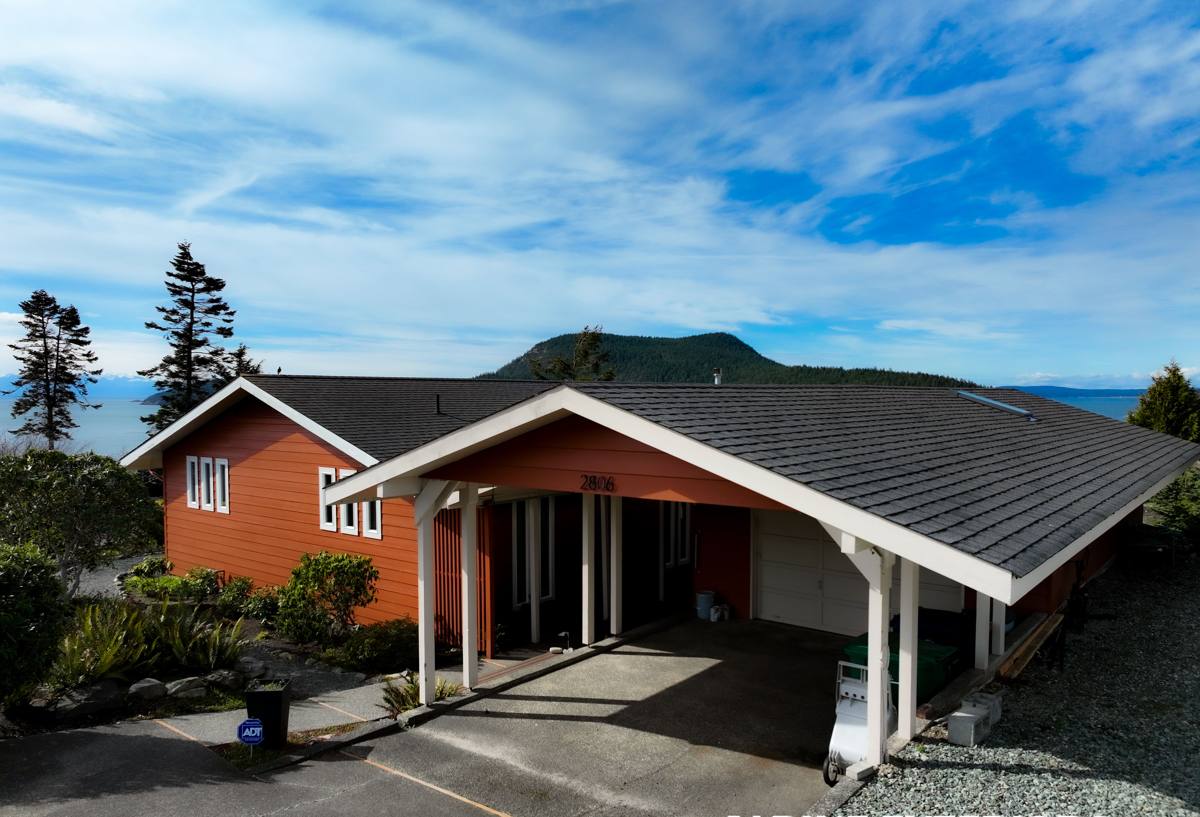
Siding: The First Line of Defense
Siding is the single biggest factor in how well an Everson home handles the climate here. Wood-based products — cedar, primed spruce, and engineered wood siding like LP SmartSide — all share the same vulnerability: their core is organic material, and organic material absorbs moisture. In a climate with this much sustained rain and humidity, that moisture gets into seams, cut edges, and fastener penetrations and doesn't fully dry out between storms. Over years, that leads to swelling, delamination, rot at the bottom courses, and paint or finish failure — usually starting on the north and west-facing walls that see the least sun and the most weather.
Vinyl siding avoids the rot problem but brings its own issues in this climate. It expands and contracts with temperature swings, can crack in a hard freeze, and tends to look dated faster than fiber cement. It's also not repairable in any meaningful sense — a damaged panel gets replaced, not patched, and matching faded vinyl years later is nearly impossible.
Why We Install Only James Hardie Fiber Cement
Lynden Exterior Co installs James Hardie fiber cement siding exclusively. We don't install LP SmartSide, vinyl, Cemplank, Allura, primed spruce, or cedar, and we're upfront about why: fiber cement made from sand, cement, and cellulose fiber doesn't have an organic core to rot, doesn't expand and contract the way vinyl does, and is non-combustible — a real consideration during Washington's increasingly active wildfire seasons, even on the wetter west side of the state.
James Hardie's HZ5 product line is engineered specifically for climates like ours — cold, wet winters with real freeze-thaw cycling. The ColorPlus factory finish is baked on under controlled conditions rather than field-applied, which means better adhesion and color consistency than a job-site paint job, and it comes with its own finish warranty separate from the product warranty. For a home in Everson facing decades of Whatcom County weather, that combination of moisture resistance, fire resistance, and finish durability is why we standardized on it rather than offering multiple product lines.
Roofing: Standing Up to Rain and Moss
Roofs in this part of Whatcom County work harder than roofs almost anywhere else in the country, simply from volume of exposure. It's rarely the intensity of a single storm that causes damage — it's the cumulative effect of months of low-grade moisture sitting on shingles, in valleys, and under moss growth. Moss holds water against the roofing material, works its way under shingle edges, and accelerates granule loss on asphalt roofs far faster than in a drier climate.
Our roofing work focuses on the details that matter most in this environment: proper underlayment for wind-driven rain, ice-and-water shield in valleys and around penetrations, adequate attic ventilation to control condensation from the inside, and flashing details at chimneys, skylights, and wall intersections that are done right the first time. A roof that's flashed correctly and ventilated properly will shed moss growth and shed water far longer than one that's just shingled over without attention to those details.
Signs a Roof in Everson Needs Attention
- Moss buildup along the ridge, in valleys, or on the north-facing slope
- Granules collecting in gutters or at downspout outlets
- Dark streaking or algae staining across the shingle field
- Soft spots or sagging when walked, especially near valleys
- Daylight visible around flashing at chimneys or vent pipes
- Interior ceiling stains after a heavy rain event
Windows: Sealing Out Driving Rain
Wind-driven rain finds every gap in a window installation, and Everson's exposure means that gap doesn't have to be large to cause real problems. Old aluminum-frame windows, failed seals on older double-pane units, and improperly flashed window openings are common sources of moisture intrusion we see on older homes throughout the area.
When we replace windows, the flashing and integration with the surrounding siding matters as much as the window unit itself. A high-quality window installed with poor flashing will leak; a mid-grade window installed correctly, with proper weather-resistive barrier integration and sill pan flashing, will outperform it. We pay particular attention to this on Everson homes because a leak behind the siding here doesn't dry out quickly — the humidity and rain frequency mean trapped moisture stays trapped.
Decks: Built to Handle Standing Moisture
Decks take a beating in this climate for the same reasons siding does — sustained moisture exposure, moss and algae growth on horizontal surfaces, and freeze-thaw cycling in the joints and fasteners. A deck built without adequate drainage, ledger flashing, and joist protection will show rot at connection points within a few seasons, even if the decking boards themselves look fine on the surface.
We build and repair decks with attention to the structural details that don't show once the project is finished: proper ledger board flashing where the deck attaches to the house, joist tape or flashing to protect end grain and fastener penetrations, adequate spacing for water to drain and air to circulate underneath, and hardware rated for the moisture exposure here. Surface material choice matters too, but a good-looking deck built on an unprotected structure is a short-term win and a long-term problem.
Comparing Exterior Material Options
| Material | Moisture Resistance in This Climate | Maintenance | Typical Lifespan Here |
|---|---|---|---|
| James Hardie Fiber Cement | Excellent — non-organic core, engineered HZ5 line | Low — factory finish, occasional wash | 30+ years |
| Cedar Siding | Fair — needs consistent sealing/staining | High — refinish every few years | 15-25 years with upkeep |
| Primed Spruce/Wood Composite | Poor to fair — prone to swelling at seams | High — repainting, edge sealing | 10-20 years |
| Vinyl Siding | Good — won't rot, but cracks in cold | Low, but not repairable | 20-30 years |
| Engineered Wood (LP SmartSide) | Fair — treated core still moisture-sensitive at cuts | Moderate — sealant maintenance at joints | 15-25 years |
Why a Local Crew Matters
A crew that works Whatcom County regularly knows things that don't show up in a general contractor's playbook: which elevations on a typical Everson lot take the worst weather, how deep to set flashing given how much rain the area gets in a normal winter, and how long moss actually takes to establish here versus in a drier part of the state. That local knowledge shows up in the details — flashing laps, fastener spacing, ventilation sizing — that separate an exterior that holds up for thirty years from one that needs attention again in ten.
It also matters for accountability. A local company is still going to be here in five or ten years if a warranty issue comes up, which is worth more than a low bid from a crew that isn't based in the area.
What to Expect From an Estimate
- An honest look at your current siding, roofing, windows, or deck and what's actually driving the wear you're seeing
- A clear explanation of material options and why we recommend what we recommend
- A written scope covering flashing, ventilation, and drainage details — not just surface materials
- A straightforward cost range with no pressure to decide on the spot
Getting Started
Whether you're dealing with moss-covered shingles, siding that's showing swelling at the seams, drafty old windows, or a deck that's starting to feel soft underfoot, the earlier these issues get looked at, the less they cost to fix. If you're in Everson or elsewhere in Whatcom County, we're happy to come take a look and give you a straightforward, no-pressure estimate on siding, roofing, windows, or deck work — just fill out the form below to get started.