 Lynden Exterior
 Ferndale's Exterior Challenge: Salt Air Meets Rain and Moss
Ferndale sits close enough to Bellingham Bay and the Strait of Georgia that salt-laden air is a real factor in how exteriors age here, not just a coastal talking point. Add Whatcom County's long wet season and the shade cover common in older Ferndale neighborhoods, and you get a climate that pushes on a home's exterior from three directions at once: corrosive salt air, near-constant moisture, and moss that gets a foothold anywhere sunlight doesn't reach for long stretches of the year.
None of that means Ferndale homes are doomed to premature siding failure or roof problems. It means the materials and installation details matter more here than they would in a drier, inland climate. We've built our business around exterior systems that are engineered for exactly this kind of exposure, and around installation practices that respect what this climate actually does to a house over time.
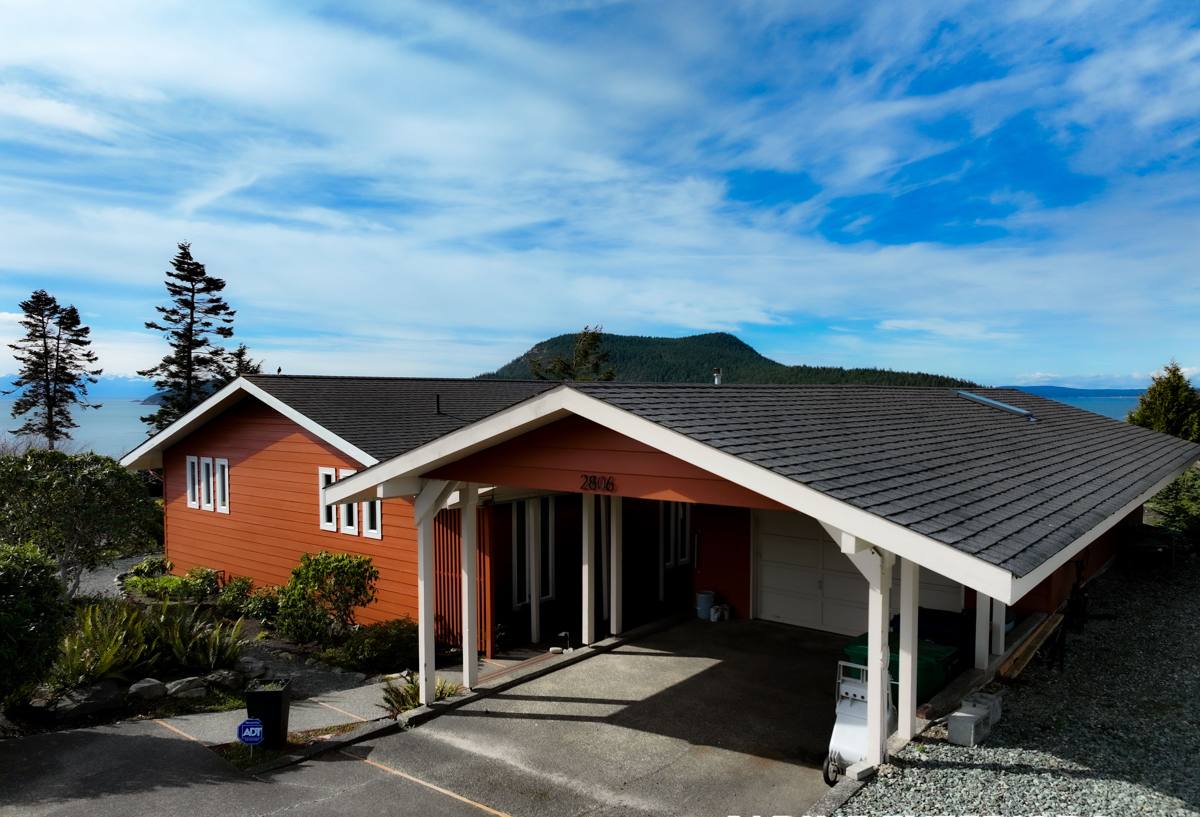
What Salt Air and Moisture Actually Do to a Home
Salt Air's Slow Corrosion
Airborne salt doesn't just affect homes on the waterfront. It travels on wind and settles on siding, trim, fasteners, and roofing hardware well inland from the shoreline. Over years, it accelerates corrosion on unprotected metal fasteners and can degrade certain paint finishes and coatings faster than a manufacturer's standard warranty accounts for. Fastener choice and finish quality aren't cosmetic details in a place like Ferndale — they're the difference between an exterior that looks good at year 15 and one that's already showing rust streaks and finish breakdown.
Driving Rain and Wind-Driven Moisture
Whatcom County storms often come with enough wind to drive rain sideways into wall assemblies, not just straight down onto roofs. That means water finds its way into gaps, laps, and penetrations that would stay dry in calmer weather. A siding and roofing system is only as good as its weakest flashing detail or the quality of the water-resistive barrier behind it — the material itself is one part of a larger moisture-management system.
Moss: The Slow, Persistent Enemy
Shaded rooflines, north-facing walls, and anything under mature tree cover in Ferndale can stay damp for weeks at a time in fall, winter, and spring. That's exactly the environment moss thrives in. On roofing, moss holds moisture against shingles and can work its way under tabs over time. On siding, it can take hold in grain textures, at butt joints, and in any spot where water sits rather than sheds. Left unaddressed, moss growth shortens the useful life of both roofing and siding regardless of the underlying material's quality.
Why We Install Only James Hardie Fiber Cement Siding
We made a deliberate decision to install one siding system: James Hardie fiber cement. We don't install vinyl, LP SmartSide, Cemplank, Allura, primed spruce, or cedar, and in a climate like Ferndale's, that decision comes down to how each material actually performs under sustained moisture and salt exposure rather than how it performs in a showroom.
What We're Choosing Against, and Why
- Vinyl siding is affordable and low-maintenance in dry climates, but it can warp or become brittle with UV and temperature swings, and its seams and J-channels give wind-driven rain more opportunities to find a way behind the cladding.
- Wood-based composite siding (LP SmartSide) uses engineered wood strand technology that performs well when maintained, but any wood-based product is more sensitive to sustained moisture exposure than fiber cement, and it depends on consistent caulking and paint maintenance to keep water out over the long run.
- Cedar is a beautiful, traditional Pacific Northwest material, but it's combustible, requires ongoing staining or sealing, and is genuinely vulnerable to the moss, mildew, and rot that Whatcom County's damp, shaded conditions encourage.
- Primed spruce is a budget option that leans hard on the field-applied paint job to do the moisture-protection work; if that finish is ever neglected, the wood underneath is exposed to exactly the kind of standing moisture this climate produces.
- Other fiber cement brands (Cemplank, Allura) use the same base material category as Hardie but don't carry the same depth of climate-specific engineering, factory finish warranty, or track record in the Pacific Northwest that led us to standardize on one manufacturer.
What James Hardie Gets Right for This Climate
Fiber cement is non-combustible and dimensionally stable — it doesn't swell, warp, or rot the way wood-based products can when moisture is a constant rather than an occasional visitor. James Hardie's ColorPlus factory-applied finish is baked on under controlled conditions, which gives it better fade and moisture resistance than most field-applied paint jobs, and it holds up better against the kind of airborne salt and grime that accumulates in coastal-adjacent Whatcom County. Hardie also builds climate-specific HZ product lines engineered for regions like the wet Pacific Northwest, and backs the material with a strong, transferable warranty — something that matters to homeowners who plan to sell within the product's lifespan.
Roofing for Ferndale's Wet, Shaded Rooflines
Roofing in this area has to account for both sustained rain volume and moss pressure. We pay close attention to flashing at valleys, chimneys, and roof-to-wall transitions, since those are the spots where driving rain most often finds a way in. On roofs with heavy shade or a history of moss growth, we talk through options for reducing future buildup as part of the installation or repair, rather than just replacing shingles and leaving the same conditions in place to cause the same problem again in a few years.
Windows: Sealing Out Wind-Driven Rain
Window performance in Ferndale is as much about installation as it is about the window unit itself. Wind-driven rain tests flashing and sealant details around window openings in a way that calmer climates don't. We install with attention to proper flashing sequencing and drainage so that water reaching the window opening has somewhere to go rather than a path into the wall cavity. Whether it's a full window replacement or addressing a leak around existing units, the installation detail is what determines whether the window actually keeps water out over time.
Decks: Built for Standing Moisture and Moss
Decks in Ferndale deal with the same moss and moisture pressures as roofing and siding, plus the added stress of foot traffic and direct weather exposure with no overhang protection in many cases. Ledger board flashing, proper drainage slope, and material choice all matter more here than in a drier climate, since a deck surface that holds water or shade is a deck surface that grows moss and degrades faster. We build and repair decks with those realities in mind rather than treating this as a one-size-fits-all install.
Cost Factors for Ferndale Exterior Projects
Every project is different, but these are the main factors that tend to drive cost on exterior work in this area:
| Factor | Why It Matters Here |
|---|---|
| Home size and wall/roof complexity | More corners, valleys, and penetrations mean more flashing detail and labor |
| Existing moisture damage | Hidden rot or water intrusion found during tear-off adds repair scope |
| Moss and shade exposure | Heavily shaded roofs/walls may need extra prep or treatment |
| Material selection | Fiber cement, roofing grade, and window quality all affect long-term value |
| Access and site conditions | Tree cover, slope, and property layout affect labor time |
Why a Local Crew Matters in Ferndale
A crew that works Whatcom County regularly knows what a Ferndale winter actually does to a roofline versus what a general exterior contractor might assume from experience in a drier region. That local knowledge shows up in the small decisions: where to add extra flashing, which walls need the most moisture-resistant detailing, and where moss is likely to become a recurring problem if it isn't addressed at the source. It also means we're accountable to this community over the long term, not passing through for a single project.
What to Look for When Hiring an Exterior Contractor Here
- Proper licensing and insurance for work in Washington State
- Manufacturer certification for the specific siding system being installed
- A clear explanation of flashing and moisture-management details, not just material brand names
- Willingness to talk honestly about moss prevention, not just moss removal
- Local references and a physical presence in Whatcom County
- A written estimate that breaks down scope, not just a single lump-sum number
If you're dealing with siding, roofing, windows, or a deck showing wear from Ferndale's salt air, rain, and moss, we're happy to take a look and walk you through honest options. Request a free, no-pressure estimate below and we'll come out and assess what your home actually needs.