 Lynden Exterior
 Exterior Work Built for Maple Falls
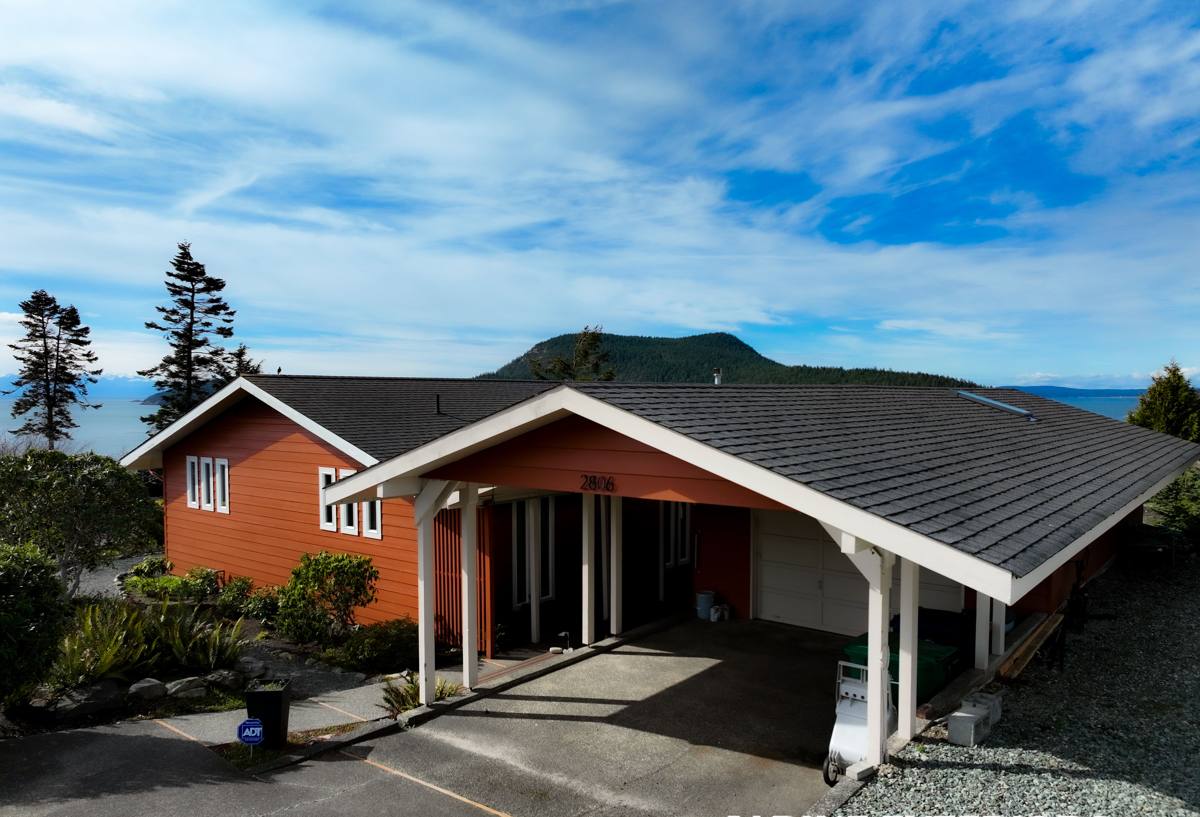
Maple Falls sits in the forested foothill country of Whatcom County, and homes out here live under conditions that flatter no shortcuts. Tree canopy holds shade and moisture against exterior walls and roofs for months at a time. Storm systems moving in off the water dump more rain as they climb into the higher terrain, and that extra rainfall, combined with cooler temperatures and less direct sun exposure than homes closer to town, adds up to a long, stubborn moss season. We've worked on enough homes in this corner of the county to know that an exterior spec that's fine in Lynden proper isn't automatically fine here — Maple Falls asks more of siding, roofing, windows, and decks, and we build accordingly.
What the Local Climate Does to a House
It's worth being specific about what "tough on exteriors" actually means in Maple Falls, because the failure modes aren't dramatic — they're slow.
Driving Rain and Wind-Driven Moisture
Rain here doesn't just fall straight down. Wind pushes it sideways into wall assemblies, under trim, and around window and door openings. Over years, any gap in flashing or any material that swells and shrinks with moisture cycling becomes a slow entry point for water — long before anyone notices a leak inside.
A Long Moss and Algae Season
Shade plus dampness equals moss, algae, and mildew growth on roofs, siding, and deck surfaces — often for a good chunk of the year, not just a few soggy months. Moss on a roof holds water against shingles and shortens their life. Algae streaking on siding is cosmetic until the substrate underneath starts absorbing moisture too.
Humidity That Never Fully Lets Up
Even between storms, ambient humidity in wooded, low-lying pockets stays high. Materials that rely on paint film or factory coatings to keep moisture out are under constant low-grade stress, and any nick or seam failure gives water a way in that doesn't dry out quickly.
Siding: Why We Install Only James Hardie
We install James Hardie fiber cement siding exclusively — not vinyl, not LP SmartSide, not Cemplank or Allura, not primed spruce or cedar. That's a deliberate standard, not a limitation of what we're capable of installing, and in a climate like Maple Falls's, the reasoning holds up.
Wood-based siding products, including engineered wood options, rely on an outer coating and careful edge-sealing to keep moisture out. In a spot with this much shade, rain, and humidity, that coating is under near-constant pressure, and any breach — a hairline check, a poorly sealed cut edge, a fastener that wasn't sealed correctly — gives moisture a path into the wood fiber. Once that starts, it doesn't reverse itself. Vinyl siding sidesteps the rot question but brings its own trade-offs: it expands and contracts more than fiber cement, seams and laps are more visible over time, and it isn't rated for the same fire performance as fiber cement.
James Hardie fiber cement is manufactured from cement, sand, and cellulose fiber — it doesn't rot, and it's non-combustible. Hardie's ColorPlus finish is baked on in a factory-controlled process rather than field-applied, which gives more consistent coverage and a longer color life than site-painted products, particularly in a climate where crews get fewer dry painting windows to begin with. Hardie also builds region-specific product lines (HZ5 for colder, wetter climates like ours) engineered around freeze-thaw and moisture exposure rather than a one-size-fits-all formulation. It's backed by a strong transferable warranty, which matters to a future buyer as much as to the current owner.
None of that makes fiber cement maintenance-free — it still needs to be installed to Hardie's spec (correct clearances, fastening, and flashing) and it still benefits from periodic washing to keep moss and algae from taking hold. But it removes the rot risk that drives most of the exterior wall failures we see on older homes in wooded, high-moisture settings like Maple Falls.
| Material | Moisture Behavior | Maintenance in This Climate | Fire Rating |
|---|---|---|---|
| James Hardie fiber cement | Does not rot or swell; factory-sealed edges available | Periodic washing; coating holds up well long-term | Non-combustible |
| Vinyl siding | Won't rot, but seams/laps can trap moisture behind panels | Low, but panels warp/fade with age and impact | Combustible, softens/melts under heat |
| LP SmartSide / engineered wood | Coating and edge-sealing are critical; vulnerable if breached | Repainting cycles; edge inspection important | Combustible |
| Primed spruce / cedar | Natural wood movement; absorbs moisture if coating fails | Most frequent repainting/sealing needed | Combustible |
Roofing in a High-Moss Environment
A roof in Maple Falls does more work than the same roof would closer to open ground. Tree cover means more debris accumulation in valleys and gutters, more shade holding moisture on the surface, and a real moss problem if the roof isn't treated or cleared regularly. We look at three things on every roofing job out here: material selection suited to sustained moisture exposure, flashing detail at every penetration and valley (where driving rain finds its way in first), and ventilation, since a roof deck that can't breathe traps moisture from below as well as above. Whether it's a full replacement or a repair, we build in the detailing this specific environment calls for rather than a generic install.
Windows That Hold Up to Wind-Driven Rain
Window failures around here are rarely about the glass — they're about the flashing and sealant details around the frame. Wind-driven rain tests every seam, and a window that's installed without proper flashing integration into the wall assembly will eventually let water track down into the framing, even if the window unit itself is a good product. When we replace windows, we pay as much attention to how the opening is flashed and sealed into the surrounding wall as we do to the window itself, because in this climate that's usually where the real vulnerability lives. Well-installed, properly sealed windows also cut down on the drafts and condensation issues that come with a persistently damp, cool climate.
Decks Built for Shade and Standing Moisture
Decks in Maple Falls fight the same battle as roofs: shade, moisture, and moss. A deck surface that stays damp for long stretches develops slick moss growth (a real safety issue on stairs and landings) and speeds up wear on fasteners, ledger connections, and structural framing if drainage isn't handled correctly. Proper spacing between boards, correct ledger flashing where the deck meets the house, and material choices suited to sustained moisture exposure all matter more here than they would on a deck that gets full sun and dries out quickly between rains.
Why a Local Crew Matters Here
Exterior work in Maple Falls isn't just about following a manufacturer's install manual — it's about knowing how this specific stretch of Whatcom County behaves. A crew that mostly works in drier, sunnier settings can miss the flashing details, drainage planning, and material choices that matter most where shade and rainfall are this persistent. We work throughout the Lynden and greater Whatcom County area, so we see the same moss patterns, the same wind-driven rain problems, and the same slow-failure modes repeatedly, and we build our installs around avoiding them rather than discovering them after the fact.
Signs Your Exterior Needs a Look
- Moss or dark streaking building up on siding, especially on shaded walls
- Soft spots, visible gaps, or discoloration around window and door trim
- Moss buildup in roof valleys or along the north-facing roof slope
- Gutters overflowing or holding standing debris after normal rain
- Deck boards that stay damp long after rain has stopped, or feel slick underfoot
- Peeling or bubbling paint on wood trim or siding
What Working With Us Looks Like
We start with an honest look at the exterior — siding, roofline, windows, and any deck structures — and talk through what's actually needed versus what can wait. If siding replacement is part of the conversation, we'll explain why we recommend James Hardie for a property in this climate specifically, not as a blanket sales pitch. Every job, whether it's a full exterior overhaul or a single component, gets installed to spec: correct clearances, correct flashing, correct fastening. That's what keeps a moss-and-rain climate like Maple Falls's from winning the long game against a house.
If you're dealing with siding, roofing, windows, or a deck that's showing its age in Maple Falls, we're happy to take a look. Reach out for a free, no-pressure estimate using the form below.