 Lynden Exterior
 Everson's Climate Is Harder on Vertical Siding Than It Looks
Everson sits in the Nooksack River valley, close enough to the water and to Puget Sound's marine air that homes here deal with a specific combination of stresses most siding products were never designed around: near-constant humidity, wind-driven rain that hits walls at an angle instead of falling straight down, salt-laden air pushing inland off the Sound, and a moss and algae season that can run most of the year in shaded, north-facing spots. Board and batten siding is a beautiful look — clean vertical lines, strong shadow relief, a farmhouse-to-modern range that suits a lot of Whatcom County architecture. But it's also a style that punishes a sloppy install faster than lap siding does, because every batten is a seam, and every seam is a place water can find its way behind the cladding if it isn't detailed correctly.
This page is about doing board and batten right, specifically for homes in and around Everson, using a material system built to actually hold up to this climate rather than just look good on the day it goes up.
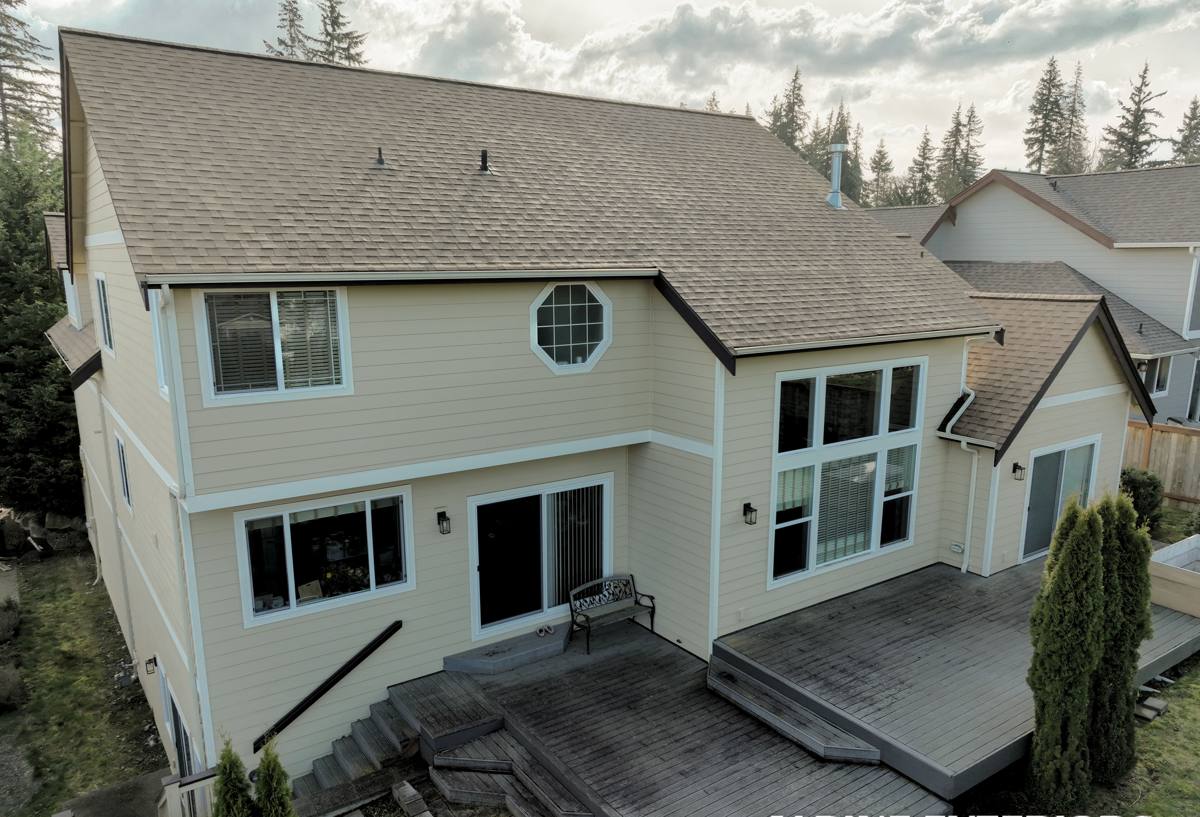
What Board and Batten Actually Is — and What It Isn't
A cladding system, not a decorative overlay
Board and batten refers to wide vertical panels (or boards) with narrower strips — battens — covering the seams between them. Done correctly, it's a full cladding system: a water-resistive barrier underneath, properly lapped and taped panel joints, correctly fastened battens, and flashing at every horizontal transition (roofline, window and door heads, foundation). Done poorly, it's just boards nailed to a wall with trim strips covering the gaps — which looks identical from the sidewalk and fails in ways you won't notice until there's rot in the sheathing.
Why the distinction matters here specifically
In a dry climate, corners get cut on vertical siding and nothing bad happens for years. In Whatcom County, with rain that comes sideways off the water and humidity that keeps wood-based products damp for days at a stretch, those same shortcuts show up as swelling, staining, and soft spots within a handful of seasons — often right at the batten seams, which is exactly where most homeowners never think to look.
Why Vertical Siding Needs More Care in This Climate Than People Expect
Every seam is a decision point
A board and batten wall has vastly more vertical seams than a lap-sided wall. Each one needs a gap behind the batten for drainage, correct fastener placement so the panel can move slightly without splitting or backing out nails, and a water-resistive barrier that's actually continuous behind it — not just stapled up quickly to get to the next step.
Driving rain doesn't behave like straight-down rain
Wind off the Sound and up the valley pushes water sideways and upward under laps and battens that would stay dry in calmer conditions. That's why flashing details — at window heads, at the transition to roofing, at deck ledgers, at the foundation line — matter more here than in drier inland climates. A batten that looks fine from the ground can be hiding a flashing gap that's been feeding moisture into the wall assembly for two winters.
Moss season adds a maintenance dimension most siding installers don't plan for
Shaded walls and north exposures in this part of Whatcom County can stay damp long enough for moss and algae to take hold on any surface that holds moisture at the surface. The siding material's surface finish and its ability to shed water quickly matter as much as the framing details underneath.
The Material We Use: James Hardie, and Why We Don't Install the Alternatives
We install James Hardie fiber cement exclusively — for board and batten, that means HardiePanel vertical siding paired with Hardie trim battens, or the Artisan® Collection where a homeowner wants a deeper, more traditional board profile. We don't install vinyl board and batten, engineered wood (LP SmartSide-type) products, or primed cedar boards, and we think homeowners in this climate deserve an honest explanation of why.
| Material | How it holds up in Everson's climate | Why it's not what we install |
|---|---|---|
| Vinyl board and batten | Sheds water well but expands and contracts with temperature swings; seams can gap or warp over time | Look is often visibly "plastic" up close; repairs after impact damage are hard to color-match |
| Engineered wood (wood-fiber composite) | Wood-based core is vulnerable to swelling if moisture reaches a cut edge or fastener hole | Long-term moisture performance depends heavily on perfect installation and ongoing caulk maintenance |
| Primed cedar or spruce boards | Natural wood movement plus this region's humidity means regular repainting and caulk upkeep | Highest long-term maintenance burden; rot risk if finish isn't kept up |
| James Hardie fiber cement | Non-combustible, dimensionally stable, engineered moisture and impact resistance for wet climates | What we install — factory ColorPlus finish, strong transferable warranty, proven track record |
None of the alternatives are "bad" products in every situation — vinyl and engineered wood both have their place, and plenty of them are installed correctly and perform fine elsewhere. Our position is narrower and more practical: for the moisture load, wind-driven rain, and long wet season Everson homes deal with, fiber cement is the material we're willing to stand behind with our own installation warranty.
What a Correct Board and Batten Installation Actually Involves
A board and batten job that's going to last through Whatcom County winters has a specific set of non-negotiables. This is the checklist we work from on every project:
- Full inspection and, where needed, repair of the existing sheathing before any new siding goes up — covering rot with new siding just delays the problem
- Continuous water-resistive barrier installed and lapped correctly, with all seams taped
- Correct panel gaps at all edges and butt joints per the manufacturer's specifications, not "tight for looks"
- Battens fastened to hit framing, not just fastened into the panel or sheathing
- Proper flashing at every window and door head, not just caulk over the gap
- Kick-out flashing wherever a roofline meets a wall, directing water away from the siding instead of behind it
- Correct clearance at the foundation line and at any deck or porch ledger to keep the bottom edge of the siding out of standing water or splash-back
- Factory-finished ColorPlus panels rather than field-painted boards, so the finish isn't dependent on job-site weather conditions during the install
Skipping any one of these doesn't necessarily show up on day one. It shows up in year three or four, as staining, soft trim, or a batten that's started to separate from the wall.
Our Process for Everson Projects
- On-site assessment. We look at your home's exposure — which walls take the worst of the wind and rain, where moss has already established itself, and whether there's existing moisture damage behind the current siding.
- Scope and product selection. We walk through HardiePanel vertical siding versus the Artisan Collection based on the look you want and your home's architecture, and give you a clear, honest estimate.
- Prep and repair. Any compromised sheathing or framing gets addressed before a single new panel goes up — this is the step that determines whether the job lasts.
- Installation to manufacturer spec. Water-resistive barrier, panels, battens, and flashing installed in the order and manner James Hardie's system requires, not shortcuts specific to our crew.
- Final walkthrough. We go over the finished job with you, including what maintenance to expect and what to watch for in the years ahead.
Why a Crew That Already Works Everson Matters
Siding work isn't just about the product — it's about knowing the conditions a given wall is going to face. A crew that already works this stretch of Whatcom County has seen which exposures in the Nooksack valley take the worst wind-driven rain, which north-facing walls hold moss the longest, and how local permitting and inspection expectations run. That's the kind of judgment that doesn't come from a spec sheet — it comes from having done this work, on homes like yours, in this specific climate, more than once.
It also means fewer surprises with scheduling and materials. We're not routing a crew in from out of the area for a single job and hoping the weather cooperates; we plan around this region's rain patterns because we work in them constantly.
Maintenance: What Board and Batten Actually Needs From You
One advantage of fiber cement board and batten over the wood-based alternatives is how little ongoing maintenance it asks for — but "little" isn't "none," especially in a climate with a long moss season.
- Rinse down shaded or north-facing walls periodically to keep moss and algae from establishing — a garden hose is usually enough; avoid high-pressure washing directly into seams
- Check caulking at window and door trim every year or two and re-caulk if it's cracked or pulling away
- Keep gutters clean and functioning so water isn't overflowing directly onto siding below
- Trim back vegetation and landscaping that keeps a wall section shaded and damp longer than the rest of the house
- Have any impact damage (a stray branch, equipment, etc.) repaired promptly rather than left open to moisture
Cost Factors to Expect
Board and batten generally costs somewhat more than standard lap siding on the same wall, mainly because of the added batten material and labor. Beyond that baseline, a few things move the number most on Everson projects:
| Factor | Effect on cost |
|---|---|
| Amount of existing sheathing or framing repair needed | Often the single biggest variable — moisture damage found during tear-off adds cost but is far cheaper to fix now than later |
| Wall height and accessibility | Two-story walls, steep grades, and limited access add labor time |
| HardiePanel vertical vs. Artisan Collection | Artisan's deeper, more traditional profile costs more than standard HardiePanel |
| Trim and detail complexity | Homes with more windows, dormers, and roof transitions need more flashing and trim labor |
| Full replacement vs. one elevation | Doing the whole house at once is generally more efficient per square foot than phasing it |
We'll walk you through the specifics for your home during the estimate rather than quoting off a generic number — every wall's condition is different, and that's usually what actually drives the price.
If you're weighing board and batten for a home in Everson, we're happy to come take a look and give you a straightforward, no-pressure estimate — including an honest read on what your existing siding and sheathing look like underneath, before you commit to anything.