 Lynden Exterior
 Exterior Work Built for Nooksack's Climate
Nooksack sits in the Nooksack River valley in northern Whatcom County, close enough to the Salish Sea and the foothills of the North Cascades that homes here get squeezed from both directions — marine moisture rolling in off the water and cool, damp air draining down from the mountains. The result is a long wet season, persistent humidity, and exterior surfaces that rarely get a real chance to dry out between fall and spring. Add in the valley's tree cover and you get one more thing local homeowners know well: moss. It grows on roofs, it grows on north-facing siding, and it grows in the shaded corners of decks that never see direct sun.
None of that is unusual for this part of Washington. But it does mean that exterior materials and installation details that work fine in a drier climate can fail early here. We're a Lynden-based exteriors contractor, and Nooksack is part of our regular service area — not a stretch job we drive out for once a year. We know which sides of a house take the worst weather in this valley and which details actually matter when you're building or replacing siding, roofing, windows, or a deck.
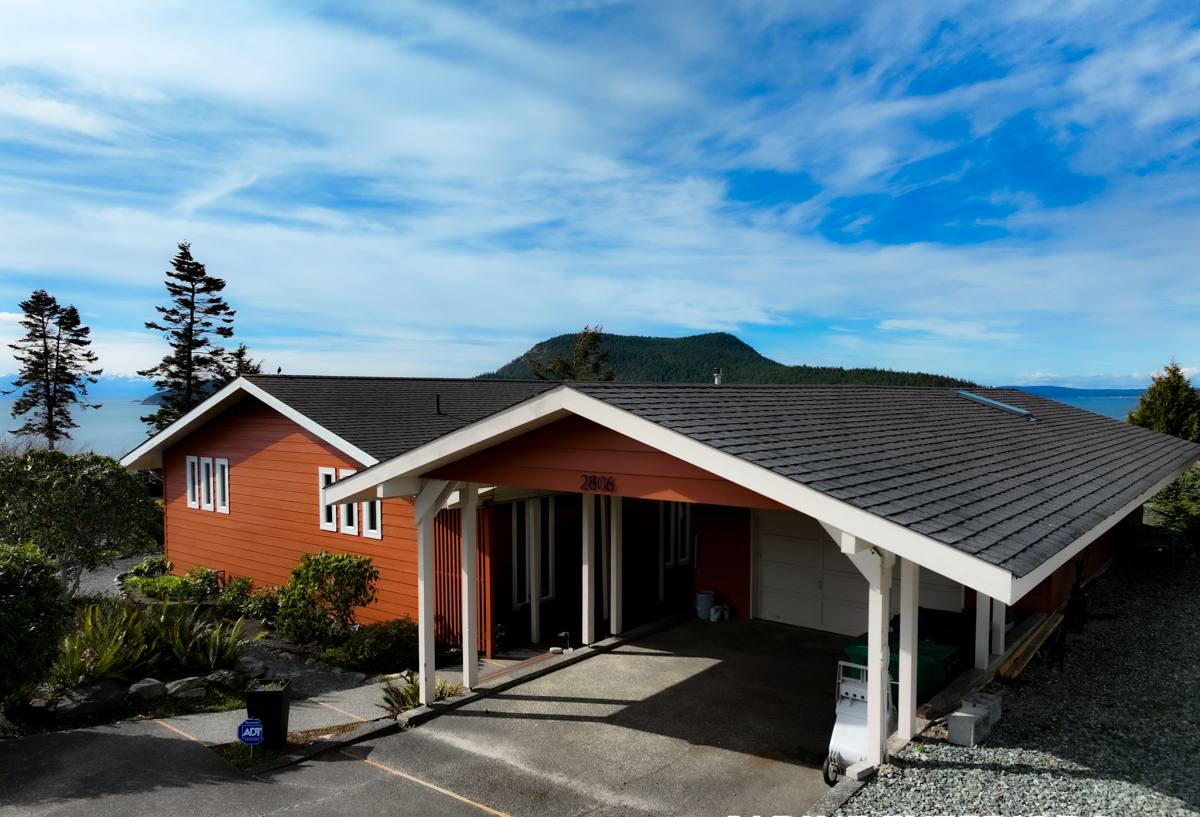
What Whatcom County Weather Does to a House Over Time
Moisture That Doesn't Let Up
Whatcom County gets a lot of its precipitation as long, low-intensity rain rather than short heavy storms. That's actually harder on a building envelope in some ways — water has more time to find its way behind poorly flashed trim, into end-grain cuts on wood siding, or under shingles with marginal underlayment. Homes in Nooksack that face prevailing weather, especially west and southwest exposures, tend to show wear first: paint failure, swelling at siding joints, and soft spots where water has been sitting rather than shedding.
The Moss and Algae Problem
A long moss season is one of the more annoying realities of exterior maintenance in this region. Roofs with north-facing slopes or heavy tree cover collect moss that holds moisture against shingles, which shortens roof life and can work its way under tabs over several seasons. The same organic growth shows up as green-black streaking on siding, particularly on wood-based products where the surface texture gives spores something to hold onto. It's not just cosmetic — moss and algae growth is a sign that a surface is staying damp longer than it should, and damp-too-long is the root cause behind most premature siding and roofing failures we see.
Temperature Swings and Material Movement
Whatcom County doesn't get extreme heat, but the swing between damp winter cold and warmer, drier summer stretches still puts cyclical stress on exterior materials. Products that expand and contract a lot, or that absorb and release moisture with the seasons, are more prone to cracking, cupping, and joint separation over a 10-15 year span. That's a big part of why material choice matters as much as installation quality out here.
Siding for Nooksack Homes: Why We Only Install James Hardie
We install James Hardie fiber cement siding exclusively. We don't install vinyl, LP SmartSide, Cemplank, Allura, primed spruce, or cedar. That's a deliberate standard, not a marketing line, and it's worth explaining honestly rather than just asserting it.
| Material | How It Handles Whatcom County's Wet Climate | Common Trade-Off |
|---|---|---|
| Vinyl siding | Sheds rain reasonably well but can warp or buckle with temperature swings and doesn't hold paint if you ever want a color change | Shorter realistic lifespan, brittle in cold snaps, seams can loosen over time |
| LP SmartSide (engineered wood) | Performs fine when installation and caulking are perfect and maintained on schedule | Wood-based core is vulnerable to moisture intrusion at cut edges and seams if maintenance slips |
| Cedar siding | Natural material, handles moisture better than most wood but needs consistent upkeep | Regular refinishing, higher long-term maintenance cost, more susceptible to moss and rot in shaded, damp areas |
| Primed spruce / other primed wood | Lowest material cost up front | Least moisture-resistant option; prone to swelling, checking, and paint failure in a climate this wet |
| James Hardie fiber cement | Non-combustible, dimensionally stable, engineered moisture resistance, factory-applied ColorPlus finish | Higher material cost, requires correct fastening and flashing at install (which is why installation quality matters) |
Vinyl and engineered wood products aren't bad materials in every climate — they have real advantages elsewhere, and cedar has genuine appeal for homeowners who want a natural look and are committed to the upkeep. But for a valley that stays wet for months at a time and grows moss on anything shaded, we've standardized on a product that's engineered specifically for regions like this one.
Why Hardie Specifically
James Hardie's HZ10 product line is formulated for cold, wet, and marine-influenced climates like ours, with a fiber cement composition that doesn't absorb and swell the way wood-based products can. The ColorPlus factory finish is baked on under controlled conditions rather than field-applied, which means better adhesion and a longer color life than a site-painted product — fewer repaint cycles over the life of the siding. Fiber cement is also non-combustible, which matters given the wildfire smoke seasons the Pacific Northwest has seen in recent summers, even if direct wildfire exposure isn't the primary concern in Nooksack. And Hardie backs the product with a transferable warranty that holds up if you sell the home, which is a meaningful detail for a material this long-lived.
None of that matters if the installation is wrong. Fiber cement siding depends on correct fastener placement, proper clearances at grade and roof lines, and flashing details that actually move water away from the wall assembly. That's the other half of why we do this work ourselves rather than subcontracting it out to whoever's available — installation quality is what determines whether a 30-plus-year product actually lasts 30-plus years.
Roofing in a Long Moss Season
Roofing in this part of Whatcom County has to account for moss and algae growth as a design consideration, not an afterthought. We look at roof slope, tree coverage, and shaded exposures on every job, and we talk through options like zinc or copper strips at the ridge, proper ventilation to reduce the trapped moisture that feeds moss growth, and underlayment that's actually rated for a climate that stays wet for weeks at a stretch. A roof that's installed with moss in mind will need far less aggressive cleaning and maintenance over its life than one that wasn't.
We also pay close attention to flashing at chimneys, valleys, and any roof-to-wall transitions, since that's where the slow, low-intensity rain typical of this region finds its way in over years rather than causing an obvious leak on day one.
Windows
Older or lower-quality windows are one of the most common sources of hidden moisture problems we find behind siding and trim in this valley. Failed seals, poor flashing at the window opening, and gaps around the frame let water track down into the wall assembly, where it can sit for a long time before it shows up as a visible problem. When we replace windows, we treat the flashing and integration with the surrounding siding as seriously as the window unit itself — a good window installed with a poor moisture barrier around it will cause the exact problems it was supposed to prevent.
Decks
Decks in Nooksack take a beating from the same conditions that affect siding and roofing: standing moisture, shade-driven moss growth, and freeze-thaw cycling on fasteners and ledger connections. We build and repair decks with attention to proper drainage, ledger flashing, and material choices that hold up to a climate where a deck surface might stay damp for days after a storm rather than drying out overnight.
Why a Local Crew Matters for This Kind of Work
We're based in Lynden, and Nooksack is close enough that it's part of our regular service footprint rather than a special trip. That matters for a few practical reasons:
- We know which building orientations in this valley take the worst weather and plan flashing and drainage details accordingly
- We're familiar with local permitting and inspection expectations in Whatcom County
- Warranty service and follow-up visits are straightforward when the crew is nearby, not a call center for a company based somewhere else
- We see the long-term results of our own work on other homes in the area, which keeps us honest about what actually holds up here
What to Check Before Hiring an Exterior Contractor
Whether you go with us or someone else, a few basics are worth confirming before any exterior project starts:
- Current Washington State contractor license and proof of liability insurance
- A written scope of work that specifies materials, brands, and product lines by name — not just "siding" or "roofing"
- Clear flashing and moisture-barrier details in the proposal, not just the visible finish material
- Manufacturer certification if the product line requires it, such as James Hardie's installer programs
- A realistic timeline that accounts for Whatcom County's wet-weather scheduling constraints
- References or examples of completed work in the local area
Maintenance That Actually Fits This Climate
Whatever material is already on your home, a few habits go a long way in a climate like this one:
- Keep gutters clear so water isn't overflowing onto siding or pooling at the roofline
- Trim back tree limbs and vegetation that keep shaded areas of the roof or walls from drying out
- Rinse moss and algae growth off siding and roofing before it builds up thick enough to hold moisture against the surface
- Watch for soft spots, swelling, or paint failure at siding seams and corners, especially on west and southwest walls
- Check deck ledger boards and fasteners annually for corrosion or loosening
Get an Estimate for Your Nooksack Property
If you're dealing with aging siding, a mossy roof, drafty windows, or a deck that's seen better days, we're happy to take a look and talk through honest options for your home — no pressure, no obligation. Reach out for a free estimate and we'll walk the property with you and explain exactly what we'd recommend and why.