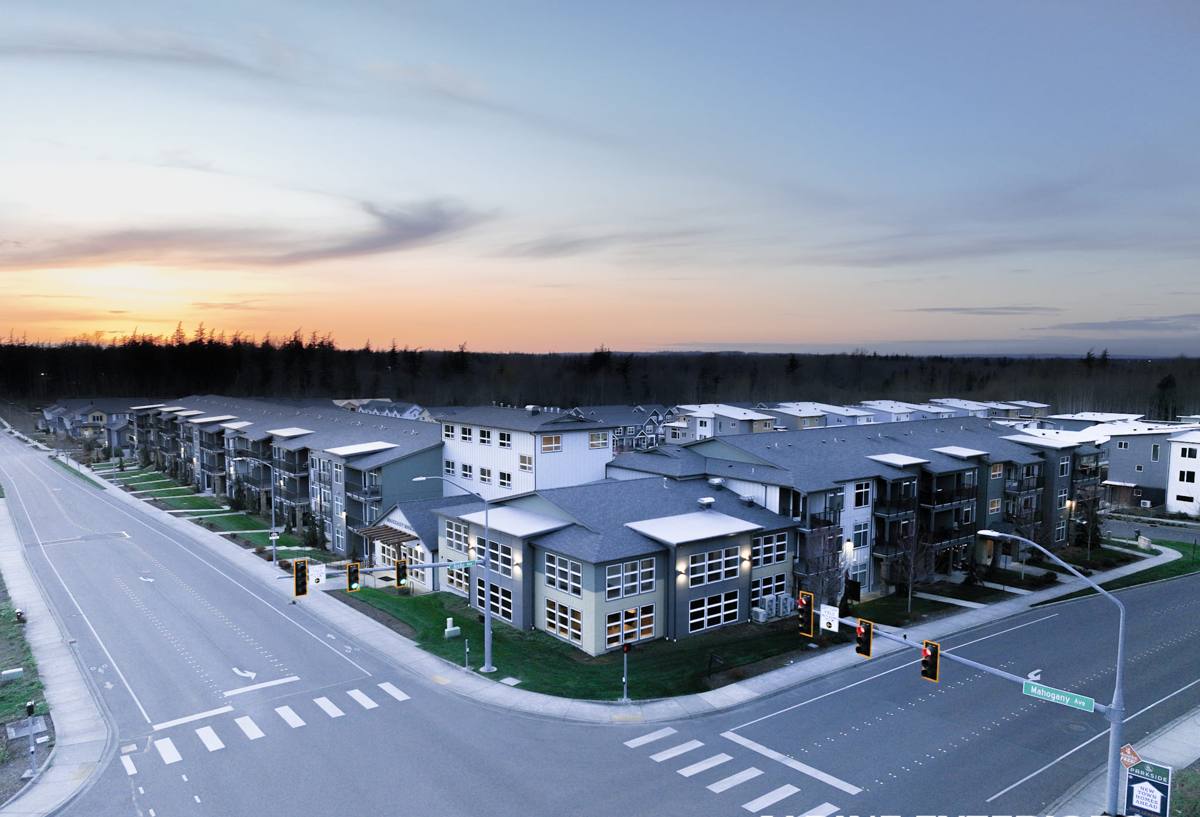
 Lynden Exterior
 Why Roof Replacement Looks Different in Lynden
Whatcom County weather is hard on roofs in ways that don't always show up on a glossy brochure. Lynden sits close enough to the Salish Sea that salt-laden air reaches roofing materials and fasteners, while the Nooksack Valley's long, wet winters keep roof surfaces damp for months at a stretch. Add in driving rain that comes sideways off Pacific storms, and a moss season that can run from October through May, and you have a climate that rewards good roofing decisions and punishes shortcuts.
A roof replacement here isn't just about picking shingles you like the look of. It's about matching the roofing system, the underlayment, the ventilation, and the flashing details to a climate that never really dries out for long. This guide walks through how to think about the project so you can make an informed decision, whether you're replacing a roof that's failing or getting ahead of one that's aging out.
Signs Your Roof Is Telling You Something
Most roofs don't fail all at once — they send signals first. Knowing what to watch for can save you from a surprise interior leak during a January atmospheric river.
- Granules collecting in gutters or at downspout outlets (a sign asphalt shingles are wearing thin)
- Shingles that are cupping, curling at the edges, or cracking
- Moss or algae streaking that keeps returning within a season of cleaning
- Daylight visible through the roof deck from inside the attic
- Soft or spongy spots when walked on (a roofer will check this, not a homeowner)
- Flashing that's rusted, lifted, or separating from chimneys, skylights, and walls
- Interior ceiling stains, especially near valleys, chimneys, or where the roof meets a wall
Any one of these on its own might just mean routine maintenance. Several at once, especially on a roof already past 15-20 years old, usually means it's time to start planning rather than reacting.
Why Moss Matters More Here Than in Drier Climates
Moss isn't just cosmetic in a climate like ours. It holds moisture against the roofing surface long after a storm has passed, which accelerates granule loss on asphalt shingles and can work its way under shingle tabs over time. In a region where roofs can go weeks without a full dry-out during winter, moss becomes less of an annoyance and more of a maintenance line item. Regular gentle cleaning (never high-pressure washing, which strips granules) and zinc or copper strips at the ridge can slow regrowth, but on an aging roof, persistent moss is often a sign the roofing material has lost enough of its protective surface that replacement makes more sense than continued upkeep.
How Long Should a Roof Actually Last Here?
Manufacturer warranties are written for national averages, not for Whatcom County's specific mix of rain volume, humidity, and salt exposure. Real-world lifespan in this climate tends to run toward the shorter end of a product's rated range unless installation details — ventilation, underlayment, flashing — were done right the first time.
| Roofing Material | Typical Lifespan (National) | Realistic Lifespan (Lynden/Whatcom Conditions) |
|---|---|---|
| 3-tab asphalt shingles | 15-20 years | 12-18 years |
| Architectural (dimensional) shingles | 25-30 years | 20-28 years |
| Metal (standing seam) | 40-60 years | 40-50+ years |
| Composite/synthetic shake | 30-50 years | 25-40 years |
These ranges assume the roof was installed with adequate attic ventilation and proper underlayment for a wet coastal climate. A roof installed without enough intake and exhaust venting will trap moisture underneath the deck, which shortens the life of any roofing material regardless of what the shingle wrapper promises.
Choosing a Roofing Material for This Climate
Asphalt Shingles
Still the most common choice, and for good reason — reasonable upfront cost, wide color range, and straightforward repairs. In our climate, look for shingles rated for algae resistance (usually marketed with a "AR" designation) since the copper or zinc granules in these products slow the moss and algae growth that's near-constant here. Architectural shingles also shed wind-driven rain better than flat 3-tab profiles, which matters when storms come in sideways.
Metal Roofing
Standing seam metal has become a popular upgrade for homeowners planning to stay long-term. It sheds water and moss far more effectively than shingles, handles wind well, and holds up to decades of Pacific Northwest rain with minimal maintenance. The tradeoff is upfront cost and the fact that not every roof profile or budget makes sense for metal.
Composite and Synthetic Options
Synthetic shake and slate products can offer the look of natural materials with better moisture resistance than real wood shakes, which struggle in a climate this consistently damp. If you like a shake aesthetic, this is usually a more durable path than the real thing here.
What a Proper Tear-Off and Install Actually Involves
The visible shingle layer is the least important part of a good roof replacement in this climate. What happens underneath determines whether the roof performs for its full lifespan.
- Full tear-off: Roofing over old layers traps moisture and hides deck damage — not appropriate for our rain volume.
- Deck inspection and repair: Any soft, delaminated, or water-damaged sheathing gets replaced before new material goes down.
- Ice and water shield: Self-adhering membrane at eaves, valleys, and penetrations, which matters more here than in drier climates because of how long water sits on a roof surface after storms.
- Synthetic underlayment: A water-resistant barrier across the full deck, not just felt paper, given how many wet-dry cycles the roof goes through each winter.
- Flashing at every penetration: Chimneys, skylights, vent pipes, and roof-to-wall transitions are where the majority of leaks originate — new flashing, not reused flashing, is the standard worth insisting on.
- Balanced attic ventilation: Intake at the eaves and exhaust at the ridge, sized correctly for the attic volume, to prevent trapped moisture and ice damming.
Roof Replacement and Your Siding: Why the Timing Matters
Roofs and siding fail for related reasons — both are your home's primary defense against the same driving rain and moisture cycles. If your roof is due for replacement, it's worth having your siding evaluated at the same time, especially around roof-to-wall transitions, chimneys, and any area where flashing ties the two systems together. Water that gets behind siding at a poorly flashed roofline can cause damage that has nothing to do with the siding material itself.
This is also where product choice compounds. We install exclusively James Hardie fiber cement siding, not because every siding product is interchangeable, but because in a climate that keeps materials wet for months at a time, how a product handles moisture at the edges and behind the surface matters as much as how it looks new. Hardie's fiber cement composition doesn't absorb water the way wood-based products can, and it won't warp, rot, or feed the kind of persistent moss and mildew growth that shows up on softer siding materials around here. If a roof project uncovers siding or trim that needs attention, that's the moment to make a durable choice rather than a like-for-like patch.
What Drives Roof Replacement Cost
Every roof is priced on its own specifics, but the same handful of factors move the number up or down on almost every job in this area.
| Cost Factor | Why It Matters |
|---|---|
| Roof size and pitch | Steeper roofs take longer, require more safety equipment, and use more material per square |
| Number of layers to remove | Tear-off labor scales with how many old layers are coming off |
| Deck condition | Rotted or soft sheathing found during tear-off adds material and labor |
| Roof complexity | Valleys, dormers, skylights, and chimneys all add flashing work |
| Material choice | Asphalt, metal, and composite products carry very different price points |
| Ventilation upgrades | Adding proper intake/exhaust venting where none existed adds scope but pays off in lifespan |
Be cautious of bids that are dramatically lower than others for the same scope — it usually means something is being skipped, whether that's tear-off, underlayment quality, or flashing replacement, and those are exactly the details that determine how the roof performs through a wet Whatcom County winter.
Hiring the Right Contractor for the Job
A roof replacement is a big investment, and the contractor matters as much as the material. A few things worth confirming before signing anything:
- Current Washington State contractor license and active liability insurance
- Manufacturer certification if you're going with a product that offers an enhanced warranty tied to certified installers
- A written scope that spells out tear-off, underlayment type, flashing replacement, and ventilation plan — not just "new roof installed"
- Local references or completed local work you can drive by
- A clear plan for debris removal and magnetic sweep for nails in your yard and driveway
Planning Your Project
Late spring through early fall is the most reliable window for roofing work here, simply because there are more consecutive dry days to work with. That said, a genuinely failing roof shouldn't wait for ideal weather — a tarped emergency repair is a stopgap, not a plan, and reputable roofers do work through the wetter months when needed. If you're not in a hurry, scheduling during the drier season generally means a faster, cleaner install with fewer weather delays.
If your roof replacement is on the horizon, or you're noticing some of the warning signs above, we're happy to take a look and walk you through what we're seeing — no pressure, no obligation. Reach out for a free estimate and we'll give you a straight answer about what your roof actually needs.