 Lynden Exterior
 Metal Roofing Built for Everson's Weather
Everson sits along the Nooksack River in the heart of Whatcom County, where the weather doesn't do a roof any favors. Winters bring long stretches of driving rain, spring and fall keep everything damp enough for moss to take hold on shaded roof slopes, and homes tucked under fir and cedar cover deal with needle litter and standing moisture most of the year. Even away from the coastline, the marine air that moves through the county carries enough moisture and salt to accelerate corrosion on the wrong materials. A metal roof, installed correctly, handles all of that better than almost anything else on the market. Installed poorly, it fails in exactly the ways homeowners worry about: leaks at the seams, rust streaking down the fascia, and panels that loosen in the wind.
This page is about one thing: metal roofing on homes in and around Everson, what the climate actually demands from the material and the installation, and how we approach the job so it holds up for decades instead of years.
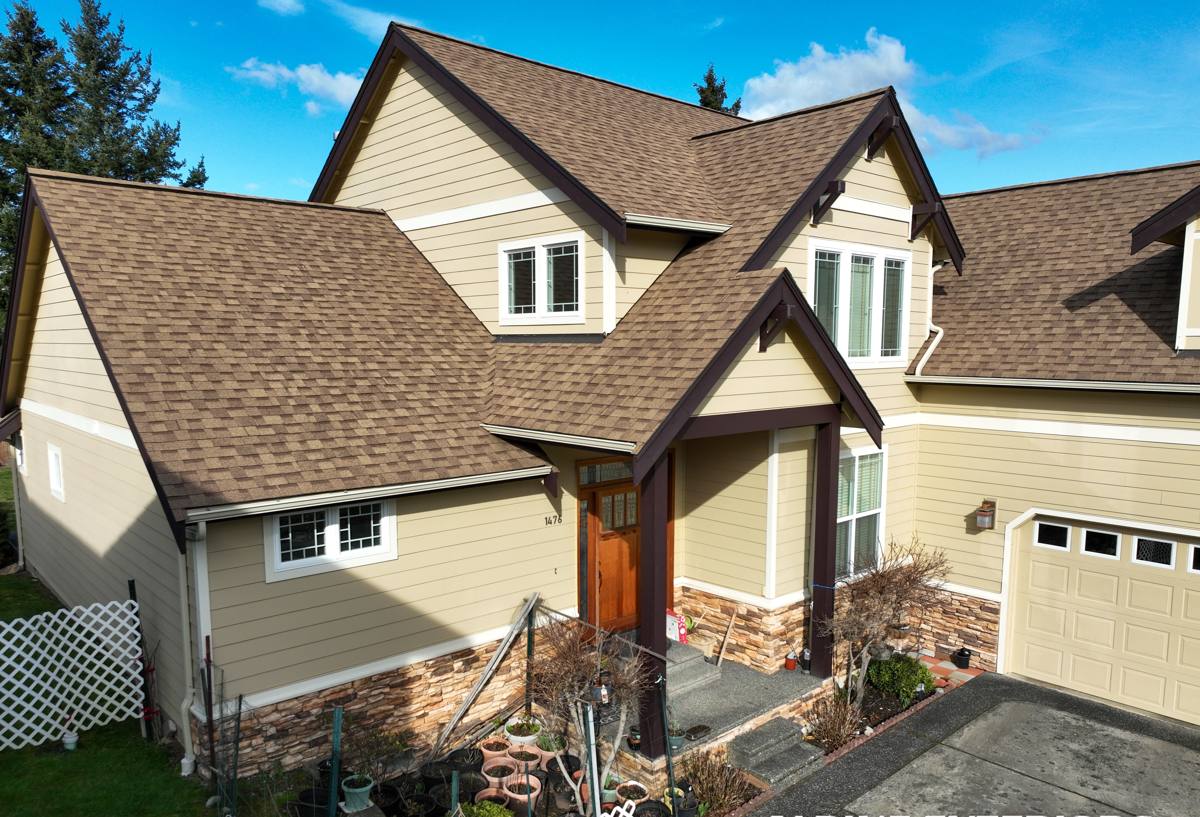
What This Climate Actually Does to a Roof
Rain Volume and Roof Pitch
Whatcom County gets a lot of rain spread across many months, not just a few heavy storms. That means every seam, fastener, and flashing detail on a roof is under sustained pressure for most of the year, not just during an occasional downpour. On lower-pitch roofs especially, water has more time to find any weak point before it sheds off. Metal roofing performs well here because a properly lapped or seamed panel system gives water very few places to work its way underneath — but that only holds true if the panel layout, lap direction, and pitch are matched correctly during design and install.
Moss, Shade, and Tree Cover
A lot of Everson-area properties have mature trees close to the house, which means shaded roof sections that stay damp long after the rest of the roof has dried out. That's exactly where moss and algae take hold on the wrong materials. Metal roofing doesn't give moss the same foothold that shingles or wood do — there's no granulated or porous surface for spores to grip — but debris still needs to be kept off the panels, and valleys still need to stay clear, or you get standing organic matter sitting against the finish longer than it should.
Wind and Temperature Swings
Whatcom County isn't a high-wind zone in the way coastal or mountain-pass areas are, but gusty winter storms are routine, and metal panels that aren't fastened to spec will work loose over a few seasons. Temperature swings between summer afternoons and winter nights also mean the roof system needs to allow for expansion and contraction — panels, clips, and fasteners that don't account for that movement are one of the more common causes of long-term seam failure.
What a Correct Metal Roof Installation Involves
Metal roofing has a reputation for durability, and it earns that reputation when it's installed right. Most of the problems we get called out to fix on other contractors' work trace back to a handful of shortcuts, not the material itself.
Underlayment and Moisture Barrier
Metal panels are the visible layer, but the underlayment underneath is what actually keeps a roof deck dry if wind-driven rain ever gets past a seam. In a climate like this, we don't treat underlayment as an afterthought — it's a synthetic, high-temperature-rated barrier suited to sit under metal, with extra protection at eaves and valleys where water concentrates.
Fastening and Panel Seams
Exposed-fastener systems need every screw seated correctly, with a sealing washer that's still doing its job — not over-driven, not under-driven. Standing seam systems rely on concealed clips that let the panel expand and contract without stressing the fasteners. Either system fails early when the crew doesn't respect that distinction.
Flashing and Roof Penetrations
Chimneys, vents, skylights, and wall intersections are where the vast majority of roof leaks start, metal or otherwise. Custom-formed flashing that matches the panel profile, properly lapped and sealed, is not optional — it's the difference between a roof that sheds decades of Whatcom County rain and one that needs repairs within a few years.
Choosing a Metal Roofing System
Not every metal roof is the same product wearing a different name. The three systems homeowners most often compare have real differences in cost, appearance, and how they hold up under this region's conditions.
| System | Typical Look | How It Performs Locally |
|---|---|---|
| Standing seam | Clean vertical panels, concealed fasteners | Best moisture performance; handles expansion and contraction well; higher upfront cost |
| Exposed-fastener panel | Ribbed or corrugated profile, visible screws | Good value; requires correctly torqued fasteners and periodic washer inspection over time |
| Metal shingle/shake panels | Mimics shake or slate in interlocking panels | Strong option where architectural style matters; installation detail at laps is critical in heavy rain |
We'll walk through which of these fits a given roof's pitch, complexity, and your budget honestly — including telling you when a mid-range exposed-fastener system is the smarter call rather than upselling standing seam where it isn't needed.
Steel vs. Aluminum
Steel panels (typically Galvalume-coated) are the standard choice for most residential roofs in this area and, with a quality factory finish, hold up well against the moisture this climate delivers. Aluminum costs more but never rusts, which can matter on roofs closer to open water or with unusually low pitches where water sits longer. We'll talk through which makes sense for your specific roof rather than defaulting to one option.
Signs an Existing Roof Needs Attention
A lot of the calls we get in the Everson area aren't for new construction — they're homeowners noticing something isn't right on a roof that's a decade or two old, metal or otherwise.
- Rust streaking below fastener heads or at cut panel edges
- Moss or dark staining building up in shaded valleys or north-facing slopes
- Loose or "oil-canning" panels that flex or drum in the wind
- Gaps or lifted sealant at flashing around chimneys, vents, or skylights
- Granule buildup or debris packed into valleys and gutters after storms
- Interior ceiling stains, especially near penetrations or roof-to-wall junctions
None of these mean the roof needs to be torn off. Most are catchable with a straightforward inspection and targeted repair if you get to them early.
How We Approach a Metal Roofing Project
- On-site assessment. We look at pitch, existing roof condition, tree cover, and any problem areas before recommending a system.
- Straight-talk estimate. You get a clear breakdown of panel type, gauge, finish, and what drives the price — no vague allowances.
- Tear-off or overlay decision. We'll tell you honestly whether your existing roof can support an overlay or whether a tear-off is the right call for long-term performance.
- Installation to spec. Correct underlayment, fastening, and custom flashing at every penetration — not just the field panels.
- Final walkthrough. We go over the finished roof with you, including basic maintenance so you know what to watch for.
Cost Factors Worth Understanding
Metal roofing costs more upfront than asphalt shingles, and homeowners deserve a clear explanation of why, rather than a number with no context.
| Factor | Why It Matters |
|---|---|
| Panel system | Standing seam runs higher than exposed-fastener panels due to material and labor |
| Roof complexity | Valleys, dormers, and multiple penetrations add flashing labor and material |
| Tear-off vs. overlay | Removing an old roof adds cost but is often the right call for a long-term result |
| Panel gauge and finish | Heavier gauge and premium factory coatings cost more but last longer with less maintenance |
| Roof access | Steep pitches or difficult access can add labor time regardless of material |
We'd rather walk you through these factors on your specific roof than quote a number that doesn't account for what your house actually needs.
Why a Crew That Already Works This Area Matters
Metal roofing rewards experience with the specific conditions it's going into. A crew that's worked roofs throughout Lynden, Everson, and the surrounding Whatcom County valley knows how local pitch and tree-cover patterns affect moss and water flow, understands what permitting and inspection expect in this county, and has already seen how different panel systems hold up here over years, not just on a spec sheet. That local track record shows up in details — where extra underlayment protection gets added, how valleys get detailed, which fastener spacing actually holds against our winter storms — that a crew unfamiliar with the area is more likely to miss.
We're licensed, bonded, and insured, and we stand behind the work with a clear written warranty on both materials and labor, so you know exactly what's covered if something needs attention down the road.
Get a Straight Answer on Your Roof
If you're weighing a metal roof for a home in the Everson area — whether it's new construction, a full replacement, or you're just trying to figure out if your current roof has a few good years left — we're happy to take a look and give you an honest read. Reach out for a free, no-pressure estimate using the form below.