 Lynden Exterior
 Window Replacement Built for Everson's Climate
Everson homes sit in the Nooksack River valley, close enough to the Salish Sea that the same marine-influenced weather that shapes the rest of Whatcom County shows up here too: salt-tinged air moving inland, long stretches of driving rain, and a moss season that can run from October through May. Windows in this area don't fail because they're old in the abstract sense — they fail because year after year of moisture exposure finds every weak point in the seal, the flashing, and the frame material. A window replacement done for Everson needs to account for that reality, not just swap in a new unit and hope the old opening was built right the first time.
We're based in Lynden and work throughout Whatcom County, including Everson, on a regular basis. That matters less for marketing purposes and more for practical ones: we already know which window details tend to leak here, which materials hold up, and which shortcuts cause callbacks two winters down the road.
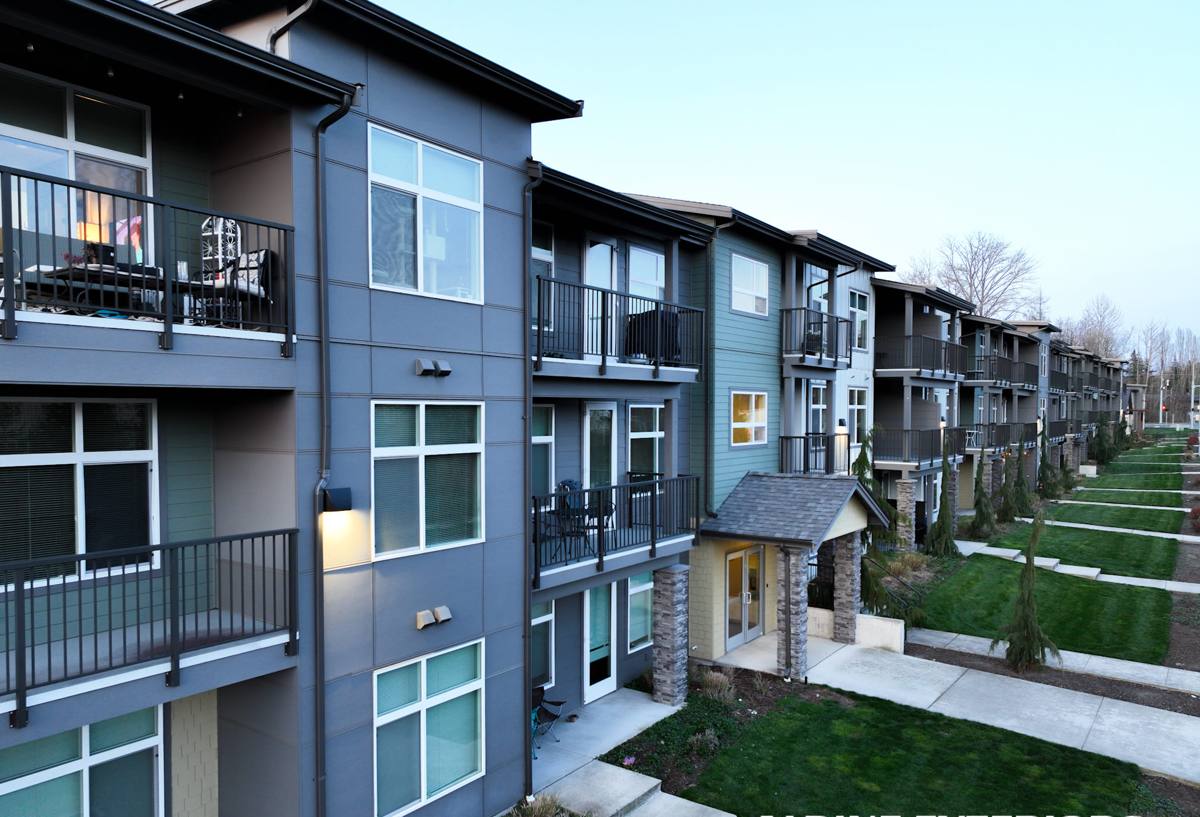
How Local Weather Actually Wears Down a Window
It's worth being specific about what's happening physically, because it explains almost every decision that goes into a correct replacement.
Driving Rain and Wind-Driven Moisture
Whatcom County doesn't just get rain — it gets rain pushed sideways by wind off the water. That means moisture is being forced against and around window openings, not just falling on them. A window and flashing detail that would be fine in a drier, calmer climate can still leak here if the water management isn't built for wind-driven exposure.
Salt Air and Metal Components
Marine air carries salt content that accelerates corrosion on hardware, fasteners, and unprotected metal flashing. Over years, this can pit or seize window locks and rollers, and it will eat through cheap or exposed metal faster than most homeowners expect.
Moss, Algae, and Prolonged Dampness
Long moss season means surfaces around window openings — trim, sills, and siding — stay damp longer between dry spells. That prolonged dampness is what actually rots wood and delaminates poor-quality composite trim, not the rain event itself. Moss and algae growth on sills and horizontal surfaces also traps moisture against the material instead of letting it shed.
Temperature Swings and Condensation
Whatcom County winters bring cold, damp air against warm interior air, which is a recipe for condensation on older or poorly sealed windows. Persistent interior condensation is often the first visible sign that a window's seal or frame has failed, well before any leak is visible from outside.
Signs an Everson Home's Windows Need Replacing
Not every window problem means full replacement — sometimes it's a caulking or hardware repair. But these signs usually point to the window itself, not just maintenance:
- Fogging or a permanent haze between the panes of a double-pane window (the seal has failed)
- Soft, spongy, or visibly rotted wood at the sill or frame
- Windows that are difficult to open, close, or lock, especially after damp weather
- Visible daylight or a noticeable draft around the frame when closed
- Paint or finish that's peeling or bubbling specifically around the window opening
- A musty smell or soft drywall near the window that suggests water intrusion behind the trim
- Noticeably higher heating bills with no other explanation
If you're seeing more than one or two of these, it's worth having the windows and the surrounding wall assembly looked at together — moisture problems around a window rarely stay contained to the window itself.
What a Correct Window Replacement Actually Involves
A window replacement is not just picking a product and screwing it into the existing hole. In a climate like ours, the installation detail matters as much as the window itself, sometimes more.
Removing and Inspecting the Opening
Once the old window is out, the opening should be inspected for hidden rot, water staining, or compromised sheathing before anything new goes in. Installing a new window over a damaged opening just seals the problem inside the wall.
Flashing and Water Management
Proper flashing directs any water that gets past the window's exterior seal back out, rather than letting it pool at the sill or migrate into the wall cavity. Given how much wind-driven rain this area sees, this step is not optional or cosmetic — it's the difference between a window that's dry in ten years and one that's rotting behind the trim in three.
Air Sealing and Insulation
The gap between the window frame and the rough opening needs to be sealed and insulated correctly — not stuffed with excess spray foam, which can bow the frame, and not left with gaps that let air and moisture through.
Exterior Trim and Finish
Trim and caulking need to be finished in a way that sheds water rather than trapping it, especially on any horizontal surfaces where moss and standing moisture are most likely to collect over a Whatcom County winter.
Choosing the Right Window Material for This Climate
Every window material has real trade-offs. Our standard is to be upfront about what each option needs from a homeowner over time, rather than oversell one product line.
| Material | Moisture Performance | Maintenance | Best For |
|---|---|---|---|
| Vinyl | Won't rot; performs well in wet, salt-influenced air | Low — occasional cleaning | Most Everson homes prioritizing long-term, low-upkeep performance |
| Fiberglass | Very stable in temperature swings and moisture; resists warping | Low | Homeowners wanting a rigid frame with minimal movement over time |
| Wood | Attractive but vulnerable to rot without diligent upkeep | High — regular painting/sealing required | Homeowners committed to ongoing maintenance for a specific look |
| Wood-Clad | Exterior clad protects wood from direct weather, but sensitive to installation quality | Moderate | Homeowners wanting wood interior with better exterior protection |
We install a range of these depending on the home and the homeowner's priorities. We're honest when a product isn't a good fit for a given exposure — a west-facing wall that takes the brunt of driving rain, for example, is a tough spot for a high-maintenance wood exterior, and we'll say so rather than let a callback happen down the road.
Our Window Replacement Process
- On-site assessment: We look at existing windows, the surrounding wall condition, and any moisture history before recommending anything.
- Straightforward quote: You get a clear breakdown of window units, labor, and any additional work needed if we find hidden damage.
- Scheduling around weather: Given our rain patterns, we plan install timing to minimize how long an opening is exposed.
- Removal and inspection: Old windows come out, and we check the opening before installing anything new.
- Correct installation: Flashing, air sealing, and trim work are done to shed water, not just look finished.
- Final walkthrough: We check operation, sealing, and finish work with you before calling the job done.
What Affects the Cost of a Window Replacement
Costs vary by project, but the main factors homeowners should expect to weigh are consistent from job to job:
| Factor | Why It Matters |
|---|---|
| Window count and size | More or larger openings mean more material and labor |
| Material choice | Vinyl, fiberglass, and wood carry different upfront costs and long-term upkeep |
| Hidden damage | Rotted sheathing or framing found during removal adds repair work before install |
| Access and home layout | Second-story or hard-to-reach windows take more time and equipment |
| Full-frame vs. insert replacement | Full-frame replacement (needed when the existing frame is damaged) costs more than an insert into a sound frame |
We'll walk through which of these apply to your home during the assessment, so the quote reflects your actual project rather than a generic estimate.
Why It Matters to Hire a Crew That Already Works in Everson
Window replacement done wrong doesn't usually fail immediately — it fails two, three, or five winters later, after enough wind-driven rain and damp moss season have found the weak spot. That's a hard thing to catch on a quick inspection, and it's exactly why local, hands-on experience with this specific climate matters more than it would in a milder or drier region.
Working regularly in Whatcom County, including Everson, means we've seen what actually holds up here and what doesn't — not in theory, but on real homes exposed to real Pacific Northwest winters. That experience shapes how we flash an opening, what we recommend for a given exposure, and where we won't cut a corner even if it's faster.
Keeping New Windows Performing Long-Term
A correct installation does most of the work, but a little homeowner upkeep extends the life of any window in this climate:
- Clean debris and moss out of window tracks and sills periodically, especially heading into fall
- Check exterior caulking annually for cracking or separation
- Keep gutters and downspouts clear so water isn't overflowing near window openings
- Address any new condensation or operational stiffness early, rather than waiting for it to worsen
If you're weighing whether it's time to replace windows on your Everson home, we're happy to take a look and give you a straight answer — including telling you if repair makes more sense than replacement. Reach out for a free, no-pressure estimate using the form below.