 Lynden Exterior
 Siding Repair Built for Everson's Climate
Everson homes sit in a part of Whatcom County where weather works on a house year-round. Marine air off the Puget Sound region keeps humidity high, driving rain pushes moisture sideways into wall assemblies, and the long, gray moss season means organic growth gets a head start on any siding that isn't shedding water the way it should. None of that is unusual for this corner of Washington — but it does mean siding repair here has to account for more than a cracked board or a loose panel. It has to account for what happens behind the siding, not just what you see on the surface.
We work on homes throughout Lynden and the surrounding Whatcom County communities, including Everson, and we see the same failure patterns repeat house after house. Understanding those patterns is the difference between a repair that lasts and one that's patched again in two years.
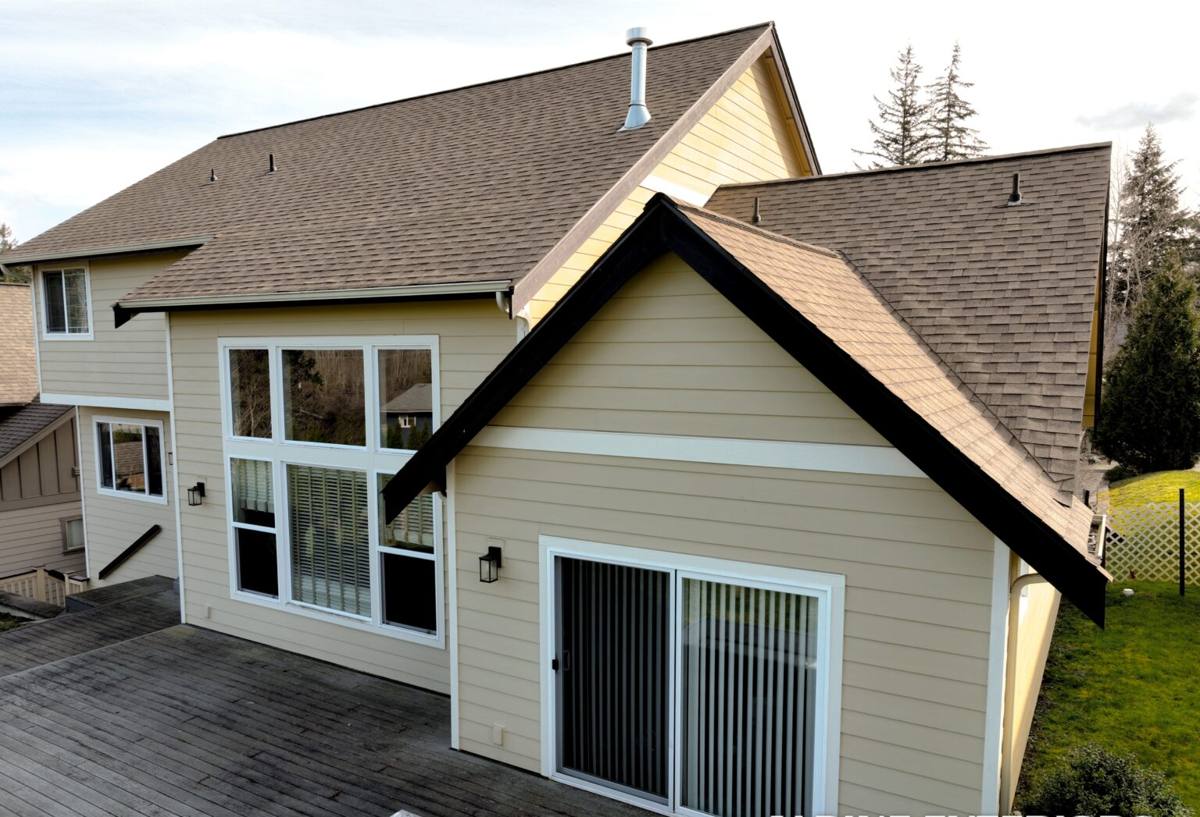
Why Siding Fails Faster Here Than in Drier Climates
In a dry climate, siding damage is mostly about UV and impact. In Whatcom County, moisture is the real enemy. Everson's setting near the Nooksack River valley means fog and damp air linger longer in the mornings, and winter storms bring sustained, wind-driven rain rather than short bursts. That combination creates three specific problems for siding:
- Prolonged wetting cycles — siding and the wood behind it stay damp longer between dry spells, giving rot and mold more time to establish.
- Wind-driven rain intrusion — rain pushed sideways finds gaps at seams, corners, and penetrations that would stay dry in calmer weather.
- Moss and algae growth — shaded, north-facing, and tree-covered walls stay damp enough for moss to take hold, which traps additional moisture against the siding surface.
Any repair that doesn't address the underlying moisture path is a temporary fix. That's true whether the original siding is vinyl, LP SmartSide, cedar, or fiber cement.
Signs an Everson Home Needs Siding Repair
Homeowners often wait until damage is visible from the street, but the earliest signs are usually smaller and easier to miss. Walk your exterior and look for:
- Soft or spongy spots when you press on siding, especially near the bottom courses
- Visible gaps, buckling, or warping at seams and panel joints
- Peeling or bubbling paint, which often points to moisture trapped underneath
- Dark streaking or green-black growth, particularly on shaded or north-facing walls
- Cracked or chipped panels near corners, window trim, or where siding meets the foundation
- Any siding that feels cool and damp to the touch during a dry stretch of weather
- Interior signs — musty smells, discolored drywall, or peeling interior paint on exterior walls
Any one of these is worth a closer look. Several together usually mean water has already found its way behind the cladding.
What a Correct Siding Repair Actually Involves
It starts behind the siding, not on top of it
A repair that only replaces the damaged board without checking the water-resistive barrier, flashing, and sheathing underneath is addressing the symptom, not the cause. Before we replace anything, we pull back enough surrounding material to see what caused the failure — a missing kick-out flashing, a failed seam seal, a fastener that backed out, or house wrap that was never properly lapped.
Matching matters more than people expect
Siding repair on an older wall means matching profile, reveal, and color as closely as possible so the repair doesn't stand out. On fiber cement in particular, panel thickness and plank width vary between manufacturers and product generations, so we source materials that match the existing installation rather than forcing in whatever is on hand.
Fastening and sealing to spec
Fiber cement siding has specific fastening requirements — nail placement, penetration depth, and clearances at butt joints all affect how the repaired section performs over time. Sealant is used at the right joints, not everywhere, since over-sealing can trap moisture rather than shed it.
Common Failure Points We See on Everson Homes
| Location | Why It Fails |
|---|---|
| Lower siding courses near grade | Splashback and slower drying keep this zone damp longest |
| North-facing and shaded walls | Less sun exposure means moss and algae establish and spread |
| Corners and trim joints | Seams here are common entry points for wind-driven rain |
| Around windows and doors | Failed or missing flashing lets water track behind the siding |
| Under roof-wall intersections | Missing or undersized kick-out flashing directs roof runoff into the wall instead of the gutter |
Recognizing these patterns lets us inspect efficiently and catch problems before they spread to adjacent sections.
Repair or Replace? How We Help You Decide
Not every damaged section needs a full re-side, but repeated repairs on an aging installation are a signal worth paying attention to. We walk homeowners through the trade-offs honestly rather than defaulting to the bigger job.
| Factor | Repair Usually Makes Sense | Replacement Worth Considering |
|---|---|---|
| Extent of damage | Isolated to one or two wall sections | Recurring failures across multiple walls |
| Age of siding | Under 15-20 years, sound elsewhere | Original material near or past its service life |
| Underlying structure | Sheathing and framing are dry and solid | Rot found in sheathing or framing during inspection |
| Material type | Fiber cement, good remaining condition | Cedar, LP SmartSide, or vinyl showing widespread wear |
| Repair history | First repair in this area of the home | Same section repaired more than once already |
When repair is the right call, we do the repair. We don't upsell a full replacement a home doesn't need — but we also won't patch over a moisture problem that's going to resurface next winter.
Our Siding Repair Process
- On-site inspection — we examine the visible damage and check adjacent areas, trim, and flashing for related issues.
- Moisture assessment — where damage suggests water intrusion, we check the sheathing and framing behind the siding before quoting the repair.
- Material matching — we source replacement material that matches the existing siding's profile, reveal, and finish as closely as possible.
- Root-cause correction — any failed flashing, sealant, or drainage issue that caused the damage gets corrected, not just covered.
- Installation to manufacturer spec — proper fastening, clearances, and sealing so the repair performs the same as the surrounding siding.
- Final walk-through — we show you what we found and what we did about it, in plain terms.
Why It Matters That We Already Work in Everson and Whatcom County
Siding repair isn't a generic task you can perform the same way in every climate. A crew that mostly works drier inland regions may not think twice about a moss-covered north wall or a kick-out flashing gap — because in their climate, those issues rarely cause real damage. In Whatcom County, they do. Working regularly in Lynden, Everson, and the surrounding area means we've seen how local weather actually behaves against a wall over multiple seasons, not just on the day of the estimate.
That local experience shapes how we diagnose a repair: where we expect to find hidden moisture, which details tend to have been skipped in older installations, and what actually holds up here long-term.
Why We Repair — and Install — James Hardie Fiber Cement Only
Our company installs exclusively James Hardie fiber cement siding, and that standard shapes how we approach repairs too. When we're patching into an existing Hardie installation, the material is non-combustible, dimensionally stable, and backed by a factory ColorPlus finish that resists the fading and touch-up mismatch that plague field-painted repairs. When a home has cedar, LP SmartSide, or vinyl siding in need of repair, we'll still do honest work on it — but we'll tell you plainly if repeated repairs are a sign that a future re-side with Hardie's climate-engineered HZ5 product line would serve the home better in this environment. We're not going to pretend every product performs the same way against Pacific Northwest rain and moss, because it doesn't.
Keeping Repaired Siding Looking Right
Once a repair is complete, a little seasonal upkeep keeps it that way:
- Rinse siding annually, focusing on shaded and north-facing walls where moss and algae build up fastest
- Keep gutters clear so roof runoff doesn't overshoot onto wall sections below
- Trim back vegetation that keeps siding shaded and damp
- Check caulking at trim and penetrations each fall, before the wet season sets in
- Have any new soft spots or discoloration inspected promptly rather than waiting
If you're noticing damage, discoloration, or recurring moisture issues on your Everson home's siding, we're happy to take a look and give you a straight answer about what it needs. Reach out for a free, no-pressure estimate — the form below only takes a minute.