 Lynden Exterior
 Laurel's Exterior Climate: What Homes Are Really Up Against
Laurel sits in the kind of Whatcom County weather pattern that doesn't get much sympathy from outsiders but wears hard on a house year after year. Moist air moves inland off the Salish Sea and the Strait of Georgia with real regularity here, and it brings a fine salt content with it that settles on siding, trim, and metal fixtures long before most homeowners notice. Add driving, wind-blown rain that gets pushed sideways into wall assemblies rather than simply falling straight down, and you have a climate that punishes anything less than a properly detailed exterior.
Then there's moss. Whatcom County's moss season isn't a two-week nuisance — it's closer to eight or nine months of the year when temperatures and moisture stay in that narrow band moss loves. Roofs, north-facing siding, deck boards, and anything shaded by trees or a neighboring structure becomes a moss magnet if it isn't built and maintained to shed water and dry out between rain events.
None of this is unique to any one address in Laurel. It's the baseline every exterior in this part of the county has to survive, which is why the materials and installation details matter more here than they would in a drier region.
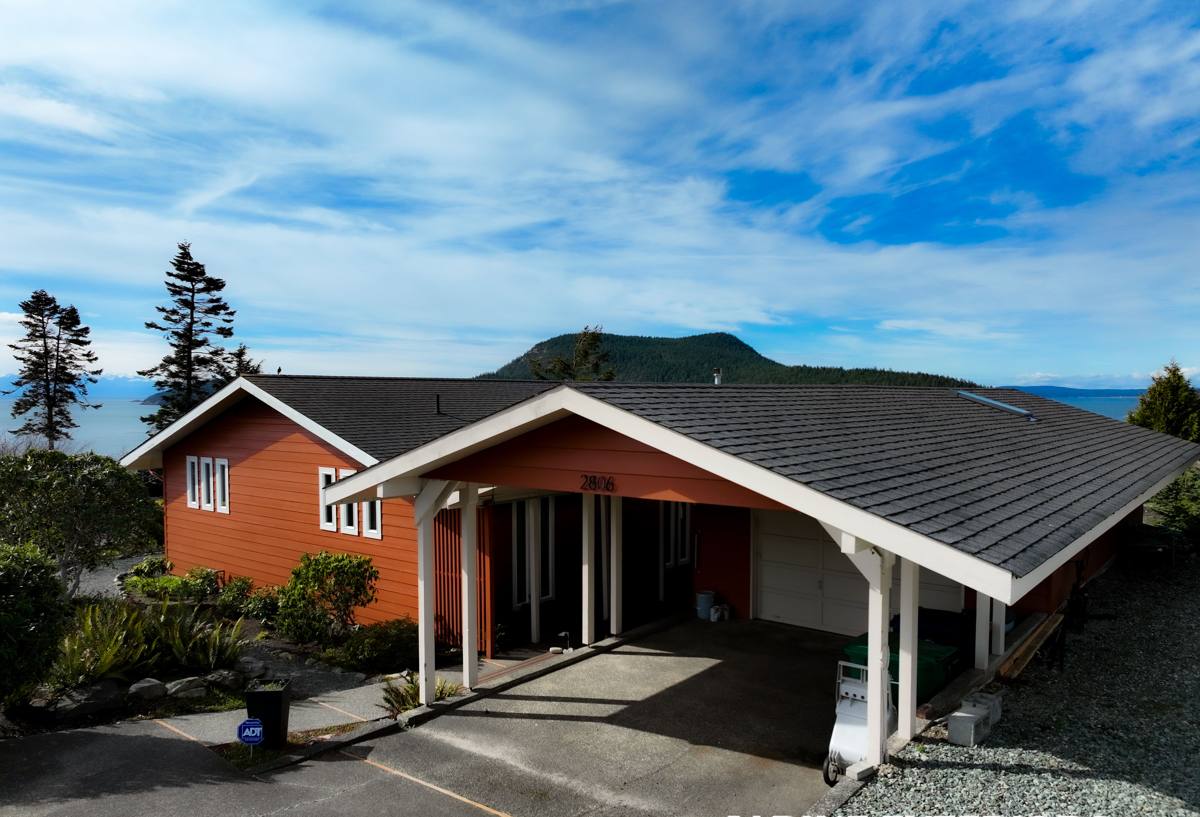
Siding That Actually Holds Up Here
Why We Only Install James Hardie Fiber Cement
Lynden Exterior Co installs one siding system: James Hardie fiber cement. That's not a marketing preference — it's a standard we hold to because of what we've seen driving rain, salt-laden air, and constant damp do to lesser-performing materials over a Whatcom County lifespan. Fiber cement is dimensionally stable, meaning it doesn't swell, cup, or warp the way wood-based products can when they take on repeated moisture. It's also non-combustible, which matters as regional wildfire risk becomes a bigger part of insurance conversations even out here in the wetter part of the state.
Hardie's ColorPlus factory finish is baked on under controlled conditions rather than field-applied, which gives it better adhesion and fade resistance than a job-site paint job — a real advantage when a home is going to sit under near-constant humidity for most of the year. And Hardie's HZ5 product line is specifically engineered for cold, wet climates like ours, which is a level of climate-matching most competing products simply don't offer.
What About Vinyl, LP SmartSide, or Cedar?
We get asked this regularly, and homeowners deserve an honest answer, not a sales pitch. Vinyl siding is inexpensive and low-maintenance in the sense that it doesn't need painting, but it's a petroleum-based product that can warp under heat, crack in cold snaps, and it simply doesn't hold up structurally the way fiber cement does over decades. LP SmartSide is a wood-strand product with a resin binder — it performs reasonably well when installation and caulking are perfect and stay perfect, but any breach in that seal invites moisture into the substrate, and a climate with this much sustained dampness doesn't give a product many chances to recover from a bad seam. Cedar and primed spruce are beautiful, and we understand the appeal, but they demand a maintenance schedule — refinishing, caulking, moisture monitoring — that most homeowners underestimate until they're several years in and behind on it.
We're not telling anyone these products are junk. They're built for a purpose and sold at a price point that reflects trade-offs. We've simply chosen not to install products where the long-term maintenance burden or moisture sensitivity works against what this climate demands, and we'd rather stand behind one system we trust completely than offer several we'd have reservations about.
| Siding Material | Moisture Behavior in Wet Climates | Maintenance Demand | Typical Longevity |
|---|---|---|---|
| James Hardie Fiber Cement | Dimensionally stable, moisture-resistant core | Low — factory finish, occasional wash | Decades, with strong transferable warranty |
| Vinyl | Can warp/crack with temperature swings | Low, but limited repair options | Moderate, fades and becomes brittle over time |
| LP SmartSide | Vulnerable if seams/caulking fail | Moderate — seam maintenance is critical | Moderate, installation-dependent |
| Cedar / Primed Spruce | Absorbs moisture, needs to breathe and dry | High — refinishing, caulking cycles | Variable, heavily maintenance-dependent |
Roofing Built for Moss Season
A roof in Laurel isn't just fighting rain volume — it's fighting the fact that surfaces here rarely get a long enough dry stretch to fully shed moisture between storms. That's what lets moss and algae establish themselves on shaded slopes and north-facing planes. Proper roofing work in this area means getting ventilation, underlayment, and flashing details right so water and trapped humidity have somewhere to go, and it means choosing roofing materials and installation practices that don't give moss an easy foothold in the first place.
We also pay close attention to valleys, penetrations, and gutter tie-ins, since that's where a huge share of roof failures in this region actually start — not from a section of shingles wearing out, but from a poorly sealed detail letting water in behind the roofing system.
Windows That Keep Driving Rain Out
Wind-driven rain doesn't just test a window's glass — it tests the flashing, the sealant, and the way the window is integrated into the wall assembly around it. A window that looks fine from the curb can still be letting moisture track down behind the siding if the install wasn't detailed correctly. When we replace windows in Laurel, we treat the flashing and water management around the opening as seriously as the window unit itself, because in this climate, that's usually where problems actually originate.
Older single-pane or poorly sealed windows also tend to run colder surface temperatures, which contributes to condensation and, over time, moisture damage to surrounding trim and framing — another slow-moving issue this climate accelerates if it isn't addressed.
Decks That Survive a Wet Winter
Decks take a different kind of punishment: standing water, freeze-thaw cycles, and constant exposure to the same damp air that drives moss growth everywhere else on the property. Proper spacing between boards, correct fastening, and ledger flashing that actually sheds water away from the house are the details that separate a deck that lasts from one that starts showing rot and soft spots within a few seasons. We build and repair decks with an eye toward drainage and airflow underneath the structure, not just what the surface looks like on day one.
Why a Local Crew Matters in Laurel
Whatcom County's microclimates vary more than people expect across a fairly small area — proximity to the water, tree cover, elevation, and wind exposure all shift how hard a given property gets hit by moisture and salt air. A crew that works this county regularly develops a feel for which details need extra attention on a given lot, rather than applying a one-size-fits-all approach pulled from a different region's playbook. Local knowledge also means faster response for warranty work, storm damage, or follow-up questions — we're not driving in from out of the area to look at a job we did months ago.
We also know the permitting and inspection expectations in this part of the county, which keeps projects moving instead of stalling on avoidable paperwork issues.
What to Expect When You Work With Us
Every exterior project starts with an honest look at what's actually happening on the house — not just what's visible from the driveway. That means checking for moisture intrusion, moss buildup, failing caulk lines, and any signs that a previous installation wasn't detailed correctly for this climate. From there we walk through material options, realistic timelines, and what the work will actually involve before anything is scheduled.
- Ask whether the contractor is licensed and insured in Washington State, and confirm it directly rather than taking it on faith
- Ask what siding, roofing, or window products they install and why — and whether they'll explain trade-offs, not just upsell
- Ask how they handle moisture and flashing details specifically, since that's where most Whatcom County exterior failures originate
- Ask for a clear, written scope of work before any deposit changes hands
- Ask how warranty claims are handled and who you'd actually call if an issue shows up years later
If your Laurel home is showing moss buildup, water staining, soft trim, or siding that's clearly past its best years, it's worth getting a straight assessment before those issues get more expensive to fix. We're happy to walk the property, explain what we see, and put together a free, no-pressure estimate — no obligation to move forward, just an honest read on where things stand.