 Lynden Exterior
 Roofs in Everson Take a Different Kind of Beating
Everson sits along the Nooksack River in Whatcom County, close enough to the water and the coastal weather patterns to catch the same driving rain and damp, salt-tinged air that works over roofs throughout this part of Washington. A roof here isn't dealing with one hard season and then a break — it's dealing with nine months of moisture, low winter sun angles that never quite dry out the north-facing slopes, and a moss season that can run from October through May if nothing is done about it. None of that is dramatic on its own. It's the accumulation that causes problems: a little bit of trapped moisture, repeated freeze-thaw cycling, and organic growth working into laps and fasteners year after year.
Roof repair in this climate is less about patching a single obvious hole and more about catching the small, compounding issues before they become a full tear-off. That's the approach we take on every Everson roof repair call.
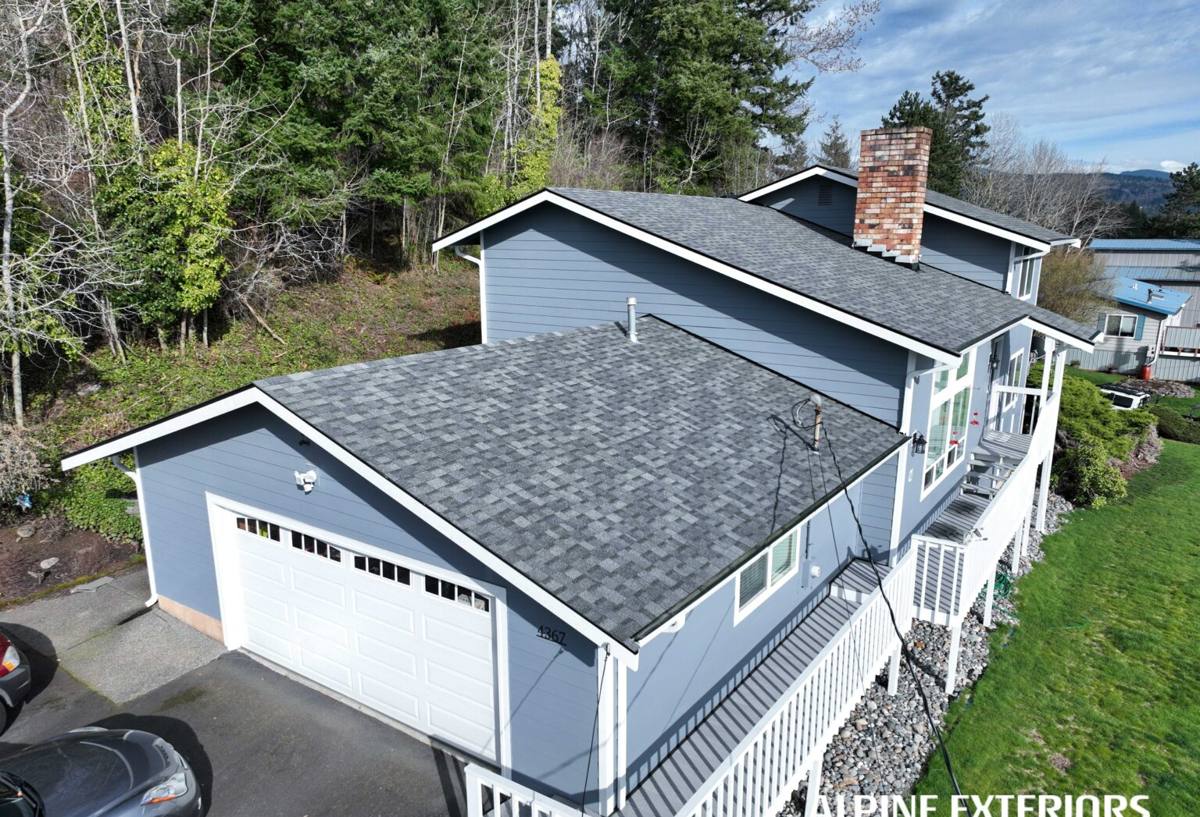
What Everson Homes Actually Need From a Roof Repair
Most of the repair calls we get in this area fall into a handful of categories, and they're almost always climate-driven rather than random:
- Moss and lichen growth lifting shingle edges and holding moisture against the roof deck
- Flashing failures around chimneys, skylights, and roof-to-wall intersections where driving rain gets pushed sideways under normal laps
- Granule loss and shingle brittleness from repeated wet-dry cycling, especially on older three-tab roofs
- Clogged valleys and gutters that back water up under the roofing material during heavy storms
- Soft or discolored decking found only after a leak has already been running for a while
The common thread is water finding a way in slowly, over time, rather than all at once. That means a repair done right has to address the moisture pathway, not just the visible symptom.
Why "Just Reseal It" Isn't Always the Fix
A lot of roof problems in this climate get temporarily masked with caulk or roof cement by well-meaning DIY fixes or a quick patch job. That can buy a season, but it doesn't address why water was finding that spot in the first place — usually a flashing detail, a lapping error, or trapped moisture from moss. We'd rather tell a homeowner the honest scope of a repair than sell a five-minute fix that fails again during the next atmospheric river event.
What a Correct Roof Repair Involves
Diagnosis Before Anything Else
Every repair starts with figuring out where water is actually entering, which is not always where it shows up inside the house. Water can travel along rafters or decking for several feet before it drips through a ceiling, so an accurate repair means tracing the path back to the source on the roof itself — not just patching the spot above the stain.
Flashing and Transition Points
Chimneys, skylights, dormers, and any place where two roof planes meet are the most common failure points in a driving-rain climate. Step flashing, counter-flashing, and valley metal all need to be lapped correctly and tied into the underlayment properly. A flashing repair done wrong will often leak worse than before, because it changes how water sheds off the roof.
Underlayment and Decking
If moisture has been getting under the roofing material for any length of time, the underlayment and sometimes the decking underneath it need to be checked. Soft, delaminating, or stained decking has to be replaced — patching shingles over compromised decking doesn't hold up and won't pass a reasonable inspection down the road.
Shingle, Shake, or Metal Matching
Repairs need to match the existing roofing material as closely as possible, both for appearance and for how the repair sheds water alongside the surrounding field. Older roofs sometimes have discontinued shingle profiles or weathered colors that won't match exactly — we'll tell you upfront when that's the case rather than promising an invisible repair that isn't realistic.
Repair or Replace? An Honest Comparison
Not every roof problem in Everson calls for a full replacement, and not every roof is a good candidate for another round of patching. Here's generally how we walk homeowners through that decision:
| Situation | Repair Usually Makes Sense | Replacement Usually Makes Sense |
|---|---|---|
| Age of roofing material | Under 15-18 years, isolated issue | Approaching or past manufacturer's expected service life |
| Extent of moss/moisture damage | Localized to one section or detail | Widespread across multiple slopes |
| Decking condition | Solid, dry, no soft spots found | Multiple areas of soft or delaminated decking |
| Flashing condition | One or two failed details | Flashing systemically undersized or missing throughout |
| Granule loss / shingle brittleness | Confined to a small area | Consistent across the whole roof |
We'll always give you the repair option first if it's a sound long-term fix. If a repair would just be a temporary patch on a roof that's structurally past its useful life, we'll say so plainly and explain why, rather than stringing out repairs on a roof that needs to come off.
Our Repair Process
- On-roof inspection — we get up on the roof itself, not just a ground-level look, to check flashing, valleys, moss coverage, and decking condition where accessible.
- Interior check — if there's an active leak, we look at attic framing and decking from below where possible to confirm the water path.
- Written scope — you get a clear explanation of what's actually wrong, what needs to be done, and what it will cost, before any work starts.
- Repair work — removal of damaged material, correction of the underlying cause (flashing, decking, underlayment), and reinstallation matched to the existing roof.
- Cleanup and moss treatment — debris and moss growth removed from the repair area and, where it makes sense, the rest of the roof so the same failure doesn't recur nearby.
- Final walk-through — we show you what was found and what was done before we consider the job finished.
Moss, Debris, and Preventive Maintenance
Because moss season runs so long in this region, a repair that ignores ongoing moss growth is only a partial fix. Moss holds moisture against the roofing material long after rain has stopped, which is exactly the condition that causes granule loss, wood rot, and lifted shingle edges in the first place. Part of doing a repair correctly is leaving the roof in a condition where moss and debris won't immediately undo the work.
Things we check or recommend as part of most Everson repair visits:
- Overhanging branches trimmed back to reduce shade and organic debris on the roof
- Gutters and valleys cleared so water has a clean path off the roof during heavy rain
- Moss physically removed rather than just chemically treated, since dead moss still holds moisture
- Zinc or copper control strips considered on roofs with a history of heavy moss regrowth
- Attic ventilation checked, since poor airflow keeps the underside of the decking damp and speeds up deterioration
Materials and Honest Trade-Offs
We repair asphalt composition shingles, wood shake and shingle roofs, and metal roofing, and each has different maintenance realities in this climate:
| Roofing Type | What to Expect for Repairs Here |
|---|---|
| Asphalt composition | Most common, most straightforward to match and patch; granule loss and moss lifting are the typical issues |
| Wood shake/shingle | Higher maintenance burden in a wet climate — moss and moisture retention are more aggressive, and individual shakes need periodic replacement |
| Metal roofing | Sheds moss and moisture well overall, but fastener and flashing seams need careful attention since a failure there is harder to disguise |
We'll explain the maintenance trade-offs of whatever material is already on your roof rather than pushing a different product — the goal is a repair that holds up on the roof you have, not an upsell.
Why It Matters Who You Hire for This
Roof repair is one of those trades where a mediocre job can look fine for a year and then fail badly during the next heavy storm. Because the failure modes in Whatcom County are so tied to moisture and moss rather than sudden wind or hail damage, a crew that hasn't worked this specific climate can miss the underlying cause and fix only the symptom. A crew that already works roofs around Lynden and Everson knows what a properly lapped flashing detail needs to withstand here, how aggressively moss regrows in this microclimate, and which decking issues are likely versus unusual for the age and style of homes common in this area.
That local familiarity shows up in small but important ways: knowing which valleys tend to back up in a heavy Nooksack Valley rain event, recognizing early moss patterns before they become structural problems, and giving realistic timelines that account for the wet-weather windows we actually have to work in.
What Homeowners Should Ask Before Hiring for a Roof Repair
A few honest questions go a long way toward avoiding a repair that fails again in a year:
- Will you get on the roof itself, or is the estimate based on a ground-level look or photos alone?
- What specifically caused this leak, and how does the proposed repair address that cause?
- Is the decking sound, and how was that confirmed?
- What's the plan for moss and debris in the repair area going forward?
- Is the scope and price in writing before work starts?
If you're dealing with a leak, moss buildup, or flashing you're not sure about on a home in Everson or the surrounding Lynden area, we're happy to take a look and give you a straightforward, no-pressure estimate — just fill out the form below.