 Lynden Exterior
 Building Decks That Actually Hold Up in Everson
Everson homeowners ask us for a lot of the same things: more usable outdoor space, a place to sit with morning coffee that doesn't feel damp half the year, and a deck that doesn't need to be babied every spring. That last one matters more here than it does in drier parts of the country. Whatcom County sits in a marine-influenced climate belt, and Everson gets its share of driving rain, long stretches of overcast humidity, and a moss season that can run from late fall through early spring. A deck built without those conditions in mind will show it within a few years, whether that's soft spots underfoot, black streaking on the boards, or fasteners that start weeping rust down the face of the decking.
A correctly built deck in this area isn't a different product than a deck built somewhere dry — it's the same structure with different priorities baked into every decision, from the footings up through the final board. That's what this page walks through.
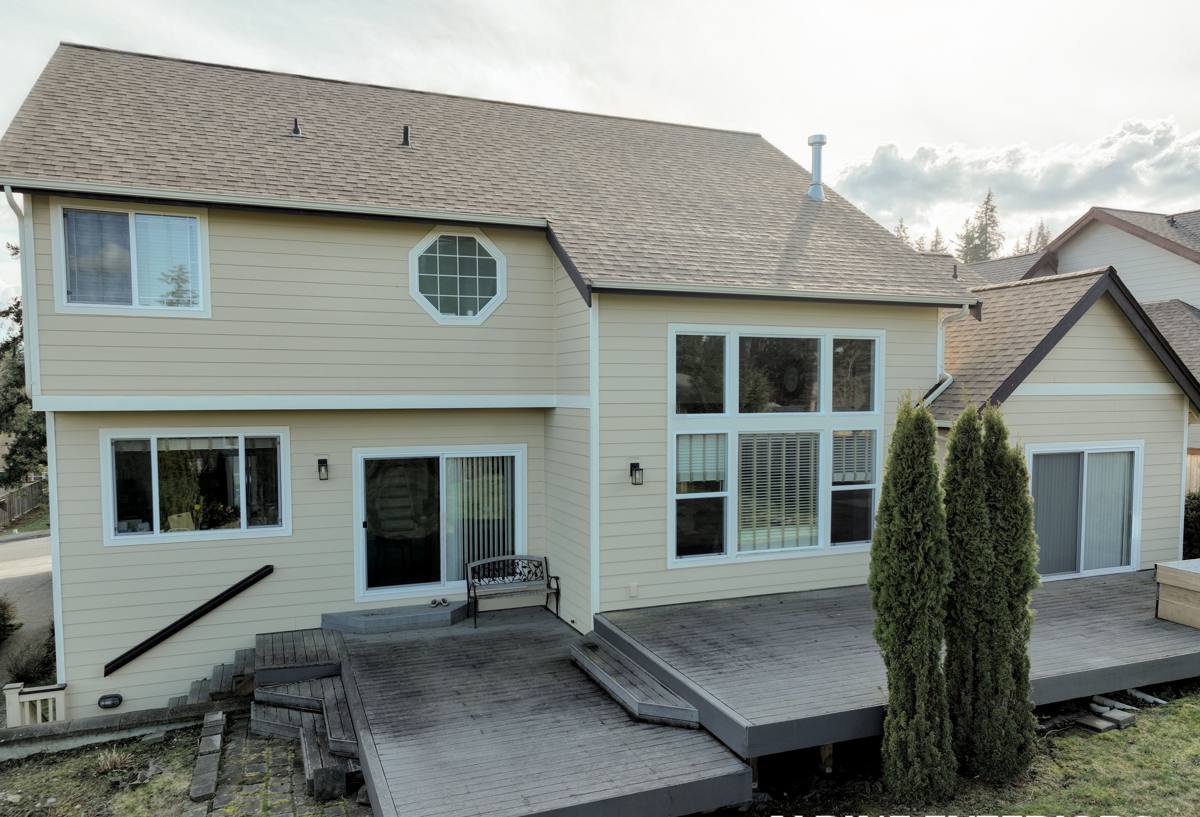
What Everson's Climate Actually Does to a Deck
Moisture That Doesn't Let Up
The problem in this part of Washington isn't usually a single hard freeze or a single storm — it's the accumulation. Weeks of damp air, low sun angles that leave shaded sections of a deck wet for days at a time, and rain that comes in sideways under railings and against fascia boards. Wood and wood-composite decking that isn't detailed correctly holds that moisture at the joints, under fasteners, and where boards butt up against the house.
Moss and Organic Growth
Moss doesn't just grow on roofs here. Any deck surface that stays shaded and damp — under trees, on the north side of a house, or in a low spot with poor drainage — will start growing moss and algae if it isn't detailed to shed water and dry out between rains. Beyond looking bad, moss holds moisture against the board surface and makes decking slick and genuinely unsafe underfoot.
Salt-Influenced Air
Whatcom County's proximity to Puget Sound and the Strait of Georgia means metal hardware, fasteners, and railing components are exposed to more corrosive air than they would be further inland in the country. Cheap or mismatched fasteners corrode faster here, and once a fastener starts rusting, it stains the wood around it and weakens its grip over time.
What a Correctly Built Deck Looks Like Here
None of this requires exotic materials. It requires getting the ordinary details right, consistently, in a climate that doesn't forgive shortcuts.
- Footings sized and set below frost depth, with proper drainage around them so standing water doesn't undermine the post base over time
- Ledger board flashing that actually sheds water away from the house rim joist, not just a bead of caulk behind the ledger
- Joist tape or a comparable moisture barrier on top of every joist, so the top of the framing isn't sitting in standing water under the decking
- Proper board spacing for drainage and airflow — tight enough to look clean, wide enough that the deck actually dries between rain events
- Stainless or coated fasteners rated for this climate, not standard hardware that will streak and corrode within a few seasons
- Railing posts through-bolted into the framing, not just lag-screwed into a rim joist that can eventually soften
- Grading and drainage under the deck itself so water has somewhere to go besides pooling against the footings
Choosing Decking Materials for This Climate
There's no single "right" decking material for every Everson home — it depends on budget, how much upkeep the homeowner wants to take on, and how the deck will be used. What matters is understanding the real trade-offs instead of picking based on looks alone.
| Material | How It Handles Local Moisture | Upkeep Involved |
|---|---|---|
| Pressure-treated lumber | Good rot resistance when properly sealed; needs the seal maintained | Annual cleaning and periodic re-staining or sealing |
| Cedar | Naturally moisture-resistant, ages to a grey patina if left unsealed | Cleaning plus refinishing every few years to hold color |
| Composite decking | Doesn't rot, but needs correct spacing and hidden fastening to avoid trapping moisture underneath | Periodic washing to keep moss and mildew from taking hold on the surface |
| PVC/capped composite | Most moisture-resistant option, sheds water well, resists staining | Occasional washing; least ongoing upkeep of the group |
We'll walk through this comparison against your actual budget and how you plan to use the space — a deck that mostly hosts a grill and a couple chairs has different priorities than one meant to handle furniture, planters, and regular gatherings.
Framing and Substructure: Where Most Deck Failures Actually Start
Homeowners tend to focus on the decking surface because that's what they see, but the framing underneath is what determines whether a deck lasts fifteen years or forty. In this climate, the substructure is where corners get cut most often, because it's invisible once the decking is installed. We build framing so it can be inspected and maintained — proper joist spacing for the decking material chosen, blocking where it's actually structural rather than cosmetic, and beam sizing that accounts for real Whatcom County snow and wind loads, not just minimum code allowances.
Post bases matter as much as the posts themselves. A post sitting directly on a wet footing, or one without a standoff base keeping the wood off standing water, is a slow-motion failure. We use post bases that elevate the wood end grain above the concrete and let water drain away instead of wicking upward into the post.
Railings, Stairs, and Hardware Details
Railings and stairs take more direct weather exposure than the deck surface itself in a lot of layouts, since they're vertical and catch driving rain that would otherwise run off a flat surface. We detail railing post connections so water can't pool at the base, and we choose baluster and cap materials that won't cup or check under repeated wet-dry cycles. Stair stringers get the same moisture-barrier treatment as the main framing, since exposed stringers are one of the first places rot shows up on decks that were built without local conditions in mind.
Fastener choice throughout the whole structure is not a place to save money. Everything from joist hangers to railing bolts should be rated for the exposure they'll actually see, factoring in the area's marine-influenced air.
Our Process for an Everson Deck Project
- On-site assessment — we look at drainage, sun exposure, existing structure (if replacing a deck), and how the space will be used
- Design and material selection — sizing, layout, and material recommendations based on your budget and maintenance preferences
- Permitting — we handle the permit process with Whatcom County or the applicable jurisdiction so the deck is built to code, including railing height and guard spacing requirements
- Site prep and footings — excavation, footing placement below frost depth, and drainage grading before any framing goes in
- Framing and moisture detailing — joist layout, flashing, joist tape, and post bases installed to the standard described above
- Decking, railing, and stairs — installed with proper spacing, fastening, and hardware for the material chosen
- Final walkthrough — we go over care and maintenance specific to the material installed, so you know what upkeep to expect and when
Maintenance That Actually Matters in This Climate
Every deck material needs some upkeep here — the differences are in how much and how often. A few habits go a long way regardless of what decking you choose:
- Sweep debris and standing leaves off the surface regularly, especially in fall — trapped organic matter is what feeds moss and mildew
- Keep gutters and downspouts near the deck clear so runoff isn't dumping directly onto the structure
- Check for soft spots, especially near the ledger board and stair stringers, once a year
- Reseal or refinish wood decking on the schedule appropriate to that product — don't wait until it's visibly failing
- Wash composite and PVC decking periodically to keep pollen, moss spores, and mildew from establishing on the surface
- Check railing post connections for movement, particularly after a hard winter
Why It Matters That We Already Work in Everson
A deck built by a crew that mostly works in a different climate will often use details that are perfectly fine somewhere drier and inadequate here — undersized flashing, standard hardware instead of corrosion-resistant fasteners, or decking spacing that looks better on day one but doesn't drain well through a Whatcom County winter. We work in Everson and the surrounding Lynden area regularly, which means we're not guessing at how a deck needs to be built for this specific combination of rain, humidity, and moss pressure — we're building to what we've already seen hold up and what we've seen fail.
That local familiarity also means a faster, more accurate estimate. We already know the kind of drainage and soil conditions common in this area, which shortens the guesswork during the assessment and design phase.
Get a Straightforward Estimate
If you're planning a new deck or replacing one that's showing its age, we're happy to come take a look and give you an honest assessment of what it would take — no pressure, no upsell. Use the form below to request a free estimate for your Everson property.