 Lynden Exterior
 Exterior Contractors Serving Bellingham Homeowners
Bellingham sits close enough to the water and the foothills that its homes take on a mix of weather challenges most inland Washington towns never have to deal with. Lynden Exterior Co is based just up the road in Lynden, and we've built our service routes around Whatcom County towns like Bellingham for years. That local footprint matters more than it might seem — it means our crews already understand how a Bellingham lot facing Bellingham Bay behaves differently than one tucked into a wooded slope near Sudden Valley or a flat stretch out toward the Guide Meridian corridor.
We handle four exterior trades for Bellingham homes: siding, roofing, windows, and decks. Rather than subcontracting each piece out to a different outfit, one crew that understands how these systems interact — how a roof's drip edge ties into siding flashing, how a deck ledger board needs to be sealed against the same moisture that attacks wall sheathing — tends to produce a tighter, longer-lasting result.
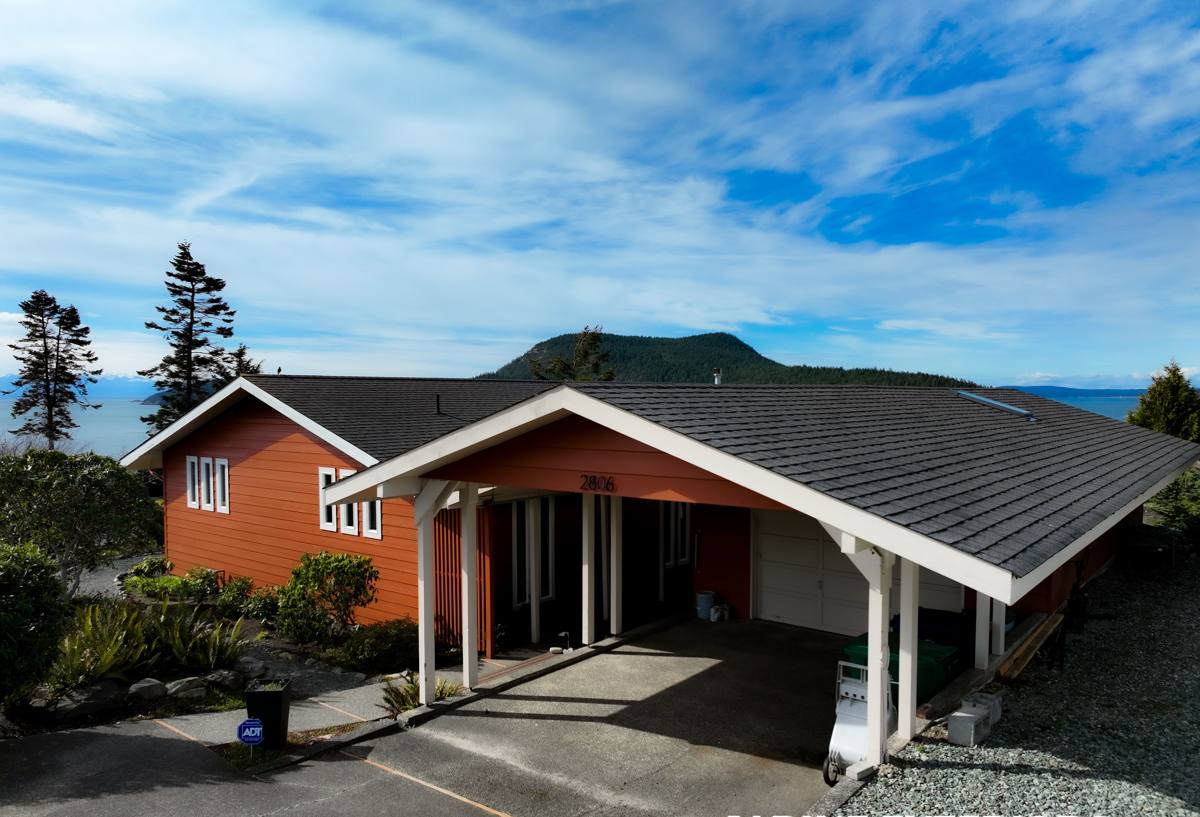
What Bellingham's Climate Does to a House
Salt Air and Coastal Exposure
Homes closer to Bellingham Bay and the surrounding shoreline deal with a low-grade but constant exposure to salt-laden air. Salt air accelerates corrosion on fasteners, flashing, and any exposed metal trim, and it speeds up the breakdown of paint films and porous siding materials. It's not dramatic — nobody's siding falls off in a season — but over ten or fifteen years, the difference between a coastal-exposed wall and an inland one is usually obvious.
Driving Rain
Whatcom County doesn't just get a lot of rain — it gets a lot of wind-driven rain, especially during fall and winter storm systems that come in off the Strait of Georgia. Driving rain doesn't fall straight down; it gets pushed sideways into wall assemblies, window frames, and any gap in flashing or caulking. A siding or window installation that would hold up fine in a drier, calmer climate can fail here if the water management details weren't done right the first time.
Long Moss Season
Between the moisture, the mild temperatures, and the tree cover common in and around Bellingham, moss and algae have a long growing season on north-facing roof slopes and shaded siding. Moss holds water against a surface far longer than open air would allow, which is exactly the condition that rots wood trim, degrades roofing granules, and stains lighter-colored siding. Homes with a lot of tree canopy — common on the wooded lots around Bellingham — see this the worst.
Siding: Why We Only Install James Hardie
Lynden Exterior Co installs James Hardie fiber cement siding exclusively. We don't install vinyl, LP SmartSide, Cemplank, Allura, or primed wood siding products like spruce or cedar lap. That's a deliberate standard, not a sales pitch, and it's worth explaining honestly rather than just asserting it.
Vinyl siding is inexpensive and low-maintenance in the sense that it doesn't need painting, but it's a thin, flexible plastic product that can crack in cold snaps, fade unevenly under UV exposure, and — critically for a place like Bellingham — it doesn't stand up well to sustained wind-driven rain at seams and corners the way a properly installed fiber cement system does. Engineered wood products like LP SmartSide use a wood-strand substrate with a resin-saturated overlay; it's a real improvement over old-school wood siding, but any wood-based product depends heavily on the factory seal and field-applied caulking staying intact, and in a climate with this much sustained moisture and moss growth, any breach in that seal is an invitation for rot to start from the inside out. Other fiber cement brands like Cemplank and Allura are chemically similar to Hardie, but we've standardized on one manufacturer so our crews install one system to one spec, with one warranty structure, rather than juggling installation quirks across brands.
James Hardie fiber cement is non-combustible, doesn't support moss and mildew growth the way wood-based products can, and holds its factory-applied ColorPlus finish far longer than field-painted alternatives — which matters in a climate where UV and salt air both work against paint. Hardie's HZ5 product line is specifically engineered for climates with freeze-thaw cycling and heavy moisture exposure, which describes Whatcom County well. The company backs it with a strong, transferable limited warranty, but the product only performs to that standard when it's installed correctly — proper clearances, correct fastening, and flashing details that actually account for driving rain rather than just vertical rainfall.
Siding Product Comparison
| Material | Moisture Behavior | Maintenance | Fit for Bellingham's Climate |
|---|---|---|---|
| Vinyl | Sheds water but seams/corners are vulnerable to driven rain | Low, but cracks and fades over time | Weak in wind-driven rain and coastal exposure |
| LP SmartSide / engineered wood | Good if seal stays intact; rot risk if breached | Moderate; needs caulk/paint upkeep | Vulnerable in long moss/moisture seasons |
| Cemplank / Allura (fiber cement) | Similar to Hardie chemically | Low | Reasonable, but we standardize on one brand for install consistency |
| James Hardie fiber cement | Engineered HZ lines for wet, coastal climates | Low; factory finish resists fading | Our standard for Bellingham and all Whatcom County work |
Roofing for Bellingham's Rain and Moss
A roof in Bellingham does more work than it would somewhere drier. Beyond just shedding water, it has to resist sustained moss growth on shaded slopes, hold up under wind gusts off the bay, and manage the granule and flashing wear that comes with near-constant moisture exposure for much of the year. When we work on a roof here, we pay particular attention to underlayment quality, proper ventilation (a poorly vented attic traps moisture and speeds up deck rot from underneath), and flashing at every penetration and valley — the spots where driving rain finds its way in first.
We also talk with homeowners honestly about moss prevention versus moss removal. Zinc or copper strips near the ridge can reduce future moss growth on north-facing slopes, but they don't undo years of existing buildup, and aggressive moss removal on an older roof can do more harm than the moss itself if it's not done carefully.
Windows: Sealing Against Driven Rain
Window failures in this climate are almost never about the glass — they're about the seal around the frame. Wind-driven rain pushes water sideways into any gap in flashing tape, sill pans, or caulking, and once water gets behind a window frame it can sit there for a long time before anyone notices a stain on the interior wall. When we install or replace windows in Bellingham, proper flashing integration with the surrounding wall assembly is not optional — it's the difference between a window that lasts decades and one that causes a hidden moisture problem within a few years.
Decks: Built for Wet Wood Conditions
Decks in Bellingham live in a tough spot: full outdoor exposure to rain, shade from mature trees that keeps surfaces damp longer, and in some yards, proximity to salt air that speeds up fastener corrosion. The ledger board connection — where the deck attaches to the house — is the single most important moisture detail on any deck, since a poorly flashed ledger is a direct path for water into the home's framing. We also pay attention to fastener selection (corrosion-resistant hardware matters more here than in a dry inland climate) and to gapping and drainage so water doesn't pool on deck boards during the long stretches of fall and winter rain.
Why a Local Crew Matters
Exterior work in Whatcom County isn't generic. A crew that mostly works dry-climate jobs and occasionally takes on a coastal Washington project doesn't have the same instinct for where water actually gets in around here. Being based in Lynden means our crews are on Bellingham job sites regularly, familiar with the microclimates across the area — from bay-facing lots to shaded, tree-covered yards — and available for warranty follow-up or a quick check without a long drive.
What to Look for When Hiring an Exterior Contractor Here
- Manufacturer training or certification on the specific siding product being installed, not just general carpentry experience
- A clear explanation of flashing and water management details, not just "we'll caulk it"
- Local references or a local physical presence, not just a truck with an out-of-area license plate
- Written warranty terms for both materials and labor, and clarity on what voids them
- Willingness to explain trade-offs between materials honestly, rather than pushing the cheapest option
- A plan for coordinating siding, roofing, window, and deck work so flashing and water paths tie together correctly
Getting Started
If your Bellingham home is dealing with moss buildup on the roof, siding that's showing its age faster than it should, drafty or stained windows, or a deck that's starting to feel soft underfoot, it's worth having a local crew take a look before small issues turn into structural ones. We offer free, no-pressure estimates for Bellingham homeowners — reach out through the form below and we'll walk the property with you and talk through what actually needs attention.