 Lynden Exterior
 Roofing Built for Everson's Weather, Not Just Any Weather
Everson sits in a part of Whatcom County where the roof over your head works harder than it does almost anywhere else in the state. Marine-influenced air moving in off the Salish Sea, long wet winters, and a growing season for moss that never really stops all add up to conditions that shorten the life of a poorly installed or poorly maintained roof. An asphalt shingle roof done right for this area isn't the same as one done right for eastern Washington or even for a drier stretch of the I-5 corridor. It needs the right materials, the right underlayment strategy, and installation details that account for wind-driven rain finding every gap a shortcut leaves behind.
This page is about one job in one area: asphalt shingle roofing for homes in and around Everson. Not a general overview of every roofing material we offer — just what actually matters if you own a home here and you're trying to decide whether your roof needs attention now, in a few years, or whether a repair will get you further before a full replacement makes sense.
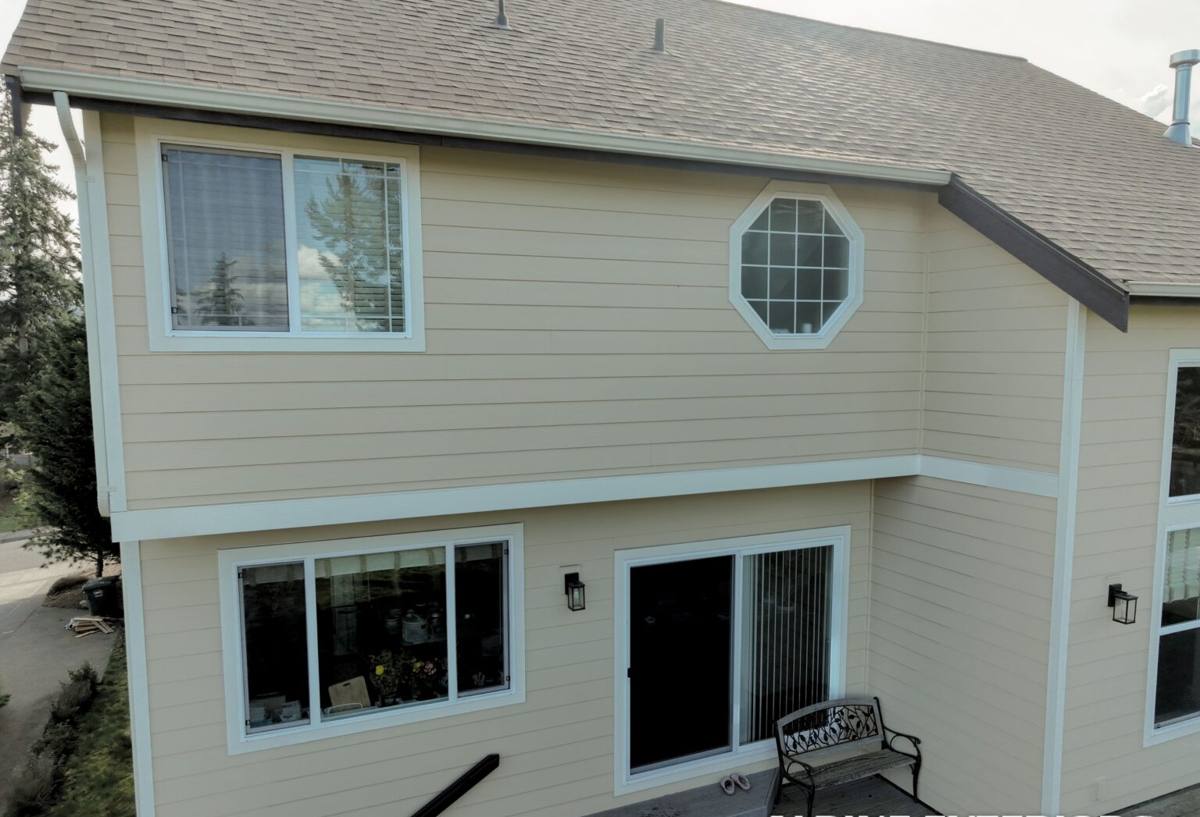
What Whatcom County Weather Does to a Shingle Roof
Moss and Sustained Moisture
The biggest long-term threat to a shingle roof in this region isn't a single storm — it's the slow, steady moisture that never fully dries out between rain events. Shaded slopes, north-facing pitches, and roofs surrounded by mature trees hold moisture longer, and that's exactly where moss and algae get a foothold. Moss isn't just cosmetic. Its root structure lifts shingle edges, holds water against the mat underneath, and accelerates granule loss. Left unchecked for a few seasons, a mossy roof can lose years of service life it should have had.
Wind-Driven Rain
Rain that falls straight down is easy for any roof to shed. Rain that comes in sideways during a windstorm is a different problem — it tests every seam, every nail line, and every piece of flashing on the roof. In this part of Whatcom County, wind-driven rain is common enough that installation details most homeowners never think about — how far up a wall the underlayment runs, how flashing is layered versus just caulked — end up being the difference between a roof that stays dry and one that develops slow leaks nobody notices until there's a stain on a ceiling.
Marine and Salt-Influenced Air
Even away from the immediate waterfront, this region's air carries a marine influence that inland parts of the state simply don't deal with. That salt-tinged, humid air is harder on exposed metal fasteners, flashing, and any roofing accessory that isn't rated for it. It's part of why we pay attention to the metal components of a roof system as carefully as we pay attention to the shingles themselves — a roof is only as durable as its weakest material.
What a Correct Asphalt Shingle Roof Involves
A shingle roof is a system, not a single product. The shingles get the attention because they're what you see, but most roof failures we get called out to inspect trace back to something underneath or around them, not the shingles themselves.
Tear-Off vs. Overlay
Installing new shingles over an existing layer is sometimes technically allowed by code, but it's rarely the right call in a climate like ours. Overlaying traps moisture between layers, hides the condition of the decking, and shortens the life of the new shingles on top. Our standard is a full tear-off so we can inspect the decking, replace anything soft or delaminated, and start the new roof system from a clean, dry surface.
Underlayment
Underlayment is the roof's backup layer — the thing that keeps water out if wind ever drives rain up under a shingle tab. In a region with this much sustained rainfall, we don't treat underlayment as an afterthought. Synthetic underlayment and self-adhered ice-and-water membrane in vulnerable areas (eaves, valleys, around penetrations) do more to prevent leaks over the life of the roof than almost any other single decision made during installation.
Flashing
Flashing around chimneys, skylights, sidewalls, and roof-to-wall transitions is where most leaks actually start. Correctly installed flashing is layered with the underlayment and siding so water is directed out and away at every step, not caulked over as a substitute for proper layering. Caulk fails; correctly lapped flashing doesn't rely on a sealant to do a metal detail's job.
Ventilation
A shingle roof needs balanced intake and exhaust ventilation to manage heat and moisture in the attic. Without it, moisture from inside the home gets trapped against the underside of the roof deck, which can cause rot and void a shingle manufacturer's warranty regardless of how well the shingles themselves were installed. Ventilation is easy to overlook because it's invisible from the ground, which is exactly why it's worth asking about.
Choosing the Right Shingle for This Climate
Not every asphalt shingle product is built the same, and in a wet, moss-prone climate the differences matter more than they would somewhere drier. Here's how the common options compare for a home in the Everson and Lynden area.
| Shingle Type | Typical Lifespan Here | Moss/Algae Resistance | Wind Rating | Best Fit |
|---|---|---|---|---|
| 3-Tab Shingles | Shorter end of the range | Standard, no built-in resistance | Lower | Budget-conscious projects, secondary structures |
| Architectural (Dimensional) | Longer, more consistent | Standard unless algae-resistant option chosen | Higher | Most primary homes in this climate |
| Algae-Resistant (AR) Architectural | Longest of the asphalt options | Copper/zinc granules resist algae streaking and slow moss growth | Higher | Shaded lots, north-facing roofs, tree cover |
| Impact-Resistant (Class 4) | Long, with added durability | Varies by product; often paired with AR granules | Higher | Homes wanting added durability against debris and hail |
For most homes in Everson, we lean toward algae-resistant architectural shingles as the practical middle ground — meaningfully better moss and streak resistance than standard shingles, without the premium of specialty products most homes here don't need.
Our Process for Everson Roofing Projects
- On-site inspection. We look at the roof itself, the decking condition where accessible, attic ventilation, and any signs of moisture intrusion — not just a curbside estimate.
- Honest scope and written estimate. You get a clear breakdown of what's being replaced, what materials are specified, and what the job will actually cost — no vague allowances.
- Tear-off and deck inspection. Old roofing comes off, decking gets inspected board by board, and any damaged sections are replaced before anything new goes down.
- Underlayment and flashing installation. Ice-and-water membrane at vulnerable areas, synthetic underlayment across the field, and properly layered flashing at every penetration and transition.
- Shingle installation to manufacturer spec. Correct nail pattern, exposure, and fastening — the details that determine whether a warranty is actually valid if you ever need it.
- Final walkthrough. We review the completed roof with you, clean up the site, and make sure you know what maintenance, if any, the new roof needs going forward.
Signs Your Everson Home Needs Roof Attention
- Visible moss or dark algae streaking on north-facing or shaded slopes
- Granules collecting in gutters or at downspout outlets
- Shingle edges curling, cupping, or lifting
- Daylight visible through the attic roof deck
- Soft or spongy spots when walking the roof (never do this yourself — this is one for a professional)
- Water stains on interior ceilings, especially near chimneys, skylights, or exterior walls
- Sagging in the roofline between rafters
- Missing or damaged flashing around penetrations
Any one of these on its own isn't necessarily an emergency, but a roof showing two or three of these signs together is usually past due for a real inspection.
Maintenance That Actually Matters in a Moss-Prone Climate
A well-installed shingle roof in this climate still needs some upkeep — the difference between a roof that reaches its full lifespan and one that doesn't often comes down to maintenance habits, not installation quality alone.
Keep Gutters and Valleys Clear
Debris that collects in valleys and gutters holds moisture against the roof edge and gives moss an easy starting point. Clearing this a couple of times a year, especially after fall leaf drop, keeps water moving off the roof the way it's supposed to.
Address Moss Early, Correctly
Moss should be treated and gently removed before it establishes a heavy root mat — not pressure-washed, which strips protective granules and can do more damage than the moss itself. Zinc or copper strips near the ridge can help slow regrowth on roofs with persistent shade exposure.
Trim Back Overhanging Trees
Reducing shade and debris fall from overhanging branches cuts down significantly on how fast moss and algae reestablish after treatment.
Cost Factors for Everson Roofing Projects
| Factor | Why It Affects Cost |
|---|---|
| Roof size and pitch | More material and more complex access on steep roofs increases labor time |
| Number of layers to remove | Tear-off of multiple existing layers adds disposal and labor cost |
| Decking condition | Rot or delamination found during tear-off requires replacement before new roofing goes down |
| Shingle grade selected | Standard 3-tab, architectural, and algae-resistant products carry different material costs |
| Roof complexity | Valleys, dormers, skylights, and chimneys all add flashing detail and labor |
| Ventilation upgrades | Adding or correcting intake/exhaust ventilation is sometimes needed alongside reroofing |
We don't quote a roof over the phone or from a satellite photo — actual cost depends on what we find during the on-site inspection, and we'd rather give you an accurate number than a low one that changes once work starts.
Why a Crew That Already Works Everson Matters
A roofing crew that regularly works this specific stretch of Whatcom County already understands which slopes hold moisture the longest, how local wind patterns tend to drive rain against a roof, and which flashing details matter most given the marine-influenced air common to this area. That's not something a crew unfamiliar with the region picks up on a first job. It shows up in the small decisions — where extra membrane goes, which shingle line holds up best against local moss pressure, how ventilation gets balanced for this specific climate — that separate a roof that lasts its full expected lifespan from one that needs premature repairs.
If your Everson or Lynden home is due for a roof inspection, a repair, or a full replacement, we're happy to take a look and give you a straightforward assessment of where things stand. Reach out for a free, no-pressure estimate using the form below.