 Lynden Exterior
 Siding Installation Built for Everson's Climate, Not a National Average
Everson sits along the Nooksack River in the shadow of the North Cascades, close enough to the Salish Sea that homes here deal with a mix of coastal moisture and inland cold snaps most siding products were never designed around. Whatcom County's weather doesn't give siding a break: long wet winters, driving rain that comes in sideways off the water, a moss season that can run eight months out of the year, and salt-tinged air that works its way inland further than most homeowners realize. A siding installation done right in Everson has to account for all of that from day one, not just look good on installation day.
We install James Hardie fiber cement siding exclusively. That's not a marketing angle — it's a decision we made after years of tearing old siding off Whatcom County homes and seeing which products actually held up to this climate and which ones didn't. This page is about what a correct siding installation looks like specifically for an Everson home, why the details matter more here than they would somewhere drier, and how our process protects your investment for decades, not just until the next warranty claim window closes.
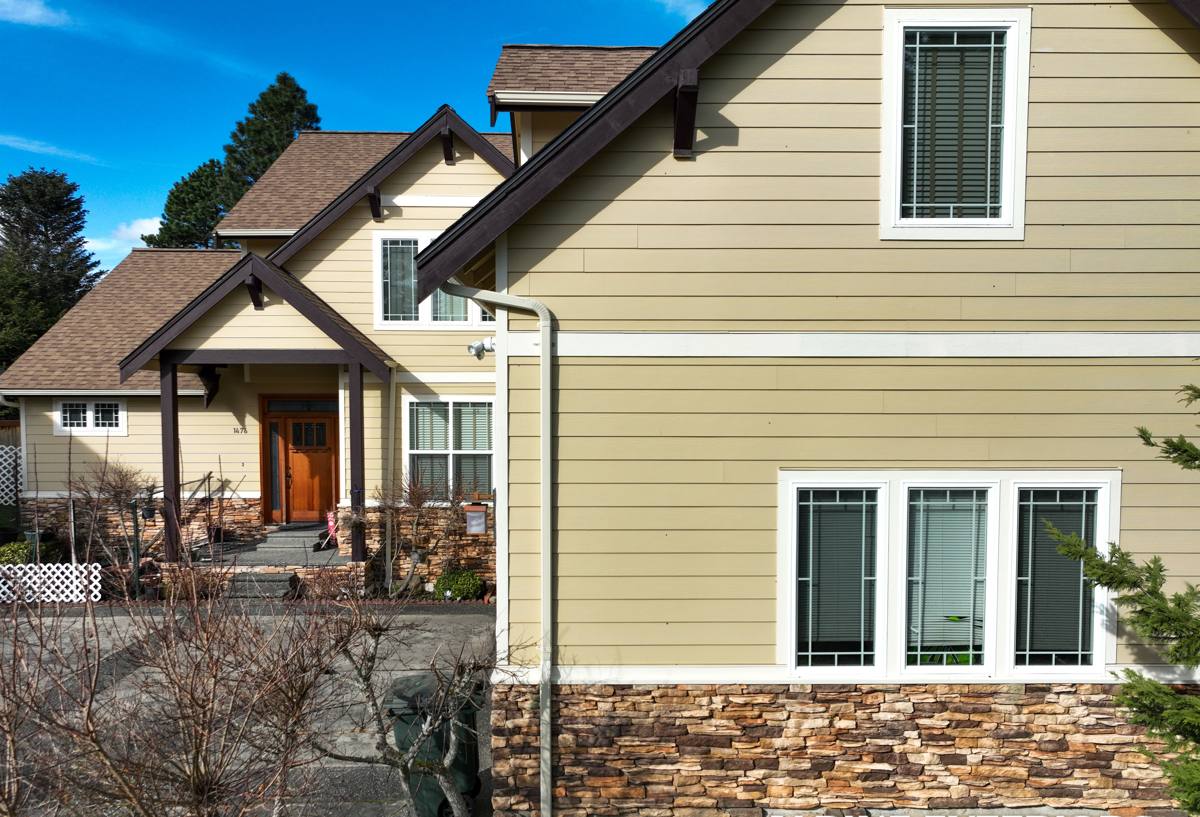
What Everson's Climate Actually Does to Siding
Moisture Load and Driving Rain
Everson gets a steady diet of rain for much of the year, and a good share of it doesn't fall straight down — wind off the valley pushes it sideways into wall assemblies. Siding that isn't installed with proper flashing, drainage gaps, and sealed penetrations will let that water find its way behind the cladding eventually. Once moisture gets trapped against sheathing, you're looking at rot, mold, and repairs that cost far more than the siding job itself.
Moss and Organic Growth
The long damp season here means moss, algae, and mildew have plenty of time to establish themselves on north-facing walls, under eaves, and anywhere airflow is limited. Some siding materials absorb moisture and give organic growth a foothold; others resist it. The material you choose determines how much scrubbing and pressure-washing you'll be doing every year to keep your home looking cared for.
Salt Air Exposure
Everson is inland from the coast, but Whatcom County's proximity to the Salish Sea means salt-laden air still reaches this far, especially during winter storm systems. Salt exposure accelerates corrosion on fasteners and trim, and it can degrade certain paints and coatings faster than a drier inland climate would. Siding and finish systems that aren't engineered for it fade, chalk, or fail sooner than their advertised lifespan.
Freeze-Thaw and Temperature Swings
Whatcom County doesn't get brutal winters, but Everson does see enough freeze-thaw cycling to stress any siding material that absorbs water. Wood-based products swell when wet and shrink when they dry or freeze, and repeated cycling opens joints, cracks finishes, and loosens fasteners over years of exposure.
Why We Only Install James Hardie Fiber Cement
We get asked regularly why we don't offer vinyl, LP SmartSide, cedar, or primed spruce alongside Hardie. The honest answer is that after years of service work in this exact climate, we stopped installing products that we knew would create callbacks and disappointed homeowners down the road. Fiber cement is non-combustible, dimensionally stable, and doesn't absorb water the way wood-based or engineered-wood products do. James Hardie's ColorPlus factory finish is baked on under controlled conditions, which gives it better fade and moisture resistance than field-applied paint — a real advantage in a climate that punishes finishes.
Hardie also makes climate-engineered product lines (their HZ5 line is built for the Pacific Northwest's wet, moderate climate), and the company backs it with a strong, transferable warranty. That combination of material science and manufacturer accountability is why we standardized on it rather than offering a menu of products with very different long-term outcomes.
How Siding Materials Compare in Everson's Climate
| Material | Moisture Behavior | Moss/Algae Resistance | Finish Longevity Here |
|---|---|---|---|
| James Hardie Fiber Cement | Does not swell, rot, or absorb water like wood-based siding | Resists organic growth better than absorbent materials | Factory ColorPlus finish holds up well to sun, rain, and salt air |
| Vinyl | Doesn't rot, but expands/contracts with temperature and can warp or crack over time | Can trap moisture behind panels if installed loosely | Color fades and becomes brittle with UV and years of exposure |
| LP SmartSide (engineered wood) | Wood-based core is vulnerable if the factory seal is compromised at cuts or seams | More prone to organic growth than fiber cement if moisture intrudes | Field-applied or lower-grade finishes wear faster in wet climates |
| Cedar / Primed Spruce | Absorbs and releases moisture constantly; prone to swelling, splitting, cupping | Requires regular treatment to resist moss and mildew | Needs repainting or restaining on a recurring cycle |
What a Correct Siding Installation Involves
The material is only half the equation. We've seen Hardie siding installed poorly and fail early, and we've seen lesser materials installed with enough care to last longer than expected. In a climate like Everson's, the installation details matter as much as the product.
- Weather-resistive barrier: A properly lapped and sealed house wrap or building paper behind the siding, installed to shed water downward and outward.
- Rainscreen or drainage gap: A small air gap between the siding and the wall assembly lets any moisture that does get behind the panels drain and dry out instead of sitting against the sheathing.
- Flashing at every penetration: Windows, doors, vents, and any wall penetration need proper flashing so driving rain can't work its way behind the siding at these vulnerable points.
- Correct fastening: James Hardie specifies fastener type, spacing, and placement for a reason — under-driven or over-driven nails, or the wrong fastener material, are a common cause of premature failure and corrosion in salt-influenced air.
- Proper clearances: Siding needs the right gap from grade, roofing, decks, and other transitions so water doesn't wick up into the bottom edge of the panels.
- Caulking and sealant done right: Sealed where it should be sealed, left open where it needs to breathe — over-sealing traps moisture just as badly as under-sealing lets it in.
Our Process for an Everson Siding Installation
1. On-Site Assessment
We start by walking the property and looking at what your current siding and wall assembly are telling us — moisture staining, moss patterns, trim condition, and how the home is oriented relative to prevailing wind and rain. Every Everson lot handles weather a little differently depending on tree cover, elevation, and exposure.
2. Tear-Off and Sheathing Check
Old siding comes off and we inspect the sheathing underneath for any rot or moisture damage before anything new goes up. Covering a compromised wall assembly with new siding just hides a problem instead of fixing it.
3. Weather Barrier and Drainage Plane
We install a correctly lapped weather-resistive barrier and drainage gap sized for the wall assembly, giving any incidental moisture a way out.
4. Hardie Installation to Manufacturer Spec
Panels, fasteners, and flashing details are installed to James Hardie's published specifications — the same specifications that keep their warranty valid and keep the siding performing the way it's engineered to.
5. Trim, Caulking, and Final Detail Work
Trim boards, corners, and joints get finished and sealed with attention to the details that matter most in a wet climate — the places water actually tries to get in.
6. Walkthrough
We walk the finished job with you so you know what was done, why it was done that way, and what basic maintenance to expect going forward.
Why It Matters That We Already Work in Everson
A crew that works Whatcom County regularly already knows how this area's weather behaves through a full year — where moss builds up fastest, which wall orientations take the worst of the driving rain, and how salt air exposure shows up on fasteners and trim over time. That local pattern recognition shapes decisions on your job before a single panel goes up: where extra flashing attention is warranted, how much drainage capacity a given wall needs, and what finish details will actually hold up here rather than in a showroom photo. An installer unfamiliar with this specific climate is more likely to treat every home the same way, regardless of whether it sits in a dry inland valley or a damp river-adjacent lot like much of Everson.
What to Look for Before You Hire
- Manufacturer training or certification specific to the siding product being installed
- A clear explanation of the weather barrier and drainage plane they plan to use
- Willingness to explain flashing details at windows, doors, and penetrations before work starts
- A written scope that specifies fastener type and installation method, not just "siding replacement"
- References or a track record of work in Whatcom County specifically, not just general siding experience
- A straight answer about warranty coverage — both the manufacturer's and the installer's own workmanship warranty
Signs Your Everson Home May Need New Siding
Not every siding problem is obvious from the curb. Persistent moss or dark staining that returns shortly after cleaning, soft spots when you press on the siding, paint that's bubbling or peeling faster than it should, warped or cupped boards, and rising energy bills can all point to a wall assembly that's no longer doing its job. Catching these signs early, before sheathing or framing is compromised, keeps the project a siding replacement instead of a structural repair.
If your Everson home's siding is showing its age or you're planning ahead for a replacement, we're happy to take a look and give you a straightforward, no-pressure estimate — including an honest read on what your current siding is telling us about your wall assembly. Fill out the form below to get started.