 Lynden Exterior
 Deck Repair Built for Everson's Climate
Everson sits close enough to the water and the foothills that its decks take a different kind of beating than decks further inland. Homes here deal with driving rain off the Nooksack valley, long stretches of gray, damp weather, and a moss season that can run from October clear through April. If you own a deck in this part of Whatcom County, you already know the drill: boards that stay damp for days after a storm, railings that feel a little softer than they used to, and green film creeping across the stair treads no matter how often you sweep them off.
We work on decks throughout the Lynden and Everson area regularly, which means we're not guessing at what causes local decks to fail early. We're looking at the same ledger boards, the same joist framing, and the same fastener patterns over and over, and we've learned which parts of a deck give out first in this climate and why. This page is about deck repair specifically — not a full replacement pitch, not a generic decking overview — just what it actually takes to fix an Everson deck correctly and make it last.
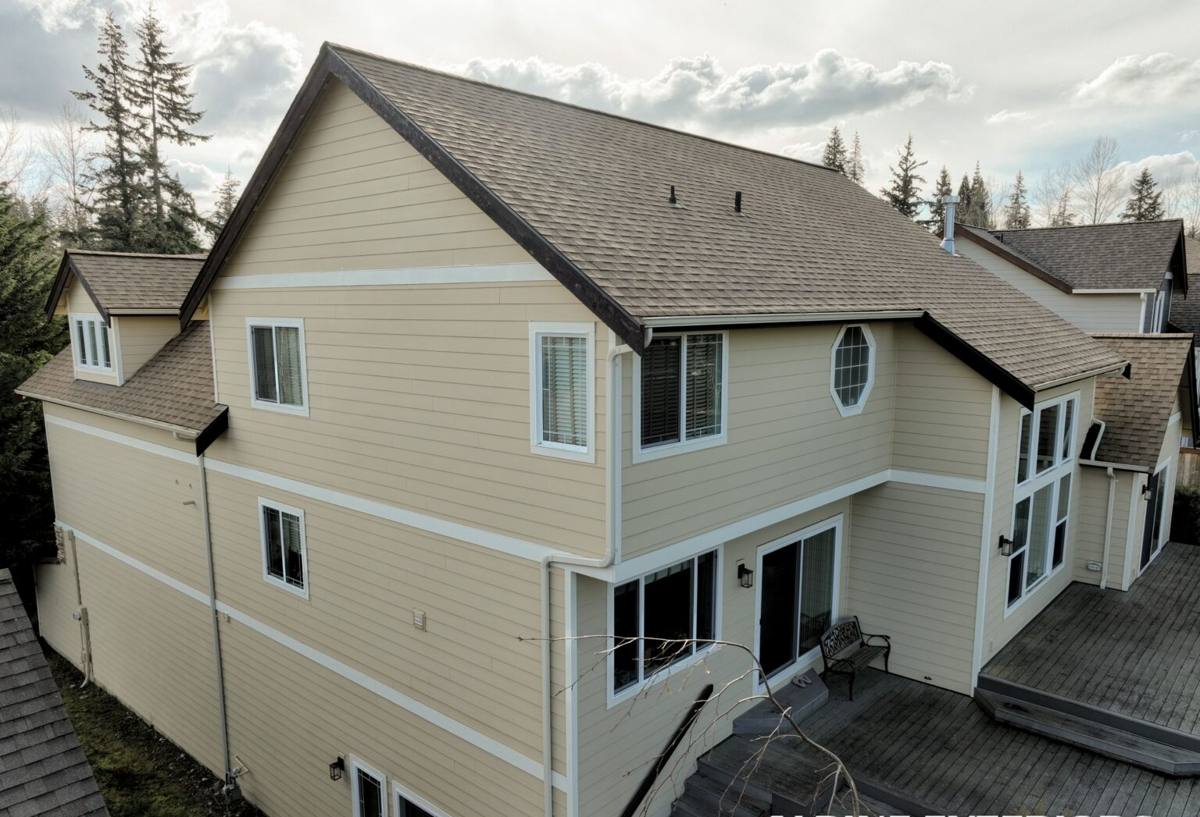
Why Decks in This Area Fail Faster Than You'd Expect
A deck built the same way in a dry inland climate can hold up for decades. In Whatcom County's marine-influenced weather, several things work against wood and fasteners at once, and it's usually the combination that causes trouble rather than any single factor.
Moisture that never fully leaves
Rain here doesn't just fall and stop — it's often followed by fog, low cloud cover, and high humidity that keeps surfaces damp for days. Decking boards, especially where they sit close to grade or under overhangs that block the sun, can stay wet long after a storm has passed. That prolonged dampness is what drives rot, not the rain itself.
Moss and organic buildup
Moss doesn't just make a deck look neglected — it holds moisture directly against the wood surface and works into the grain, joints, and fastener heads. Left alone through a full wet season, it accelerates decay in exactly the spots where you'd want the wood driest: stair treads, north-facing sections, and anywhere shaded by the house or nearby trees.
Salt-tinged air and metal fasteners
Everson isn't right on the coast, but the broader Whatcom County air carries enough moisture and mineral content that lower-grade fasteners, brackets, and hardware corrode faster than homeowners expect. Once a nail or screw starts rusting, it loses grip on the wood around it, and that's often the real reason a board that looks fine still feels loose underfoot.
Freeze-thaw cycling
Whatcom County gets enough cold snaps in the winter that water trapped in a crack or a fastener hole can freeze, expand, and widen the damage. It's a slower process than rot, but it compounds every year a small crack goes unaddressed.
What a Correct Deck Repair Actually Involves
A lot of deck "repairs" amount to swapping a bad board for a new one and calling it done. That fixes what you can see, but it doesn't address what caused the failure in the first place — which means the same spot often fails again within a couple of seasons. Here's what we actually check and address on an Everson repair call.
Structural inspection first
Before any board gets replaced, we look at what's underneath it: joists, beams, the ledger board connection to the house, and the posts and footings. Surface-level rot on a decking board is common and usually minor. Rot in a joist or ledger board is a structural issue, and it changes the scope of the job.
Fastener and hardware condition
We check for corroded nails, stripped screws, and any hardware that's rated below current code for exterior, wet-climate use. Undersized or rusted joist hangers and ledger bolts are a common weak point on older Everson decks, especially ones built or last repaired more than 15-20 years ago.
Railing and guard post integrity
Railings take a specific kind of abuse here — they're gripped constantly, exposed on all sides, and often anchored with hardware that was never rated for the loads current code requires. A railing that wiggles is not a cosmetic issue; it's a safety issue, and it's one of the most common repair calls we get in this area.
Drainage and grading around the deck
A repair that ignores water flow is a temporary fix. We look at how water moves off the deck surface and away from posts and footings. In a lot of cases, a deck that keeps rotting in the same spot has a drainage problem, not just a wood problem — and no amount of board replacement solves that on its own.
Matching materials correctly
Patching in a mismatched wood species, a different pressure-treatment rating, or an incompatible fastener metal creates a new weak point right next to the old one. We match structural lumber grade and treatment to what's already there, or upgrade it where the original spec was undersized for this climate.
Our Repair Process
- On-site inspection. We walk the full deck — surface, substructure, railings, stairs, and connection points — and identify every area of concern, not just the spot you called about.
- Honest scope and estimate. You get a clear breakdown of what's cosmetic, what's structural, and what's optional. We won't pad a repair with work that doesn't need doing.
- Removal of compromised material. Rotted, cracked, or corroded components come out completely — we don't sister new wood over bad wood and hope it holds.
- Structural correction. Any joist, ledger, post, or hardware issue gets addressed before cosmetic repairs move forward.
- Board and railing replacement. New material is fastened with corrosion-resistant hardware rated for this climate.
- Finish and protection. Depending on your decking material, this may mean sealing, staining, or simply confirming the surface sheds water correctly.
- Final walkthrough. We show you what was found, what was fixed, and what to keep an eye on going forward.
Common Repair Scenarios We See Around Everson
| Issue | What's Usually Happening | Typical Fix |
|---|---|---|
| Soft or spongy boards | Prolonged moisture exposure, often near ground level or under shade | Board replacement; check joists underneath for rot spread |
| Wobbly railings | Corroded or undersized fasteners, loosened post connections | Re-anchor with code-rated hardware; replace compromised posts |
| Persistent moss/green film | Shade, poor drainage, infrequent cleaning | Clean, treat, and improve airflow or drainage where possible |
| Rust staining around fasteners | Standard-grade fasteners corroding in damp, humid air | Replace with stainless or hot-dip galvanized hardware |
| Gaps widening between boards | Freeze-thaw cycling and repeated wet/dry swelling | Board replacement with proper spacing for seasonal movement |
| Stairs feeling unstable | Stringer rot or loosened stair-to-deck connections | Stringer inspection and reinforcement or replacement |
Signs Your Everson Deck Needs Attention
Most deck damage in this climate builds slowly, which is exactly why it catches homeowners off guard. Walk your deck this fall or after the next heavy rain and check for these:
- Boards that feel soft, spongy, or flex noticeably when you step on them
- A railing or guard post that moves when you lean on it
- Visible cracking, splintering, or checking along board edges
- Dark staining or discoloration around fastener heads
- Moss or algae that returns quickly after cleaning
- Gaps between boards that seem wider than when the deck was built
- Water pooling on the surface instead of draining off
- A musty smell coming from underneath the deck
Any one of these on its own might be minor. Two or three together usually mean it's worth a proper inspection before the next wet season sets in.
Repair vs. Replacement: How We Make the Call
Not every deck problem needs a full rebuild, and we're not going to tell you it does. The decision usually comes down to how much of the structure — not just the surface — is affected.
Repair usually makes sense when
The framing and posts are structurally sound, damage is limited to specific boards or railing sections, and the deck's overall footprint and layout still work for how you use the space.
Replacement becomes the better option when
Rot has spread into multiple joists or the ledger connection, the deck was undersized or under-built for current load requirements, or repair costs are approaching a significant share of what full replacement would run. We'll tell you plainly if we think you're at that point — it doesn't help either of us to patch a deck that's on its way out.
Why It Matters That We Already Work in This Area
A repair crew that's never worked in Whatcom County will treat every deck like it's in a dry, mild climate, because that's the standard playbook. A crew that works Everson and Lynden regularly knows to check for the corrosion patterns specific to this air, to expect moss buildup in shaded sections, and to plan drainage details around a rainy season that runs longer than most of the country's. That local familiarity shows up in small decisions — the hardware grade we default to, where we look first for hidden rot, how we schedule around the wettest months — and those small decisions are what determine whether a repair lasts five years or fifteen.
We also know what permitting and inspection expectations look like locally, so structural repairs are done to a standard that holds up, not just one that looks fine until the next inspection or the next home sale.
Maintenance That Extends Your Repair
A repair is only as good as the upkeep that follows it. A few habits go a long way in this climate:
- Clean moss and debris off the surface and between boards at least twice a year, more often in shaded areas
- Keep gutters and downspouts clear so runoff isn't draining directly onto or under the deck
- Trim back vegetation that's shading the deck and keeping it damp longer than it needs to be
- Check railings and stair connections for movement once a year, ideally before winter
- Re-seal or re-stain wood decking on the schedule appropriate for your finish product, not just when it looks faded
If you're noticing soft spots, loose railings, or a deck that just doesn't feel as solid as it used to, we're happy to take a look. We'll give you a straightforward, no-pressure estimate on what's actually going on and what it would take to fix it right — just fill out the form below to get started.