 Lynden Exterior
 Why Everson Homes Need a Siding System Built for This Weather
Everson sits in the part of Whatcom County where marine air off the Salish Sea, near-constant fall and winter rain, and long stretches of low, damp shade combine to put real stress on exterior siding. It's not one dramatic storm that wears out a wall system here — it's the cumulative effect of months of moisture exposure, salt-laden air moving inland, and shaded north sides that never fully dry out before the next rain arrives. Siding that looks fine for the first few years can start failing quietly behind the scenes if it wasn't built, and installed, for exactly this kind of climate.
That's the lens we use on every Everson job: not "what siding looks good on day one," but "what siding, installed correctly, will still be doing its job in year fifteen and year thirty." James Hardie fiber cement is the only product we install, and this page walks through why, what a correct installation actually involves, and what it means to hire a crew that already knows this area's houses.
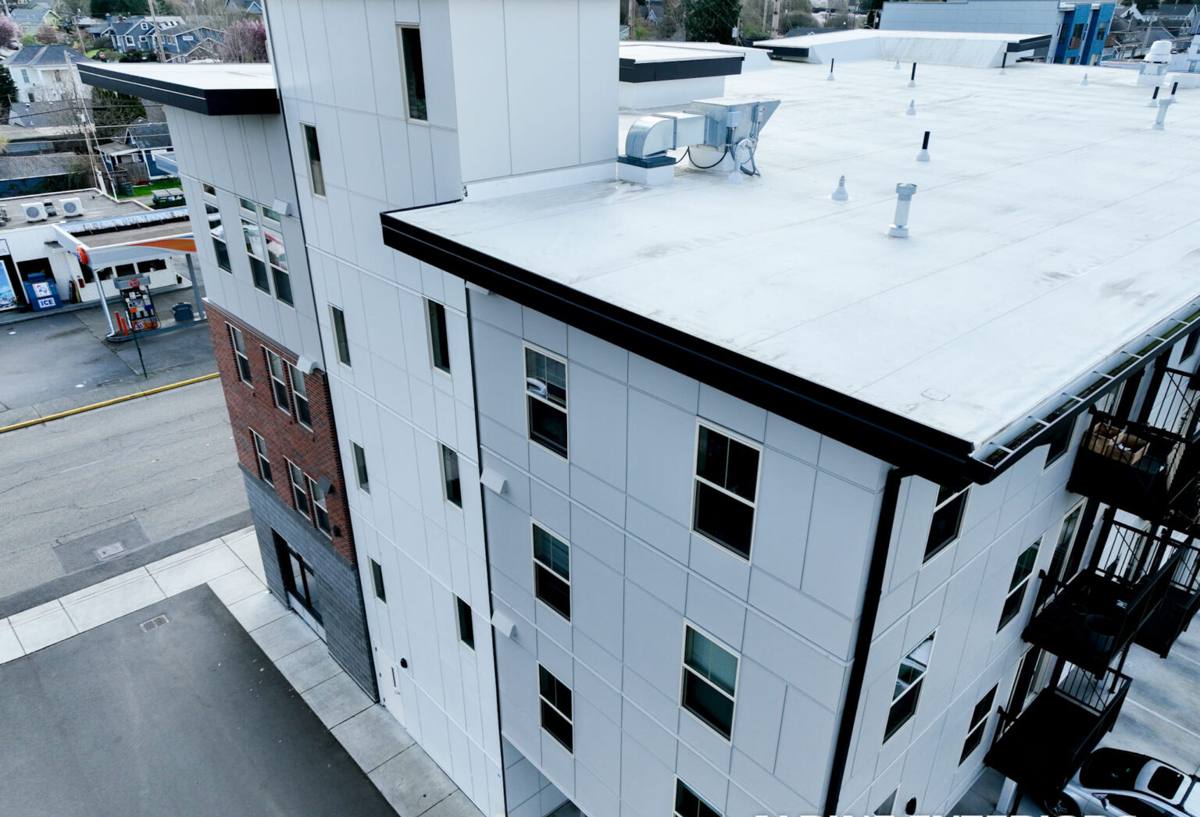
What Salt Air, Rain, and Moss Season Actually Do to Siding
Moisture Load Over Time
Whatcom County's wet season isn't just about total rainfall — it's about how long siding stays wet between dry spells. Driving rain pushed by wind gets forced sideways into seams, laps, and butt joints that weren't sealed or flashed correctly. Materials that absorb water, or that swell and shrink with moisture, are the ones that eventually cup, buckle, or rot at the edges.
Salt Air Migration
You don't have to be right on the water for salt air to matter. Moist marine air moves inland and settles into low-lying valley areas, and over years it accelerates corrosion on fasteners, trim, and any metal flashing components that aren't rated for it. This is one of the reasons fastener choice and flashing detail matter as much as the siding panel itself.
Moss and Organic Growth
Shaded, north-facing walls and areas under eaves or near mature trees stay damp longer, which is exactly where moss, algae, and mildew take hold. On wood-based products, sustained organic growth can hold moisture against the surface and contribute to rot underneath. Siding needs to resist that growth and needs to be installed with enough clearance and drainage that moisture doesn't get trapped in the first place.
What a Correct James Hardie Installation Involves
James Hardie siding performs the way it's rated to perform only when it's installed to the manufacturer's specifications. A lot of the failures we get called out to inspect on older installs — anywhere in Whatcom County, not just Everson — trace back to shortcuts taken during install, not the product itself. Correct installation includes:
- A continuous, properly lapped weather-resistive barrier behind the siding, with no gaps at seams or penetrations
- Flashing at every window, door, and roof-to-wall transition, installed so water is directed out and away from the wall assembly
- Minimum clearance between the bottom edge of siding and grade, decks, patios, and roof lines, per Hardie's published specs
- Correct fastener type, spacing, and embedment — over-driven or under-driven nails are one of the most common causes of premature panel damage
- Factory-primed or ColorPlus-finished cut edges properly sealed in the field, since raw cut edges are the most vulnerable point on any fiber cement panel
- Proper caulking at butt joints and trim intersections using a sealant rated for the exposure, not just whatever tube was on the truck that day
None of this is exotic. It's disciplined, unglamorous, correct workmanship — the kind that doesn't show up in a photo but shows up in how the wall performs a decade later.
Why We Standardized on James Hardie — And Only James Hardie
We get asked fairly often why we don't offer vinyl, LP SmartSide, cedar, or other fiber cement brands as options. The honest answer is that we looked at the real-world trade-offs of each and decided we didn't want to put our name on installs we knew would need more attention from the homeowner down the road.
| Material | Moisture Behavior in Wet Climates | Fire Resistance | Long-Term Maintenance |
|---|---|---|---|
| James Hardie fiber cement | Engineered non-combustible core, dimensionally stable when installed to spec | Non-combustible | Low — factory finish holds color; occasional caulk/inspection |
| Vinyl siding | Can warp or bow with heat and impact; seams are a common water entry point | Combustible, can melt/deform | Low labor, but limited repair options and shorter practical lifespan |
| Wood-based composite (LP SmartSide) | Engineered wood strand core, sensitive to sustained moisture at cut edges and seams | Combustible | Moderate — edge sealing and moisture monitoring matter more |
| Cedar / primed spruce | Natural material, absorbs moisture, prone to moss/algae in shaded damp areas | Combustible | High — regular refinishing, sealing, and moss treatment needed |
Cedar has real appeal, and we understand why homeowners like the look. But in a climate with this much sustained moisture and moss pressure, a natural wood product asks a lot of the homeowner in ongoing upkeep. LP SmartSide and similar wood-strand products have improved over the years, but they're still wood-based at the core, and that core is what we'd be trusting to hold up in Whatcom County's wet season year after year. Vinyl is low-maintenance in a different way, but it's a thinner, more impact-sensitive product that doesn't offer the same fire performance or dimensional stability. James Hardie's fiber cement — cement, sand, and cellulose fiber — simply isn't food for moss or rot, and it doesn't expand and contract the way wood-based products do.
The Right Hardie Product Line for This Area
James Hardie engineers its products by climate zone, and for the Pacific Northwest that means the HZ5 formulation, built specifically to resist moisture-related issues in wetter, more temperate regions. HZ5 products are what we install on Everson homes as a default, not an upgrade.
ColorPlus Factory Finish
We install ColorPlus finished panels whenever the project allows for it, rather than field-painting after install. The factory finish is baked on under controlled conditions, which gives it better adhesion and fade resistance than a job-site paint job exposed to variable weather during application. It also comes with its own finish warranty separate from the substrate warranty, which matters over a 20-30 year ownership horizon.
Panel and Plank Options
Depending on the home's style, we work with Hardie's lap siding, board-and-batten (HardiePanel), and shingle-style profiles. The right choice is driven by the home's architecture and existing trim details, not by whichever product happens to be cheapest to install that week — we'll walk through the options that make sense for your specific house during the estimate.
How Our Process Works
- On-site inspection: we look at your current siding condition, existing moisture damage if any, trim, flashing, window details, and roof-to-wall transitions before quoting anything.
- Written estimate: a clear scope covering tear-off (if needed), weather barrier, flashing, siding material and profile, and finish — no vague allowances.
- Prep and weather barrier: old siding removed where required, sheathing inspected and repaired as needed, continuous weather-resistive barrier installed and properly lapped.
- Flashing first: every window, door, and penetration flashed before a single piece of siding goes up — this is the step that determines whether the wall stays dry for decades.
- Installation to Hardie spec: correct clearances, fastener schedule, and joint treatment, with cut edges sealed as we go.
- Final walkthrough: we review the finished work with you before calling the job done.
Maintenance: What Everson Homeowners Should Actually Watch For
Correctly installed James Hardie siding is low-maintenance, not zero-maintenance. A little seasonal attention goes a long way in this climate:
- Rinse siding annually, especially shaded north and east-facing walls where moss and grime build up fastest
- Inspect caulk lines at trim, windows, and butt joints every year or two, and re-caulk if you see cracking or separation
- Keep gutters clear so overflow doesn't run down the wall face during heavy rain events
- Trim back vegetation and tree branches that keep a section of wall shaded and damp longer than the rest of the house
- Watch for any soft spots, staining, or color changes near ground level, decks, or roof lines — these are the areas most likely to show an early flashing or clearance issue
| Season | What to Check |
|---|---|
| Spring | Inspect for winter storm damage, clean moss and debris off shaded walls, check gutters |
| Summer | Rinse siding, inspect caulk joints while weather is dry and easy to work in |
| Fall | Clear gutters and downspouts before the wet season, trim back overhanging vegetation |
| Winter | Watch for standing water or ice near the base of walls, note any problem areas for spring follow-up |
Why Hiring a Crew That Already Works Everson Matters
Siding installation isn't one-size-fits-all across a region. A crew that regularly works Whatcom County homes already understands the local building patterns, the way local moisture and moss issues show up on different home orientations, and which flashing and clearance details matter most given the area's rain patterns. That familiarity shows up in small decisions throughout a job — where extra flashing attention is warranted, how much clearance to leave near landscaping that's common in this area, and how to sequence work around the region's weather windows so materials aren't installed wet or under time pressure.
It also matters for follow-up. A local crew is reachable if a question comes up two or five years after installation, not a name that did one job in the area and moved on. For a product designed to last decades, that ongoing accountability is part of what you're actually paying for.
Warranty and Long-Term Value
James Hardie backs its fiber cement products with a transferable limited warranty, and ColorPlus finishes carry their own separate finish warranty. Warranty coverage depends on the product line and correct installation per manufacturer specifications — which is exactly why installation quality isn't a side issue, it's the thing that determines whether that warranty coverage is even meaningful. We install to spec specifically so that warranty stays intact if you ever need it, and because a house sided correctly the first time simply costs less over its lifetime than one that needs early rework.
If you're considering new siding for a home in Everson or elsewhere in Whatcom County, we're happy to take a look and walk you through what we'd recommend for your specific house — no pressure, no obligation. Use the form below to request a free estimate.