 Lynden Exterior
 Exterior Work for Homes Near the Abbotsford, BC Border
Lynden sits just a few minutes from the Sumas border crossing, and a lot of the homes we work on are close enough to Abbotsford, BC that the two communities share more or less the same weather system. Rain rolls in off the Pacific, moves through the Fraser Valley, and settles over this corner of Whatcom County and the lower BC mainland pretty much the same way. If you're a homeowner near the border on either side, your siding, roof, windows, and deck are fighting the same fight: long wet seasons, damp cold snaps, and a moss problem that never really goes away.
We're based in Lynden and licensed to work on the Washington side of that border. For homeowners in and around Abbotsford who are comparing contractors, or who own property on both sides of the line, we're glad to talk through what we do and how we approach exterior work in this climate — even if a given project ends up outside our direct service radius. A lot of what determines whether a house holds up out here isn't which side of the border it's on, it's whether the materials and installation account for the actual weather.
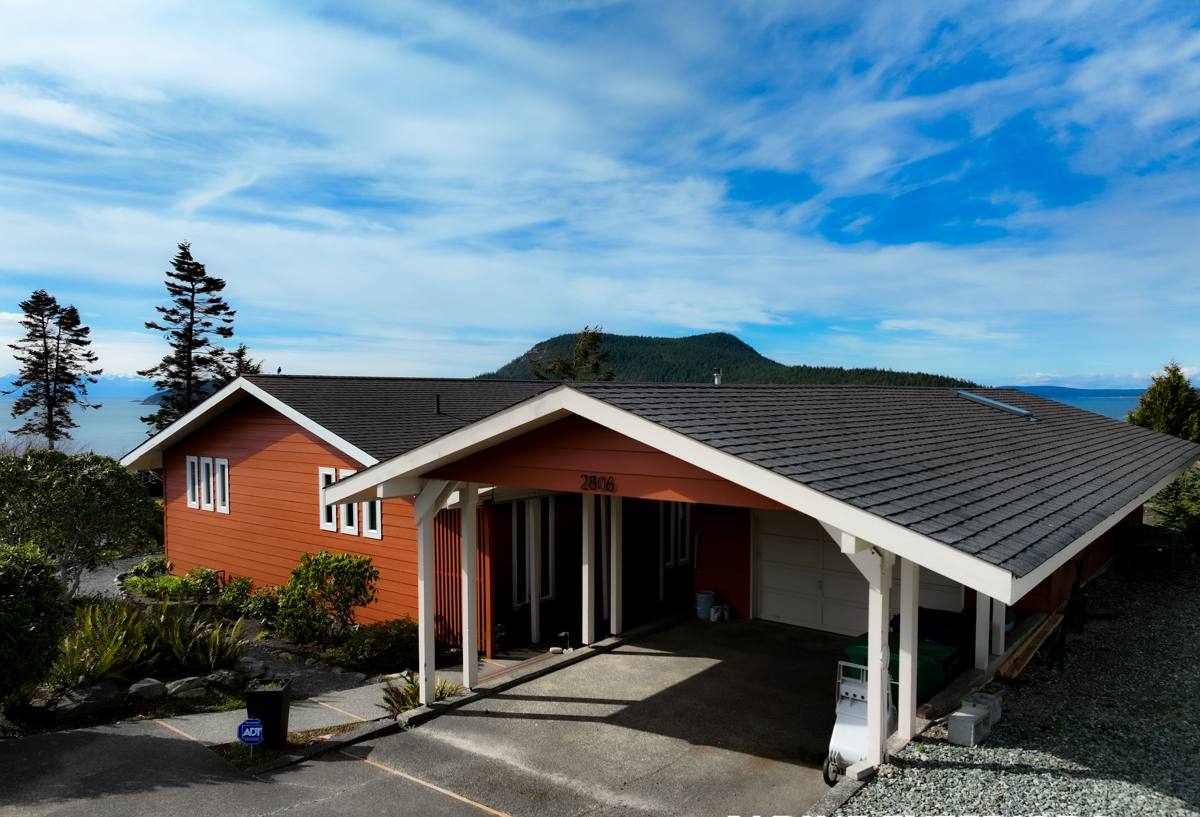
What This Climate Does to a House
The Fraser Valley and Whatcom County lowlands get a specific combination of stress that a lot of siding, trim, and roofing products just aren't built for:
- Driving rain — wind-driven rain doesn't just wet a wall, it pushes water sideways into seams, laps, and fastener points that a straight-down rain would never reach.
- Long moss and algae season — shaded north and west walls, roof valleys, and anything under tree cover stay damp for months at a stretch, which is exactly what moss and mildew need to establish.
- Salt-tinged air — proximity to Georgia Strait and Puget Sound means a low but steady dose of salt air that accelerates corrosion on fasteners, flashing, and metal trim over years of exposure.
- Freeze-thaw swings — not extreme cold, but enough freeze-thaw cycling each winter to stress any material that absorbs water and expands.
None of these are dramatic, one-time events. They're slow, cumulative pressure. That's why exterior failures out here tend to show up as swelling, delamination, soft trim, or moss staining over five to fifteen years — not as a single storm event. The contractor and the materials matter more here than in a drier climate, because a mediocre installation has years of steady moisture exposure to find its weak points.
Why "It's Just Rain" Undersells the Problem
A lot of homeowners moving from drier regions assume rain resistance is the whole story. In this climate it's really about how long a wall assembly stays wet, not just whether it gets wet. A product or installation that sheds bulk water fine but traps moisture behind it — or takes on water at cut edges and fastener holes — can look fine for years and then fail fast once moisture gets a foothold. That's the failure mode we design around on every job.
Siding: What We Install and Why
We install James Hardie fiber cement siding exclusively. We don't install vinyl, LP SmartSide, primed wood, cedar, or other fiber cement brands, and that's a deliberate standard, not a sales pitch. Here's the reasoning:
- Fiber cement doesn't rot. Unlike wood-based products, it has no organic fiber for moisture to break down over time, which matters directly in a region with this much sustained dampness.
- It's dimensionally stable. It doesn't swell, warp, or expand the way engineered wood siding can when it takes on moisture through cut edges or damaged caulk joints — a real risk given how many wet weeks this area gets each year.
- ColorPlus factory finish is baked on under controlled conditions, which holds up better against the region's damp-and-fade cycle than field-applied paint, and it doesn't need repainting on the schedule that wood siding does.
- It's non-combustible, which matters for insurance and for peace of mind, though it's not the primary reason we standardized on it for this climate.
James Hardie also makes climate-engineered product lines — HZ5 for colder, wetter regions and HZ10 for warmer, drier ones. Homes in the Lynden and Abbotsford border area fall in HZ5 territory, and the plank composition, moisture resistance, and installation specs are matched to exactly this kind of climate.
Why We Don't Install Other Options
Vinyl siding is affordable and low-maintenance in the sense that it doesn't need painting, but it can warp in direct sun, crack in cold snaps, and it's installed with expansion gaps that rely on careful workmanship to stay weathertight — a lot of margin for error in a climate this wet. LP SmartSide and other engineered wood products perform reasonably well when installation is flawless, but they're wood-based, meaning cut edges, fastener penetrations, and butt joints are all points where moisture can get in and start the clock on swelling or delamination. Primed spruce and cedar are attractive and traditional, but they demand a repainting and caulking cycle that most homeowners underestimate, and in a climate with this much sustained moisture, gaps in that maintenance show up fast as rot. We'd rather install one product correctly than offer five and hope the maintenance gets done.
Roofing
Roofs here take the moss problem harder than any other part of the house. Shaded slopes, valleys, and north-facing planes stay damp for weeks at a time in fall and winter, and moss growth under shingles lifts tabs, holds water against the roof deck, and shortens the life of the whole system. Roofing work in this area needs to account for:
- Proper underlayment and flashing detail at every valley, penetration, and wall intersection — this is where driving rain actually gets in.
- Ventilation that keeps the attic dry enough to avoid condensation-driven rot from the inside out, not just weather from the outside.
- Material choice and installation that accounts for moss and algae exposure over the roof's service life.
Windows
Window replacement in this climate is as much about the flashing and integration with the wall assembly as it is about the window unit itself. A high-end window installed with poor flashing will leak; a mid-grade window installed correctly, tied properly into the water-resistive barrier and siding, will outperform it. We pay close attention to how new window openings integrate with fiber cement siding specifically, since that's the wall system we install and warranty.
Decks
Decks in the Lynden and Abbotsford border area deal with the same driving rain and moss exposure as the rest of the exterior, plus standing water on horizontal surfaces and UV cycling in whatever sun does show up. Board spacing, joist protection, and fastener choice all affect how long a deck holds up before boards cup, fasteners stain, or ledger connections start to fail from trapped moisture. Deck work isn't just carpentry here — it's another moisture-management project.
Comparing Siding Options in This Climate
| Material | Moisture Behavior Here | Maintenance Cycle | Do We Install It |
|---|---|---|---|
| James Hardie fiber cement | Doesn't rot; dimensionally stable under sustained damp conditions | Occasional wash; no repainting with ColorPlus | Yes — exclusively |
| Vinyl | Won't rot but relies on tight installation to stay weathertight; can warp/crack | Low, but limited repair options if damaged | No |
| LP SmartSide / engineered wood | Wood-based; vulnerable at cut edges and joints if moisture intrudes | Caulk and paint maintenance over time | No |
| Cedar / primed spruce | Attractive but absorbs moisture; needs consistent upkeep to avoid rot | Regular painting/staining and caulking | No |
Why a Local Crew Matters for a Border-Area Job
Contractors who don't work this specific climate regularly tend to under-detail the parts of the job that don't show up as a problem right away — flashing laps, weep holes, starter strip placement, caulk joints at penetrations. Those are exactly the details that separate a wall assembly that holds up for decades from one that starts showing moisture damage in year seven. Working this close to the border and this close to the water means we see the moss staining, the salt-air corrosion on old fasteners, and the swollen trim boards on tear-offs regularly enough that we build the installation around preventing them, not just meeting code minimums.
What to Ask Any Contractor Working Near the Border
- Do you install one siding system to a consistent spec, or several brands depending on budget?
- How do you detail flashing at windows, doors, and roof-to-wall intersections?
- What's the manufacturer's warranty, and is it transferable if you sell the home?
- How do you handle moss and algae exposure on shaded roof and wall sections?
- Can you walk me through your fastener and trim choices for salt-air exposure?
A Straightforward Process
For homeowners near Abbotsford who reach out, the process starts the same way it does for any Lynden-area home: a walk-through of the exterior, an honest read on what's driving any current problems — moisture, moss, failing trim, aging roofing — and a plan built around James Hardie siding, correct flashing and roofing detail, and materials sized to this specific climate. We're not going to oversell work a house doesn't need, and we're not going to install a product we don't stand behind just to win the job.
If you're near the border and want a second opinion on a siding, roofing, window, or deck project, or you just want to understand what this climate actually does to a house before you commit to a product, we're happy to talk it through. Reach out for a free, no-pressure estimate using the form below.