 Lynden Exterior
 Why This Decision Is Harder Than It Looks
Every roof eventually needs work, but the question of repair versus replacement isn't always obvious. A roof can look fine from the driveway and still be failing underneath, or it can look rough with moss and streaking and still have five or more good years left. Get the call wrong in either direction and you either pay for a full replacement you didn't need yet, or you keep patching a roof that's quietly letting water into your attic, insulation, and framing.
In Lynden and the rest of Whatcom County, the decision is complicated further by our climate. Salt-tinged air moving in off the Salish Sea, long stretches of driving rain, and a moss season that can run eight or nine months out of the year all put stress on roofing materials in ways that homeowners in drier climates never have to think about. What looks like a simple shingle repair in Arizona can be the tip of a much bigger moisture problem here.
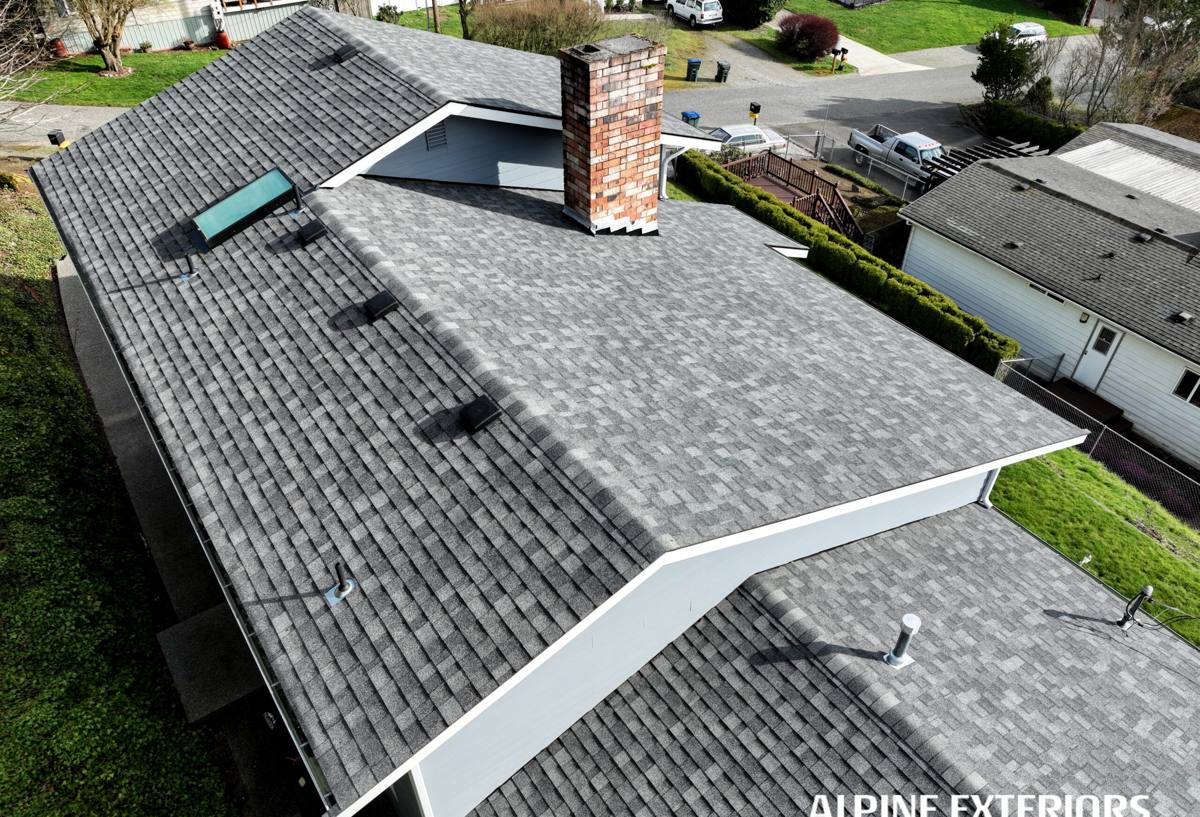
Signs Your Roof Is Telling You Something
What You Can See From the Ground
- Shingles that are cracked, curling at the edges, or missing entirely
- Bald patches where granules have worn off, exposing the black asphalt mat underneath
- Heavy moss growth, especially on north-facing slopes or under tree cover
- Dark streaking (algae) running down from the ridge
- Sagging areas along the roofline or around valleys
- Rusted, bent, or separated flashing around chimneys, vents, and skylights
What You'll Notice Inside the House
Interior clues matter just as much as what's on the roof. Water stains on ceilings, peeling paint near the attic hatch, a musty smell in upstairs closets, or daylight visible through the attic roof deck are all signs that water is already getting past the shingles. By the time you see staining inside, the leak has usually been active for a while.
Repair or Replace? How to Actually Decide
There's no single rule that applies to every roof, but three factors do most of the work in this decision: the roof's age, how widespread the damage is, and what's happening underneath the shingles.
| Factor | Leans Toward Repair | Leans Toward Replacement |
|---|---|---|
| Roof age | Under 12-15 years, damage is isolated | Nearing or past the material's expected lifespan |
| Extent of damage | One slope, one leak source, localized | Multiple leaks, widespread granule loss, several slopes affected |
| Decking condition | Solid, dry, no soft spots | Soft, delaminating, or visibly rotted sheathing |
| Moss/algae coverage | Light, surface-level, recently developed | Heavy, long-term, growing under shingle tabs |
| Repair history | First repair, or infrequent | Third or fourth repair in a few years |
A good rule of thumb: if you're patching the same roof more than once every year or two, you're not really extending its life anymore, you're paying rent on a roof that's already decided it's done.
The Cost of Waiting
Deferred roof repair is one of the more expensive mistakes a homeowner can make, not because the repair itself is costly, but because of what happens while you wait. Once water finds a way past the roofing material, it doesn't stop at the shingles. It works into the underlayment, then the sheathing, then the framing and insulation below. Wet insulation loses its R-value and can hold moisture against the ceiling drywall long after the leak is fixed. Wet framing can develop rot or, over enough time, structural softness that costs far more to repair than the original roof leak ever would have.
This is especially true in our climate. A roof leak that might dry out between rain events in a drier region often doesn't get that chance here, where one wet system rolls into the next for weeks at a time. Small leaks compound instead of resolving on their own.
Warning Signs the Damage Has Spread Past the Roof
- Soft or spongy decking when walked on (a roofer will check this during inspection)
- Sagging ceiling drywall or visible water rings that keep reappearing
- Insulation that's compressed, discolored, or damp when the attic is checked
- A musty odor that doesn't clear even in dry weather
Moss and Algae: A Whatcom County Fact of Life
Moss isn't just cosmetic here, and it isn't optional to deal with. Our combination of shade from mature trees, high humidity, mild year-round temperatures, and long rainy stretches gives moss almost ideal growing conditions on north-facing and tree-shaded roof slopes. Left alone, moss does real damage: it holds moisture directly against the shingle surface, works its way under shingle tabs and lifts them, and its root structure can degrade the asphalt mat over time.
The mistake we see most often isn't ignoring moss, it's dealing with it the wrong way. Pressure washing a roof to remove moss strips away the protective granules along with it, which shortens the roof's remaining life instead of extending it. Proper moss management means gentle removal methods, zinc or copper control strips near the ridge that release ions to inhibit regrowth, and keeping gutters and valleys clear so water doesn't sit and give moss a foothold in the first place.
Heavy, established moss on an older roof is often a sign that replacement makes more sense than another round of cleaning, since the granule loss underneath it usually can't be undone.
What a Proper Replacement Actually Involves
When replacement is the right call, the quality of the work underneath the new shingles matters more than the shingles themselves. A roof that's installed correctly on a solid foundation will outperform a premium shingle installed over shortcuts, every time.
Full Tear-Off vs. Overlay
An overlay (installing new shingles directly over the old layer) can look like a cost-saving shortcut, but it hides the condition of the decking, traps moisture between layers, and voids many manufacturer warranties. A full tear-off lets the crew inspect and replace any damaged sheathing before anything new goes down, which is the only way to know the new roof isn't going over a hidden problem.
Underlayment and Flashing
Synthetic underlayment performs better than old-style felt in wind-driven rain, which matters given how much of our weather comes sideways off the water. Flashing around chimneys, skylights, and wall intersections is where the majority of roof leaks actually start, not in the open field of shingles, so this detail work deserves as much attention as the shingles themselves.
Ventilation
An underventilated attic traps heat and moisture, which shortens shingle life from underneath and contributes to ice and condensation issues in cold snaps. Proper intake and exhaust ventilation should be part of any full roof replacement, not an afterthought.
A Quick Look at Roofing Material Options
| Material | Typical Lifespan | Notes for This Climate |
|---|---|---|
| 3-tab asphalt shingle | 15-20 years | Budget option; less wind and moss resistance than architectural |
| Architectural (laminate) shingle | 25-30 years | Better wind rating and impact resistance; most common upgrade choice |
| Standing seam metal | 40-50+ years | Sheds moss and moisture well; higher upfront cost |
When Roof Work Uncovers Siding Problems
Roof and siding issues often show up together, because the same wind-driven rain and moisture that stress a roof also work on the walls below it. When we're up on a roof replacing shingles and flashing, it's common to also notice trim rot, staining, or delamination at the top edge of the siding where roof and wall meet. Water that's been getting past bad flashing for years frequently ends up as a siding problem long before it ever shows up as a ceiling stain.
If siding replacement is part of the picture, this is worth mentioning directly: we install only James Hardie fiber cement siding, and we don't install vinyl, LP SmartSide, or wood products like cedar or primed spruce. That's not a marketing preference, it's a standard we hold because Hardie's fiber cement doesn't feed moss and algae the way wood-based products can, holds its factory-applied ColorPlus finish far longer than field-painted materials, and is engineered specifically for wet Pacific Northwest conditions through its HZ5 product line. If a roof project turns up siding that needs attention, we'll tell you honestly rather than trying to squeeze in a product we wouldn't stand behind.
Questions to Ask Before You Sign Anything
- Will you be doing a full tear-off, or an overlay over the existing roof?
- What happens if you find soft or damaged decking once the old roof is off?
- What underlayment and flashing materials are included, and are they upgrades or the minimum?
- Is attic ventilation part of the scope, or an add-on?
- What does the manufacturer's warranty cover, and what does your workmanship warranty cover separately?
- Is the estimate itemized, or a single lump sum with no breakdown?
A contractor who answers these questions clearly and in writing is one worth trusting with the job. A vague answer, or pressure to sign before you've had time to think it over, is a reason to keep looking.
If you're not sure whether your roof needs a repair, a full replacement, or just an honest inspection to find out, we're happy to take a look and give you a straight answer. Reach out for a free, no-pressure estimate using the form below.