 Lynden Exterior
 Exterior Work in Kendall, Washington
Kendall sits in the northeast corner of Whatcom County, in the foothill country between Lynden and the mountains, where the terrain shifts from open farmland to timber and second-growth forest. Homes out here live a different exterior life than a house on a bare, wind-scoured lot in town. More tree canopy means more shade, more standing moisture, and a longer window every year when siding, trim, roofing, and decking simply do not dry out between rain events. We work throughout Whatcom County, and Kendall is one of the areas where we spend the most time talking with homeowners about moisture management before we ever talk about color or trim style.
This page covers what we actually see on Kendall exteriors, how our siding, roofing, window, and deck work addresses it, and why we think a crew that works this specific stretch of county road on a regular basis does better work than a company dispatching from three counties over.
What the Climate Does to a Kendall Home
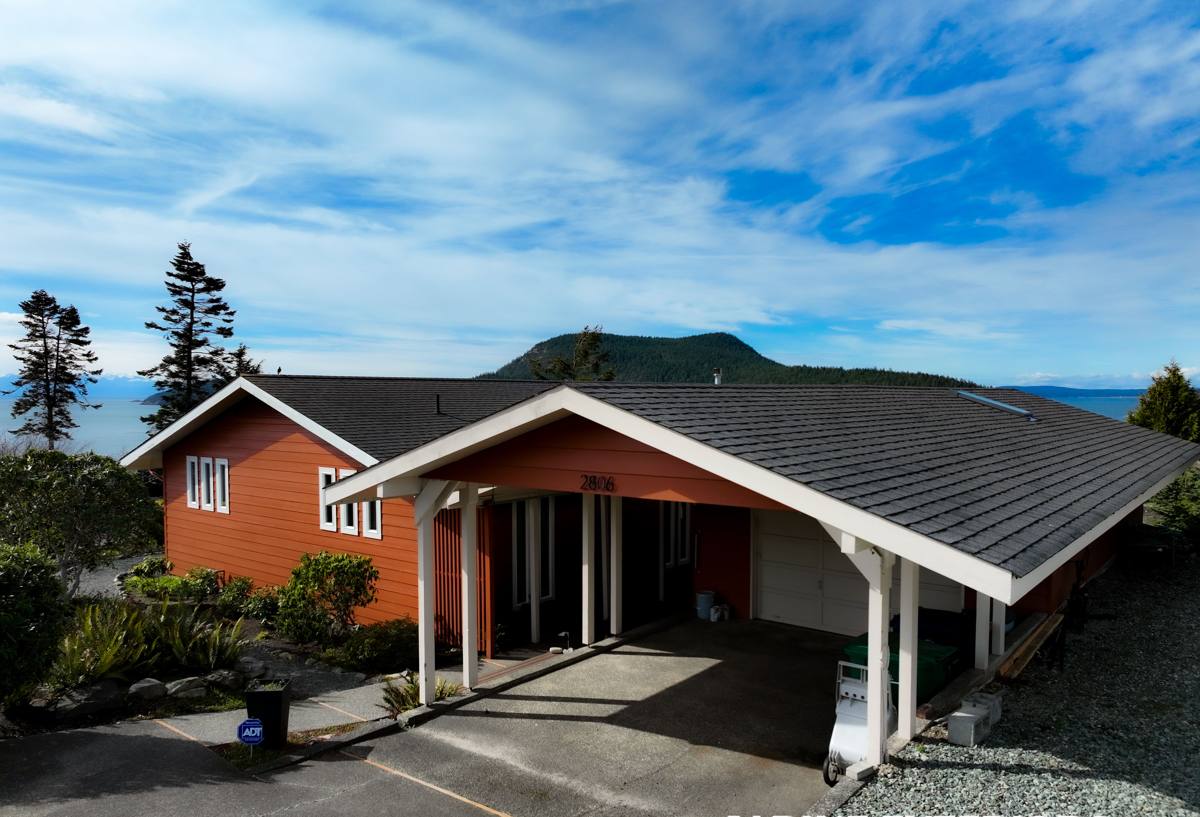
Whatcom County's exterior conditions are shaped by long, wet winters, a marine-influenced climate that keeps humidity high most of the year, and a moss season that, depending on how sheltered a lot is, can run eight months or more. Driving rain — the kind that comes in sideways during a winter front rather than falling straight down — finds every gap in flashing, trim, and window sealant that a calmer climate would never expose. Add Kendall's heavier tree cover and you get lots with less direct sun exposure, which means roofs, north-facing siding, and shaded decking hold moisture noticeably longer than an equivalent surface out in open farmland closer to town.
None of that is unique to Kendall — it is the Pacific Northwest's baseline exterior challenge. What is worth calling out locally is how much shade and tree density change the math. A siding product, roofing system, or deck material that performs fine on an exposed, sun-drying lot can struggle on a shaded Kendall property simply because it never gets the same drying time between storms.
The practical result
- Moss and algae establish faster and thicker on shaded roof slopes and north walls
- Wood trim, fascia, and untreated siding edges take on moisture and start to soften years before a homeowner notices visually
- Caulking and sealant around windows and doors breaks down faster under repeated wet-dry cycling
- Deck boards in shaded yards stay damp longer, accelerating rot at fastener points and board ends
Siding That Actually Holds Up Here
Siding is the largest surface area on a house and the first thing that takes on Kendall's moisture load. We install James Hardie fiber cement siding exclusively, and this is the area of the state where that decision matters most, not least. Fiber cement does not rot, does not delaminate the way some engineered wood products can when a seam or cut edge stays wet too long, and it will not swell or feed the moss and mildew growth that damp wood siding is prone to hosting in shaded conditions.
We get asked fairly often why we don't offer vinyl siding, LP SmartSide, or cedar as options. Our answer is not that those products are worthless — each has a legitimate use case somewhere. Vinyl can crack and warp under the temperature swings and impact of a working rural property. Engineered wood siding depends on unbroken factory sealant and careful field caulking at every cut; in a climate where things stay wet for months, any gap in that sealant becomes a slow, hidden problem. Cedar is genuinely beautiful but requires a maintenance commitment — refinishing, caulking, moisture watching — that most homeowners underestimate until the siding is already showing rot. James Hardie's fiber cement removes that maintenance gamble: it is cement and cellulose fiber, it does not absorb and hold water the way wood-based products do, and it carries a factory-applied ColorPlus finish that is warrantied against fading and peeling far longer than a field-applied paint job would be.
Hardie product lines we use
James Hardie engineers its siding by climate zone. In the Pacific Northwest we work with the HZ10 formulation, built specifically for wetter, more moisture-exposed regions rather than the drier HZ5 formulation used in the Southwest. That distinction matters more in a shaded, tree-heavy area like Kendall than it does on an open lot, since the product is doing more work keeping moisture out over a longer wet season.
Roofing for a Long Moss Season
Roofing in Kendall has to deal with two related problems: heavy rain volume and moss that takes hold wherever a roof stays damp and shaded. We look at roof pitch, tree overhang, and gutter condition together, because moss growth is rarely a roofing-material problem on its own — it is almost always a moisture-retention problem. A roof under heavy tree cover with clogged or undersized gutters will grow moss faster than the same roofing product on an open, well-drained roof.
Our roofing work on Kendall homes typically includes attention to underlayment quality, proper flashing at valleys and penetrations, and ventilation, since trapped moisture under a roof deck causes damage that has nothing to do with what shingle or panel is on top. Where trees are unavoidable, we talk with homeowners honestly about the maintenance tradeoff — some moss growth in a heavily shaded Whatcom County lot is close to inevitable, and periodic cleaning is a more realistic plan than expecting a roof to stay moss-free year-round.
Windows: Sealing Out Driving Rain
Window failures in this climate are rarely about the glass. They are almost always about the seal around the frame — flashing, sealant, and the flashing tape or building wrap detail behind the trim. Driving rain during a winter storm pushes water sideways into any gap that a calmer climate would leave alone. When we replace windows, we treat the flashing and sealing detail as equally important to the window unit itself, because a well-built window installed with a poor moisture barrier will leak eventually, and a modest window installed with correct flashing will often outperform it.
For Kendall homes specifically, we also pay attention to condensation. Homes with heavier tree cover and less direct sun tend to run more interior humidity in winter, and older or poorly sealed windows show that as fogging or moisture buildup between panes. New, properly sealed units reduce that, but ventilation habits inside the home matter too — something we're glad to talk through during an estimate.
Decks That Survive Shade and Damp
A shaded deck in Kendall lives a harder life than the same deck on an open, sunny lot. Standing moisture at board ends, fastener points, and ledger connections is where rot starts, and shade simply gives that moisture more time to do damage before it dries. We build and repair decks with attention to proper drainage gaps, ledger flashing, and fastener choice, and we'll talk honestly with homeowners about material tradeoffs — pressure-treated lumber costs less up front but needs more maintenance in a damp, shaded yard, while composite decking costs more initially but shrugs off moisture and skips the annual staining conversation entirely.
Why a Local Crew Matters Out Here
Kendall is close enough to Lynden that a Lynden-based crew can be on site quickly, but far enough into the county's rural stretch that not every contractor treats it as core territory. That distance shows up in small but real ways: knowing which roads flood or ice first in a winter storm, understanding how a specific property's tree cover and slope affect drainage before the first estimate walk-through, and being available for a callback without a multi-week wait because the crew is working three counties away that month. We're a Whatcom County crew working Whatcom County homes, and Kendall is inside the area we know well enough to give straight answers on-site rather than guesses.
Comparing Siding Options in This Climate
| Material | Moisture Behavior | Maintenance | Typical Lifespan Here |
|---|---|---|---|
| James Hardie fiber cement | Does not rot, warp, or feed moss growth | Occasional washing; factory finish holds color | 30+ years with correct install |
| Vinyl siding | Doesn't absorb water but can warp with heat/cold cycling | Low, but panels can crack and are hard to color-match when replaced | Variable, often 15-25 years |
| LP SmartSide / engineered wood | Depends entirely on unbroken sealant at every cut and seam | Ongoing caulk and paint inspection required | Shorter if sealant fails in damp conditions |
| Cedar siding | Absorbs moisture; performance depends on finish upkeep | High — regular refinishing and caulking | Highly maintenance-dependent |
A Homeowner's Quick Exterior Check
Between professional inspections, there are things a homeowner can check from the ground:
- Look for moss or dark streaking on north-facing walls and shaded roof slopes
- Check that gutters are clear and pitched to drain, especially under heavy tree cover
- Press gently on any wood trim near ground level or under downspouts — sponginess means rot has already started
- Look at window sealant and caulking for cracking or gaps, especially on the sides that take the most driving rain
- Check deck board ends and ledger connections for dark staining or soft spots
If any of that sounds familiar on your own property, or you're just planning ahead for siding, roofing, windows, or a deck, we're glad to take a look. Estimates are free and there's no pressure — fill out the form below and we'll set up a time to walk the property with you.