 Lynden Exterior
 Exterior Work for Aldergrove Homes, Built for This Climate
Aldergrove sits just north of the Whatcom County line, close enough to Lynden that a lot of the same weather patterns roll through both communities. That matters more than people think when it comes to choosing exterior materials and contractors. Homes here deal with a long wet season, steady moss growth on shaded roof and siding surfaces, driving rain that comes in sideways off the coast, and a background level of salt air that slowly works on anything not built to handle it. We've built our business around exteriors that hold up to exactly this kind of weather, and we regularly work in Aldergrove alongside our jobs throughout Whatcom County.
A lot of exterior damage in this region isn't dramatic. It's slow. Paint that starts chalking a few years early. Trim that stays damp for days after a storm and starts to swell. Moss that creeps under shingle tabs and lifts them just enough to let water in. None of that shows up overnight, which is exactly why so many homes end up with bigger repair bills than they should have — the early signs get written off as normal wear instead of addressed.
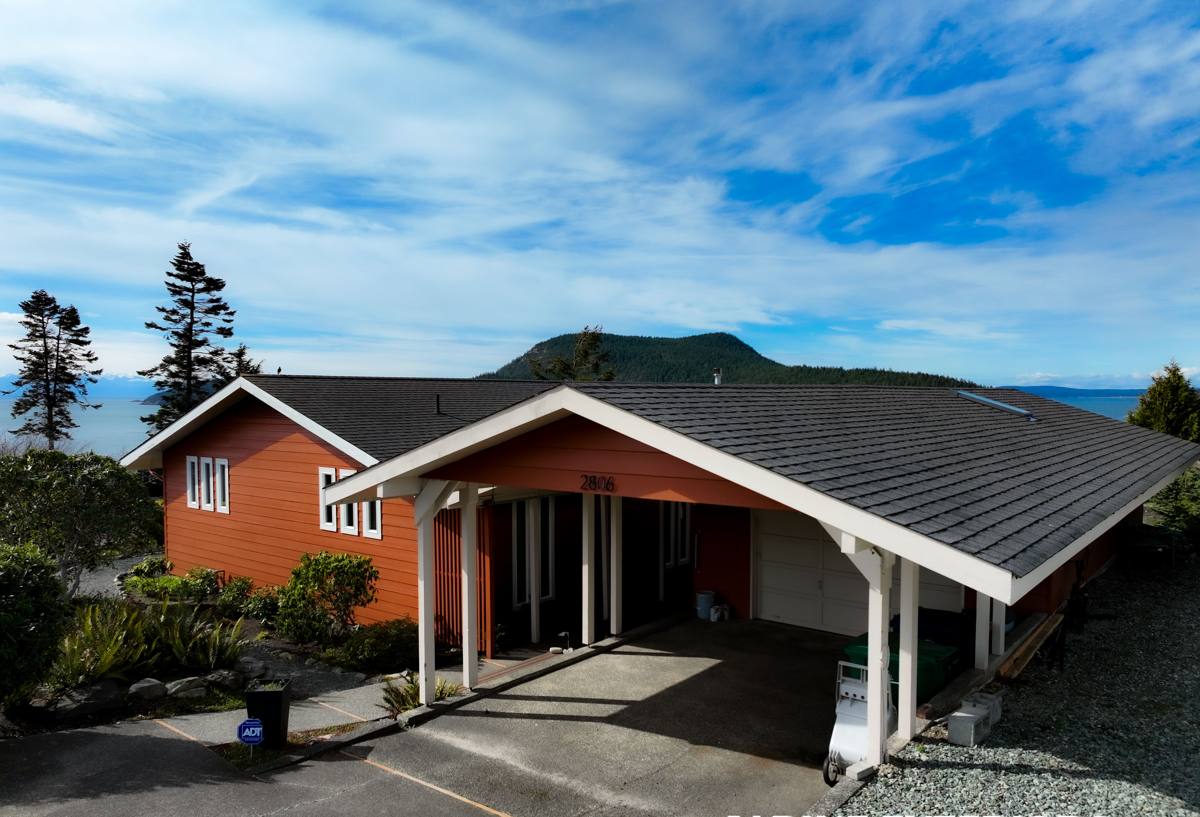
What Aldergrove's Climate Actually Does to a House
Moisture Load
This part of the Pacific Northwest gets a long stretch of the year where exterior surfaces simply don't fully dry out between rain events. Wood-based siding products absorb that moisture at cut edges, fastener holes, and any spot where the factory coating has been compromised. Over repeated wet-dry cycles, that leads to swelling, splitting, and eventually rot — especially at the bottom courses of siding and around window and door trim.
Moss and Organic Growth
Shaded roof slopes, north-facing walls, and anywhere air doesn't move freely are prime territory for moss and algae. On roofing, moss holds moisture against the shingle and can lift edges over time. On siding, algae staining is mostly cosmetic but signals a surface that's staying damp longer than it should — which is worth paying attention to on the products that are more moisture-sensitive.
Salt Air and Wind-Driven Rain
Aldergrove doesn't sit directly on saltwater, but proximity to the greater Salish Sea region means airborne salt exposure is part of the equation, particularly on west and south-facing elevations that catch prevailing weather. Combined with wind-driven rain, that means fasteners, flashing, and coatings all take more punishment than they would in a drier inland climate.
Siding: Why We Only Install James Hardie
We install James Hardie fiber cement siding exclusively. We don't install vinyl, LP SmartSide, Cemplank, Allura, or primed wood products like spruce or cedar lap. That's a deliberate standard, not a limitation on what we're capable of installing — and it's worth explaining why, because homeowners deserve to know the trade-offs before they pick a material for a house they're going to live in for decades.
- Vinyl is affordable and low-maintenance, but it expands and contracts with temperature swings, can crack in impact events, and its color is baked into the material rather than a factory-applied finish — meaning it fades over time with no way to refresh it short of replacement.
- LP SmartSide and other engineered wood products use treated wood strand technology that resists moisture better than raw lumber, but any wood-based product depends heavily on caulking, flashing, and paint maintenance staying ahead of the region's wet season. Miss a maintenance cycle here and the consequences show up faster than in a drier climate.
- Primed spruce and cedar are traditional and look great fresh, but they require the most ongoing maintenance of any option — repainting, caulk inspection, and vigilance against moisture intrusion at every seam.
- Cemplank and Allura are also fiber cement products and share some of Hardie's core advantages, but we've standardized on Hardie specifically for its ColorPlus factory finish, its regionally engineered HZ5 product line built for climates like ours, and its transferable warranty structure.
James Hardie fiber cement is non-combustible, dimensionally stable across temperature and humidity swings, and available with a factory-applied ColorPlus finish that's baked on rather than field-painted — which means better fade resistance and no need to repaint on the same schedule as wood siding. The HZ5 product line is specifically engineered for climates that see a lot of moisture, which describes Aldergrove and Whatcom County well. It's the product we're comfortable standing behind on every job, and it's what we put on our own crews' installs.
Roofing Built for a Long Wet Season
Roofing in this area has to manage water for months at a stretch, not just during isolated storms. That means underlayment quality, flashing detail at valleys and penetrations, and proper ventilation all matter as much as the shingle or roofing material itself. A roof that's installed correctly sheds moss more effectively, dries out faster between rain events, and doesn't trap moisture in the attic where it can cause its own set of problems.
We look at ventilation as part of every roofing job, not an afterthought. A roof deck that can't breathe holds moisture longer, which accelerates moss growth and shortens the life of the roofing material regardless of how good that material is on paper.
Windows: Where Most Air and Water Leaks Start
Window replacement in a climate like this is as much about the installation as it is about the window unit itself. Flashing details around the rough opening determine whether wind-driven rain gets diverted away from the wall assembly or finds its way behind the siding. We see plenty of older window installs in this region where the unit itself is fine but the flashing was never done correctly, and moisture has been quietly working its way into the wall cavity for years.
Energy performance matters too — Aldergrove sees enough cold, damp stretches that a poorly sealed window shows up directly on a heating bill, not just as a draft.
Decks That Handle Rain and Moss Without Rotting Out
Decks take a particular beating in this climate because they're horizontal — every drop of rain that falls on them has to shed off or dry out, and shaded decks under trees or on the north side of a house often don't get much help from the sun. Framing, ledger board flashing, and gap spacing between boards all affect how well a deck manages water long-term. A deck built without attention to drainage will hold moss and standing water in low spots, which accelerates rot regardless of what decking material sits on top.
Signs an Aldergrove Home's Exterior Needs Attention
- Moss buildup on roof slopes, especially on north-facing or shaded sections
- Soft or spongy spots on deck boards or around deck framing
- Paint that's peeling, bubbling, or chalking earlier than expected
- Staining or discoloration streaking down from window trim or roof edges
- Gaps or cracking at siding seams and around window and door trim
- Windows that feel drafty or show condensation between panes
Comparing Siding Options for This Climate
| Material | Moisture Resistance | Maintenance | Finish Durability |
|---|---|---|---|
| James Hardie Fiber Cement | Engineered HZ5 line for wet climates | Low | Factory ColorPlus finish, long fade resistance |
| Vinyl | Won't rot, but seams can allow water behind panels | Low | Color fades over time, no refinishing option |
| LP SmartSide / Engineered Wood | Good if maintenance stays current | Moderate | Field-applied paint needs periodic upkeep |
| Primed Cedar / Spruce | Most vulnerable to moisture without upkeep | High | Requires repainting on a regular cycle |
Why a Local Crew Matters in Aldergrove
Exterior work here isn't generic. A crew that mainly works in drier or more temperate regions doesn't always think about flashing details, ventilation, or moisture management the same way a crew does when it's dealt with this specific stretch of rainy-season weather year after year. We work throughout Lynden and Whatcom County, and Aldergrove falls within reach of that same service footprint — close enough that scheduling, follow-up, and warranty support aren't an inconvenience.
Knowing the climate also shapes the small decisions that add up over a job: where extra flashing tape gets used, how much ventilation a roof deck needs, how deck framing gets spaced to shed water. Those are the details that separate a house that looks fine on install day from one that's still performing well ten and twenty years later.
Get a Free Estimate
If you're weighing options for siding, roofing, windows, or a deck on a home in Aldergrove, we're happy to take a look and give you a straightforward, no-pressure estimate. Use the form below to get started.