 Lynden Exterior
 Why Decks in Everson Wear Out Faster Than the Warranty Card Says
Everson sits in the same stretch of Whatcom County weather that soaks Lynden and the rest of the lowlands for much of the year: long wet winters, a short dry window in summer, and a lot of shoulder-season days that are damp without ever quite counting as "rain" on the forecast. That in-between dampness is what actually kills decks. It's not one big storm — it's months of moisture sitting in end grain, under railing posts, and in the gaps between boards where sunlight and airflow rarely reach.
Add in moss. Whatcom County's moss season runs long, and a deck surface that stays shaded or doesn't drain well will grow a slick green film faster than most homeowners expect — sometimes within a single wet season on the north or east side of a house. Moss holds moisture against the wood or composite surface, and on wood decks specifically, that trapped moisture is what starts rot at the board level long before the structure underneath is compromised.
None of this means every deck in Everson needs to be torn out. It means replacement decisions here should be made by someone who's actually looked at wet-climate decks fail over time, not just someone reading a manufacturer's spec sheet.
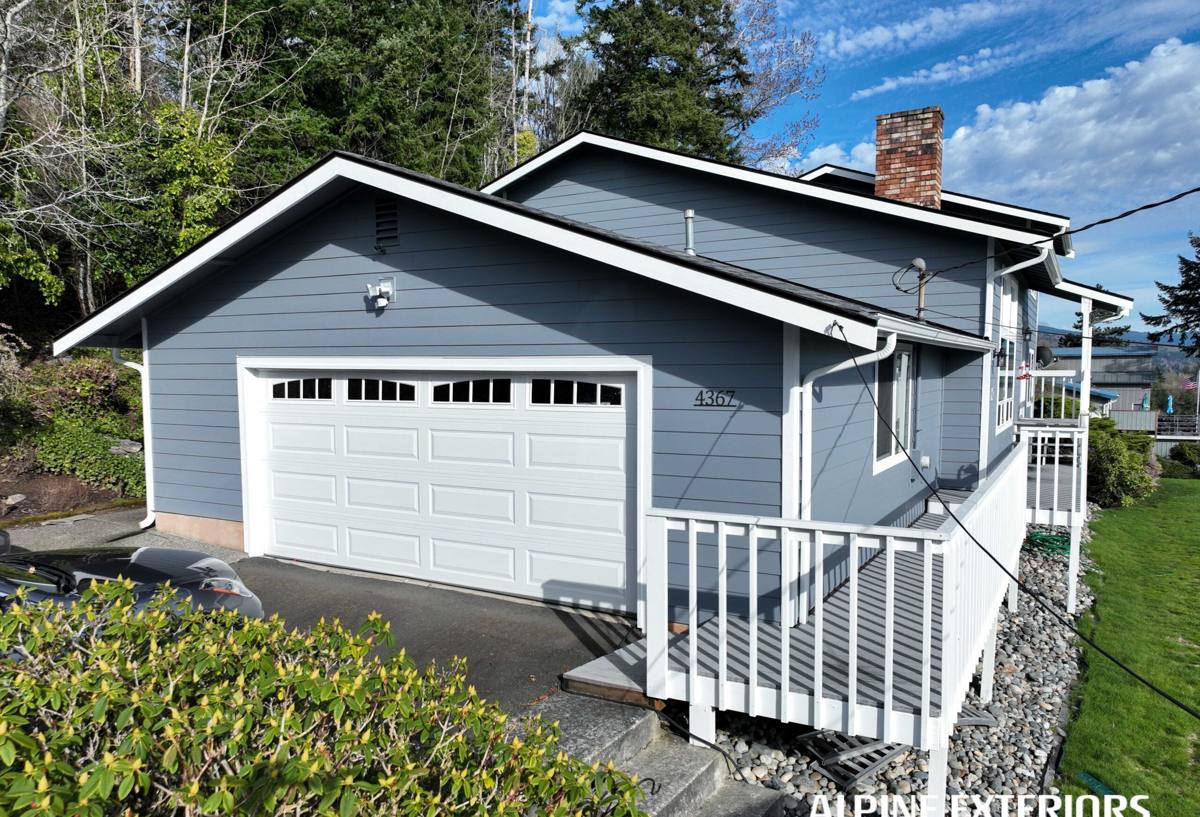
Repair or Replace? What We Actually Look At
A lot of deck problems look worse than they are, and a lot of decks that look fine from the top are in worse shape underneath than the owner realizes. Before we recommend a full replacement, we check the parts that actually determine whether a deck is safe and worth saving:
- Ledger board attachment — where the deck connects to the house is the single most common failure point in wet climates, and it's almost never visible from above.
- Footings and posts — checking for heave, rot at the post base, or undersized footings that never met current code to begin with.
- Joists — probing for soft spots, especially near the rim joist and anywhere water has been pooling.
- Surface boards — cupping, splintering, or persistent moss growth even after cleaning, which usually means the wood has stopped shedding water the way it should.
- Railing posts — a common weak point since older installs often lag-bolted posts directly into a rim joist without proper blocking.
If the framing and footings are sound, a resurface or targeted repair can make sense. If the ledger connection, footings, or joists are compromised, patching the surface just buys a year or two before you're back to the same conversation — and in the meantime you're carrying a safety risk, not just a cosmetic one.
What a Correct Deck Replacement Involves in This Climate
Flashing and the Ledger Connection
This is the detail that separates a deck that lasts fifteen-plus years from one that starts rotting at the house wall within five. Proper ledger flashing — installed so water is directed out and away from the house rather than behind the siding — matters more here than in drier regions, simply because the wood or sheathing behind that connection stays damp for a larger share of the year. We treat this as non-negotiable on every replacement, not an upgrade option.
Footings Sized for Wet, Shifting Soil
Whatcom County soils vary block to block, and footings that were adequate decades ago don't always meet current frost depth and bearing requirements. On a full replacement, we re-evaluate footing depth and spacing rather than reusing old concrete pads just because they're still in the ground.
Board Spacing and Airflow
Tight board spacing looks clean on day one and traps moisture and debris by year two. We space decking to let water and air move through, and we make sure the substructure underneath has enough clearance and ventilation that moisture isn't just sitting under the deck all winter.
Fasteners and Hardware
Everson isn't a direct saltwater environment, but the broader Whatcom County marine air still accelerates corrosion on the wrong hardware. We use fasteners and structural connectors rated for exterior, moisture-heavy use — not generic hardware-store screws that streak and weaken within a few seasons.
Material Options: What Actually Holds Up Here
| Material | How It Handles Local Moisture & Moss | Maintenance Reality |
|---|---|---|
| Pressure-treated wood | Good rot resistance when properly sealed; still needs consistent upkeep to shed water and resist moss | Annual cleaning and re-sealing recommended; lowest upfront cost |
| Cedar | Naturally moisture- and insect-resistant but softer surface; can gray or grow moss faster without maintenance | Periodic sealing to preserve color and moisture resistance |
| Composite decking | Very good moisture resistance; capped boards resist moss buildup better than raw wood | Low maintenance; occasional cleaning, no sealing required |
| PVC decking | Excellent moisture resistance; least hospitable surface for moss | Lowest maintenance; higher upfront material cost |
We install all of the above, and we'll give you a straight answer about which one fits your budget and how much upkeep you actually want to do. A well-built pressure-treated deck that you're willing to clean and seal every year will outlast a poorly-built composite deck. The material matters less than whether the person installing it understands how water moves through a deck system in this climate.
What We're Cautious About
Some lower-grade composite products on the market have had a history of moisture-related issues in wet climates — swelling at cut ends, mold in the cores, or fading faster than advertised. We're selective about which composite and PVC lines we install for that reason, and we'll tell you honestly if a product a homeowner has seen advertised isn't one we'd stand behind in a Whatcom County winter.
Our Replacement Process
- On-site assessment — we inspect the ledger, footings, and framing, not just the surface, and tell you honestly whether replacement or repair is the right call.
- Written estimate — clear pricing, material options, and timeline, no vague allowances.
- Permitting — deck replacements in Whatcom County typically require a permit depending on size and height; we handle that process so you don't have to chase it down.
- Demolition and disposal — full removal of the old deck, including hauling away debris.
- Framing and footings — built or upgraded to current code, with proper ledger flashing and hardware.
- Decking and railing install — spaced and fastened for drainage and airflow, using the material you've chosen.
- Final walkthrough — we go over the finished deck with you, including basic care guidance for whatever material you picked.
Sizing Up the Project: What Drives Cost
Every deck is different, but the same few factors drive most of the cost difference between one Everson deck replacement and the next:
| Factor | Why It Matters |
|---|---|
| Deck size and height off the ground | Taller decks need more substantial railings, stairs, and often additional footings |
| Material choice | Wood, composite, and PVC span a wide cost range and affect long-term maintenance costs too |
| Condition of existing footings/framing | Reusable footings save cost; footings that don't meet current code add to the project |
| Railing and stair complexity | Multiple stair sections, angled runs, or custom railing designs add labor |
| Access to the site | Tight side yards or limited equipment access can add time to demo and material staging |
We'll walk through these factors with you during the estimate so there are no surprises once the project starts.
Maintenance That Actually Matters in Everson's Climate
Whatever material you choose, a little consistent care goes a long way toward preventing the moss buildup and moisture damage that shortens deck lifespan around here:
- Clear leaves and debris from board gaps before fall rains set in — trapped debris holds moisture directly against the decking.
- Treat moss early with a deck-safe cleaner rather than letting it establish; once it's thick, it holds water underneath it year-round.
- Check and re-seal wood decking on a regular schedule, especially on shaded or north-facing sections that stay damp longer.
- Keep gutters and downspouts near the deck functioning — misdirected roof runoff is a common cause of premature ledger and post rot.
- Walk the deck once a year and check for soft spots, loose railing posts, or gaps opening up around the ledger flashing.
Why a Crew That Already Works This Area Matters
Building a deck that holds up in Everson isn't about following a national how-to guide — it's about understanding how a specific climate behaves against a specific structure over years, not just through one dry summer. A crew that works Lynden, Everson, and the rest of Whatcom County regularly has already seen which ledger connections fail first, which footings don't hold up to local soil conditions, and which materials actually perform once the fall rains and the moss season set in. That experience shows up in the details you don't see on install day — the flashing behind the ledger, the footing depth, the fastener choice — and those are exactly the details that determine whether your deck is still solid in year twelve or needs work again in year four.
Get a Straight Answer About Your Deck
If you're not sure whether your Everson deck needs a full replacement or just some targeted repair, we're glad to come take a look and give you an honest read — no pressure, no upsell. Use the form below to request a free estimate, and we'll walk the deck with you and lay out your options plainly.