 Lynden Exterior
 Birch Bay's Exterior Challenge Is Different From Inland Whatcom County
Birch Bay sits right on the water, and that changes what a house has to deal with every year. A few miles inland in Lynden, homes get plenty of Pacific Northwest rain and the seasonal moss that comes with it, but they're shielded from the thing that makes coastal exteriors age differently: salt-laden air moving off the water. Add in exposed, wind-driven rain during winter storms off the Strait of Georgia, and Birch Bay properties are working against a tougher combination of moisture and corrosion pressure than most of the rest of the county.
None of this means a house in Birch Bay is doomed to constant repairs. It means the materials and installation details matter more here, not less. A siding, roofing, window, or deck system that performs fine on a sheltered inland lot can fail early on a bluff or a low-lying waterfront lot if it wasn't chosen and installed with salt exposure and wind-driven rain in mind. That's the lens we bring to every Birch Bay project.
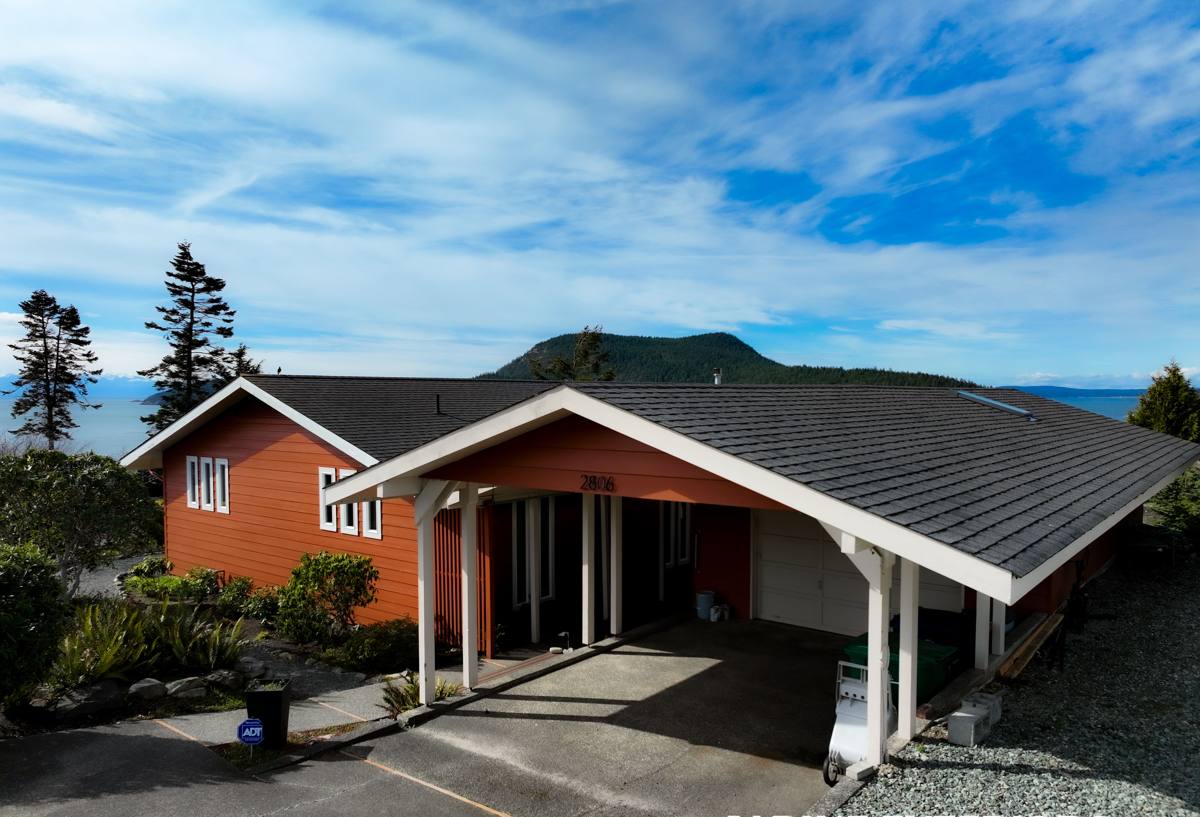
What Salt Air Actually Does to a Home's Exterior
Salt air isn't just "humid air." Airborne salt is corrosive to metal fasteners, flashing, and hardware, and it's abrasive to finishes over time. On a home a few blocks from the water, or one with a clear line of sight to the bay, you'll typically see the effects show up in a few predictable places:
- Fasteners and metal trim that corrode or streak faster than the manufacturer's rated lifespan would suggest, especially if non-coastal-grade hardware was used
- Paint and factory finishes that chalk, fade, or lose adhesion sooner on the water-facing side of the house
- Caulking and sealant joints that break down faster, opening the door to moisture intrusion behind siding and trim
- Roofing metals — flashing, gutters, vents — that pit or corrode ahead of schedule if they aren't rated for a marine or near-marine environment
This is why we pay close attention to fastener grade, flashing material, and sealant products on Birch Bay jobs, not just the visible siding or roofing product. The parts of an exterior system you don't see are often what determines how long the parts you do see actually last.
Driving Rain and Wind Exposure
Birch Bay's open exposure to the water means wind-driven rain hits building envelopes at angles that inland Lynden homes rarely see. Rain that's being pushed sideways by wind finds its way into laps, seams, and penetrations that would shed water fine in a calmer setting. That's a siding and flashing detail problem as much as a material problem — correct lap dimensions, properly integrated house wrap, and flashing at every window, door, and roof-to-wall transition matter more on an exposed coastal lot than almost anywhere else in the county.
Moss, Mildew, and the Long Wet Season
Whatcom County's wet season runs long, and Birch Bay's proximity to the water tends to keep humidity and surface moisture elevated even on days when it isn't actively raining. That's ideal growing conditions for moss and mildew on roofs, siding, and shaded deck surfaces. A north-facing roof slope or a siding wall that stays shaded and damp for weeks at a stretch will grow moss faster than the same surface on a dry, sun-exposed inland property.
Moss isn't just a cosmetic issue. On roofing, moss holds moisture against shingles and can work its way under tabs and flashing, shortening roof life. On siding and decking, persistent moisture and organic growth accelerate rot in any wood-based material and stress paint and caulk joints. Material selection and basic maintenance — keeping gutters clear, keeping tree cover trimmed back where practical, and addressing moss early rather than letting it establish — go a long way here.
Siding: Why We Only Install James Hardie Fiber Cement
We get asked in Birch Bay more than almost anywhere else why we don't offer vinyl, LP SmartSide, or cedar. The honest answer is that we looked at how each of those products actually performs under sustained salt exposure and driving rain, and we made a standard for our company based on that, not on what's cheapest to install.
Vinyl
Vinyl siding is affordable and low-maintenance in a lot of settings, and it doesn't rot. But it's a thin, flexible plastic product that can warp or become brittle over time, and in a coastal wind environment like Birch Bay, panels are more prone to rattling, popping loose at the locks, or cracking on impact than a rigid fiber cement panel. Its seams and J-channels also give wind-driven rain more opportunities to find a path behind the cladding.
LP SmartSide and Other Engineered Wood
Engineered wood siding is wood at its core, treated and resin-coated to resist moisture. That works well in a lot of applications, but it depends entirely on the factory coating and field-applied caulking staying intact at every cut edge and seam. In a salt-air, high-moisture environment, any breach in that coating is an invitation for the wood substrate underneath to start absorbing water — and once that starts, it's progressive.
Cedar and Primed Spruce
Real wood siding has a genuine appeal, and some homeowners want that look specifically. But it's a natural material that requires ongoing refinishing, and in a wet, salt-exposed coastal setting it demands more upkeep than most owners are prepared to commit to over the long run. Skipped maintenance cycles show up fast as cracking, cupping, and rot.
Why Hardie
James Hardie fiber cement is cement, sand, and cellulose fiber — it's non-combustible and doesn't have a wood substrate to rot. Its ColorPlus factory finish is baked on and holds color and adhesion better than field-applied paint, which matters when a finish is fighting UV, salt, and constant moisture at the same time. Hardie also engineers products by climate zone, and coastal Pacific Northwest installations fall under specifications built for exactly this kind of moisture exposure. It's a rigid panel that holds up to wind better than vinyl, and it carries a strong transferable warranty when installed to Hardie's spec — which is the installation standard we hold ourselves to on every job.
Roofing in a Salt-Air, Moss-Heavy Environment
Roofing choices in Birch Bay need to account for both wind uplift and moss resistance. We look at underlayment quality, ventilation, and flashing metal compatibility as closely as the shingle or roofing product itself — a great shingle installed with the wrong flashing metal or without adequate ridge and soffit ventilation will underperform its rated lifespan on a home this close to the water. Proper attic and roof ventilation also helps control the interior moisture that contributes to moss and mildew from the inside out, not just what falls as rain.
Windows and Decks: The Same Exposure Rules Apply
Window flashing and sealant details deserve the same scrutiny as siding in Birch Bay — a window that's watertight on an inland lot can leak on a coastal one if the flashing isn't integrated correctly with the house wrap and siding around it. For decks, material choice and fastener grade both matter: composite decking resists rot better than untreated wood in this environment, but the fasteners, ledger flashing, and any exposed metal hardware need to be rated for coastal exposure, or they'll corrode well before the decking itself shows wear.
Comparing Siding Options for a Birch Bay Home
| Factor | Vinyl | Engineered Wood | Cedar | James Hardie Fiber Cement |
|---|---|---|---|---|
| Salt air / corrosion resistance | Moderate | Depends on coating integrity | Low without diligent upkeep | High |
| Wind-driven rain performance | Moderate (more seams) | Good if sealed correctly | Moderate, upkeep-dependent | Strong |
| Rot risk | None (not wood-based) | Present if moisture reaches core | Present without maintenance | None (cement-based) |
| Combustibility | Combustible | Combustible | Combustible | Non-combustible |
| Ongoing maintenance | Low | Moderate | High | Low |
What a Local Crew Brings to a Coastal Property
A contractor based inland who occasionally works Birch Bay may not think twice about fastener grade, flashing metal compatibility, or how a wall assembly needs to handle sideways rain differently than a sheltered lot. Because we work throughout Whatcom County, including regularly in Birch Bay, we see how homes here actually age — where moss establishes first, which elevations take the worst of the weather, and which installation shortcuts show up as callbacks two or three years later. That's knowledge that only comes from doing the work here repeatedly, not from a spec sheet.
A Simple Maintenance Checklist for Birch Bay Homeowners
- Clean gutters and downspouts at least twice a year to keep water moving off the roof and away from siding
- Inspect caulking and sealant joints around windows, doors, and trim annually, especially on the water-facing side of the house
- Treat moss on roofing and shaded siding early rather than letting it establish and hold moisture against the surface
- Check exposed metal hardware — hinges, railings, fasteners — periodically for early signs of corrosion
- Trim back vegetation that keeps siding or roof sections shaded and damp for extended periods
- Have flashing at roof-to-wall transitions and window/door openings inspected if you notice any interior staining or drafts
Getting Started
If you're weighing a siding, roofing, window, or deck project for a Birch Bay property, we're glad to come take a look and talk through what your specific lot and exposure actually call for. There's no pressure and no cost to get an honest assessment and an estimate — just a straightforward look at what will actually hold up on your home.