 Lynden Exterior
 Windows Built for Everson's Weather, Not Just the Opening
Everson sits in the part of Whatcom County where marine air off the coast, the Nooksack River valley, and long stretches of overcast, wet weather combine into a climate that is hard on building materials — and windows take more of that punishment than almost any other part of the exterior. Salt-tinged moisture in the air, driving rain that comes in sideways during winter storms, and a moss season that can stretch from fall through spring all work against window frames, sills, and seals year after year. A window that was installed correctly for a drier climate, or installed carelessly anywhere, tends to show its age fast here.
When we talk about "custom windows" for an Everson home, we mean windows sized and detailed for that specific opening, that specific wall assembly, and that specific exposure — not a one-size-fits-all box pulled off a shelf. Older Everson homes, especially those with original wood-frame construction or additions built without much attention to moisture management, often have openings that are slightly out of square, walls that have settled, or trim details that don't match anything you'd find at a big-box store. Custom sizing and detailing is what makes the difference between a window that seals properly for twenty-plus years and one that starts leaking within a few winters.
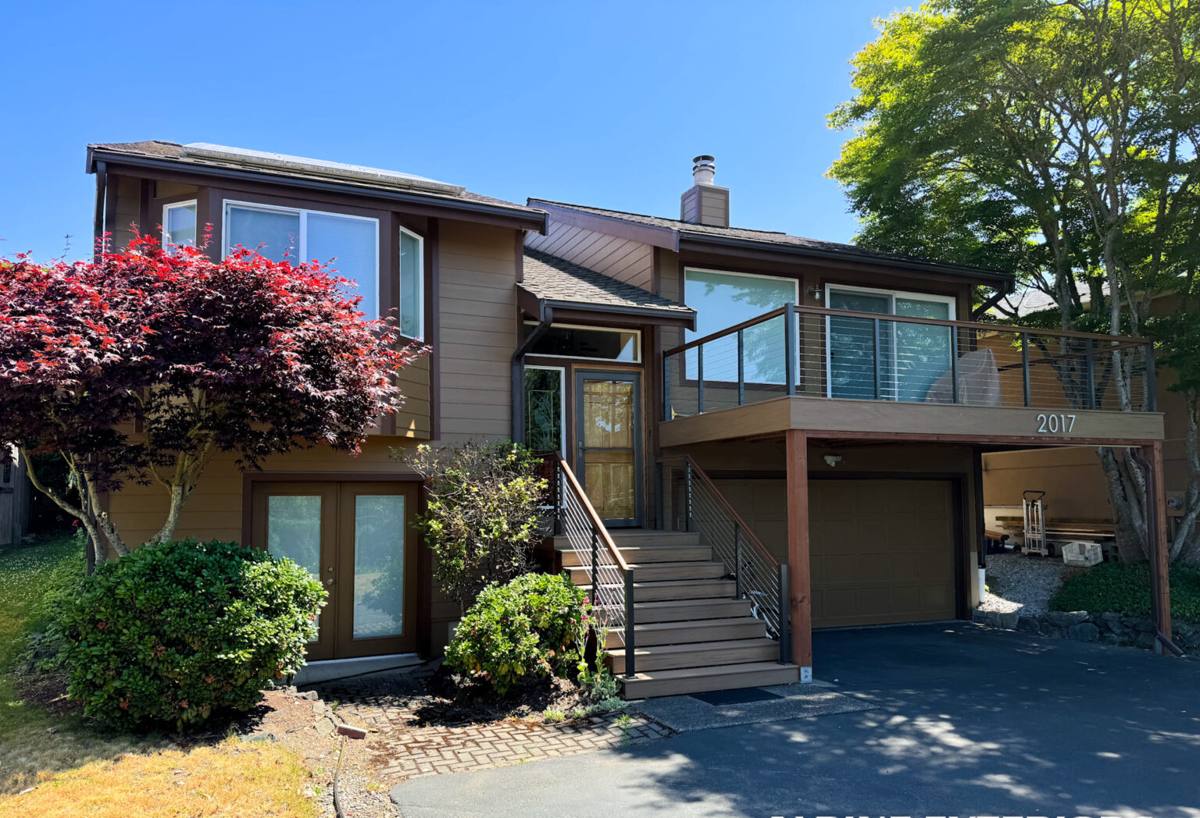
What Whatcom County's Climate Does to the Wrong Window
Moisture Intrusion
Driving rain doesn't just test the glass — it tests every joint, every piece of flashing, and every bead of sealant around the frame. A window installed without proper flashing integration into the wall's water-resistive barrier will eventually let water behind the trim, where it can sit against sheathing and framing without anyone noticing until there's visible damage.
Moss and Organic Growth
Wherever moisture lingers — horizontal sills, the tops of trim boards, low-slope areas near windows — moss and algae find a foothold. Left alone, that growth holds even more moisture against the wood or composite material, accelerating rot and finish failure. It's a slow problem, which is exactly why it's so often ignored until repair costs climb.
Condensation and Indoor Humidity
Cold, damp winters push a lot of moisture-laden indoor air against cold glass and frames. Windows with poor thermal performance or gaps in the seal show it as fogging, condensation running down to the sill, and eventually soft or discolored wood on the interior side — a problem homeowners often notice before they ever suspect the window itself.
Signs an Everson Home's Windows Need Attention
- Soft, discolored, or swelling wood at the sill or lower corners of the frame
- Visible moss, algae, or dark streaking on horizontal trim or sills
- Drafts you can feel near the frame even when the window is fully latched
- Condensation forming between double-pane glass (a sign the seal has failed)
- Difficulty opening, closing, or latching windows that used to operate smoothly
- Visible daylight or gaps around the frame from outside
- Rising heating bills without any other clear explanation
What a Correct Custom Window Installation Actually Involves
The window unit itself only accounts for part of how well a window performs over time. Installation quality is what determines whether that performance holds up through Whatcom County winters. A correct job includes:
Accurate Measurement and Fit
We measure each opening individually rather than assuming uniformity across a home — especially important in older Everson houses where framing has shifted slightly over the decades. A custom-built or custom-ordered window that fits its actual opening, not a nominal "standard" size, seals tighter and lasts longer.
Flashing Integrated with the Water-Resistive Barrier
Flashing tape and pan flashing need to tie into the house wrap or building paper in the correct shingle-lap order, so water is always directed outward and downward, never trapped behind the trim. This is the single most common shortcut on a rushed installation, and it's the one most likely to cause hidden rot.
Proper Sealant Placement — And Where Not to Seal
Sealing every gap sounds thorough, but sealing the wrong spot can trap moisture that needs a path to drain and dry out. Correct installation leaves specific weep points and drainage paths open by design.
Insulation Without Compression
The gap between the window frame and the rough opening needs to be filled with insulation that doesn't compress the frame out of square, which can bind hardware or break the seal over time.
Interior and Exterior Trim Detailing
Trim needs to match the home's existing lines while also shedding water away from joints — an area where custom work matters most on older or architecturally distinct homes.
Choosing Materials That Hold Up Locally
Every window material handles Whatcom County's damp climate differently. There's no universally "best" choice — the right one depends on the home's style, budget, and how much upkeep the homeowner wants to take on.
| Material | Moisture Resistance | Maintenance | Typical Lifespan |
|---|---|---|---|
| Vinyl | Very good — won't rot, resists moss staining | Low; occasional cleaning | 20–30 years |
| Fiberglass | Excellent — stable in wet/dry cycling, minimal expansion or contraction | Low | 30+ years |
| Wood (unclad) | Requires diligent upkeep; most vulnerable to rot and moss if finish fails | High; repainting/refinishing needed regularly | Varies widely with maintenance |
| Wood-clad (aluminum or vinyl exterior) | Good — exterior shell protects the wood core if properly sealed | Moderate; interior wood still needs occasional attention | 25–35 years |
For homes closer to open exposure or with a long history of moisture problems, we generally steer homeowners toward vinyl or fiberglass on the exterior-facing side, since they hold up to the driving rain and humidity swings with the least ongoing maintenance. For homes where matching an original wood-frame look matters more, wood-clad options let us keep that appearance while giving the exterior a more weather-resistant shell — as long as the installation and flashing details are done correctly.
Our Process for a Custom Window Project
- On-site assessment — we look at every opening individually, check for existing moisture damage, and note anything unusual about the wall assembly before recommending anything.
- Material and style selection — we walk through the trade-offs above based on your home's exposure, style, and budget, without pushing a single "house brand."
- Accurate measurement and ordering — custom units are built or configured to the real opening dimensions, not a rounded-off standard size.
- Removal and inspection — when we pull the old window, we check the framing and sheathing underneath for hidden rot or moisture damage before anything new goes in.
- Installation with proper flashing and drainage — following the sequence that keeps water moving out, not trapped in.
- Trim and finish work — matched to your home's existing lines, inside and out.
- Final walkthrough — we test operation, check the seal, and go over care basics before we consider the job done.
Energy Performance Worth Paying Attention To
In a climate with as many overcast, cool days as Whatcom County sees, a window's U-factor (how well it resists heat loss) matters more than most homeowners realize when comparing options. Solar Heat Gain Coefficient (SHGC) is less critical here than it would be in a sunnier climate, but it still affects comfort near south- and west-facing windows. When comparing quotes or products, ask for the U-factor and SHGC ratings directly rather than relying on marketing terms like "energy efficient," which don't tell you much on their own.
Keeping New Windows Performing Long-Term
- Rinse sills and tracks periodically to keep organic debris and moss spores from taking hold
- Check exterior caulking and sealant annually, especially after winter storm season
- Keep gutters and downspouts clear so runoff isn't sheeting down across window heads
- Trim back vegetation that shades window sills and keeps them damp longer than the rest of the wall
- Address any soft trim or discoloration early — it's far cheaper to fix a small area than to replace a rotted frame
Why a Crew That Already Works in Everson Matters
Window installation done right depends on understanding how a specific climate behaves against a specific wall assembly, and that's knowledge that builds up from doing the work locally, season after season. A crew that regularly installs windows in Everson and the surrounding Lynden area already knows how driving rain moves across typical wall orientations here, which older home styles tend to hide moisture problems behind their trim, and how to time installation work around the region's wetter stretches so the opening isn't sitting exposed during a storm. That local familiarity shows up in the details — the flashing sequence, the trim choices, the material recommendations — more than in anything you'd notice on the surface.
If your Everson home has windows showing signs of wear, or you're planning a renovation and want the job done with the right materials and installation details for this climate, we're happy to take a look and talk through your options. Reach out for a free, no-pressure estimate — there's no obligation, just a straightforward look at what your home actually needs.