 Lynden Exterior
 Why Bellingham Roofs Take a Different Kind of Beating
Homes around Bellingham sit in a spot where three things stack up against a roof at the same time: proximity to salt water and the marine air that comes with it, long stretches of driving rain off the Pacific, and a moss season that can run most of the year under the tree cover common to Whatcom County. Any one of these is manageable on its own. Together, they shorten the useful life of a roof that wasn't built or installed with this climate in mind.
Salt-laden air corrodes exposed metal faster than it would inland — flashing, fasteners, and vent components take the brunt of it. Driving rain, especially in wind, finds its way into laps and seams that would stay dry in a calmer climate, which is why underlayment and flashing detail matter more here than in drier parts of the state. And moss doesn't just sit on top of a roof looking messy — its root structure lifts shingle edges and holds moisture against the surface long after the rain stops, which is exactly the environment that leads to premature granule loss and rot.
None of this means a roof in Bellingham is doomed to fail early. It means the materials, the ventilation, and the installation details need to be chosen for this specific environment, not for a generic spec sheet.
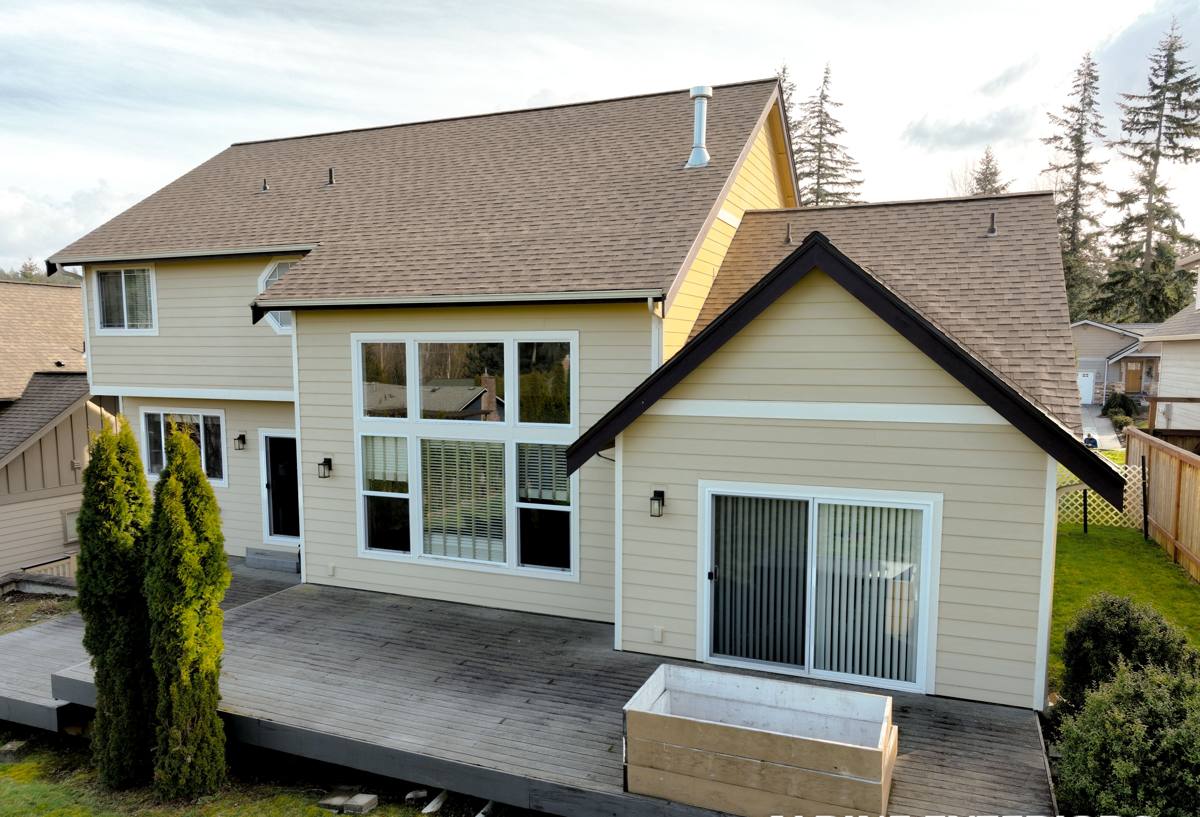
Repair or Replace? Reading the Signs
Not every roof problem calls for a full replacement, and a straight answer up front saves homeowners money. The signs below are what we actually look for when deciding which side of that line a roof is on.
- Granules collecting in gutters or at downspout outlets, especially after a hard rain
- Shingles that are cupping, curling at the edges, or visibly thinning in patches
- Moss established in patches rather than a light surface film
- Soft spots or slight give when walking the roof deck
- Daylight visible through the attic roof boards, or damp insulation below the deck
- Repeated leaks in different spots after past patch repairs
- A roof that's already past or close to the manufacturer's expected service life for its material and exposure
One or two of these on their own often point to a repair. Several at once, or any sign of deck damage, usually means the roofing system as a whole has reached the point where patching is a short-term fix on a longer-term problem.
What a Correct Roof Replacement Actually Involves
A roof replacement is more than swapping old shingles for new ones. In this climate, several layers work together, and skipping or shortcutting any one of them is where premature failures start.
Tear-Off and Deck Inspection
We remove the existing roofing down to the deck rather than layering over it. That's the only way to actually see the condition of the sheathing underneath — soft, delaminated, or water-stained boards get replaced before anything new goes down. Installing over a compromised deck just hides the problem under a new roof.
Underlayment and Moisture Protection
Given how much driving rain this area sees, underlayment isn't a formality. We pay particular attention to ice-and-water shield or high-performance synthetic underlayment at eaves, valleys, and anywhere wind-driven rain is most likely to push moisture backward under the shingle laps.
Ventilation That Matches the Climate
Poor attic ventilation traps moist air against the underside of the deck, which accelerates rot and can void material warranties outright. A correct replacement includes checking intake and exhaust balance — soffit vents, ridge vents, or other exhaust points — so the attic can actually dry out between wet stretches instead of staying damp all winter.
Flashing, Valleys, and Penetrations
Chimneys, skylights, vent pipes, and valleys are where most roof leaks actually start, not the open field of shingles. We install new flashing rather than reusing old, corroded pieces, with metal and sealants chosen to hold up to salt air rather than fail early.
Choosing Roofing Materials for Whatcom County Weather
There's no single "best" roofing material for every home — it depends on budget, roof pitch, and how much moss and moisture exposure the property gets. Here's how the common options generally compare for this climate.
| Material | Moss & Moisture Resistance | Maintenance | General Lifespan |
|---|---|---|---|
| Architectural asphalt shingle | Good with proper ventilation and zinc/copper strips; moss can still take hold without upkeep | Periodic moss and debris removal recommended | Long-term, varies by product line |
| Standing seam metal | Excellent — smooth surface sheds moss and debris well | Low; occasional rinse and fastener check | Very long-term |
| Synthetic/composite shingle | Good; resists moisture absorption better than organic-based products | Low to moderate | Long-term |
| 3-tab asphalt shingle | Lower profile holds less debris but wears faster under constant wet exposure | Regular upkeep needed to maximize lifespan | Shorter than architectural or metal |
We don't push one product on every home. What we do is walk through the trade-offs honestly — upfront cost, how much moss maintenance a homeowner is willing to do, and how the roof's exposure to shade and moisture compares to the rest of the property — so the material fits how the house actually sits on its lot.
Our Bellingham Roof Replacement Process
The process is straightforward, and we keep homeowners informed at each stage rather than disappearing until the job is done.
- On-site inspection. We walk the roof and attic, check the deck condition, ventilation, and flashing points, and take measurements.
- Written estimate. A clear scope of work and material options, with the reasoning behind each recommendation explained in plain terms.
- Scheduling around the weather. Roofing in Whatcom County means working around rain windows. We plan tear-off and dry-in carefully so the deck isn't left exposed longer than necessary.
- Tear-off and deck repair. Old roofing comes off, damaged sheathing gets replaced, and the deck is prepped for underlayment.
- Underlayment, flashing, and material installation. Each layer goes down in the order and manner that actually protects against this region's rain and wind patterns.
- Final walkthrough and cleanup. We inspect the finished roof, check ventilation is functioning correctly, and clear the site of debris and fasteners.
Why a Crew That Already Works Bellingham Matters
Roofing crews who work Bellingham and the broader Lynden area regularly know things that don't show up on a spec sheet: which neighborhoods sit under enough tree cover that moss resistance should weigh heavier in material choice, how local permitting works, and how to plan a tear-off around Whatcom County's rain patterns instead of getting caught mid-job with an open deck. That local familiarity translates directly into fewer surprises and a roof that's actually built for where it sits, not for a generic climate zone.
It also matters for accountability. A contractor based in the area has a reputation in the community to stand behind, and is around for warranty service, follow-up questions, or storm-related concerns long after the crew has packed up.
Protecting Your New Roof: Moss and Debris Maintenance
A correctly installed roof still benefits from basic upkeep in this climate. A little maintenance goes a long way toward hitting the material's full expected lifespan.
- Clear gutters and downspouts at least twice a year, more often under heavy tree cover
- Remove overhanging branches that keep sections of the roof shaded and damp
- Have moss growth treated or gently removed before it spreads, rather than after it's established
- Avoid pressure washing shingles directly — it can strip protective granules
- Schedule a walk-through inspection every couple of years, or after any significant windstorm
- Check attic ventilation isn't blocked by insulation or debris
Cost Factors for a Bellingham Roof Replacement
Every roof is priced individually after an on-site look, but the same handful of factors drive the cost on most Whatcom County homes.
| Factor | Why It Affects Cost |
|---|---|
| Roof size and pitch | Steeper roofs take longer to work safely and use more material for the same footprint |
| Number of existing layers | Extra tear-off work is required when a roof has been layered over in the past |
| Deck condition | Rotted or soft sheathing found during tear-off needs replacement before new roofing goes down |
| Material selection | Asphalt, synthetic, and metal roofing carry different material and labor costs |
| Roof complexity | Valleys, dormers, skylights, and chimneys all add flashing and labor time |
| Site access | Steep lots, limited driveway access, or tall trees can affect equipment and staging needs |
We'd rather walk a roof in person and give an honest number than guess over the phone — too many of these factors only show up once tear-off starts.
Ready to Talk About Your Bellingham Roof?
If your roof is showing wear, holding onto moss it shouldn't, or you're just not sure whether repair or replacement is the right call, we're happy to take a look. Fill out the form below for a free, no-pressure estimate and a straight answer about what your roof actually needs.