 Lynden Exterior
 Storm Damage Roof Repair Built for Bellingham's Weather
Bellingham sits close enough to the water that homes here take a different kind of beating than roofs further inland. Wind off the Strait and Bellingham Bay drives rain sideways under shingles and flashing that would stay dry in a calmer storm. Salt-laden air speeds up corrosion on fasteners, flashing, and metal roofing components. And Whatcom County's long, wet, low-sun stretch from fall through spring keeps roofs damp for months at a time, which is exactly what moss and algae need to take hold. None of this means your roof is doomed — it means storm damage repair here has to account for conditions that a generic repair crew from outside the area might not think to check.
We're based in Lynden and work Bellingham regularly, so we're not guessing at what a wind-and-rain event does to a roof in this corner of Washington. We've seen how a single hard blow can lift shingles that looked fine, how driving rain finds the smallest flashing gap, and how a roof that "seems okay" after a storm can still be taking on water in the attic for weeks before it shows up as a ceiling stain.
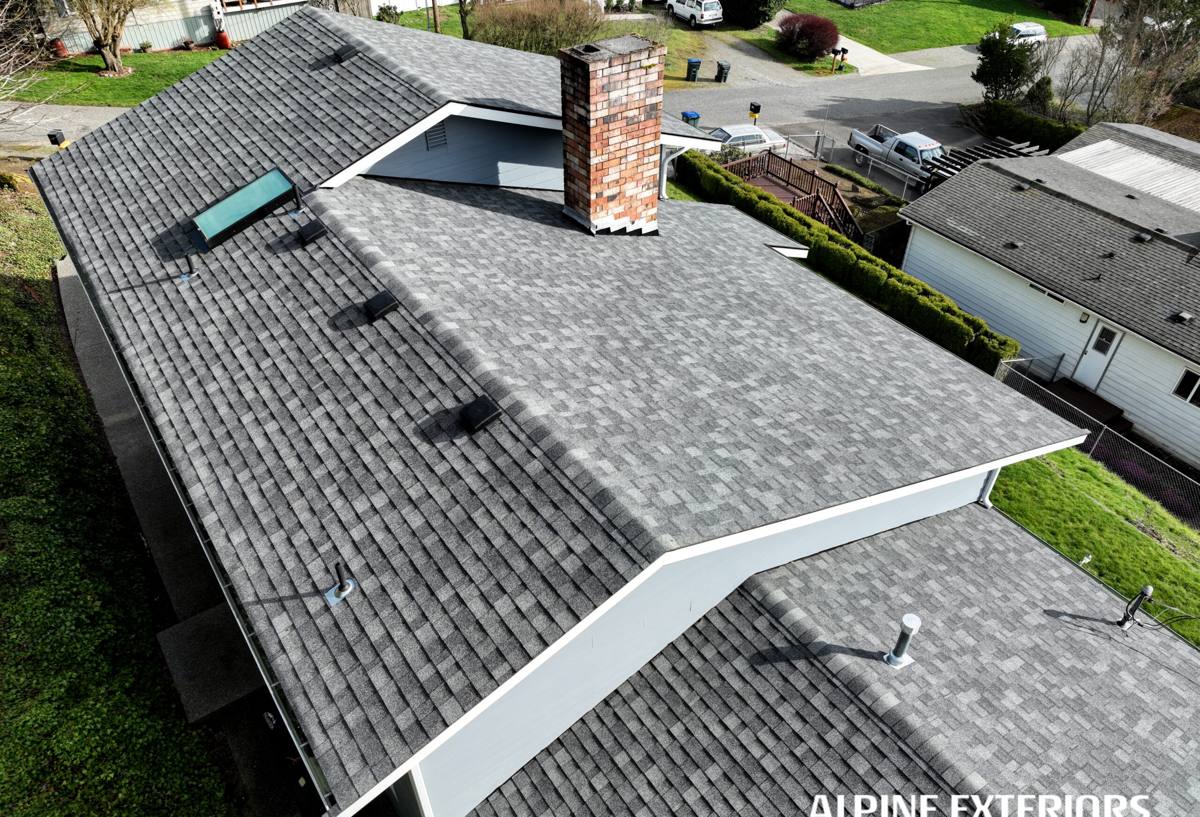
What Storms Actually Do to a Roof Here
Storm damage isn't always dramatic. Most of the calls we get after a windstorm aren't for roofs that are visibly torn up — they're for roofs that look mostly normal from the ground but have real problems up close. Understanding the common failure points helps you know what to watch for.
Wind
Sustained wind and gusts lift the tab edges of asphalt shingles, breaking the seal strip underneath even if the shingle doesn't tear off. Once that seal is broken, the shingle can flap in the next wind event and let water underneath. Wind also loosens ridge caps and can pull nails partway out, which isn't obvious unless someone gets on the roof and checks.
Driving rain
Rain that comes in at an angle — common in Whatcom County storms — pushes water uphill under shingle edges and into any gap in flashing around chimneys, skylights, vents, and roof-to-wall transitions. This is where most storm-related leaks actually start, not in the open field of the roof.
Debris
Branches and needles knocked loose in a storm can gouge or puncture roofing material, especially on roofs with mature trees nearby. Even small debris impacts can crack shingle tabs or dent metal flashing in ways that aren't visible from the ground.
Moss and prolonged moisture
Moss itself isn't storm damage, but a storm-damaged roof that's already carrying a moss load is more vulnerable. Moss holds moisture against the roofing material and can work its way under shingle edges, and it often masks smaller storm damage until someone clears it and inspects underneath.
Signs Your Roof May Have Storm Damage
After any significant wind or rain event, it's worth doing a quick check — ideally from the ground with binoculars, since walking a wet roof is a real fall risk. Call us if you notice any of the following:
- Shingles that look lifted, curled, or out of alignment compared to the rest of the roof
- Granules collecting in gutters or downspouts (a sign of shingle surface wear or impact damage)
- Visible gaps or bent sections in flashing around chimneys, vents, or skylights
- Water stains on interior ceilings or upper walls, especially near exterior corners
- Damp or musty smell in the attic after a storm
- Debris, branches, or dents on the roof surface
- Sagging or soft-feeling spots in the roof deck visible from the attic side
- Daylight visible through the roof boards from inside the attic
If you see any of these, the priority is getting a tarp or temporary cover on active leaks and getting an inspection scheduled — waiting through another rain event on a compromised roof usually turns a repair into a bigger repair.
What a Correct Storm Damage Repair Actually Involves
A rushed storm repair — a few new shingles nailed over the damaged area and a bead of sealant — often looks fine for a season and then fails at the first real rain. Doing it right means treating the repair as a system, not a patch:
- Full-area inspection, not just the obvious spot. Storm damage usually isn't confined to one shingle. We check the surrounding field, ridge, and any nearby flashing before deciding what needs replacing.
- Underlayment check. If water got under the shingles, the underlayment beneath may already be compromised even if the shingles themselves look salvageable.
- Flashing evaluated on its own. Flashing around chimneys, skylights, and walls is a separate failure point from the shingles and needs its own check — replacing shingles over bad flashing just relocates the leak.
- Matching materials correctly. New shingles should match the existing roof's type, weight, and where possible, color, so the repair doesn't stand out or create a mismatched wear pattern down the road.
- Proper fastening for wind exposure. Given how much wind this area gets off the water, we fasten repairs to hold up under the next storm, not just the current inspection.
Our Process
1. Inspection and documentation
We walk the roof (weather permitting) and check the attic from inside where accessible. We document what we find with photos — this matters if you're filing an insurance claim, since adjusters want clear evidence of storm-caused damage versus general wear.
2. Honest assessment
We'll tell you plainly whether you're looking at a targeted repair or whether the damage (or the roof's age and condition going in) points toward replacement being the more sensible option. We're not going to talk you into a full re-roof for a fixable problem, and we're not going to patch something that's going to leak again in six months.
3. The repair
Once you approve the scope, we replace damaged shingles, underlayment, and flashing as needed, matching materials to your existing roof. We work to get exposed sections closed in the same day whenever weather allows, since an open roof and a Whatcom County forecast don't mix well.
4. Cleanup and final check
We clear debris, old materials, and stray fasteners from the yard and gutters, then do a final walk-through so you know exactly what was done and what to watch for going forward.
Repair or Replace? What Actually Drives That Decision
Not every storm-damaged roof needs the same answer. The table below covers the main factors we weigh — this is general guidance, not a quote, since every roof is different.
| Factor | Leans Toward Repair | Leans Toward Replacement |
|---|---|---|
| Roof age | Under 10-15 years, in otherwise good shape | Already near or past expected service life |
| Extent of damage | Isolated to one area or slope | Spread across multiple areas or slopes |
| Underlayment/deck condition | Dry and intact where exposed | Soft decking or widespread moisture found |
| Moss/algae history | Minor, surface-level growth | Heavy, long-term buildup with underlying wear |
| Prior repairs | Few or none | Multiple past patches, especially in the same area |
| Insurance scope | Claim covers a defined repair area | Adjuster scopes full slope or full roof |
Materials and Standards We Work To
For repairs, we match your existing roofing material rather than defaulting to whatever's easiest to source. If your roof is asphalt composition shingle, metal, or another common residential type, we carry the fasteners, flashing stock, and underlayment suited to that material and to coastal Whatcom County conditions — corrosion-resistant fasteners near the water, and underlayment rated for the amount of moisture exposure this area sees. We don't cut corners on flashing detail work to save time, because that's the part of a repair most likely to fail first if it's rushed.
If You're Filing an Insurance Claim
Many storm repairs go through homeowners insurance. A few things help that process go smoother:
- Get photos of visible damage as soon as it's safe to do so, before any temporary repairs change the scene
- Get a professional inspection promptly — insurers generally want documentation close to the storm date
- Keep receipts for any emergency tarping or temporary measures, which are often reimbursable
- Ask your adjuster directly whether the scope covers repair or full replacement before work begins
We can provide our inspection findings and photos to support your claim, but the claim decision and coverage details are between you and your insurer.
Why It Matters That We're a Local Crew Working Bellingham Regularly
Storm damage repair is one of those jobs where local familiarity actually changes the outcome. A crew that works Bellingham and greater Whatcom County on a regular basis knows what this area's storms typically do to roofs, knows which flashing details tend to fail first in salt air and driving rain, and can usually get out for an inspection faster after a regional storm than a company dispatching from further away — which matters when water is actively getting into your attic. Being close by also means a follow-up visit, if you need one, isn't a big ask.
If a recent storm has you wondering whether your roof took damage, we're glad to come take a look. Reach out using the form below for a free, no-pressure estimate — we'll tell you honestly what we find and what it would take to fix it right.