 Lynden Exterior
 Why Bellingham Siding Wears Differently Than Inland Siding
Bellingham sits right on Bellingham Bay, and that changes what siding has to survive. Homes just a few miles inland in Whatcom County deal with rain and cold, but Bellingham homes also take on salt-laden air moving off the water, wind-driven rain that gets pushed sideways into wall assemblies, and a moss and algae season that can run most of the year on shaded or north-facing walls. Salt air is corrosive to fasteners and finishes over time, and it accelerates the breakdown of anything that isn't built to handle a marine-influenced climate. Add in the region's long stretches of overcast, damp weather, and siding here rarely gets the drying time that the same product would get on the dry side of the state.
This isn't a reason to panic about siding — it's a reason to be specific about what you install and how it's installed. A lot of siding failures we see in this area aren't from bad luck, they're from products or installation details that were never matched to a coastal marine climate in the first place.
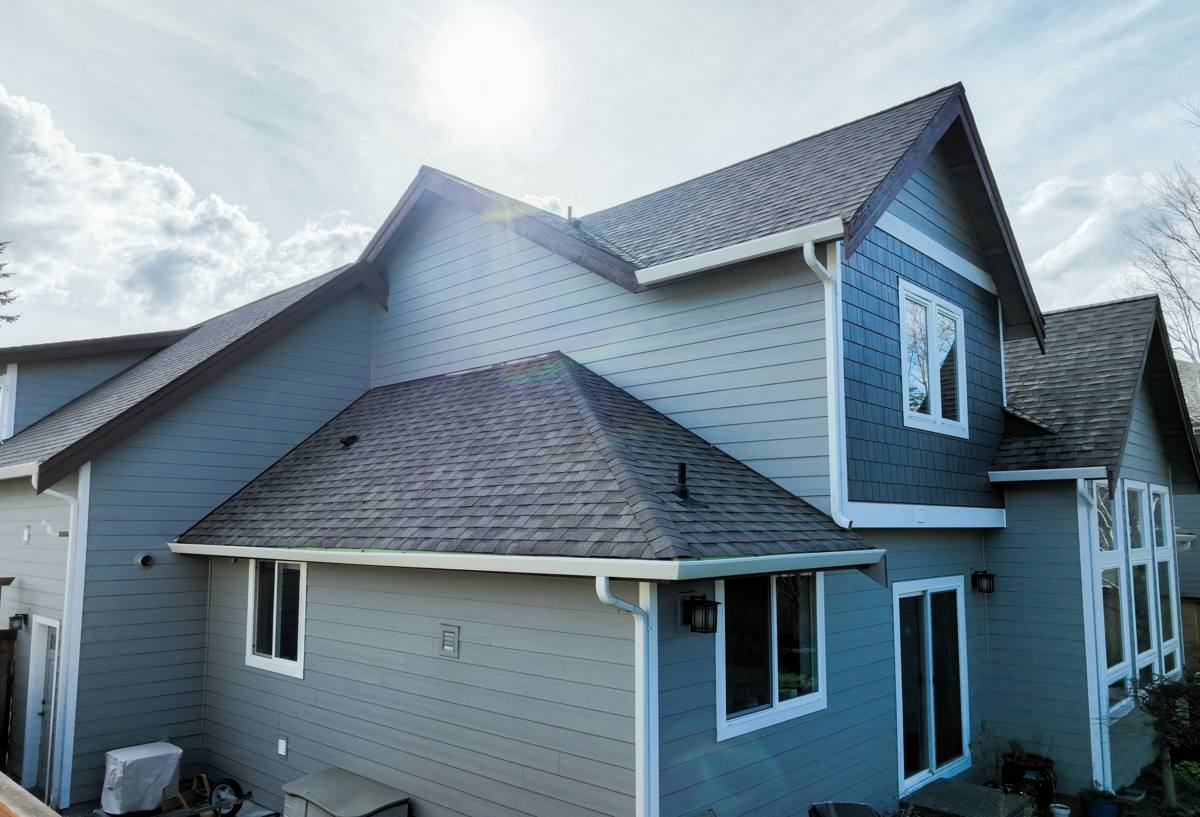
How Coastal Conditions Actually Damage Siding
Salt Air and Metal Fasteners
Salt in the air settles on exposed surfaces and speeds up corrosion of exposed nail heads, trim fasteners, and flashing that isn't rated for it. Over years, this shows up as rust streaking, staining below fastener points, and eventually failed connections at the siding's weak points.
Driving Rain and Wind
Storms coming off the Strait of Georgia and Bellingham Bay often push rain horizontally instead of straight down. That means water gets forced into laps, seams, and butt joints that would stay dry in a calmer climate. Siding systems here need to be installed with wider effective overlaps, correctly flashed penetrations, and a drainage plane behind the cladding that actually works — not just a product that looks good on a dry day.
Moss, Algae, and Constant Moisture
Shaded walls, tree cover, and long damp stretches let moss and algae take hold on siding surfaces, especially at ground level and under eaves with limited sun exposure. Moss holds moisture against the siding surface far longer than the surrounding air would on its own, which is exactly the condition that rots wood-based products and lifts paint film on lower-quality finishes.
Signs a Bellingham Home Needs Siding Replacement, Not Just Repair
Coastal siding problems are often visible well before they become structural. Homeowners in Bellingham should watch for:
- Soft or spongy spots when you press on the siding, especially near the bottom courses and around windows
- Persistent moss or dark streaking that comes back within weeks of cleaning
- Paint or finish that's chalking, peeling, or bubbling rather than just fading
- Visible gaps at butt joints or corners where caulking has failed or shrunk
- Rust staining running down from nail heads or trim fasteners
- Interior signs like musty smells, peeling interior paint, or warped trim near exterior walls
- Warping, cupping, or delamination on any wood-based or engineered wood panels
One or two of these on their own might be a repair. Several at once, especially combined with soft spots, usually means the water-management layer behind the siding has already been compromised and a patch won't fix the underlying problem.
What a Correct Siding Replacement Involves
Replacing siding in a marine climate is not the same job as replacing siding in a dry inland climate, even though the finished wall can look identical. The details that matter happen before the new siding ever goes up.
Tear-Off and Sheathing Inspection
Once the old siding is off, the sheathing underneath gets inspected for rot, soft spots, or prior water damage — this is often the first real look anyone has had at the wall assembly in decades. Any compromised sheathing gets replaced before anything else happens, because installing new siding over damaged sheathing just hides the problem for a few more years.
Weather-Resistive Barrier and Drainage Plane
A proper weather-resistive barrier, correctly lapped from bottom to top so water sheds outward, goes over the sheathing. In a climate like Bellingham's, we also pay close attention to creating a drainage gap behind the siding so any moisture that does get past the cladding can drain and dry instead of sitting against the wall.
Flashing at Every Penetration
Windows, doors, hose bibs, vents, and any other wall penetration need dedicated flashing detail — not just caulk. Caulk is a maintenance item that eventually fails; flashing is a mechanical detail that keeps water out even after the caulk ages.
Fastening and Clearances
Fasteners are set to the manufacturer's specified pattern and depth, and siding is installed with the correct clearance above grade, roof lines, decks, and patios so water doesn't wick up into the bottom edge of the panel. Skipping these clearances is one of the most common causes of early rot at the bottom courses of a wall.
Why We Install Only James Hardie Fiber Cement
Lynden Exterior Co installs James Hardie fiber cement siding exclusively. We don't install vinyl, LP SmartSide, cedar, primed spruce, or other fiber cement brands, and in a climate like Bellingham's that decision matters more than it would somewhere dry and mild.
Fiber cement is non-combustible and dimensionally stable — it doesn't expand and contract with moisture the way wood-based products do, which matters when a wall is dealing with near-constant humidity swings off the water. James Hardie's ColorPlus factory-applied finish is baked on under controlled conditions rather than field-applied, which gives it better adhesion and UV resistance than a job-site paint job, and it holds up better against the chalking and fading that salt air and UV exposure cause over time. Hardie also engineers specific product lines (their HZ5 line, for example) for harsher, wetter climate zones — which the Pacific Northwest coast qualifies as — rather than selling one generic product for the whole country.
We're not saying every other product is unusable everywhere. We're saying that after years of servicing homes in this specific climate, fiber cement from a manufacturer that engineers for moisture exposure and backs it with a strong transferable warranty is what we're willing to put our name on.
How Common Siding Materials Compare in This Climate
| Material | Moisture Behavior | Maintenance in Coastal Climate | Typical Lifespan Here |
|---|---|---|---|
| James Hardie fiber cement | Dimensionally stable, resists moisture-driven warping | Occasional cleaning; factory finish resists chalking/fading | Decades with correct install |
| Vinyl siding | Doesn't rot, but can warp or crack in temperature swings and doesn't stop moisture behind it | Low, but seams and laps are common water entry points | Moderate, finish and fasteners degrade with UV and salt exposure |
| LP SmartSide / engineered wood | Wood-based; vulnerable to swelling and edge damage if moisture gets in | Requires diligent caulk and paint upkeep to stay sealed | Shorter if moisture management isn't perfect |
| Cedar / primed spruce | Natural wood; absorbs moisture, prone to rot and moss growth | High — regular refinishing, moss treatment, moisture monitoring | Shortest without heavy ongoing maintenance |
Our Bellingham Siding Replacement Process
The process itself is straightforward, but every step is shaped by what we've learned installing on homes exposed to Bellingham Bay weather.
1. On-Site Evaluation
We walk the exterior, check for soft spots, moss patterns, drainage issues, and grading problems that push water toward the foundation and lower siding courses. We look at sun exposure on each wall, since north- and shade-facing walls need different attention for moss and moisture.
2. Product and Line Selection
We help you choose the right James Hardie profile and product line for your home's exposure, and walk through ColorPlus color options versus field-painted options.
3. Tear-Off, Sheathing Repair, and Weather Barrier Installation
Old siding comes off, sheathing gets inspected and repaired as needed, and a correctly lapped weather-resistive barrier with proper drainage goes on before any new siding is installed.
4. Installation to Manufacturer Spec
Siding, trim, and flashing go in following James Hardie's installation instructions for fastening, clearances, and joint treatment — the details that actually determine how the wall performs in year ten and year twenty, not just year one.
5. Final Walkthrough
We walk the finished job with you, cover care basics for this climate, and make sure you know what normal aging looks like versus what would be a callback item.
Living With Moss Season in Bellingham
Even correctly installed siding will see moss and algae activity in a climate this wet, particularly on shaded walls and under overhangs with limited airflow. The goal isn't to eliminate moss entirely — it's to keep it from becoming a moisture problem. James Hardie's factory finish resists staining better than field-painted or bare wood surfaces, and periodic gentle cleaning (never high-pressure blasting directly into seams) keeps growth from building up enough to hold moisture against the wall long-term. Keeping vegetation trimmed back from walls and making sure gutters and downspouts are directing water away from siding also does a lot of the work in reducing moss pressure.
Why a Crew That Already Works Bellingham Matters
Siding installation instructions look the same on paper everywhere in the country. What changes is judgment — knowing which walls in a Bellingham microclimate need extra flashing attention, recognizing early moss and moisture patterns specific to homes near the bay, and understanding how driving rain off the water actually hits a wall versus how it's described in a generic install manual. A crew that regularly works this area has already seen how these homes age, which means fewer surprises during tear-off and a better-informed installation from the start.
Questions Worth Asking Any Siding Contractor in This Area
- Do you inspect and repair sheathing before installing new siding, or install over what's there?
- What weather-resistive barrier and drainage approach do you use behind the siding?
- How do you flash windows, doors, and other penetrations — caulk only, or dedicated flashing?
- What clearance do you leave between siding and grade, roofs, decks, and patios?
- Is your installation covered by the manufacturer's transferable warranty, and what would void it?
What Replacement Typically Involves Cost-Wise
Every home is different, and an accurate number depends on square footage, the condition of the sheathing once it's exposed, the amount of trim and detail work, and the product line and finish you choose. In general, the cost factors that move the number most are:
| Cost Factor | Why It Matters |
|---|---|
| Sheathing condition | Hidden rot found at tear-off adds repair scope before new siding can go on |
| Home size and wall complexity | More corners, penetrations, and trim details mean more labor and flashing work |
| Product line and finish | ColorPlus factory finishes and specific HZ product lines vary in price versus base products |
| Access and site conditions | Landscaping, multiple stories, or tight lot lines affect setup and labor time |
We give firm numbers only after seeing the home in person — anything else is a guess, and guesses aren't useful when you're planning a real project.
If your Bellingham home is showing any of the signs above, or you'd just like an honest read on where your siding stands, we're happy to come take a look. The estimate is free, there's no pressure attached to it, and you'll get a straight answer about what your siding actually needs.