 Lynden Exterior
 Building Decks That Actually Hold Up in Bellingham
Bellingham sits close enough to the water that salt air is a real factor in how a deck ages, and it gets enough rainfall through the fall and winter that drainage and moisture management matter more here than almost anywhere else in the state. A deck that's built the same way you'd build one in a dry inland town will show problems within a few years in this environment — soft spots, corroding hardware, slick moss buildup, and finishes that fail early. We build decks specifically for what Bellingham throws at them, not a generic template.
This page covers what a properly built custom deck looks like for a Bellingham property: the materials that actually perform here, the structural details that keep water from doing damage, and what our process looks like from first visit to finished deck.
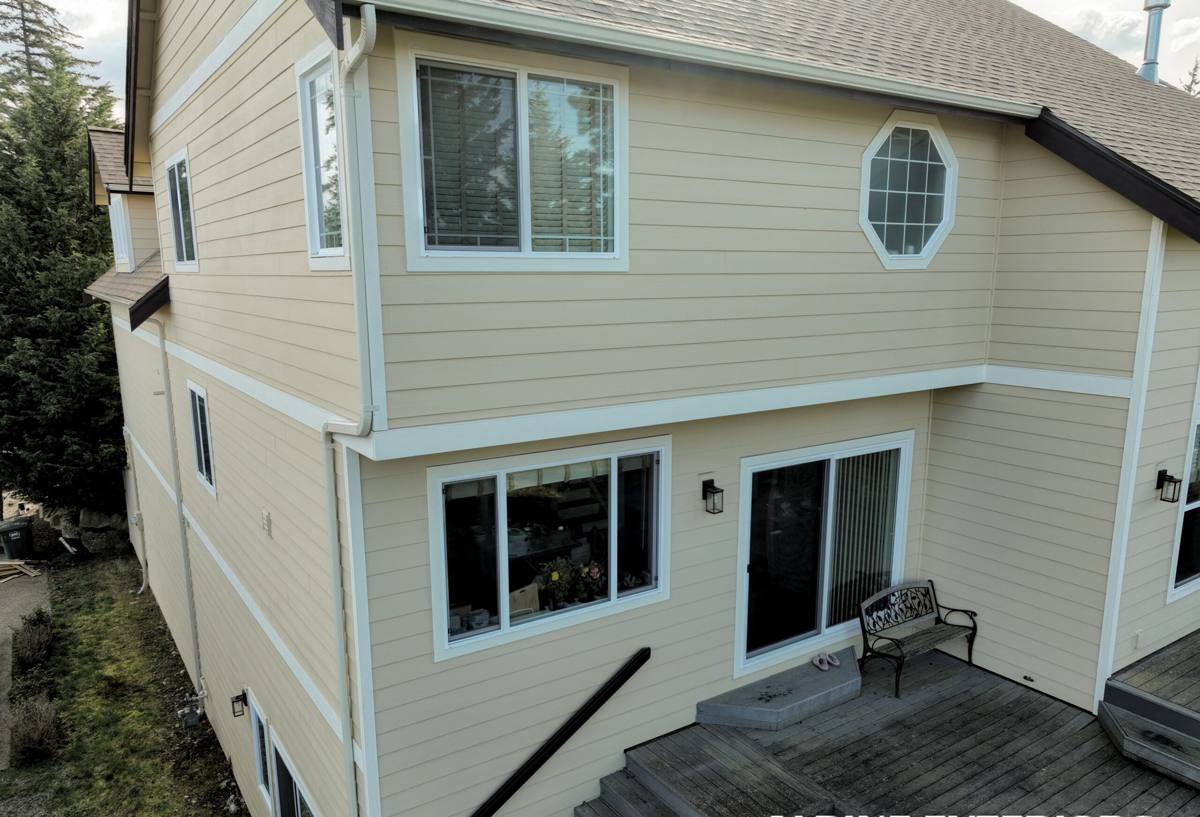
What Bellingham's Climate Does to an Unprotected Deck
Salt Air and Corrosion
Proximity to Bellingham Bay means airborne salt is part of daily life for homes near the water, and even properties set back a mile or two still get some exposure, especially with prevailing winds off the Sound. Salt air accelerates corrosion in fasteners, joist hangers, and any exposed metal hardware. Standard hot-dip galvanized hardware can start rusting and staining lumber within a couple of seasons in a salt-exposed setting. Once a fastener starts corroding, it loses holding strength long before it looks obviously bad — which is exactly why hardware selection is not a place to cut corners on a coastal Whatcom County build.
Driving Rain and Standing Water
Bellingham gets a lot of rain, and a good share of it comes in sideways during winter storms. That matters for decks in two ways. First, driving rain gets up under railings, into end grain, and behind ledger boards in ways that straight-down rain doesn't. Second, the sheer volume of water means drainage at the ledger, the joists, and the substructure has to actually work — not just look fine on a dry day. A deck that traps water against the house framing, even a small amount, is a slow-motion rot problem.
Moss and the Long Wet Season
Western Washington's moss season runs long, and decks — especially anything shaded by trees or the house itself — are prime real estate for it. Moss holds moisture against the deck surface, which accelerates wood decay and turns composite or wood boards into a genuine slip hazard on wet mornings, which is most mornings for a good stretch of the year. Surface texture, board spacing, and how much airflow gets under the deck all affect how fast moss takes hold and how hard it is to keep off.
What a Correctly Built Deck Involves Here
A deck that's going to last in this climate isn't just about picking a nice-looking decking board. The parts you don't see matter as much or more than the parts you do.
- Ledger flashing and waterproofing — the connection to the house needs proper flashing so water sheds away from the wall assembly, not into it.
- Corrosion-resistant hardware — joist hangers, structural screws, and post bases rated for coastal or wet-climate exposure, not the minimum-code option.
- Proper joist spacing and blocking — tighter spacing where boards are more prone to flex when wet, and blocking that keeps the frame square over time.
- Ventilation under the deck — enough clearance and airflow that the substructure can dry out between rain events instead of staying damp.
- Sloped, drained surfaces — decking and any picture-frame borders installed with slight pitch so water runs off instead of pooling.
- Footings sized for our soil and frost conditions — set to the depth and bearing that actually holds in Whatcom County ground, not a shortcut pour.
Skip any one of these and the deck might look fine for a year or two. The problems that show up in coastal, wet-climate decks are almost always substructure problems that surface late — which is why we treat the framing and drainage details as the real project, not the finishing touches.
Choosing the Right Decking Material for a Bellingham Property
There's no single "best" decking material for every home — it depends on how much sun and shade the deck gets, how close you are to the water, and how much maintenance you actually want to keep up with. Here's an honest comparison of the main options we install.
| Material | How it handles moisture and salt | Moss/mildew resistance | Maintenance |
|---|---|---|---|
| Capped composite | Excellent — non-porous, doesn't absorb water or salt spray | Good, but still needs periodic cleaning in shaded areas | Low — occasional washing, no staining or sealing |
| Cedar | Naturally rot-resistant but needs sealing to hold up to driving rain long-term | Moderate — moss will still take hold without upkeep | Moderate to high — periodic staining/sealing |
| Pressure-treated fir/hem-fir | Good structural performance when properly treated and fastened | Moderate — same moss concerns as any wood surface | Moderate to high — regular sealing to prevent checking and decay |
| Tropical hardwoods | Very good, dense and naturally water-resistant | Good | Moderate — oiling to maintain color and prevent surface checking |
For homeowners who want the lowest-maintenance option in a salt-air, high-moss environment, capped composite is usually the easiest long-term choice — it won't absorb salt spray, doesn't need refinishing, and holds up well against the wet season. For homeowners who want a natural wood look and don't mind a maintenance routine, cedar and quality treated lumber both perform well when installed and sealed correctly. We'll walk through the real tradeoffs for your specific site rather than push one material across the board.
Our Process for a Custom Deck Build
1. On-Site Evaluation
We walk the property, look at sun/shade exposure, drainage patterns, existing grade, and how close the site is to salt air exposure or heavy tree cover. This tells us what substructure and hardware spec the deck actually needs.
2. Design and Material Selection
We design the layout around how you'll actually use the space, then go through material options honestly — what fits your maintenance tolerance and budget, and what will hold up given the exposure we saw on-site.
3. Permitting
Deck permitting requirements vary depending on size, height, and attachment to the home, and jurisdictions in Whatcom County handle this differently. We handle the permit process so the deck is built to code from the start — this protects you at resale and with insurance, and it's not a step worth skipping even for a modest deck.
4. Framing and Waterproofing
This is where the climate-specific work happens: ledger flashing, corrosion-resistant hardware, proper joist layout, and ventilation clearance under the structure.
5. Decking, Railing, and Finish Work
Boards, railings, stairs, and any built-in features get installed with attention to drainage slope and fastener placement, followed by a final walkthrough with you.
Keeping a Bellingham Deck in Good Shape Long-Term
A well-built deck still needs some seasonal attention in this climate. A short routine goes a long way:
- Sweep leaves and debris off the surface regularly in fall — trapped organic matter is what feeds moss and mildew.
- Rinse salt residue off the surface periodically if you're close to the water, especially after storms.
- Check that gaps between boards stay clear so water keeps draining instead of pooling.
- Inspect railings and stair connections annually for any looseness — a sign hardware may be corroding.
- Re-seal wood decking on the manufacturer's recommended schedule; don't wait until it visibly grays and cracks.
- Keep an eye on the area underneath the deck for standing water or poor airflow.
Why Local Experience with Bellingham Conditions Matters
A deck built by a crew that hasn't worked much in a marine, high-rainfall climate tends to make decisions that are fine on paper but don't hold up here — standard hardware instead of corrosion-resistant fasteners, minimal ventilation under the frame, or decking laid flat with no attention to drainage slope. We build in Whatcom County regularly, so the hardware grade, flashing details, and material recommendations we use are based on what actually survives a Bellingham winter, not a generic build sheet. That local pattern-recognition is the difference between a deck that needs real repair work in five years and one that's still solid in twenty.
What Affects the Cost of a Custom Deck
| Factor | Why it matters |
|---|---|
| Size and shape | More square footage and multi-level or angled layouts increase material and labor |
| Decking material | Composite generally costs more upfront than treated lumber but less over time in maintenance |
| Height and grade | Taller decks or sloped sites require more substructure, footings, and stair work |
| Railing style | Cable, glass, or custom railing systems cost more than standard baluster railing |
| Site access | Tight or obstructed access can add labor time for material handling and equipment |
| Permit requirements | Larger or attached decks typically require permitting and inspection, which factors into timeline and cost |
Every property is different, and the honest answer on cost comes from seeing the site rather than a per-square-foot rule of thumb that ignores drainage, grade, and material choice.
Let's Take a Look at Your Space
If you're planning a new deck or replacing one that hasn't held up to Bellingham's wet, salty conditions, we're glad to come take a look and talk through what would actually work for your property. There's no pressure and no obligation — just an honest assessment and a straightforward estimate. Use the form below to get started.