 Lynden Exterior
 Why Bellingham Homes Need Siding That's Built for This Climate
Bellingham sits close enough to the water that salt-laden air is a daily fact of life for the homes here, not an occasional nuisance. Add Whatcom County's long wet season — months of driving rain pushed sideways by wind off the Sound — and a moss and algae season that can run from fall through spring, and you have a climate that is genuinely hard on exterior building materials. Siding here doesn't just need to look good on install day. It needs to hold its finish, resist moisture intrusion, and shrug off organic growth year after year without constant upkeep.
We install James Hardie fiber cement siding exclusively, and Bellingham is one of the areas where that decision matters most. This page covers what local homes actually need from their siding, what a correct Hardie installation looks like in this climate, and how our process works from first look to finished wall.
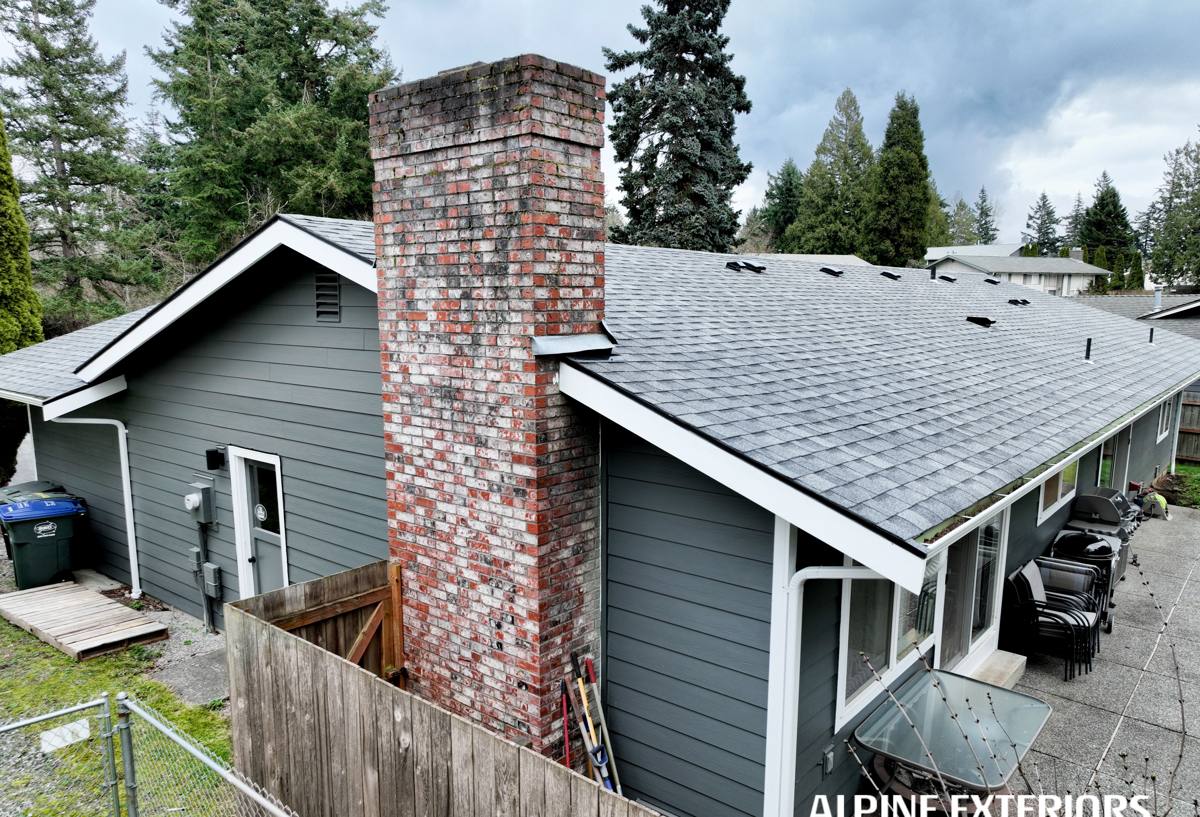
What Salt Air, Rain, and Moss Actually Do to Siding
Salt Air
Airborne salt accelerates corrosion on exposed fasteners and trim, and it can degrade certain paint and coating systems faster than manufacturers rate them for in inland climates. Materials that aren't engineered for coastal exposure often show chalking, fading, or fastener staining well ahead of schedule.
Driving Rain
Wind-driven rain doesn't just fall on siding — it gets pushed up and under laps, into seams, and behind trim that isn't properly flashed. Over time, any product that absorbs and holds moisture at the panel edges is at risk of swelling, delaminating, or rotting from the inside, even if the face looks fine.
Moss and Algae
Bellingham's shade, moisture, and mild temperatures are close to ideal growing conditions for moss and algae. Porous or textured surfaces give organic growth something to grip. Left unaddressed, that growth holds moisture against the siding surface and can shorten the life of the material underneath it.
Any siding decision for this area should be judged against these three stresses specifically — not just against a generic "durability" claim on a spec sheet.
Why We Standardized on James Hardie
We used to get asked why we don't install LP SmartSide, vinyl, Cemplank, Allura, or primed wood siding like cedar or spruce. The honest answer is that after years of installing and repairing exterior siding in this climate, James Hardie fiber cement gave us the best combination of moisture performance, factory-applied finish durability, and long-term structural stability for homes exposed to coastal weather. It's non-combustible, which matters increasingly to insurers and homeowners alike, and it's engineered specifically for climate zones like ours through Hardie's HZ product lines. We stand behind it because we've seen how it performs here, not just because of a brochure.
How Hardie Compares on the Factors That Matter Locally
| Factor | James Hardie Fiber Cement | Wood (Cedar/Spruce) | Vinyl |
|---|---|---|---|
| Moisture absorption | Very low; engineered to resist swelling | High; prone to rot without diligent upkeep | Low, but can trap moisture behind panels |
| Salt air resistance | Factory ColorPlus finish rated for harsh exposure | Finish breaks down faster near salt air | Can chalk and fade; seams are vulnerable points |
| Moss/algae resistance | Dense, less porous surface; holds up to washing | Porous grain holds moisture and growth | Resists growth but seams and laps still collect grime |
| Fire resistance | Non-combustible | Combustible | Can soften, warp, or melt under heat |
| Typical repaint/refinish cycle | 15+ years with ColorPlus factory finish | 3-7 years | Doesn't repaint well; replace to change color |
What a Correct James Hardie Install Looks Like Here
Fiber cement siding performs the way it's rated to perform only when it's installed to spec — and in a climate that pushes rain sideways, the details behind the panel matter as much as the panel itself.
- Weather-resistive barrier: A properly lapped and sealed water-resistive barrier behind the siding, so any moisture that gets past the face still has a path to drain out rather than sit against the sheathing.
- Rainscreen or drainage gap where called for: On exposures that take direct wind-driven rain, a drainage gap lets water that reaches the back of the panel escape instead of wicking upward.
- Correct fastener placement and type: Hardie specifies fastener type, spacing, and embedment depth precisely; getting this wrong is one of the most common causes of premature siding failure, and it isn't visible from the street once the job is done.
- Proper clearances: Minimum gaps from grade, roofing, decks, and other transitions so water doesn't wick into the bottom edge of the panel or sit against untreated cut ends.
- Sealed and primed cut edges: Every field cut exposes raw fiber cement; those edges need to be sealed per manufacturer spec before the piece goes up, not caulked over afterward.
- Flashing at every penetration: Windows, doors, vents, and any wall penetration need integrated flashing detail — this is where driving rain finds its way in if it's skipped or shortcut.
None of this is visible in a finished photo. It's the difference between siding that performs for its rated lifespan and siding that looks fine for a few years before problems start showing up at the seams.
ColorPlus Finish and Color Retention Near the Water
James Hardie's ColorPlus Technology is a factory-baked finish, applied and cured under controlled conditions rather than sprayed or brushed on site. That matters in a coastal-influenced climate like Bellingham's because factory finishes generally hold up better against UV, moisture cycling, and salt exposure than field-applied paint, and they come with a longer color-specific warranty. For homeowners who want the lowest-maintenance long-term option, ColorPlus panels and trim reduce how often the exterior needs attention at all.
Moss and Algae: What Homeowners Can Expect and Do
No siding material is completely immune to organic growth in a climate this wet and shaded. What differs is how much it holds onto once it starts. Fiber cement's dense, engineered surface doesn't give moss and algae the same grip that porous wood grain does, and it tolerates routine gentle washing far better than painted wood or aging vinyl. For homes in Bellingham with heavy tree cover or north-facing walls that stay shaded most of the year, we'll talk through gutter and landscaping factors during the estimate too — siding performance and moss control are connected to how water and shade move around the whole house, not just the wall material.
Our Process for Bellingham Homes
- On-site walk-through: We look at existing siding condition, moisture entry points, trim and flashing detail, and any problem areas specific to your home's exposure.
- Product and color selection: We walk through Hardie's plank, shingle, and panel options and ColorPlus color families so the finished look fits the home and the neighborhood.
- Written estimate: Clear scope, materials, and cost factors — no surprise add-ons buried in fine print.
- Prep and moisture barrier work: Removal of failing material, inspection of sheathing for hidden rot or water damage, and correct installation of the water-resistive barrier and drainage detail before a single piece of siding goes up.
- Installation to manufacturer spec: Fastening, clearances, sealed cuts, and flashing done to James Hardie's published installation requirements, not shortcuts that happen to look right.
- Final walk-through: We review the finished job with you before we call it done.
Cost Factors Homeowners Ask About
| Factor | How It Affects the Job |
|---|---|
| Home size and wall complexity | More corners, gables, and trim detail increase labor time |
| Existing siding removal | Tear-off and disposal of failing material adds scope |
| Sheathing condition | Hidden rot or water damage found during removal may need repair before siding goes on |
| Product line and profile | Plank width, shingle style, and panel choice vary in material cost |
| Trim and accessory scope | Corner boards, fascia, and soffit work done alongside siding |
We give real numbers during the on-site estimate rather than broad ranges pulled from a website — every home's exposure and condition is different, and that's what actually drives cost.
Why Hire a Crew That Already Works This Area
A contractor who works Whatcom County regularly already knows which wall exposures in Bellingham take the worst of the wind-driven rain, how aggressive moss growth gets on shaded north walls, and what condition to expect when older siding comes off homes near the water. That local pattern recognition shows up in the small decisions — where to add extra flashing attention, which details to double-check — that a crew unfamiliar with this specific climate might not think to prioritize. We install James Hardie siding across Lynden and the surrounding Whatcom County communities, including Bellingham, and we bring that same standard to every job regardless of size.
If your Bellingham home's siding is showing moss buildup, cracked or peeling paint, or soft spots near trim and window edges, we're happy to take a look. Reach out for a free, no-pressure estimate — we'll walk the exterior with you and give you a straight answer on what it needs.