 Lynden Exterior
 Fiber Cement Siding for Bellingham Homes
Bellingham sits close enough to the water that salt air is part of daily life, and close enough to the foothills that shade, moisture, and moss are a year-round concern. Homes here take a different kind of beating than homes twenty miles inland, and the siding on them needs to be matched to that reality rather than to a generic Pacific Northwest spec sheet. We are based in Lynden and have spent years working on homes throughout Whatcom County, including Bellingham, so this page is written from what we actually see on siding tear-offs in this specific area, not from a national playbook.
We install James Hardie fiber cement siding exclusively. We don't offer vinyl, LP SmartSide, Cemplank, Allura, or cedar as alternatives, and later on this page we explain the reasoning rather than just asserting it. If you're comparing siding options for a Bellingham home, the goal here is to give you enough real information to make that decision with confidence.
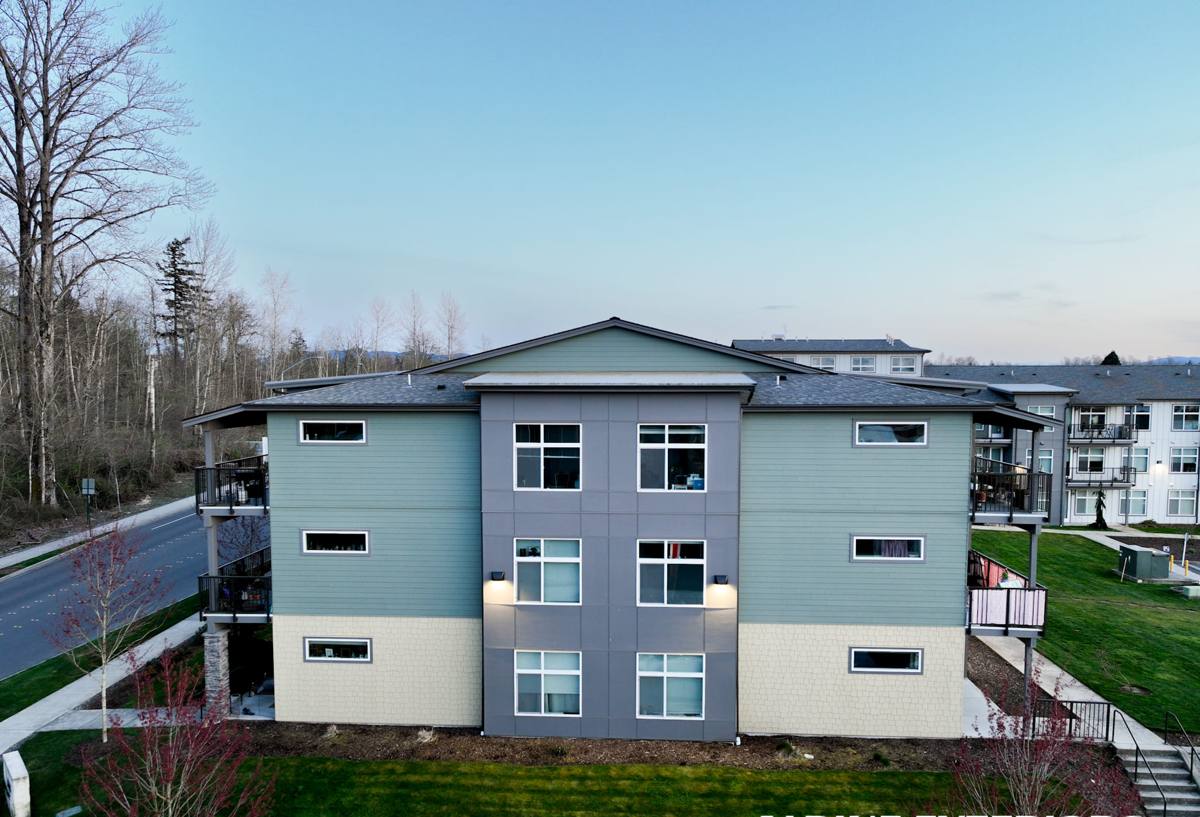
What Bellingham's Climate Actually Does to Siding
Salt Air and Marine Moisture
Proximity to Bellingham Bay means airborne salt and near-constant marine humidity, especially on homes with west or northwest exposure. Salt-laden moisture accelerates corrosion on fasteners and trim metal, and it keeps painted and coated surfaces damp longer than they would stay in a drier inland climate. Siding materials and finishes that aren't engineered for coastal exposure tend to show it first in faded color, chalking, and early caulk failure.
Driving Rain
Storms moving in off the Strait of Georgia and Puget Sound don't just fall straight down here — wind-driven rain hits walls at an angle, which pushes water into every seam, lap, and penetration that isn't detailed correctly. This is less about total rainfall and more about wind-driven exposure on specific elevations, which is why the same house can have a bulletproof south wall and a chronically damp north or west wall.
The Long Moss Season
Bellingham's combination of shade from mature trees, marine humidity, and mild temperatures gives moss and algae a long growing season on siding, trim, and roofing. Moss holds moisture against the surface it grows on, and on the wrong substrate that constant dampness is what leads to swelling, soft spots, and paint failure long before the siding is otherwise "worn out."
What a Correct Fiber Cement Job Involves Here
Fiber cement siding is not moisture-proof on its own — it's the installation details that determine whether a Bellingham home actually gets the protection the material is capable of. A correct job includes:
- A drainable water-resistive barrier behind the siding, not just building paper stapled flat, so any moisture that gets past the cladding has somewhere to go
- Rainscreen furring or a drainage mat in high-exposure applications, creating an air gap that lets walls dry instead of trapping dampness against the sheathing
- Correct lap exposure and fastener placement per the manufacturer's engineering — not "close enough," since under-driven or over-driven nails are a leading cause of premature siding failure
- Factory-mitered or properly caulked corners and trim, sized for the wide temperature swings between damp mornings and sunny afternoons
- Flashing integrated above every window, door, and horizontal trim break — the single most common failure point we find on tear-offs
- Bottom clearance from grade, decks, and roof lines so the siding isn't sitting in standing moisture or splashback
Skip any one of these and you can end up with siding that looks fine from the curb for a few years while quietly failing behind the surface — which is exactly the pattern moss, marine air, and driving rain create when they're not accounted for.
Why James Hardie, Specifically, for This Area
James Hardie fiber cement is engineered around exactly the conditions we just described. The HardieZone HZ10 product line is formulated for wetter, milder climates like Whatcom County, and the ColorPlus factory finish is baked on and cured before the boards ever reach the jobsite — which matters in a region where field-applied paint has more days of damp air to fight during cure. Fiber cement itself doesn't feed mold or moss the way organic wood fibers can, and it holds up to salt-air exposure better than most painted wood products because it isn't relying on an unbroken paint film alone to keep water out of the substrate.
None of that replaces good installation — Hardie siding installed poorly will still have problems. But it gives a correctly installed home a real margin against the specific stresses Bellingham throws at a house: salt, wind-driven rain, and a long stretch of shaded, damp months every year.
Why We Don't Install the Alternatives
We get asked regularly why we don't offer other options, and the honest answer is trade-offs we're not willing to put our name behind in this climate:
- Vinyl siding expands and contracts significantly with temperature swings, and its seams and J-channels rely on lap-and-overlap details that can let wind-driven rain track behind the panel over time. It also can't be painted a darker color without risk of warping, which limits homeowners long-term.
- LP SmartSide and other engineered wood products use wood strand substrates that, while treated, are still organic material — meaning any sustained moisture intrusion (the kind driving rain and moss create) has more potential to cause swelling or deterioration than a cement-based product.
- Cedar and primed spruce are attractive but need ongoing maintenance — recoating, caulking, and moss treatment — that most owners underestimate, especially in a climate where moss pressure is constant rather than seasonal.
- Cemplank and Allura are also fiber cement, and reasonable products in general. We simply standardized on one manufacturer, one warranty structure, and one set of installation specs so our crews are experts in a single system rather than generalists across several.
This isn't a claim that these products are unusable — plenty of them perform fine when installed correctly and maintained. It's a statement of our own standard: given what we see on Bellingham-area tear-offs, fiber cement engineered for this climate, installed to spec, is what we're willing to warranty our labor against.
Cost Factors for a Bellingham Fiber Cement Project
| Factor | Why It Moves the Price |
|---|---|
| Tear-off vs. re-side over existing siding | Removing old siding adds labor but lets us inspect and repair sheathing damage before it's covered up again |
| Wall complexity | Dormers, bump-outs, and multiple roof lines mean more flashing, cutting, and trim work per square foot |
| Exposure orientation | West and north walls exposed to driving rain and shade often need extra drainage detailing versus protected south/east walls |
| Siding profile | Lap siding, board-and-batten, and shingle-style Hardie panels differ in material and labor cost per square |
| Existing moisture damage | Rot found at tear-off (common around old flashing failures) adds sheathing and framing repair before new siding goes on |
| Trim and accent work | Corner boards, frieze boards, and window trim in matching HardieTrim add cost but tie the whole exterior together |
We don't publish flat per-square-foot pricing because these factors genuinely change the number from house to house — a simple one-story re-side and a two-story home with moisture damage behind the old siding are different projects. A walk-through gives you an accurate number; a generic online estimate usually doesn't.
Signs a Bellingham Home Needs Siding Attention
- Soft or spongy spots when you press on siding, especially near the bottom courses or under windows
- Persistent moss or algae growth that returns within weeks of cleaning
- Paint that's peeling, bubbling, or chalking heavily on one elevation more than others
- Visible gaps at seams, corners, or trim where caulking has shrunk or pulled away
- Musty smell or visible staining on interior walls that share an exterior wall with damaged siding
- Warping, cupping, or separation at butt joints between siding boards
Any one of these on its own might be minor. Several together, particularly on a shaded or west-facing wall, usually means moisture has been getting behind the siding for a while.
Our Process on Bellingham-Area Projects
Because we work this area regularly, we already have a sense of which streets tend to run shadier, which lots sit closer to marine exposure, and which house styles from local building eras tend to have specific flashing or trim quirks. Our process on a typical project:
- On-site walk-through and moisture check, including a look at trim, flashing, and any soft spots before we quote anything
- A written scope that specifies HardieZone product line, profile, and color, plus what drainage and flashing details the specific walls need
- Tear-off (when applicable) with sheathing inspection — we stop and talk to you before covering up anything we find, rather than sealing damage in
- Installation to Hardie's engineering specs for fastener pattern, lap exposure, and clearances
- Final walk-through so you know what was done and what the warranty covers
We don't subcontract this out to whoever's available — the crew that quotes the job is familiar with the products and the local conditions that make the installation details matter.
Maintenance After Installation
Correctly installed Hardie siding is low-maintenance, not no-maintenance. In a Bellingham climate, that means an annual rinse to keep moss and algae from establishing, periodically checking caulking at trim joints and penetrations, and keeping gutters clear so overflow doesn't run down the wall face. None of this is heavy labor, but skipping it for years lets exactly the conditions we described earlier — trapped moisture, moss growth — get a foothold even on good siding.
Get a Straight Answer on Your Project
If you're weighing a siding replacement or repair on a Bellingham-area home, we're happy to come take a look, tell you honestly what we see, and put together a written estimate — no pressure, no obligation. Use the form below to request a free estimate.