 Lynden Exterior
 Window Replacement Built for Bellingham's Marine Climate
Bellingham sits close enough to the water that homes here take a different kind of weather beating than houses further inland in Whatcom County. Salt-laden air off Bellingham Bay works on window hardware and finishes year-round. Driving rain, pushed sideways by wind off the water, finds every gap in old flashing and worn weatherstripping. And the long moss season that runs from fall through spring keeps siding, trim, and window sills damp for months at a time. None of that is a problem you can solve with caulk alone.
Window replacement in this kind of climate isn't just a cosmetic upgrade. It's a moisture-management job first and an energy-efficiency job second. Get the moisture handling wrong and a brand-new window will fail years before it should — fogged glass, rotting jambs, mold creeping up from the sill. Get it right and the window will outlast the rest of the remodel.
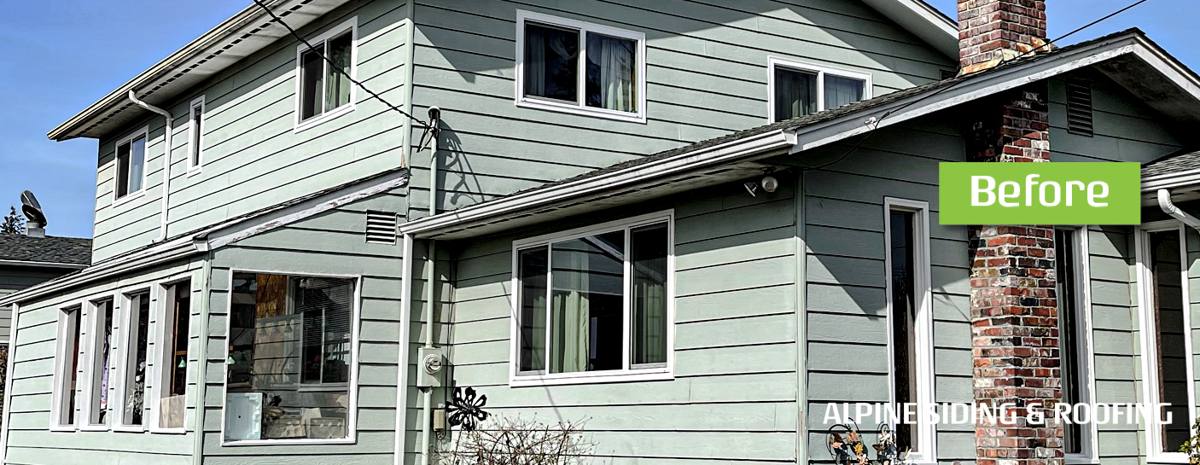
Signs a Bellingham Home Actually Needs Replacement (Not Just Repair)
Not every drafty window needs to come out. But in this climate, certain symptoms usually mean the window and its surrounding frame have taken on more damage than a repair can fix.
- Fogging or a milky haze between panes — the seal on the insulated glass unit has failed and moisture is inside the glass itself
- Soft, spongy, or darkened wood at the sill or lower corners of the frame
- Windows that are difficult to open, close, or lock, especially after damp weeks
- Visible gaps between the window frame and the siding or trim
- A musty smell near the window that doesn't clear up when the room airs out
- Moss or dark streaking on the exterior trim directly below or beside the window
- Noticeable cold drafts at the frame edge even when the window is fully latched
If you're only seeing one or two of these and the frame itself still feels solid, a repair or re-seal may buy you time. Once wood is soft or a seal has failed, replacement is the honest recommendation — patching a failed seal doesn't restore it.
What a Correct Window Replacement Job Actually Involves
The window itself is the easy part to shop for. The install is where most long-term problems either get solved or get built in. In a climate that sees this much wind-driven rain, a handful of steps matter more here than they would in a drier part of the state.
Removing the old window without hiding damage
Old trim and the old window come out fully so the rough opening is visible. This is the point where hidden rot, past water intrusion, or failed old flashing gets found — and it needs to get found now, not covered back up with a new window on top of it.
Repairing what the old window was hiding
Any soft framing, damaged sheathing, or compromised weather-resistive barrier gets repaired before the new window goes in. Installing a new window over a damaged opening just delays the same failure.
Flashing and drainage, not just caulk
Proper flashing — sill pan, jamb flashing, and head flashing integrated with the house wrap in the right shingled order — is what actually keeps wind-driven rain from getting behind the window. Caulk is a backup, not a substitute for correct flashing sequencing. This step is where the difference between a job that lasts and a job that leaks in year three really comes down to.
Setting, shimming, and sealing the new window
The window is set level and plumb, shimmed at the right points so it doesn't rack or bind, and sealed with the appropriate sealants at the interior and exterior — never sealed shut in a way that traps moisture inside the wall.
Trim, finish, and cleanup
Exterior trim is refinished or replaced to match, interior trim is reset, and the job site is cleaned up, including old window disposal.
Choosing Window Materials for Bellingham's Climate
Every frame material handles salt air, sustained dampness, and moss-season humidity a little differently. There's no single "best" choice — it depends on your home's exposure, budget, and how much upkeep you want to take on.
| Material | How it handles this climate | Maintenance | Typical cost position |
|---|---|---|---|
| Vinyl | Good moisture and salt-air resistance; won't rot or rust | Low — occasional cleaning | Lower to mid |
| Fiberglass | Very stable in temperature swings and damp conditions; strong long-term performer near the coast | Low | Mid to higher |
| Aluminum-clad wood | Attractive wood interior with a weather-resistant exterior shell; clad has to be well-sealed at joints or moisture can work behind it | Moderate | Higher |
| Solid wood | Classic look but the most vulnerable to sustained dampness and moss-season humidity without diligent upkeep | High — regular refinishing | Higher |
Our standard recommendation for most Bellingham homes is vinyl or fiberglass, simply because they hold up with the least upkeep in a climate that stays damp for a large part of the year. That's a maintenance and moisture-behavior judgment, not a knock on wood windows — if you want a wood interior look and are willing to stay on top of refinishing, aluminum-clad is a reasonable middle ground.
Glass and Hardware Choices That Matter Here
Beyond the frame, a few glass and hardware details make a real difference in this climate:
- Low-E coatings reduce heat loss through the glass, which matters through Whatcom County's long, gray heating season
- Argon or krypton gas fill between panes adds insulating value with no visible difference
- Corrosion-resistant hardware — look for stainless or coated components, since standard hardware finishes degrade faster this close to salt air
- Weep hole design that stays clear — weep holes let trapped water drain back out, and they need to be positioned and sized so moss or debris doesn't clog them over a wet winter
Our Process, Start to Finish
- On-site assessment — we look at the existing windows, the surrounding trim and siding condition, and any signs of past water intrusion before quoting anything
- Honest scope and estimate — you get a clear breakdown of what's window replacement and what's related repair, with no pressure to upgrade beyond what the house needs
- Scheduling around the weather — we plan install days with an eye on the forecast so openings aren't left exposed longer than necessary
- Removal and inspection — old windows come out, and we show you anything we find before covering it back up
- Correct flashing and install — sill pan, jamb and head flashing, proper shimming, and appropriate interior and exterior sealing
- Trim and finish work — matched to the rest of the exterior wherever possible
- Final walkthrough — every window opens, closes, and locks the way it should before we call the job done
Cost Factors for Bellingham Window Replacement
Every home is different, so we won't quote a number without seeing the job — but these are the main factors that move a window replacement estimate up or down:
| Factor | Why it affects cost |
|---|---|
| Frame material | Vinyl runs lower, fiberglass and clad-wood run higher |
| Number of windows and access | Upper-story or hard-to-access windows take more labor time |
| Condition of the rough opening | Hidden rot or past water damage adds repair work before the new window can go in |
| Trim and siding work | Matching or replacing exterior trim adds to the scope |
| Glass and hardware upgrades | Low-E coatings, gas fills, and upgraded hardware add incrementally to unit cost |
Why a Bellingham-Familiar Crew Matters
A window replacement crew that already works in and around Bellingham knows what to expect before the first window comes out. They've seen how driving rain off the bay tends to hit certain wall orientations harder than others, how long moss season actually runs in a given year, and where past building practices in this part of Whatcom County tend to leave weak points around openings. That's the difference between an install that treats every house the same and one that accounts for how this specific climate behaves.
Local familiarity also means realistic scheduling — knowing which weeks are worth avoiding for an install and which aren't, and not leaving a house with open framing on a day the forecast turns against you.
If your windows in Bellingham are showing any of the signs above, or you're just ready to stop fighting drafts and condensation every winter, we're happy to take a look and give you a straightforward, no-pressure estimate. Use the form below to get started.