 Lynden Exterior
 Windows in Ferndale Take a Different Kind of Beating
Ferndale sits close enough to Bellingham Bay and the Strait of Georgia that homes here deal with a mix most inland Whatcom County towns don't see as often: salt-laced air off the water, wind-driven rain that comes in sideways instead of straight down, and a wet season that stretches long enough to grow a steady crop of moss on anything that holds moisture. None of that is dramatic on its own. It's the combination, year after year, that wears out windows faster than homeowners expect — corroded hardware, swollen sashes, seals that give out early, and sills that stay damp long enough to start rotting from the inside before anyone notices from the outside.
Custom windows done right for a Ferndale home aren't just about picking a style you like. They're about choosing materials and installation details that hold up to salt air and driving rain specifically, not just "Pacific Northwest weather" in general. That distinction matters more the closer a home sits to the water.
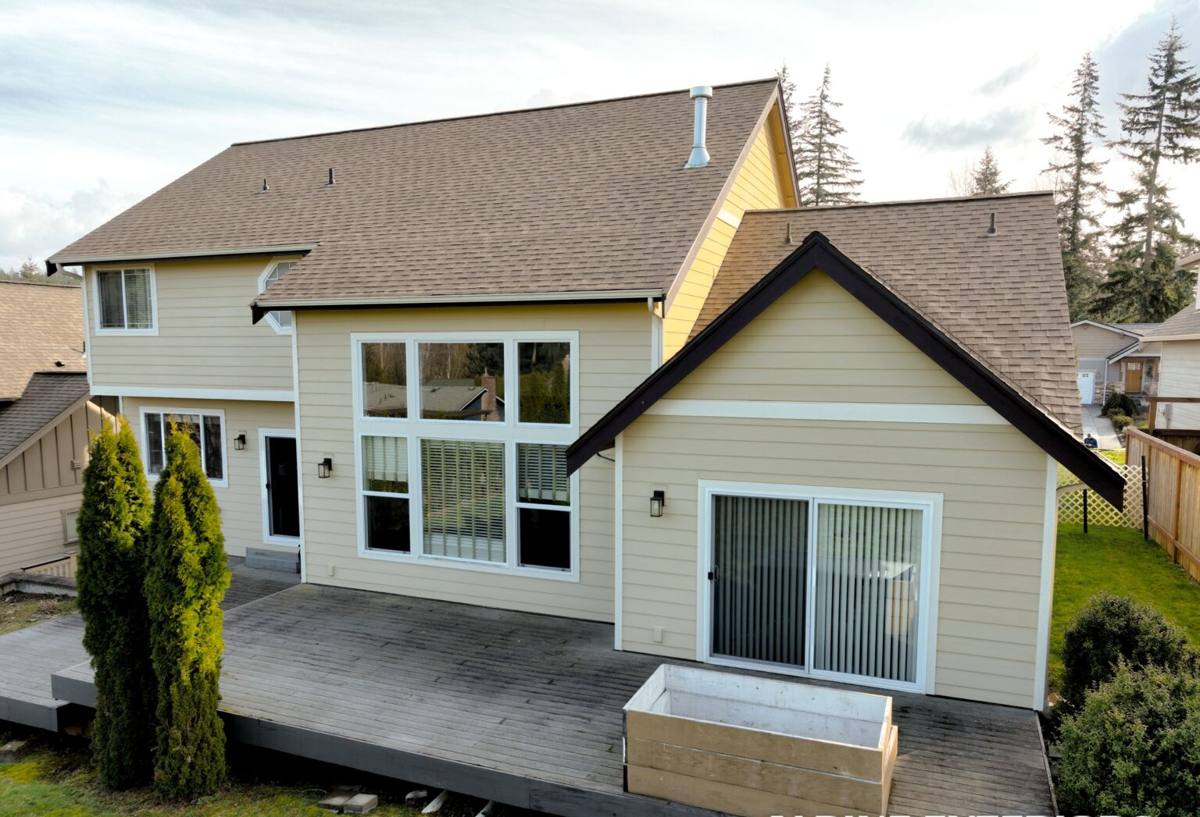
What "Correctly Installed" Actually Means Here
A window can be a good product and still fail early if it goes in wrong. Most of the premature window failures we get called out to inspect in this area aren't the window's fault — they're installation shortcuts that don't show up until a few wet seasons have passed.
The details that matter in this climate
- Sill pan flashing — a sloped, sealed pan under the window opening so any water that does get past the sash has a way out instead of a place to pool.
- Proper shingle-lap sequencing — flashing tape and building paper layered so water sheds downward and outward, never trapped behind the frame.
- Correct sealant, not just more of it — the right bead in the right place beats a thick, sloppy caulk job that traps moisture inside the wall instead of keeping it out.
- Shimming and squaring — a window that's slightly out of square will bind, won't seal evenly, and will leak at the corners first.
- Weep path clearance — the drainage channels built into most modern frames need to stay open, not sealed shut by an installer trying to stop every possible draft.
Skip any one of these and a window can look fine from the curb for a year or two while moisture works on the framing behind it. Driving rain off the Strait finds those gaps faster than a calmer inland climate would.
Choosing a Frame Material for Salt Air
Frame material affects how a window handles moisture and salt exposure over time, and it's worth more thought here than it would be further inland.
| Material | How it handles this climate | Trade-offs |
|---|---|---|
| Vinyl | Won't rust or corrode from salt air; handles moisture well | Limited color range; can look plain on older or higher-end homes |
| Fiberglass | Very stable in temperature swings and moisture; strong long-term performer near the coast | Higher upfront cost than vinyl |
| Wood-clad | Classic look, good interior warmth; the exterior cladding protects the wood from rain | Any gap in the cladding or seal lets moisture reach the wood core — needs a careful, tight install |
| Aluminum | Strong and slim sightlines | Conducts cold and can corrode faster in salt air unless properly coated; we use it selectively |
We lean toward vinyl and fiberglass for most Ferndale homes specifically because they don't give salt air anything to corrode. Wood-clad is still a good choice for homeowners who want that look, but it has zero margin for a sloppy install in this climate — the cladding has to stay fully sealed for the life of the window.
Hardware matters as much as the frame
Locks, hinges, and cranks near the water corrode faster than the same parts fifteen miles inland. We spec hardware rated for coastal or marine exposure on Ferndale jobs rather than the standard-grade hardware that ships with some builder-grade window lines. It costs a little more up front and saves a service call in three years.
Glazing and Energy Performance
Whatcom County's energy code sets minimum performance standards for replacement and new windows, and for a home this close to the water, the glazing package also affects comfort more than people expect — condensation on cold, damp days is as much a nuisance here as heat loss is.
| Feature | What it does |
|---|---|
| Double-pane, Low-E, argon-filled | Standard for most Ferndale homes — solid insulation value and condensation resistance for the price |
| Triple-pane | Better insulation and sound dampening; worth it for north- or west-facing rooms that catch the worst of the wind and rain |
| Low-E coating | Reflects heat back into the room in winter, cuts UV fading on furniture and flooring |
| Warm-edge spacers | Reduces the cold ring around the glass edge that drives condensation and, over years, seal fog |
Fogging between panes — a cloudy or hazy look you can't wipe away — means the seal has failed and moisture got inside the glass unit. It's one of the clearest signs of a low-quality unit or a bad install, and it shows up faster in coastal moisture than it would in a dry climate.
How We Approach a Ferndale Custom Window Job
1. On-site assessment
We look at more than the windows themselves — sill condition, existing flashing, siding type, and how exposed the house is to prevailing wind and rain. A window on the weather side of a Ferndale home needs more attention to flashing detail than one tucked under a deep eave on the sheltered side.
2. Measuring and material selection
Custom means built to the actual opening, not a stock size with shims and gap-filler. We measure each opening individually and walk through frame material, glazing package, and hardware options based on that specific wall's exposure.
3. Removal and inspection
Old windows come out carefully so we can check the framing underneath before anything new goes in. If there's rot or moisture damage at the sill — which we do find on older homes here — that gets addressed before the new window goes in, not covered up.
4. Installation to a moisture-managed sequence
Sill pan, flashing, window, sealant, and trim go in that order, every time, so the assembly sheds water the way it's designed to rather than depending on caulk alone to keep it dry.
5. Walkthrough and adjustment
We test operation, check the seal by feel and sight, and make sure locks and cranks move smoothly before we call the job done.
Signs a Ferndale Window Needs Attention Now
These are the issues we see most often on homes in this area, roughly in order of how commonly they show up:
- Moss or dark staining building up on the sill or bottom trim — a sign moisture is sitting there longer than it should
- Stiff or corroded locks and cranks, especially on windows facing the water or prevailing wind
- Fogging or haze between panes of double- or triple-pane glass
- Soft or spongy trim or sill wood when pressed
- Drafts you can feel even with the window latched shut
- Paint or finish peeling on the interior sill, which often points to condensation building up inside rather than a paint problem
Any one of these on its own isn't an emergency. Several together, or any sign of soft wood, is worth a look before another wet season adds to the damage.
A Simple Maintenance Checklist for Homeowners
Good windows in this climate still need some upkeep. This is what we recommend to Ferndale homeowners regardless of who installed the windows:
- Rinse salt residue and grime off exterior frames and glass a couple of times a year, more often if the home faces open water or wind
- Brush moss and organic buildup off sills and trim before it holds moisture against the frame
- Check and lightly lubricate locks and cranks annually, especially on the weather-facing side of the house
- Look at exterior caulking each fall and touch up anything cracked or pulled away before the rainy season sets in
- Keep gutters and downspouts clear so runoff isn't sheeting down over window heads
- Open and close each window a few times through the year — a window that gets used stays easier to seal and adjust than one left shut all winter
Why a Local Crew That Already Works Ferndale Matters
Window installation isn't identical everywhere in Whatcom County, even though the differences are easy to overlook on paper. A crew that regularly works Ferndale homes already knows which streets sit exposed to wind off the water, which older homes tend to have outdated flashing details, and which framing quirks show up in houses built during particular local building eras. That's the kind of knowledge that doesn't come from a spec sheet — it comes from having pulled a lot of old trim off a lot of Ferndale sills.
It also matters for permitting and code questions specific to the City of Ferndale and Whatcom County, and for knowing realistically how weather windows affect scheduling — driving rain doesn't just wear out old windows, it also dictates when it's actually smart to have an opening exposed during a replacement. We're based just up the road in Lynden, which means we're not learning this area's quirks on your job — we already know them, and we can usually get out to look at a project without a long drive eating into the estimate.
Ready to Talk Through Your Windows?
If you're dealing with drafty, foggy, or hard-to-operate windows, or you're planning ahead before the next wet season sets in, we're happy to take a look and give you an honest read on what your home actually needs — no pressure, no upsell on options you don't need. Fill out the form below for a free estimate and we'll get back to you to schedule a time that works.