 Lynden Exterior
 Why Ferndale Siding Takes a Different Approach
Ferndale sits close enough to the water that salt-laden air is a daily fact of life, not an occasional nuisance. Add Whatcom County's long, wet winters and the moss season that follows every one of them, and you've got a climate that is genuinely hard on exterior building materials. Siding here doesn't just need to look good going on — it needs to survive years of driving rain hitting it sideways, salt air working on fasteners and finishes, and months of shaded, damp conditions where moss, algae, and mildew get every advantage.
A lot of siding problems we get called out to look at in Ferndale aren't failures of a bad product on day one — they're the slow result of a product or an installation that wasn't matched to this specific climate. That's the lens we bring to every Ferndale siding installation: this is a coastal Pacific Northwest job, and it gets treated like one.
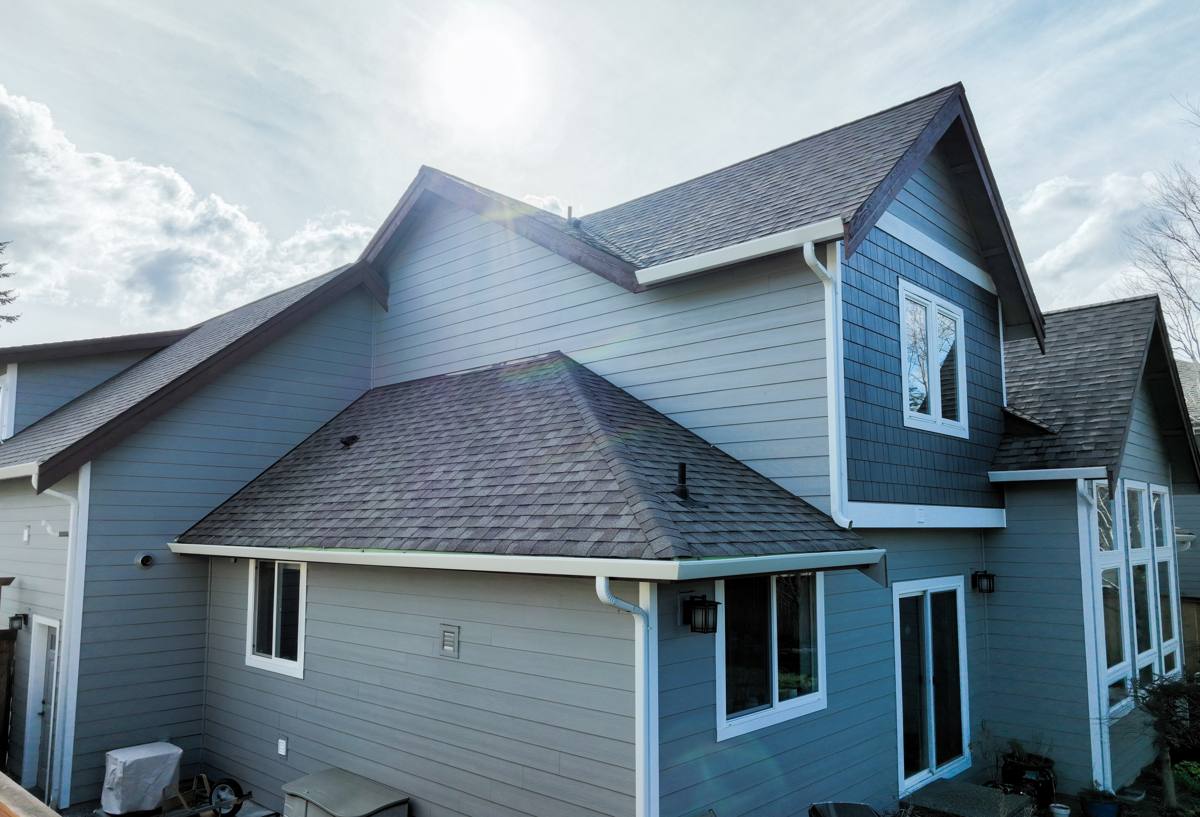
What Ferndale's Climate Actually Does to Siding
Salt Air
Airborne salt accelerates corrosion on fasteners, flashing, and any metal trim components. It also breaks down cheap or thin factory finishes faster than inland climates would, leading to chalking, fading, and clear-coat failure well before a product's rated lifespan.
Driving Rain
Wind-driven rain doesn't fall straight down — it gets pushed sideways into laps, seams, and butt joints. Siding systems that rely on caulk alone at horizontal joints, or that don't have a properly detailed water-resistive barrier and drainage plane behind them, eventually let moisture in. Once water gets behind siding in a climate this wet, it often doesn't get a chance to fully dry out between rain events.
Moss and Sustained Dampness
Shaded north and west-facing walls in particular hold moisture longer through Ferndale's gray months. Moss and algae take hold on textured or porous surfaces, and on materials that absorb water, that sustained dampness is what eventually leads to swelling, delamination, or rot at the substrate — not the moss itself, but what the moss indicates is happening underneath.
What a Correct Siding Installation Involves
The siding board itself is only part of the system. A correct installation in this climate is really about how water is managed at every layer, not just what the final surface looks like.
- A continuous, properly lapped water-resistive barrier installed shingle-style so every layer sheds water to the one below it
- Correct flashing at every window, door, deck ledger, and roofline transition — the places where most real-world leaks actually start
- Proper fastener type, spacing, and penetration depth for the specific siding product being installed
- Manufacturer-specified gaps and clearances at butt joints, corners, and ground contact points so the material can handle moisture and movement without trapping water
- Factory-finished or field-finished surfaces that are actually rated for coastal exposure, not just general exterior use
- A ventilated rainscreen gap where conditions call for it, so any moisture that does get behind the cladding has somewhere to go
Skip any one of these and the siding can still look fine for a season or two. In a climate like Ferndale's, the problems just show up later — and by then they're usually hidden behind the wall.
Why We Only Install James Hardie Fiber Cement
We install James Hardie fiber cement siding exclusively. We don't install vinyl, LP SmartSide, Cemplank, Allura, primed spruce, or cedar, and that's a deliberate standard, not a limitation on what we're capable of doing.
Vinyl siding expands and contracts significantly with temperature swings, and its seams and J-channels rely heavily on lap fit rather than a rigid, water-shedding assembly — in a climate with this much sustained rain exposure, that matters. Engineered wood products like LP SmartSide perform reasonably well when detailing is followed exactly, but they remain wood-based, and wood-based siding is inherently more vulnerable to the kind of prolonged dampness Ferndale sees for months at a stretch. Cedar is a beautiful, genuinely traditional Pacific Northwest material, but it requires ongoing maintenance — refinishing, sealing, and moisture monitoring — to hold up against salt air and moss without deteriorating.
James Hardie fiber cement is cement, sand, and cellulose fiber — it doesn't rot, it isn't a food source for moss or mildew, and it's non-combustible. Hardie's HZ5 product line is specifically engineered for regions with prolonged moisture and freeze-thaw exposure, which describes Whatcom County's climate well. The ColorPlus factory finish is baked on and warrantied against fading and chipping in a way that field-applied paint on other materials generally isn't. It's a heavier, more labor-intensive product to install correctly — which is exactly why installation quality matters as much as the product choice.
Our Ferndale Installation Process
Assessment and Planning
We start by walking the exterior and identifying the areas that take the most weather exposure — typically west and south-facing walls, anywhere near ground contact, and any spot where a previous installation shows signs of past moisture problems. We check existing sheathing condition before anything new goes up, because covering a compromised wall with brand-new siding doesn't solve the underlying issue.
Water Management First
Before a single piece of Hardie board goes on, the water-resistive barrier and flashing details get installed and inspected. This is the step that determines how the wall performs for the next several decades, and it's the step that's easiest to rush if a crew doesn't fully understand why it matters.
Installation to Manufacturer Spec
Hardie board, fasteners, and trim get installed to James Hardie's published specifications — correct nailing pattern, correct clearances at grade and roof intersections, correct joint treatment. This is also where a crew's familiarity with fiber cement specifically pays off; it handles differently than wood or vinyl, and it doesn't forgive shortcuts.
Final Walkthrough
We finish with a walkthrough covering caulking at penetrations, paint touch-up at cut edges, and a check of every transition point before we consider the job done.
Cost Factors for Ferndale Siding Installation
Every home is different, but the factors that move the price of a Ferndale siding job are fairly consistent. This is meant as a general guide to what drives cost, not a quote.
| Factor | Why It Matters |
|---|---|
| Existing wall condition | Rotted sheathing or hidden moisture damage found during tear-off adds repair scope before new siding can go on |
| Home size and complexity | More corners, dormers, and roofline intersections mean more flashing detail work and labor time |
| Siding profile chosen | Lap width, shingle-style panels, and board-and-batten each require different labor and trim approaches |
| Trim and accent scope | Fascia, soffits, and trim boards done in matching Hardie trim add cost but improve long-term consistency |
| Access and site conditions | Tight lots, tall walls, and limited staging area affect scaffolding and labor time |
| Color and finish | Factory ColorPlus finishes cost more up front than field-painted primed board, but remove a future painting cycle |
Signs Your Current Siding Is Struggling in Ferndale's Climate
Homeowners often notice symptoms without realizing what's driving them. Watch for these signs, especially on walls that face prevailing wind and rain:
- Persistent green or black staining that returns quickly after cleaning
- Soft or spongy spots when pressed, particularly near the bottom courses or around windows
- Paint or finish that's peeling, bubbling, or chalking well before you'd expect based on age
- Visible gaps, warping, or buckling at seams and butt joints
- A musty smell near exterior walls inside the home, which can indicate moisture behind the cladding
- Rusting or staining fasteners and trim, a common sign of salt air exposure over time
Why a Local Crew Matters
Siding installation guidance is written for the whole country, but the assembly that works in a dry inland climate isn't automatically the right one for Whatcom County's rain and salt exposure. A crew that regularly works Ferndale and the surrounding Lynden area already knows which walls in this region take the worst weather, how to detail for sustained moss and dampness, and where past installations in this climate tend to fail. That's not something you can fully substitute with a general installation manual, no matter how good the manual is.
Working from Lynden also means we're not a crew passing through the area for one job — we're back in the same towns regularly, which is part of why we stand behind the work we do here.
Maintenance After Installation
James Hardie siding installed correctly needs very little upkeep, but a coastal climate still calls for some basic attention. A yearly rinse to clear salt residue and organic buildup, prompt attention to any caulking that starts to fail at penetrations, and keeping vegetation trimmed back from walls to maintain airflow all go a long way. Because the ColorPlus finish is factory-applied and warrantied, you're not on a repainting cycle the way you would be with field-finished wood or older vinyl.
If your Ferndale home's siding is showing its age, or you're planning ahead for a project, we're happy to take a look and talk through what your home actually needs — no pressure, no obligation. Reach out below for a free estimate.