 Lynden Exterior
 Ferndale's Roofs Work Harder Than Most
Ferndale sits close enough to the water that salt-laden air is a real factor in how a roof ages, and close enough to the foothills that shade, moisture, and slow-drying surfaces are just as much a part of the picture. Add in Whatcom County's long stretch of wet, overcast months, and you get a climate that's genuinely tough on roofing — not because any one condition is extreme, but because the combination rarely lets a roof fully dry out or rest. Salt air accelerates corrosion on fasteners and metal flashing. Driving rain, often pushed sideways by wind off the bay, finds every weak seam and undersized flashing detail. And moss doesn't just sit on the surface — it holds moisture against shingles and roofing felt for months at a time, which is exactly the kind of slow, patient damage that shortens a roof's life without ever looking dramatic.
A roof replacement in Ferndale isn't the same job as a roof replacement in a dry inland climate. The materials, the flashing detail, the ventilation plan, and even the timing of the work all need to account for what this specific area does to a roof year after year.
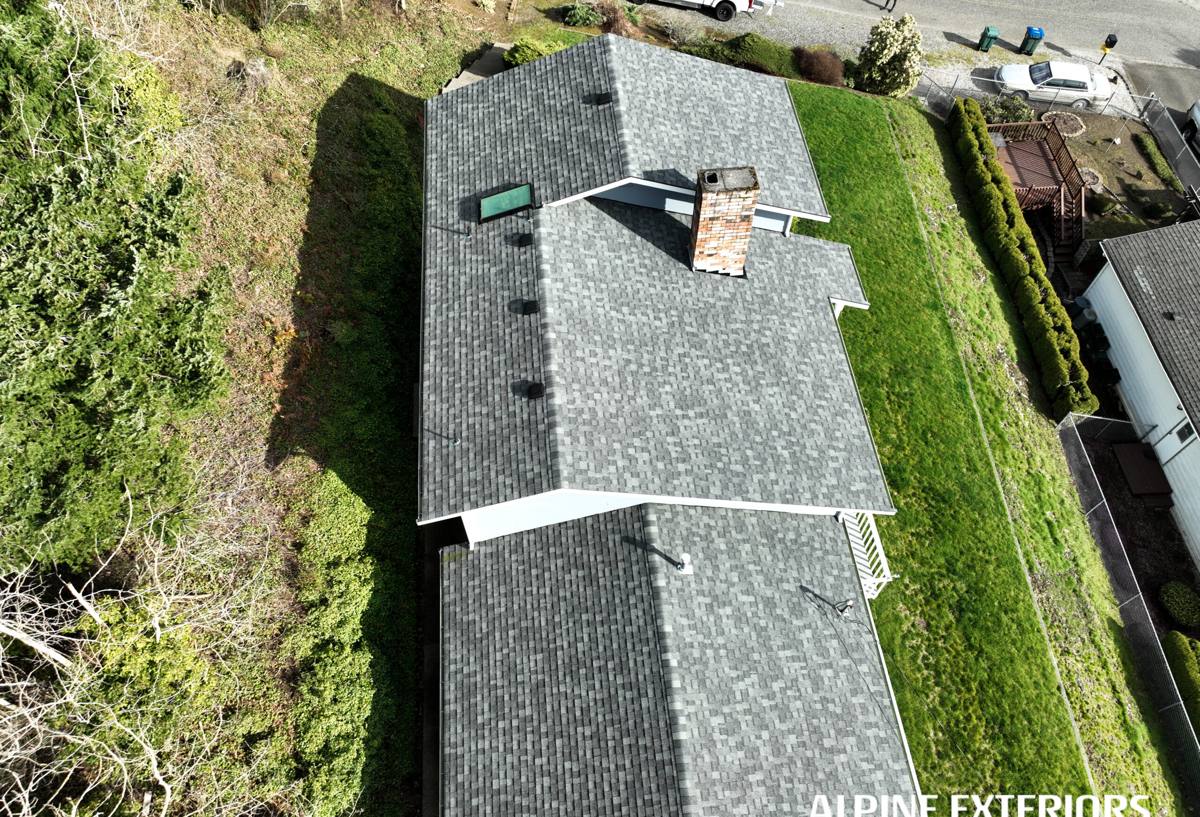
Signs a Ferndale Roof Needs Replacing — Not Just Patching
Homeowners often ask whether a repair will do. Sometimes it will. But there are signs that point toward full replacement being the more honest answer, especially on a roof that's already 20+ years old or has had multiple past repairs:
- Granule loss heavy enough that you're finding shingle grit in gutters and downspouts every season
- Moss growth that keeps returning within a year of cleaning, especially on north-facing or shaded slopes
- Soft spots or sagging in the roof deck, which usually means water has already gotten past the shingles
- Flashing around chimneys, vents, or valleys that's rusted, lifted, or was never properly stepped and counter-flashed
- Daylight visible through the roof deck from inside the attic
- Interior ceiling stains that show up after wind-driven rain specifically, not just heavy rain in general
That last one is common here — a roof can look fine in a straight-down rain and still leak the moment wind pushes water sideways under a shingle edge or through a marginal flashing detail. It's one of the more Ferndale-specific failure patterns we see.
What a Correct Roof Replacement Actually Involves
Tearing Off, Not Layering Over
A full tear-off to the deck is the standard we hold ourselves to for replacements in this area. Roofing over an existing layer might save a day of labor, but it traps moisture that's already worked its way into the old materials, and it hides the one thing a replacement is supposed to reveal: the condition of the deck underneath.
Deck Inspection and Repair
Once the old roofing is off, the deck gets inspected board by board. Any sheathing that's soft, delaminated, or water-stained gets replaced before anything new goes down. Skipping this step is one of the most common shortcuts in the industry, and it's also one of the least visible once the new roof is on — which is exactly why it matters to work with a crew that won't skip it.
Underlayment Built for Wet Climates
In a region with this much rain, underlayment choice matters more than it does in drier parts of the country. We use synthetic underlayment as standard, and self-adhered ice-and-water membrane at vulnerable points — eaves, valleys, around penetrations, and low-slope transitions — where wind-driven rain and ice damming are most likely to force water backward under the shingles.
Flashing Done Right
Flashing failures cause more roof leaks than worn-out shingles do. Correct step flashing at walls, proper counter-flashing at chimneys, and new flashing at every vent penetration are non-negotiable parts of a replacement — not an upsell. Salt air speeds up corrosion on lower-grade metal, so flashing material selection matters here more than in a dry inland climate.
Ventilation That Actually Balances
Intake and exhaust ventilation need to balance for a roof to shed moisture properly. In a climate this wet, a roof deck that can't breathe holds condensation from the inside just as much as it holds rain from the outside, and that trapped moisture is a major contributor to premature deck rot and shortened shingle life.
Choosing Roofing Materials for This Climate
There's no single "best" roofing material — there's a best fit for a given roof, budget, and exposure. Here's how the common options stack up against Ferndale's specific conditions:
| Material | Moss & Moisture Resistance | Salt Air Durability | Typical Lifespan | Maintenance Burden |
|---|---|---|---|---|
| Architectural asphalt shingle (algae-resistant) | Good, with periodic cleaning | Good | 25–30 years | Low to moderate |
| Standard 3-tab asphalt shingle | Fair — more moss-prone over time | Fair | 15–20 years | Moderate |
| Metal (standing seam or panel) | Excellent — sheds moisture fast | Depends heavily on coating/fastener quality | 40–50+ years | Low |
| Cedar shake | Poor without diligent upkeep | Fair | 20–30 years with maintenance | High |
Algae-resistant architectural shingles are our default recommendation for most Ferndale homes — they hold up well against the moss cycle, perform reasonably against salt exposure, and don't carry the maintenance demands of cedar. Metal is a strong option for homeowners planning to stay long-term and willing to pay more upfront for a longer service life, but fastener and flashing quality become even more important in salt air, since that's where corrosion shows up first. We're honest about cedar shake's trade-offs in this climate: it can look great, but it demands a maintenance commitment — regular treatment and moss control — that a lot of homeowners underestimate when they choose it.
Our Replacement Process, Step by Step
- On-site inspection and honest assessment — we look at the deck, attic ventilation, flashing points, and moss history before recommending replacement over repair.
- Written estimate — materials, scope, and timeline spelled out, no vague allowances.
- Material selection — we walk through the trade-offs above based on your budget and how long you plan to stay in the home.
- Weather-aware scheduling — we plan around Whatcom County's rain patterns rather than pretending they don't exist.
- Full tear-off and deck inspection — with photos of anything replaced, before it's covered up.
- Underlayment, flashing, and ventilation installed to spec — not just the shingles.
- Final walkthrough — so you understand what was done and why, and what maintenance (if any) it needs going forward.
Moss, Ventilation, and the Long Game
Moss is the most visible sign of Ferndale's climate on a roof, but it's really a symptom of moisture that isn't drying out fast enough — usually because of shade, slope, or debris buildup in valleys and gutters. A new roof doesn't make a home immune to moss; it changes how well the roof handles it. Proper ventilation helps the deck dry from underneath. Correct valley and flashing work keeps water moving off the roof instead of pooling. And material choice affects how quickly moss gets a foothold on the surface itself. None of these fix a bad roof design or a badly shaded roof plane on their own — but together, they're the difference between a roof that needs moss treatment every couple of years and one that needs it rarely.
What Affects Roof Replacement Cost in Ferndale
We don't publish blanket prices because roof size, pitch, layer count, and material choice all move the number significantly — but these are the factors that actually drive cost on a Ferndale job:
| Factor | Why It Matters Here |
|---|---|
| Roof size and pitch | Steeper roofs take longer and require more safety setup, especially on wet, moss-slicked surfaces |
| Number of existing layers | Tear-off labor increases with each layer of old roofing removed |
| Deck condition | Rot from long-term moisture exposure means sheathing replacement, which isn't knowable until tear-off |
| Material selection | Architectural shingle, metal, and cedar span a wide cost range, as shown above |
| Flashing and ventilation scope | Homes with multiple penetrations, valleys, or additions need more flashing work |
| Access and site conditions | Trees, tight lot lines, or difficult truck access affect labor time |
Why Local Experience Matters More Than It Sounds
A roofing crew that already works Ferndale and the surrounding Whatcom County area isn't guessing about how this climate treats a roof — they've seen the same moss patterns, the same wind-driven leak points, and the same salt-air corrosion on enough homes to know what actually holds up versus what looks fine on install day and fails in year six. That experience shows up in small decisions: which flashing metal to spec near the water, where ice-and-water membrane earns its cost, how to schedule tear-off around the rain rather than getting caught mid-job with an open deck. It also means familiarity with local permitting requirements and inspection expectations, so the paperwork side of the job doesn't become its own delay.
Before You Sign a Roofing Contract
Whatever contractor you choose, these are worth confirming upfront:
- Is the estimate a full tear-off, or does it include the option to layer over the existing roof?
- Does the written scope specify underlayment type and where ice-and-water membrane will be used?
- Is flashing replacement included, or only reused where "still good"?
- Does the contractor carry current liability insurance and any required state licensing?
- What's the workmanship warranty, separate from the manufacturer's material warranty?
- How does the schedule account for weather delays, given how often Whatcom County rain affects roofing work?
If you're weighing repair versus replacement, or just want a straight answer on what your roof actually needs, we're glad to take a look. Reach out for a free, no-pressure estimate using the form below.