 Lynden Exterior
 Asphalt Shingle Roofing Built for Ferndale's Climate
Ferndale sits close enough to the water and low enough in elevation that its roofs take on a specific combination of stresses: salt-laden air drifting in off Bellingham Bay and the Strait, long stretches of driving rain off the Pacific systems that move through Whatcom County, and a moss and algae season that, honestly, barely ends. Asphalt shingles are still one of the most practical roofing choices for homes in this area — they're cost-effective, well understood, and easy to repair in sections. But "asphalt shingle roof" covers a wide range of quality outcomes, and the difference between a roof that looks good at year three and one that's still performing at year twenty usually comes down to material choice, ventilation, and installation detail — not the shingle brand alone.
This page covers what asphalt shingle roofing actually needs to hold up in Ferndale specifically, what a correct installation involves, and how we approach the job.
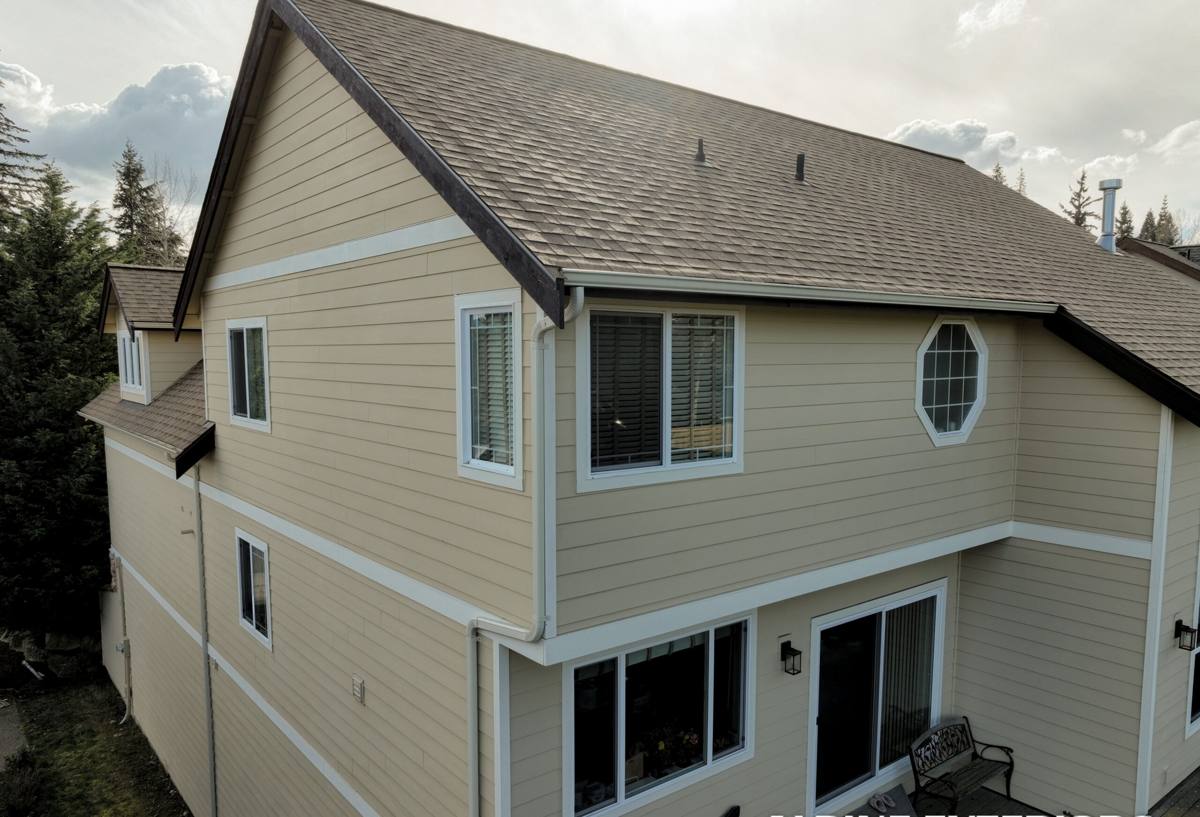
What Ferndale's Weather Does to a Shingle Roof
Salt Air and Moisture
Homes within a few miles of the water deal with airborne salt and consistently higher ambient moisture than roofs further inland. This doesn't corrode asphalt shingles the way it corrodes bare metal, but it does accelerate wear on exposed metal flashing, fasteners, and any unprotected roof-mounted hardware if lower-grade materials are used. It also means a roof that never fully dries out between rain events, which sets the stage for the next problem.
Moss, Algae, and a Long Wet Season
Western Washington's moss season is long, and Ferndale's tree cover and cooler, shaded roof planes give moss and algae plenty of time to establish. Moss isn't just cosmetic — as it grows, it lifts shingle edges, holds water against the roof deck, and works its way under tabs and flashing over time. Black algae streaking is mostly an appearance issue, but heavy moss buildup is a genuine cause of premature shingle failure if it's left unaddressed for multiple seasons.
Driving Rain and Wind-Driven Water
Storms coming off the water don't always drop rain straight down — wind-driven rain can push water sideways under shingle tabs, around flashing, and into any gap in the underlayment. This is why underlayment quality and flashing detail matter more here than they would in a drier climate; a roof that would be fine in Eastern Washington with minimal underlayment can leak in Ferndale within a few seasons if it's cut short.
Signs a Ferndale Roof Needs Attention
- Visible moss growth along shingle edges, ridges, or north-facing/shaded slopes
- Dark streaking (algae) across the roof field, especially on lighter-colored shingles
- Granules collecting in gutters or at downspout outlets
- Curling, cupping, or lifted shingle tabs, particularly on older roofs
- Soft spots or sagging when walked (a sign of deck moisture damage underneath)
- Daylight visible through the attic roof deck, or musty attic odor after rain
- Missing or displaced shingles after a windstorm
None of these mean a full replacement is automatically required — some are maintenance issues, others point to a repair, and some do mean the roof is at the end of its service life. A proper inspection tells you which situation you're actually in before any money gets spent.
What a Correct Asphalt Shingle Installation Involves
A shingle roof is a system, not a single product. Skipping any one layer shortens the life of the whole roof, even if the shingles themselves are top quality.
Deck Inspection and Repair
Before anything goes down, the roof deck (usually plywood or OSB sheathing) gets checked for soft spots, delamination, or water staining — especially around old flashing points and valleys. Any compromised sheathing gets replaced before underlayment goes on. Installing new shingles over a damaged deck just hides the problem.
Ice and Water Shield at Vulnerable Points
Eaves, valleys, and areas around chimneys or skylights get a self-adhering waterproof membrane underneath the underlayment. In a climate with as much sustained rain and occasional freeze-thaw as Whatcom County sees, this is the layer that actually stops water intrusion when everything above it is under stress.
Synthetic Underlayment
Over the rest of the deck, a synthetic underlayment provides the secondary water barrier. This matters more in a wet climate than a dry one — it's the backup layer that protects the structure if wind-driven rain ever gets past the shingles themselves.
Flashing
Step flashing at walls, valley flashing, and flashing around any roof penetration (vents, chimneys, skylights) has to be installed correctly and integrated with the underlayment — not just caulked over. Flashing failure, not shingle failure, is the most common cause of roof leaks we see, and it's almost always an installation issue rather than a materials issue.
Shingle Installation and Nailing Pattern
Correct nail placement and count (not staples, and not a "high-nail" shortcut) is what keeps shingles attached through the wind events that come through this area in fall and winter. Manufacturer nailing specs exist because under-nailed shingles are the leading cause of wind damage claims.
Attic Ventilation
Balanced intake and exhaust ventilation keeps the underside of the roof deck dry and temperature-stable. Poor ventilation traps moisture in the attic, which shortens shingle life from underneath — a problem that has nothing to do with the shingles themselves and everything to do with the rest of the system.
Choosing Shingles for a Coastal-Influenced Climate
Not every asphalt shingle product is built the same way, and for a Ferndale roof, algae resistance and wind rating matter more than they would in a milder climate.
| Feature | Why It Matters Here |
|---|---|
| Algae-resistant (AR) granules | Copper or zinc-infused granules resist the black algae streaking common on shaded, moisture-prone roofs in this area |
| Higher wind rating | Storms with sustained wind-driven rain put more stress on shingle edges and seals than calmer climates |
| Architectural (dimensional) profile | Thicker laminate construction sheds water more effectively than flat 3-tab shingles and holds up better to moss lift |
| Manufacturer warranty structure | Warranty length and what it actually covers (materials vs. labor vs. algae staining) varies significantly by product line |
We don't push one specific shingle brand as universally "best" — most major manufacturers make a solid architectural shingle line. What we do insist on is algae-resistant granules and an appropriate wind rating for anything installed on a Ferndale roof, because skipping those to save a small amount up front tends to cost more in maintenance and premature staining or lifting later.
Our Process for a Ferndale Roofing Project
- Inspection and assessment — we look at the current roof condition, deck, ventilation, and flashing points, and tell you honestly whether you're looking at repair or replacement
- Written scope and estimate — clear on materials, layers being removed, deck repair allowances, and timeline
- Tear-off and deck check — old roofing removed down to the deck, sheathing inspected and repaired as needed
- Underlayment and flashing — ice and water shield at vulnerable points, synthetic underlayment across the field, new flashing at all penetrations and walls
- Shingle installation — installed to manufacturer nailing specification, not a shortcut pattern
- Ventilation check — intake and exhaust balance confirmed or corrected
- Cleanup and final walkthrough — site cleared, magnetic sweep for nails, roof reviewed with you before we consider the job done
Maintenance That Actually Extends a Shingle Roof's Life Here
- Keep tree branches trimmed back from the roof to reduce shade and debris that feed moss growth
- Clean gutters at least twice a year so water isn't backing up under the lowest course of shingles
- Address moss growth early with proper roof-safe treatment rather than letting it establish over multiple seasons
- Avoid pressure washing shingles directly — it strips granules and shortens shingle life faster than the moss it's meant to remove
- Have the roof looked at after any major windstorm, even if nothing looks obviously wrong from the ground
Cost Factors for Ferndale Roofing Projects
Every roof is different, but the same handful of factors drive most of the cost variation we see on local projects.
| Factor | Effect on Project |
|---|---|
| Roof size and number of planes | More square footage and complexity (valleys, dormers, hips) increases labor and material |
| Number of existing layers | Tear-off of multiple old layers takes more labor than a single-layer removal |
| Deck condition | Rot or delamination found during tear-off adds sheathing replacement to the scope |
| Roof pitch and access | Steeper or harder-to-access roofs require more safety setup and time |
| Shingle tier chosen | Standard architectural vs. premium algae-resistant, higher-wind-rated lines |
| Ventilation upgrades | Adding or correcting intake/exhaust venting if the existing system is inadequate |
We give a written, itemized estimate before any work starts, so there's no guessing about what's included.
Why Local Ferndale Experience Matters
A roofing crew that mostly works dry inland climates and occasionally takes a job near the water can still install a technically correct roof — but they're less likely to catch the details that matter specifically here: where moss tends to establish first on a given roof orientation, how much ice and water shield coverage is actually warranted at the eaves for this rainfall pattern, and which ventilation setups hold up against the moisture load this area sees year-round. Working Whatcom County roofs regularly means we've seen how different shingle lines and installation details actually perform here over years, not just on paper.
Get a Free, No-Pressure Estimate
If your Ferndale home's roof is showing moss, staining, curling shingles, or you just want an honest read on how much life is left in it, we're happy to take a look. The estimate is free, there's no pressure, and you'll get a straight answer about whether you're looking at maintenance, repair, or replacement — use the form below to get started.