 Lynden Exterior
 Why Ferndale Decks Wear Out Faster Than the Rest of the House
A deck takes more abuse than almost any other part of a home's exterior. It's horizontal, so water sits on it instead of running off. It's built low to the ground, so splash-back and soil moisture hit the framing from underneath. And in Ferndale, it's exposed to a specific combination of conditions that speeds all of that up: proximity to Bellingham Bay puts a steady trace of salt in the air, Whatcom County's long wet season means driving rain soaks exposed lumber for months at a stretch, and the shade and dampness that follow keep moss and algae established on decking boards well into what should be the dry season.
None of that means a deck is doomed. It means a deck built or repaired without accounting for those conditions will fail years before it should, usually starting in a handful of predictable spots. Knowing where to look — and what "fixed" actually means in this climate — is most of what separates a repair that holds up from one that's just a patch.
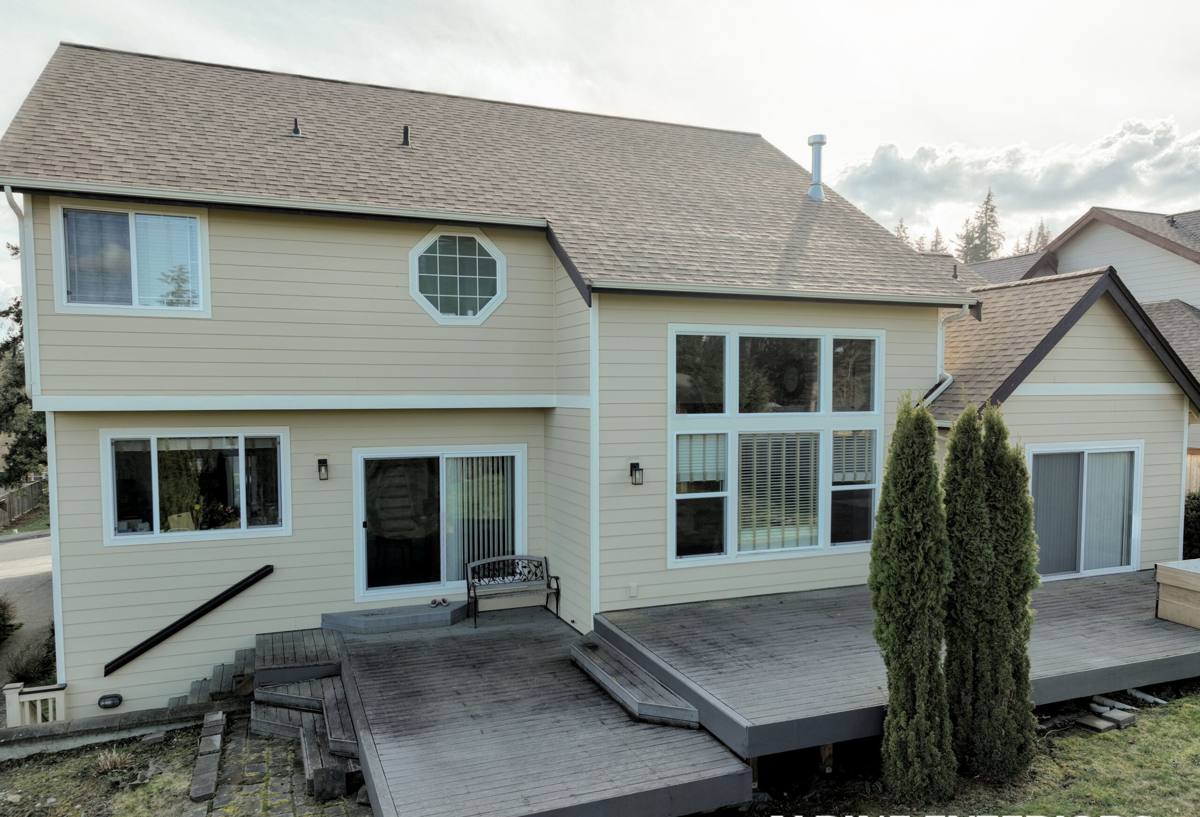
Where Ferndale Deck Damage Actually Starts
We see the same failure points again and again on repair calls in this area. Understanding them helps you catch problems early, before a simple repair turns into a structural one.
The Ledger Board Connection
The ledger board is the framing member that bolts the deck to the house. It's also the single most common source of serious deck failure, because it sits directly against the house's siding or rim joist where water can get trapped between the two surfaces with nowhere to drain. In a climate with as much sustained rain as Whatcom County gets, a ledger that wasn't properly flashed when the deck was built will trap moisture year-round, not just during storms. By the time rot shows on the surface, the framing behind it is often further gone than it looks.
Post Bases and Footings
Wherever a support post meets a concrete footing, it's constantly wicking up ground moisture, especially in low or shaded yards that don't drain quickly. Salt-laden air adds another factor: it accelerates corrosion on any metal post base or bracket, which weakens the connection well before the wood itself gives out.
Fasteners and Hardware
Nails and screws that aren't rated for coastal-adjacent, high-moisture exposure will rust, streak the decking with corrosion stains, and eventually lose their grip. Loose boards are often a fastener problem, not a wood problem — which matters, because it changes what the correct repair actually is.
Moss, Algae, and Surface Wear
Ferndale's long moss season isn't just cosmetic. Moss and algae hold moisture against the board surface, which softens wood fiber over time and turns a deck slick and genuinely dangerous underfoot, especially on stairs. A deck that looks fine in July can be hiding a full season of moisture damage that only becomes obvious once winter rains return.
Signs Your Deck Needs Repair — and What They Usually Mean
- Soft or spongy boards: usually localized rot; often repairable if the framing underneath is still sound.
- Visible gaps opening between boards or at the ledger: can indicate the structure is shifting, not just the decking shrinking.
- Rust streaks running down from screws or nails: a sign fasteners are corroding and losing holding strength.
- Wobble in the railing when you lean on it: a safety issue that should never wait for a "someday" fix.
- Green or black film that won't scrub off easily: established moss/algae growth that's likely softening the wood beneath it.
- Stairs that feel slick even when they look dry: often a sign of surface breakdown from repeated wet-dry cycles.
- Sagging between joists when you walk across: points to framing damage, not just a cosmetic surface problem.
What a Correct Deck Repair Actually Involves
A lot of "deck repair" in this region amounts to swapping a few obviously bad boards and calling it done. That fixes the symptom, not the cause, and it's why some decks get "repaired" every couple of years without ever actually getting better. A repair done right starts underneath, not on the surface.
1. Structural Assessment First
Before any board comes up, we check the ledger connection, the post bases, the joists, and the fasteners holding it all together. Surface rot is often a symptom of a moisture source somewhere else in the structure — replacing the board without addressing that source just buys a year or two.
2. Isolate What's Actually Failed
Not every soft board means the joist under it is compromised, and not every deck with a rot problem needs full replacement. We probe framing members with an awl to find the real boundary between sound wood and damaged wood, rather than assuming the worst — or, just as important, missing damage that isn't visible from the top.
3. Fix the Water Path, Not Just the Symptom
If a ledger board is rotting because it was never flashed, replacing the board without adding proper flashing means the same failure comes back. Correct repair addresses drainage and flashing details at the same time as the visible damage, which is the part that actually prevents a repeat call.
4. Match Materials and Fasteners to the Exposure
Replacement lumber, hardware, and fasteners get chosen for what the deck is actually exposed to — not just "what's on the shelf." In a salt-air, high-moisture environment, that usually means corrosion-resistant fasteners and framing hardware rated for exterior, ground-contact, or coastal exposure depending on where they sit on the structure.
5. Reassemble to Code, Not Just to Look Right
Railing height, baluster spacing, stair stringer support, and ledger attachment all have code requirements for a reason — they're the parts of a deck most tied to safety. A repair is also a chance to correct anything that was undersized or non-compliant in the original build.
Repair or Rebuild? What Actually Drives That Decision
Homeowners often assume any deck with problems needs full replacement, or the opposite — that everything can be patched. Neither is reliably true. The honest answer depends on where the damage is and how far it's spread.
| Factor | Leans Toward Repair | Leans Toward Rebuild |
|---|---|---|
| Framing condition | Joists and beams are sound; damage is at the surface | Rot has spread into multiple structural members |
| Ledger board | Solid, properly flashed connection | Rotted or never flashed correctly to begin with |
| Age of the deck | Newer deck, isolated damage | Older deck already near the end of its expected life |
| Post/footing condition | Footings and post bases intact | Multiple posts showing base rot or corrosion |
| Scope of visible damage | A handful of boards or one section | Damage spread across most of the deck surface |
| Code compliance | Railings, stairs, and spacing already meet code | Multiple non-compliant elements found during inspection |
We won't sell a full rebuild when a targeted repair will genuinely hold up, and we won't patch a deck whose framing is compromised just to keep the estimate low. The inspection tells us which side of that line your deck is on — that's the whole point of doing it properly before quoting anything.
How Our Process Works
- Free on-site inspection. We walk the deck, check the ledger, probe suspect boards and framing, and look at drainage and fastener condition — not just what's visible from the top.
- Straight assessment. We tell you what's actually wrong, what's optional, and what's a genuine safety issue that shouldn't wait.
- Written estimate. Clear scope, materials, and price — no vague allowances that turn into surprises once work starts.
- Repair work. Damaged framing, decking, railings, or hardware are replaced with materials matched to Ferndale's exposure, and any flashing or drainage issues get corrected as part of the job, not left for next time.
- Final walkthrough. We check the repair with you before we consider the job done, including railings and stairs for solid, safe footing.
Materials: What We Use and Why
Material choice on a deck repair isn't just about looks — it's about what's going to hold up against this area's rain and salt-air exposure over the next decade, not just the next dry season.
Framing Lumber
Structural repairs use pressure-treated lumber rated for ground contact where posts and beams are near soil or footings, which matters more here than in drier inland areas because the wood stays damp longer between rain events.
Decking Surface
Both quality wood decking and composite decking have a place in a repair, and the right choice depends on the rest of the deck, your maintenance preference, and budget. Wood costs less up front and can be refinished, but needs regular cleaning and sealing to resist moss and moisture in this climate. Composite costs more initially and won't rot, but it's a material that needs to be installed correctly the first time — gaps, fastening, and ventilation underneath all affect how well it performs, and mismatched expectations about maintenance are the most common source of complaints with composite decking generally.
Fasteners and Hardware
Given the salt content in the air this close to the bay, we lean toward corrosion-resistant fastener and hardware options rather than standard-grade hardware, particularly on ledger connections, post bases, and any hardware that will stay wet longer than the deck surface itself.
Keeping a Repaired Deck From Needing Repair Again
A correct repair should last, but no deck in this climate is maintenance-free. A little seasonal attention goes a long way toward protecting the work.
- Sweep debris off the deck regularly, especially in fall — trapped leaves hold moisture against the boards.
- Clean moss and algae off the surface and stairs before it becomes slick, not after.
- Keep gutters and downspouts clear so runoff isn't dumping extra water onto or under the deck.
- Check the ledger board area once a year for any sign of water staining or gaps opening up.
- Reseal or refinish wood decking on the manufacturer's recommended schedule rather than waiting until it looks obviously worn.
- Look underneath the deck occasionally — problems at the framing level are often visible from below before they show on top.
Why a Crew That Already Works Ferndale Matters
Deck repair done by someone unfamiliar with this specific stretch of Whatcom County often misses the details that actually matter here — the moisture that lingers because of shade and drainage patterns common to the area, the corrosion pace tied to being this close to the bay, and how long moss season really runs before decking dries out enough to work safely and finish materials properly. We're based in Lynden and work Ferndale regularly, which means we're not guessing at material choices or estimating a repair timeline around weather assumptions that don't hold up here. It also means if a repair needs a follow-up visit or a warranty check, we're a short drive away, not a call center.
If your deck has soft spots, a wobbly railing, or you just want an honest opinion on repair versus rebuild, we're happy to take a look. Reach out for a free, no-pressure estimate using the form below — we'll tell you what we actually find, not just what's easiest to sell.