 Lynden Exterior
 Roofing in Ferndale Comes With Its Own Set of Problems
Ferndale sits close enough to the Strait of Georgia and Bellingham Bay that salt-laden air is a daily fact of life for anything metal on a roof — fasteners, flashing, vents, valleys. Combine that with Whatcom County's long, wet winters and the moss growth that follows, and you've got a climate that is genuinely harder on a roof than most of Washington State. A roof installed without that reality in mind will show problems years before it should: streaking, granule loss, rusted fasteners, and moss working its way under shingle tabs.
We install roofs across Whatcom County, and Ferndale homes get the same attention to detail as everywhere else we work — but the material choices, fastener specs, and ventilation details we lean on here are shaped specifically by what this stretch of coastline does to a roof over time.
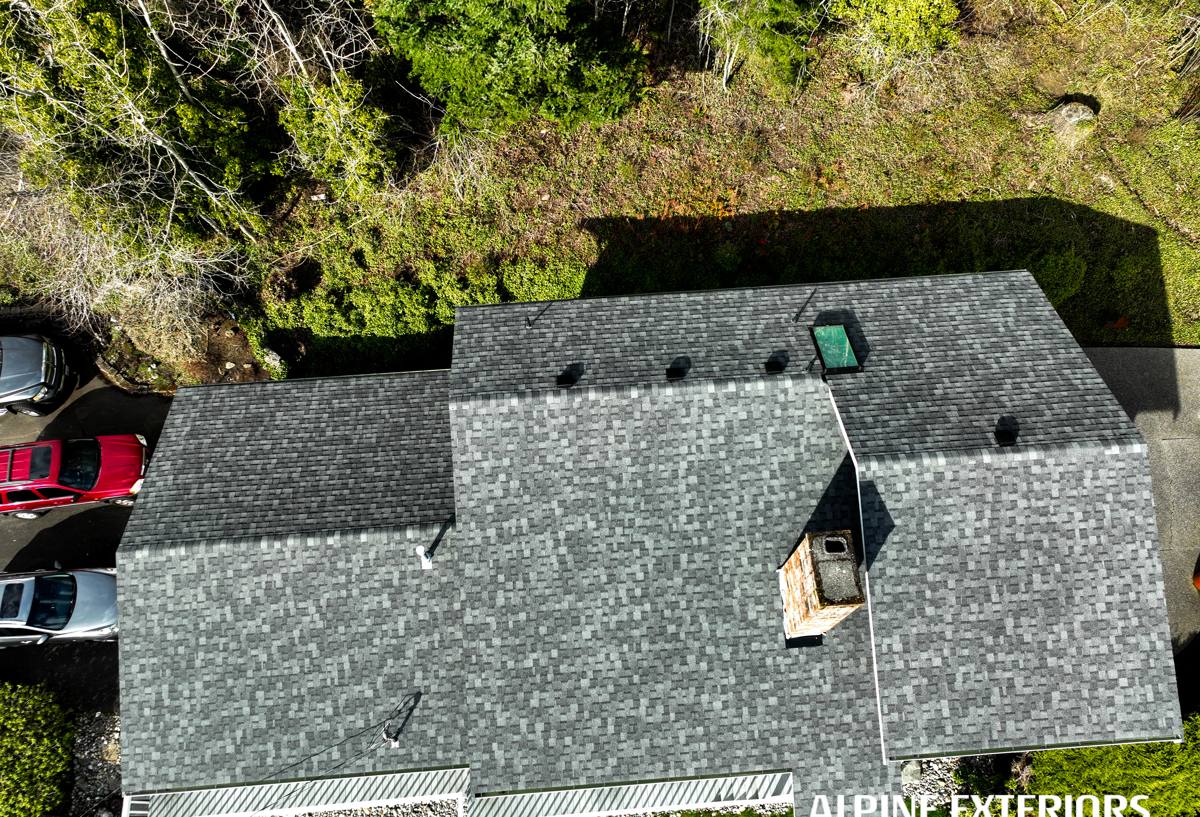
What Ferndale's Climate Actually Does to a Roof
Salt Air and Corrosion
Coastal salt exposure accelerates corrosion on anything ferrous. Standard electro-galvanized nails and staples can start rusting at the head within a handful of years in a salt-air environment, which is exactly where leaks start — not in the shingle itself, but at every point metal penetrates the roof deck. This is why fastener choice matters as much as shingle choice on a Ferndale roof.
Driving Rain
Storms coming off the water don't just fall straight down — wind-driven rain gets pushed sideways and upward under laps, ridge caps, and around penetrations. A roof detailed for calmer inland conditions can leak here even when every shingle is intact, simply because water found a horizontal path the installer didn't plan for.
Moss Season
Shade, moisture, and mild temperatures give moss a long growing window in this part of the county — often eight months or more out of the year on north-facing slopes and anywhere tree cover keeps a roof from drying out fully. Moss doesn't just look bad. Its rhizoids work into the shingle surface and lift tabs, and mats of moss hold water against the roof deck long after a storm has passed.
What a New Roof for Ferndale Actually Needs
- Corrosion-resistant fasteners — hot-dip galvanized or stainless ring-shank nails, not standard electro-galvanized, especially within a few miles of the water.
- Fully adhered ice-and-water underlayment at eaves, valleys, and around every penetration — not just the code-minimum strip.
- Balanced attic ventilation so moisture from inside the home doesn't condense against the underside of the deck and feed rot from below.
- Zinc or copper strips below the ridge on shaded roofs, which discourage new moss growth for years without chemical treatment.
- Wider, better-lapped step and valley flashing sized for wind-driven rain, not just gravity drainage.
- A shingle or roofing product genuinely rated for coastal exposure, not just a standard-line product with a coastal warranty rider bolted on.
Roofing Material Options for Ferndale Homes
There isn't one "right" roof for every Ferndale house — it depends on the home's style, budget, tree cover, and how long you plan to own it. Here's how the common options actually perform in this climate:
| Material | Coastal / Moisture Performance | Moss Resistance | Typical Lifespan Here |
|---|---|---|---|
| Architectural asphalt shingle | Good, with proper flashing and corrosion-rated fasteners | Moderate — benefits from zinc strips on shaded slopes | 20–30 years |
| Standing seam metal | Excellent when detailed with compatible, coated fasteners | High — smooth surface sheds moss easily | 40–60 years |
| Synthetic composite (slate/shake look) | Very good; doesn't absorb moisture like wood shake | High | 40–50 years |
| Cedar shake | Requires ongoing maintenance in wet, shaded conditions | Low without regular treatment | 20–30 years, maintenance-dependent |
We're happy to walk through the trade-offs for your specific roof — sun exposure, tree cover, and how much roof maintenance you actually want to do matter as much as the material spec sheet.
A Note on Cedar Shake and Wood Roofing
Cedar shake has a real place in this region's architecture, and we'll install it when that's what a homeowner wants. Our honest read is that in a shaded, high-moisture setting like a lot of Ferndale properties, wood roofing needs more consistent upkeep — cleaning, treatment, and inspection — to hold up the way it can in drier climates. If you're set on the look, we'll talk through what that maintenance schedule realistically looks like before you commit, so there are no surprises two winters in.
How We Handle a New Roof Installation, Start to Finish
1. On-Site Assessment
We walk the roof and the attic, not just one or the other. Deck condition, ventilation, existing moss or algae staining, tree cover, and flashing details all get checked before we quote anything — a roof estimate based on square footage alone misses the problems that actually cause leaks.
2. Tear-Off and Deck Inspection
Old roofing comes off down to the deck. This is the point where hidden rot, soft spots, or under-ventilated sheathing show up — issues you can't see from the ground or from inside the attic. We document any deck repair needed before covering it back up.
3. Deck Repair and Prep
Any compromised sheathing gets replaced, not patched over. Drip edge, ice-and-water membrane, and synthetic underlayment go down next, with extra coverage at valleys, eaves, and anywhere the roof plane changes.
4. Flashing First
Step flashing, valley flashing, and penetration boots go in before the field material, sized and lapped for wind-driven rain rather than the bare code minimum. This is the single most common place we find leaks originating on older Ferndale roofs we've replaced.
5. Roofing Material Installation
Shingles, panels, or shakes go on to manufacturer spec, with corrosion-resistant fasteners throughout. Nail placement and exposure are checked as we go — not just at final walk-through.
6. Ventilation and Ridge Work
Ridge vents or other exhaust ventilation are balanced against soffit intake so the attic can actually dry out between storms. Where moss risk is high, zinc or copper control strips go in at this stage.
7. Final Walk-Through
We inspect the finished roof with you, cover what maintenance (if any) it needs going forward, and make sure you understand your warranty coverage before we consider the job done.
Signs a Ferndale Roof Needs Replacing, Not Patching
- Granules collecting in gutters or at downspouts in noticeable amounts
- Shingles curling, cupping, or losing their tabs at the edges
- Moss or algae staining that comes back within months of cleaning
- Daylight visible through the roof deck from inside the attic
- Soft or spongy spots underfoot near valleys or roof penetrations
- A roof past 20–25 years old that hasn't had a full tear-off
- Rust streaking below nail heads or metal flashing
One or two of these on their own might mean a repair. Several together usually mean the roof system as a whole is past the point where patching makes financial sense.
What Roof Replacement Typically Involves, Cost-Wise
Every roof is priced on its own specifics — square footage, pitch, number of layers to remove, deck condition, and material choice all move the number. In broad terms, a straightforward asphalt shingle tear-off and replacement on an average Ferndale home runs in the low-to-mid five figures, with metal or synthetic composite roofs running higher due to material and labor. Steep pitches, multiple roof planes, extensive deck repair, or difficult access all add to the estimate. We'll never give you a number without seeing the roof first — anything quoted sight-unseen isn't a real estimate.
Why a Local Crew Matters for This Job
A roofing crew that only occasionally works this close to the water doesn't always know to spec stainless or hot-dip fasteners by default, or to plan flashing for sideways rain instead of straight-down rain. Those aren't exotic details — they're standard practice for anyone who roofs Whatcom County's coastal communities regularly. We work Ferndale, Lynden, and the surrounding areas often enough that these specs are simply how we build a roof here, not an upgrade we have to remember to mention.
Local also means accountability. If a flashing detail needs a second look after the first hard rain of the season, we're not driving in from out of the area to handle it.
Get a Straightforward Roof Estimate
If your Ferndale roof is showing its age — or you just want an honest read on how many years it has left — we're glad to take a look. The estimate is free, there's no pressure attached to it, and we'll tell you plainly if a repair is a better call than full replacement. Reach out through the form below to get started.