 Lynden Exterior
 Why Ferndale Homes Wear Out Siding Faster Than the Brochure Says
Ferndale sits close enough to the water and open farmland that its homes take a different kind of beating than houses twenty miles inland. Salt-laden air off the Strait works into seams and fastener heads. Driving rain off Pacific storms hits gable ends and window trim sideways, not straight down. And the long, wet stretch of fall through spring here in Whatcom County gives moss and algae months at a time to get established on anything that stays damp. None of this is dramatic on its own, but stacked together over ten or fifteen years, it's exactly the combination that finds every weakness in a siding system — the cheap caulk joint, the primer coat that never got a finish coat, the seam that wasn't flashed right the first time.
When we're called out to look at failing siding in Ferndale, the pattern is consistent: it's rarely one catastrophic failure. It's moisture finding a small gap and being given enough time and enough wet weather to turn that gap into rot, delamination, or a moss mat that's holding water against the wall. Replacement done right in this area has to account for all three stressors — salt, wind-driven rain, and sustained moisture — not just look good on a dry August afternoon.
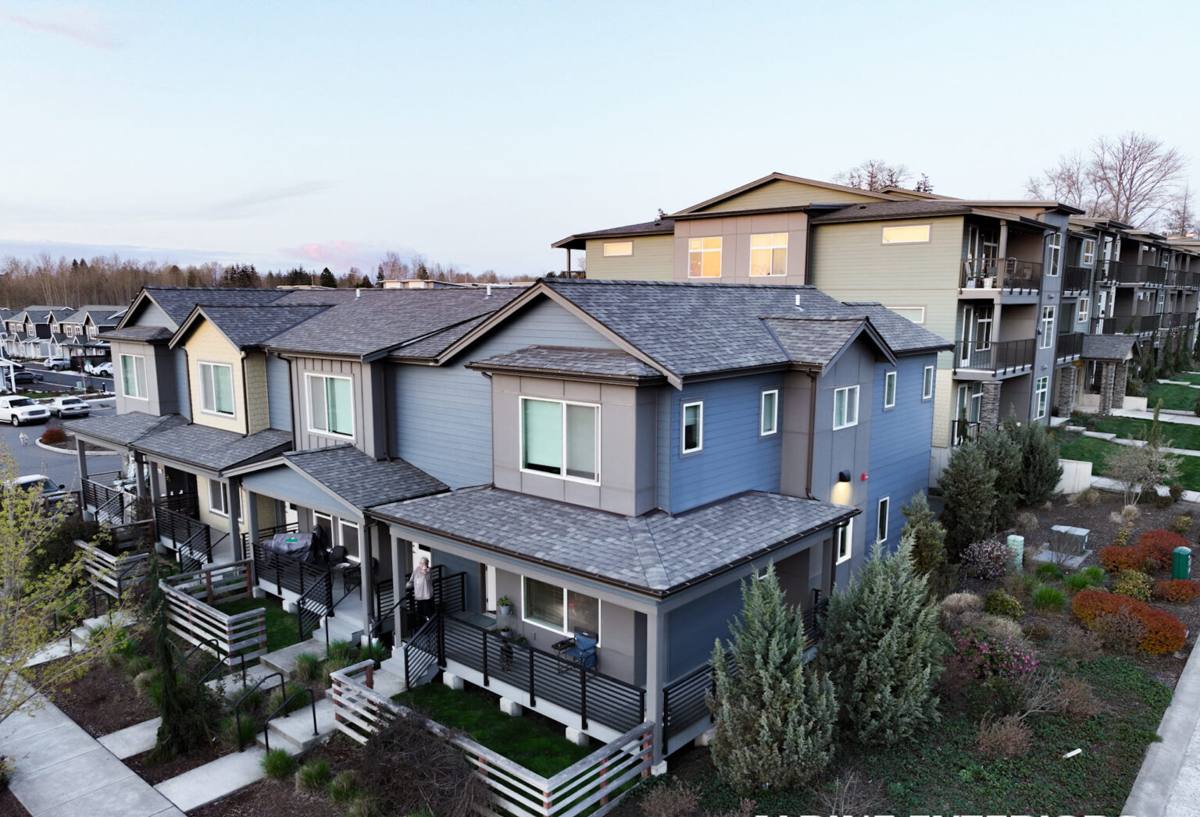
What Correct Siding Replacement Actually Involves
Replacing siding is not a cosmetic swap. If the water-resistive barrier, flashing, and fastening underneath aren't right, new siding will fail on the same timeline as the old siding did — sometimes faster, because it's now sealed against a wall that was never properly dried out. A correct job includes:
- Full removal of old siding and inspection of the sheathing underneath for soft spots, rot, or existing mold
- Repair or replacement of any damaged sheathing before anything new goes up
- Installation of a code-compliant weather-resistive barrier, lapped correctly from bottom to top so water sheds outward
- Proper flashing at every window, door, deck ledger, and roof-to-wall intersection — the places where most failures actually start
- Correct fastener type, spacing, and placement for the specific siding product being installed
- Attention to butt joints, corners, and caulk lines — the small details that determine whether water gets in over the next decade
Skip any one of these steps and the visible siding can look perfect while the wall behind it is already in trouble. This is the part of the job that doesn't show up in a driveway photo, and it's the part that matters most in a climate like ours.
Why We Only Install James Hardie Fiber Cement
We've made a deliberate decision to install one siding system: James Hardie fiber cement, in the HZ product lines engineered for this climate zone. We don't install vinyl, LP SmartSide, Cemplank, Allura, primed spruce, or cedar. That's not a marketing position — it's a standard we hold because of what we see when we tear old siding off houses in this region.
Vinyl handles moisture fine on its own, but it moves with temperature swings, and in wind-driven rain it can allow water behind panels at laps and corners if installation isn't precise — and once water's behind vinyl, it has nowhere to go. Wood-based composite products like LP SmartSide are engineered to resist moisture better than raw wood, but they're still wood at the core, meaning any breach in the factory coating is an entry point for the kind of sustained dampness Ferndale winters provide. Primed wood and cedar require a maintenance commitment — repainting, caulk inspection, moisture checks — that most homeowners underestimate going in, and in a marine climate that maintenance window shrinks. Fiber cement alternatives to Hardie exist and some are reasonable products, but we standardized on Hardie specifically for its factory-applied ColorPlus finish, its documented performance data for Pacific Northwest conditions, and the strength of its transferable warranty when installation is done to spec.
Fiber cement doesn't rot, doesn't provide a food source for the moss and algae that thrive in our wet months, and holds a factory finish far longer than field-applied paint on wood substrates. It's heavier and less forgiving to install than vinyl, which is exactly why installation quality matters as much as the product choice.
Comparing Siding Options for a Ferndale Home
| Factor | Vinyl | Wood / Composite (LP, Cedar) | James Hardie Fiber Cement |
|---|---|---|---|
| Moisture behavior | Can trap water behind panels if seams fail | Vulnerable at any coating breach | Does not rot or absorb water like wood-based products |
| Maintenance | Low, but cracks/fades over time | Regular repainting and caulk checks needed | Factory finish holds for years with minimal upkeep |
| Moss/algae resistance | Can host growth in shaded, damp areas | Provides an organic food source for growth | Non-organic surface resists sustained growth better |
| Fire resistance | Melts/deforms under heat exposure | Combustible | Non-combustible fiber cement composition |
| Wind-driven rain performance | Installation-sensitive at laps | Installation and coating dependent | Engineered HZ lines built for high-moisture regions |
Our Process for a Ferndale Siding Replacement
1. On-Site Assessment
We start by walking the exterior with you, looking specifically at the areas that take the worst of Ferndale's weather — gable ends facing prevailing wind, anything near ground contact, deck and porch attachment points, and north-facing walls where moss tends to establish first. We're checking for soft sheathing, existing moisture damage, and flashing conditions, not just surface wear.
2. Straight Answer on Scope
You get a clear picture of what's cosmetic versus what's structural before any contract is signed. If sheathing repair is needed, we tell you before demo starts, not after we've already opened the wall.
3. Tear-Off and Inspection
Old siding comes off in sections so the crew can inspect the wall assembly as we go, rather than blind-removing everything and discovering problems all at once.
4. Barrier, Flashing, and Repair
Any compromised sheathing gets replaced. Weather-resistive barrier and flashing go in correctly at every penetration and transition before a single piece of new siding is hung.
5. James Hardie Installation
Installed per manufacturer specification for fastening, clearance, and joint treatment — the details that determine whether the product performs the way it's engineered to over the next several decades.
6. Final Walkthrough
We review the finished work with you, point out anything homeowners should know for basic upkeep, and make sure you understand what's covered under warranty.
Why Hiring a Crew That Already Works Ferndale Matters
Siding installation is not one-size-fits-all across a region. A crew that mostly works drier inland areas can develop habits — flashing shortcuts, caulk-over-flashing instead of proper laps, standard rather than climate-rated fasteners — that hold up fine somewhere with less wind-driven rain but fail here. Working Whatcom County's coastal-influenced towns regularly means we've already seen where Ferndale's specific conditions expose weak installation practices, and we build around that instead of learning it on your house.
There's also a practical side: a local crew can respond faster if something needs a warranty check, and we're not disappearing after the invoice clears. That matters more in a climate where problems tend to show up gradually, over a wet season or two, rather than immediately.
Signs Ferndale Homeowners Shouldn't Ignore
- Soft or spongy spots when you press on siding, especially near the bottom courses or under windows
- Persistent moss or dark streaking that returns shortly after cleaning
- Visible warping, bubbling, or separation at seams and corners
- Peeling or chalking paint on wood siding that keeps recurring despite repainting
- Musty smell or visible staining on interior walls that share an exterior wall
- Siding that feels consistently damp to the touch even after a few dry days
Any one of these on its own might just need monitoring. Multiple signs together, especially heading into another wet Whatcom County winter, are worth having looked at before they become a bigger repair.
What Replacement Typically Involves Cost-Wise
Every Ferndale home is different — square footage, number of stories, trim complexity, and how much sheathing repair is needed all move the number. What we can say honestly is that the biggest cost drivers are usually hidden ones: how much of the wall assembly needs repair once old siding comes off, and how much trim and flashing detail the house has. A straightforward single-story home with sound sheathing costs less than a two-story home with extensive trim and multiple roof-to-wall intersections. We give a firm number after the on-site assessment, not a phone estimate, because guessing at hidden condition does homeowners no favors either direction.
Get a Straight Answer for Your Ferndale Home
If your siding is showing wear, or you're just planning ahead before the next wet season sets in, we'll come take a look and give you an honest read on what your home actually needs — no pressure, no inflated scope. Use the form below to request a free estimate.