 Lynden Exterior
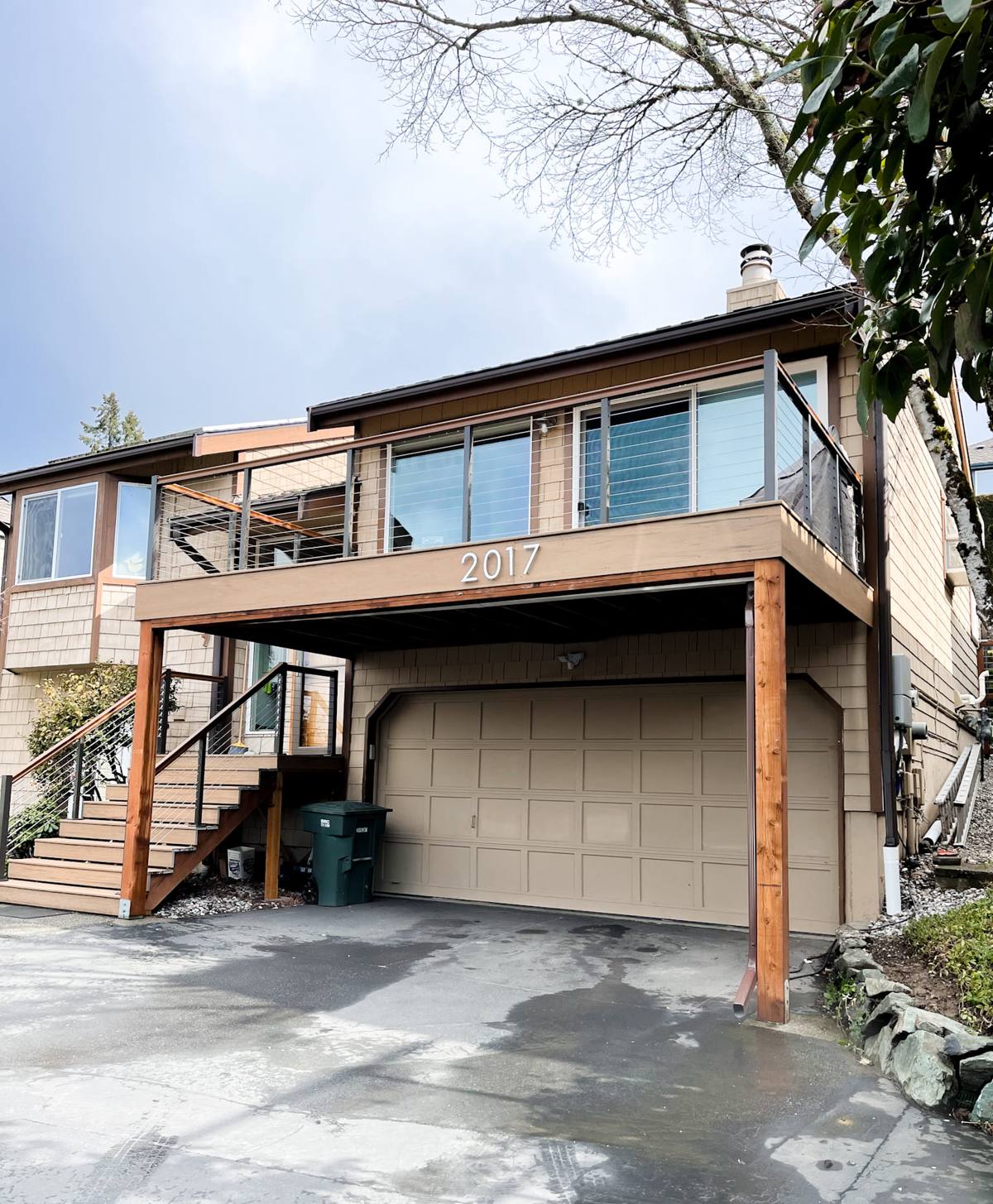
 Building a Deck That Actually Holds Up in Ferndale
Ferndale sits close enough to the water that homes here deal with a different mix of weather than you'll find further inland in Whatcom County. Salt-tinged air off the Strait of Georgia, long stretches of driving rain through fall and winter, and a moss season that can run most of the year all put real stress on an outdoor deck. A deck built the same way you'd build one in a dry inland climate will show problems here faster — soft spots, corroded hardware, slick green boards, and railings that loosen before their time.
This page covers what a deck built specifically for Ferndale conditions needs to get right, from the ground up to the railing caps, and how our process is set up to deliver that.
Why Ferndale's Climate Is Harder on Decks
Three conditions do most of the damage over time:
Salt Air
Ferndale's proximity to Puget Sound and the Strait of Georgia means airborne salt reaches homes here in a way it doesn't in Lynden or further east in the county. Salt accelerates corrosion in metal fasteners, joist hardware, and railing components. A screw or bracket rated for general outdoor use can start rusting years before a marine-grade or coated equivalent would.
Driving Rain
Whatcom County gets its share of wind-driven rain, and a deck attached to the house is a common entry point for moisture intrusion if the ledger board flashing isn't done correctly. Water that gets behind the ledger or pools on horizontal surfaces is where rot starts — usually invisible until the damage is already structural.
Moss and Algae
Shaded, damp decks in this part of Washington grow moss and algae almost year-round. Beyond looking bad, moss holds moisture against the wood or composite surface and makes boards genuinely slippery — a real slip hazard on stairs and near doorways.
What a Correctly Built Deck Requires Here
Footings and Framing
Footings need to be sized and set below frost depth with good drainage around them, not just poured into whatever the ground allows. On lots with heavier or poorly draining soil, that means gravel beds and sometimes deeper footings than the minimum code allows for. Framing lumber should be pressure-treated rated for ground contact where it's close to soil, and joists benefit from a protective tape over the top edge so fasteners don't create a path for water to soak into the wood grain.
Ledger Attachment and Flashing
Where the deck ties into the house is the single most common source of long-term water damage on any deck in this region. Proper flashing — installed so water sheds outward and never behind the siding or ledger — is not optional. This is also one of the first things a building inspector checks, and for good reason.
Fasteners and Hardware
Given the salt air here, we don't treat fastener choice as an afterthought. Hot-dip galvanized or stainless steel hardware costs more up front than standard coated fasteners, but it holds up to the corrosive air near the water far longer. Cutting corners here is the kind of thing that doesn't show up as a problem for a year or two — and then shows up as rust streaks and loose connections all at once.
Decking Material Selection
Wood, composite, and PVC decking all behave differently in wet, salt-influenced air, and the right choice depends on how much maintenance a homeowner actually wants to do versus what they want to spend up front.
Decking Material Comparison for Ferndale Conditions
| Material | Upfront Cost | Maintenance | Moisture & Salt Air Resistance | Typical Lifespan |
|---|---|---|---|---|
| Pressure-treated wood | Lowest | Annual cleaning, periodic staining/sealing | Good if sealed regularly; vulnerable if maintenance lapses | 10–15 years |
| Cedar | Moderate | Regular sealing to maintain color and resist moisture | Naturally rot-resistant but still needs upkeep near salt air | 15–20 years |
| Capped composite | Higher | Occasional washing, no staining/sealing | Very good — the capped shell resists moisture and salt exposure well | 25–30 years |
| PVC/vinyl decking | Highest | Lowest — mostly washing | Excellent — fully synthetic, no wood fibers to absorb moisture | 25–30+ years |
There's no single "right" answer — a wood deck that's properly sealed on schedule will last a long time, and plenty of Ferndale homeowners prefer the natural look and lower upfront cost. What matters is picking a material with eyes open to the maintenance commitment, and building the structure underneath it correctly regardless of what decking goes on top.
Railings, Stairs, and Code Requirements
Whatcom County follows the Washington State building code for residential decks, which sets minimum requirements for guardrail height, baluster spacing, and stair geometry, along with permitting thresholds based on deck height and size. We handle the permit process as part of the build so you're not left guessing whether an inspection is required. Beyond meeting code, railing hardware is another spot where salt air exposure matters — post connections and baluster fasteners see the same corrosion pressure as the rest of the structure, so they get the same hardware standard.
Design Details Worth Getting Right
- Gaps between deck boards sized to shed water and allow airflow underneath, reducing the damp conditions moss needs to take hold
- Stair treads and landings sloped slightly to drain rather than pool water
- Under-deck ventilation so the framing can dry out between rain events instead of staying wet
- Railing post connections reinforced beyond the code minimum on decks with any real elevation
- Fastener heads set to minimize standing water pockets on the deck surface
Living With Moss and Long-Term Upkeep
No deck material is entirely maintenance-free in this climate, but the design and build choices above cut down significantly on how much moss and algae take hold in the first place. Shaded decks under tree cover or on the north side of a house will still need more frequent attention than a deck that gets regular sun. A yearly cleaning — a stiff brush and the right cleaner, not a pressure washer blasted too close to the surface — keeps most decks looking good and keeps the surface from getting dangerously slick.
A Simple Annual Maintenance Checklist
- Clear leaves and debris from between boards and along the ledger before fall rains set in
- Wash the deck surface and railings to remove moss, algae, and grime buildup
- Check fastener heads and railing connections for movement or corrosion
- Inspect ledger flashing for gaps, cracking, or signs of water staining on the siding above
- Reseal or restain wood decking on the schedule the product calls for — don't wait until it's visibly graying
- Confirm gaps between boards haven't closed up with swelling, which traps moisture
Our Process, Start to Finish
We keep the process straightforward so there aren't surprises partway through the job.
- On-site assessment — we look at the ground conditions, house attachment point, sun/shade exposure, and talk through what you actually want to use the space for.
- Design and material selection — sizing, layout, railing style, and decking material chosen based on budget, maintenance preference, and how exposed the site is to salt air and rain.
- Permitting — we handle the Whatcom County permit application and coordinate required inspections.
- Site prep and footings — footings dug and poured to proper depth with attention to drainage.
- Framing and ledger flashing — structural framing built with corrosion-resistant hardware and correctly flashed at the house connection.
- Decking, railings, and stairs — installed to code with fastening and gap spacing done to shed water, not just look right on day one.
- Final walkthrough — we go over care and maintenance specific to the material installed so you know what upkeep to expect.
Why It Matters to Hire a Crew That Already Works This Area
A contractor who mostly builds decks in drier, inland parts of Washington may not think twice about fastener grade or ledger flashing detail — and in a lot of climates, that's fine. In Ferndale, those choices are the difference between a deck that looks good for five years and one that looks good for twenty-five. Working regularly in Whatcom County also means we're familiar with the local permitting process, typical soil conditions around Ferndale, and the seasonal windows that make sense for pouring footings and finishing exterior work before the heaviest rain sets in.
We're not going to tell you a product or a competitor is "bad" — most decking materials and fastener systems on the market work fine when they're matched to the right conditions and installed correctly. Our job is making sure what goes into your deck is actually suited to a Ferndale lot, not a generic spec sheet.
Get a Straightforward Estimate
If you're planning a new deck or replacing one that's showing its age, we're happy to come take a look, walk the site with you, and put together a straightforward, no-pressure estimate. Use the form below to get started.