 Lynden Exterior
 Wiser Lake's Climate Puts Real Demands on Siding
Homes around Wiser Lake sit in one of the wetter corners of Whatcom County, and the siding on those homes works harder than most people realize. The marine-influenced air that moves through the Lynden area carries a fine salt content off the Sound, and combined with the region's long stretch of driving rain, that moisture finds every gap, seam, and fastener hole a siding system has. Add in a moss and algae season that can run eight months out of the year on shaded, north-facing walls, and you have a climate that punishes any exterior material with a weak point.
This isn't a coastal town in the dramatic sense, but the combination of humidity, rainfall volume, and slow-drying shade pockets near the lake and tree line creates conditions that are arguably harder on siding than a straight ocean-front property that gets more sun and wind to dry things out between storms. Wood-based products swell and check. Vinyl gets brittle in cold snaps and doesn't stop moisture from tracking behind it. The right material and the right installation details matter more here than they do in a dry climate where mistakes get forgiven.
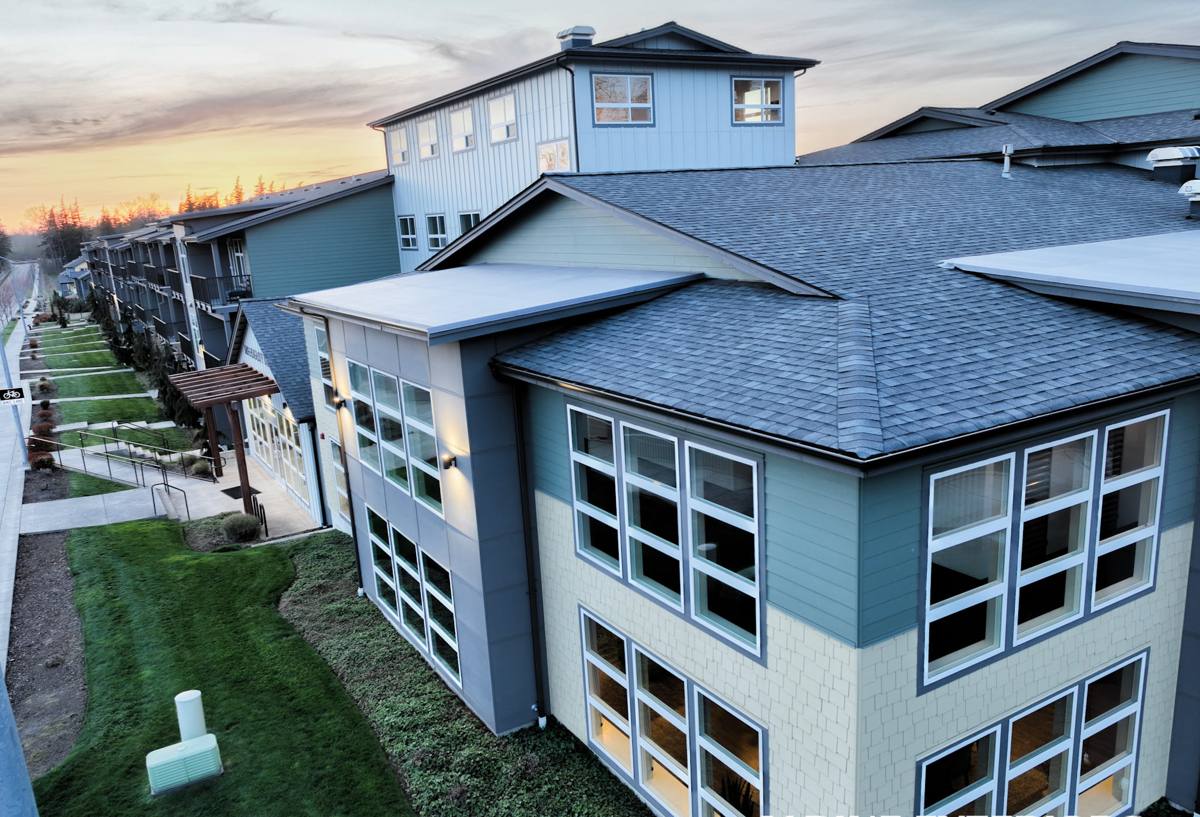
Why We Only Install James Hardie in This Area
We standardized on James Hardie fiber cement siding for every home we work on, including the properties around Wiser Lake, and the reasoning is climate-driven, not brand loyalty. Fiber cement doesn't absorb water the way wood-based siding does, so it doesn't swell, rot, or delaminate when it stays wet for days at a time — which happens regularly during a Whatcom County winter. It's also non-combustible, holds its factory-baked ColorPlus finish far longer than field-applied paint, and James Hardie engineers specific product lines for exactly this kind of wet, moss-prone Pacific Northwest environment.
We don't install LP SmartSide, vinyl, Cemplank, Allura, primed spruce, or raw cedar, and we're upfront about why. Each of those products can perform reasonably well when installed correctly and maintained diligently — but each also carries a real-world trade-off in a climate like this one: higher moisture sensitivity, more frequent repainting, weaker seam performance, or a shorter practical lifespan before problems show up. We'd rather put one product on every home and stand behind it fully than offer a menu of materials we know will need more attention five years down the road.
What HZ5 Means for Wiser Lake Homes
James Hardie's HZ5 line is engineered for climates that see freeze-thaw cycles alongside heavy moisture — which describes most winters in this part of Whatcom County. It's formulated to resist moisture intrusion and cracking under the kind of temperature swings and saturated ground conditions common near the lake. For homes in more exposed or low-lying spots around Wiser Lake, that engineering isn't a marketing detail — it's the difference between siding that looks the same in year fifteen and siding that needs early attention.
What a Correct Installation Actually Involves
Fiber cement siding is only as good as its installation. James Hardie's own specifications are detailed for a reason, and skipping steps is where most siding failures actually originate — not in the material itself. A correct job on a Wiser Lake home includes:
- A drainage plane (weather-resistive barrier) installed and lapped correctly behind the siding, with a rainscreen gap where the wall assembly calls for it
- Proper flashing at every window, door, and roofline transition — the single most common place we find moisture damage on older homes
- Correct fastener type, spacing, and penetration depth per Hardie's published specs, not just "close enough"
- Manufacturer-specified clearances from grade, roofing, and decking so the bottom edge of the siding never sits in standing water or snowmelt
- Factory-mitered or properly caulked joints, with James Hardie-approved sealants only where sealant is actually called for
- Ventilation and moisture management details at soffits and transitions so trapped humidity has somewhere to go
Every one of these steps matters more in a wet climate than a dry one, because a small installation shortcut that might go unnoticed for a decade in Arizona can show up as a soft spot or a stain within a few wet seasons here.
Moss, Algae, and Long-Term Appearance Near the Lake
Shaded walls near tree lines and lakefront lots are where moss and algae take hold fastest, and it's a recurring issue for homes around Wiser Lake. James Hardie's ColorPlus factory finish is baked on under controlled conditions and holds up better against surface growth and staining than field-applied paint, which tends to give algae more texture to grip. Correct installation also plays a role here — proper flashing and drainage keep walls from staying damp longer than they need to, which is half the battle against moss in the first place.
No siding is moss-proof in this climate. But the combination of a factory finish, a non-porous substrate, and correctly managed drainage means less staining, less pressure-washing, and a longer stretch before a home starts looking tired.
Our Process for Wiser Lake Projects
Because we work this area regularly, our process is built around the specific conditions on the ground — soil moisture near the lake, tree cover on certain lots, and the exposure a given wall faces relative to prevailing wind and rain direction.
- On-site assessment — we look at the existing siding, sheathing condition, flashing details, and any visible moisture history before quoting anything
- Product and color selection — matching the right Hardie line and ColorPlus color to the home's exposure and the owner's preferences
- Tear-off and sheathing check — old siding comes off and we inspect what's underneath before anything new goes up, since hidden rot is common on older Whatcom County homes
- Weather barrier and flashing installation — done to Hardie spec, not shortcuts, especially around windows and rooflines
- Siding installation — correct fastening, clearances, and joint treatment throughout
- Final walkthrough — we go over the finished work with the homeowner before calling the job done
Comparing the Materials We're Asked About Most
| Factor | James Hardie Fiber Cement | Vinyl | Wood / Primed Spruce |
|---|---|---|---|
| Moisture resistance in wet PNW climate | High — non-organic, engineered for wet regions | Moderate — doesn't rot but traps moisture behind panels | Low — absorbs water, prone to swelling and rot |
| Finish longevity | Factory-baked ColorPlus, long fade resistance | Color molded in but can chalk and fade | Field paint, needs recoating every few years |
| Fire resistance | Non-combustible | Melts/deforms under heat | Combustible |
| Moss/algae resistance | Good with correct drainage details | Moderate | Poor without frequent treatment |
| Typical maintenance | Occasional wash, caulk checks | Occasional wash | Repainting, sealing, rot checks |
What Drives Cost on a Wiser Lake Home
| Cost Factor | Why It Matters Here |
|---|---|
| Existing sheathing condition | Older homes near the lake sometimes need sheathing repair before new siding can go on |
| Wall exposure and complexity | Homes with more corners, dormers, or trim detail take more labor and material |
| Siding profile and Hardie line | Lap, shingle, and panel styles carry different material and labor costs |
| Color and finish selection | Standard ColorPlus colors versus special-order options can shift pricing |
| Access and site conditions | Treed lots, slopes, or tight lake-adjacent lots can affect staging and labor time |
We give homeowners a real, itemized number after seeing the home in person — broad ranges without an on-site look aren't useful to anyone.
Simple Maintenance Homeowners Can Do
- Rinse siding gently once or twice a year, focusing on shaded, north-facing walls where moss forms first
- Keep gutters clear so overflow doesn't run down and saturate wall sections
- Trim back vegetation and tree limbs that keep a wall section shaded and damp
- Check caulking at trim and penetrations annually and have any gaps addressed before winter rains set in
- Walk the exterior after major storms and note any loose boards, staining, or soft spots for a professional to check
Why It Matters That We Already Work This Area
A crew that already works Wiser Lake and the surrounding Lynden area knows how the lake's moisture and shade patterns affect different lots, which wall exposures fail first on older homes, and how local permitting and inspection expectations work in Whatcom County. That familiarity shows up in the details — the flashing choices, the fastener schedule, the drainage plan — that separate a Hardie installation that lasts thirty-plus years from one that runs into problems in year eight. We'd rather be the crew a Wiser Lake homeowner calls back for the next project than the one that has to be called back to fix the last one.
If you're weighing a siding replacement or repair on a home near Wiser Lake, we're happy to take a look and give you a straight assessment — no pressure, no sales script. Reach out for a free estimate using the form below.