 Lynden Exterior
 Roof Repair for the Nooksack Area, Built Around Whatcom County Weather
Homes in and around Nooksack take a different kind of beating than roofs on the dry side of the state. The combination of salt-laden air drifting in off the Sound, driving rain that comes in sideways during winter storms, and a moss season that can stretch for most of the year means a roof here ages differently than a roof in Spokane or Yakima. A repair that doesn't account for that climate is a repair that fails again in a year or two.
This page covers what roof repair actually looks like for homes near Nooksack — what typically goes wrong, what a correct fix involves, and how our process works when you call us out for a look.
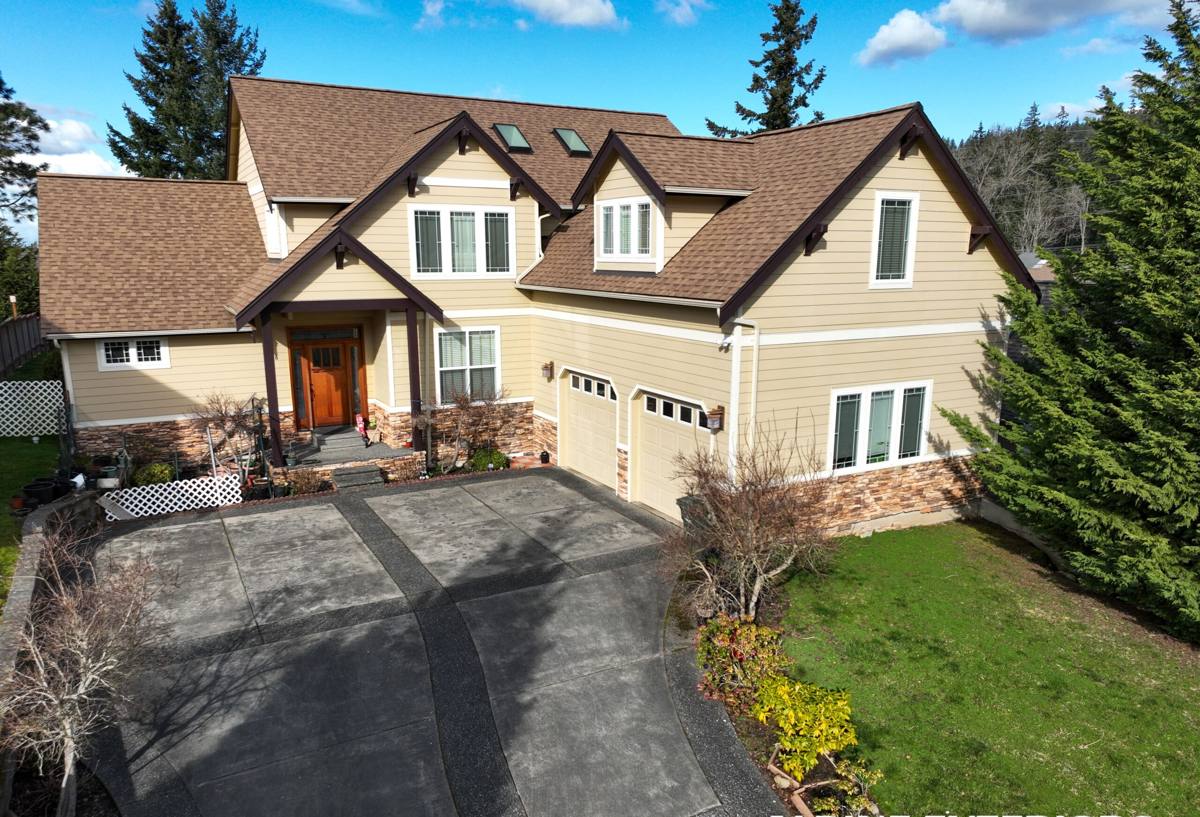
What Nooksack Homes Are Up Against
A Long Moss Season
Whatcom County stays cool and damp for a large part of the year, and shaded roof sections — north-facing slopes, areas under fir and cedar cover — rarely get enough sun to dry out fully between rain events. Moss and algae take hold in that environment, and once established, moss does more than look bad. It holds moisture directly against the shingle surface, works its way under shingle tabs as it grows, and can physically lift edges over time, opening a path for water.
Driving Rain and Wind-Driven Wet
Storms in this part of the county don't always fall straight down. Wind-driven rain pushes water sideways and upward under shingle edges, into flashing laps, and around anything that penetrates the roof deck — vents, chimneys, skylights. A roof that would shed a calm rain just fine can leak during a windier system if flashing or underlayment details aren't right.
Salt Air and Metal Fatigue
Proximity to the Sound means a steady, low-level exposure to salt in the air. It's not the same as a beachfront property, but over years it accelerates corrosion on exposed metal — flashing, fasteners, gutter hardware, and any exposed screws on roof-mounted equipment. Corroded fasteners back out or fail quietly, long before the shingles around them show obvious wear.
Common Repair Needs We See in This Area
Most repair calls we get near Nooksack fall into a handful of categories:
- Wind or age-related shingle loss — missing, cracked, or curling shingles that expose the underlayment beneath
- Flashing failures — around chimneys, skylights, and roof-to-wall transitions, where sealant has dried out or metal has corroded and pulled away
- Valley wear — valleys carry the most water volume on a roof and take the most abuse from moss and debris buildup
- Moss-related lifting — shingle tabs raised by moss growth underneath, breaking the seal that keeps water out
- Nail pops and fastener corrosion — small, easy to miss, but a direct path for water once the seal breaks
- Gutter and edge issues — clogged or sagging gutters that back water up under the first course of shingles
Signs Your Roof Needs a Closer Look
- Dark streaking or visible moss patches, especially on shaded or north-facing slopes
- Granules collecting in gutters or at downspout outlets
- A stain on an interior ceiling or in the attic, even a small one
- Shingles that look curled, cupped, or are visibly missing after a windstorm
- Daylight visible through the roof deck from inside the attic
- Soft or spongy feel underfoot near valleys or penetrations, if you're up there for another reason
None of these guarantee a major problem, but any of them are worth a professional look before the next storm cycle.
What a Correct Repair Actually Involves
Diagnosis Before Patching
A leak inside the house often shows up several feet from where the water is actually getting in — water travels along the underlayment or framing before it drips. A repair that just patches the spot where the stain appeared, without tracing the water back to its actual entry point, tends to come back. Our process starts with finding the real source, not just covering the visible symptom.
Matching Materials, Not Just Covering Holes
Shingles fade with sun and age, so a patch using brand-new material next to five-year-old shingles will usually stand out in color and texture. We look for the closest reasonable match and are upfront when an exact match isn't realistic — that's a normal limitation of any repair, not something we try to hide.
Flashing and Underlayment Get Fixed, Not Just the Shingle
If the shingle failed because the flashing underneath it failed, replacing only the shingle solves nothing. Correct flashing repair means removing the compromised metal or sealant, checking the underlayment and deck beneath it for water damage, and rebuilding the water path correctly — not just running a bead of sealant over the problem and calling it done.
Fastener and Deck Condition
Where corrosion or long-term moisture exposure is a factor, we check fastener condition and the roof deck itself around the repair area. A shingle repair over a soft or water-damaged deck section won't hold, and it's better to know that before the work is finished than after the next winter storm.
Repair vs. Replacement: What Actually Decides It
Not every roof problem needs a full replacement, and not every roof problem should be patched forever. The honest answer depends on a few factors:
| Factor | Repair Usually Makes Sense | Replacement Should Be Considered |
|---|---|---|
| Age of roof | Under roughly 15 years, on a 25-30 year shingle | Near or past the shingle's rated lifespan |
| Extent of damage | Isolated area — one slope, one valley, one flashing point | Multiple areas failing independently across the roof |
| Deck condition | Deck is sound where inspected | Soft, rotted, or water-damaged decking found under shingles |
| Moss/algae history | Limited to a section that can be treated and monitored | Widespread, recurring moss across most of the roof |
| Typical cost range | Generally a few hundred to a few thousand dollars, depending on scope | A larger investment, but one repair bill closer to that range often signals it's time |
We'll always tell you honestly which side of that line your roof is on. A roof that only needs a repair doesn't need a sales pitch for a full tear-off.
Our Process, Start to Finish
- Initial contact. You describe the problem — a leak, a storm, a spot you noticed. We ask enough questions to understand urgency before we're even on site.
- On-site inspection. We get on the roof (and in the attic, when accessible) to trace the actual source of the problem, not just the visible symptom.
- Straight explanation. We tell you what we found, what's causing it, and whether repair or replacement is the honest recommendation — with reasoning you can follow, not just a number.
- Written estimate. Scope and cost in writing before any work starts.
- The repair itself. Matched materials where possible, flashing and underlayment addressed at the source, and the area cleaned up when we're done.
- Follow-up. If something isn't right after the next rain, we want to hear about it directly from you, not find out secondhand.
Why a Crew That Already Works Nooksack Matters
A roofer who works across a wide, varied territory sees a lot of different conditions but not necessarily a lot of repetition. A crew that regularly works roofs near Nooksack and Lynden sees the same moss patterns, the same wind-driven leak points, and the same flashing failures often enough to recognize them quickly instead of guessing. That familiarity translates into a faster, more accurate diagnosis — which matters when the goal is stopping a leak before it does more damage to the deck or interior of the house.
It also means we're not guessing at what materials and techniques actually hold up here. What works on a dry-climate roof isn't automatically the right call on a roof that deals with driving rain and a long damp season every year.
Maintenance That Extends the Life of a Repair
A repair done correctly still benefits from basic upkeep, especially in a moss-prone area:
- Keep gutters and downspouts clear so water isn't backing up under shingle edges
- Address moss early with an appropriate treatment rather than letting it establish and spread
- Trim back overhanging branches that keep roof sections shaded and slow to dry
- Have the roof looked at after any major windstorm, even if nothing looks obviously wrong from the ground
None of this replaces a professional inspection, but it reduces how often you need one for anything urgent.
If you're dealing with a leak, storm damage, or just want an honest look at a roof near Nooksack before it becomes a bigger problem, we're glad to come take a look. The estimate is free, there's no pressure attached to it, and if a simple repair is genuinely the right call, that's what we'll tell you — use the form below to get started.