 Lynden Exterior
 Why Blaine's Coastal Location Is Tough on a Roof
Blaine sits about as close to the water as a Whatcom County home can get, and that location shapes what a roof has to survive here. Salt-laden air, near-constant winter rain coming in sideways off the water, and a moss season that can stretch from October into May put a different kind of stress on a roof than you'd see on a home twenty miles inland in Lynden. A roof replacement here isn't just about swapping old shingles for new ones — it's about choosing materials and details that are actually built for this specific environment.
Salt Air and Metal Components
Airborne salt speeds up corrosion on anything metal: nails, flashing, gutter hangers, vent boots, and fasteners. Standard galvanized components can start showing rust streaks and pinhole leaks years before they would inland. On a coastal replacement, we pay close attention to which metals go where, because a roof is only as good as its weakest fastener.
Wind-Driven Rain and Sealing Details
Storms coming off the water don't just drop rain straight down — they push it sideways and upward under shingle edges, around chimneys, and into valleys. That means flashing, underlayment laps, and sealing details matter more here than they would in a calmer inland climate. A roof that looks fine on a dry day can still be letting water in during a January windstorm if those details were rushed.
A Long Moss Season
Cool, damp, and shaded conditions are exactly what moss and algae need to take hold, and Blaine gets a long stretch of them every year. Moss doesn't just look bad — it holds moisture against the roofing material, works its way under shingle tabs, and can lift edges enough to let water in. A roof replacement is the best time to build in moss resistance from the start, rather than fighting it after the fact.
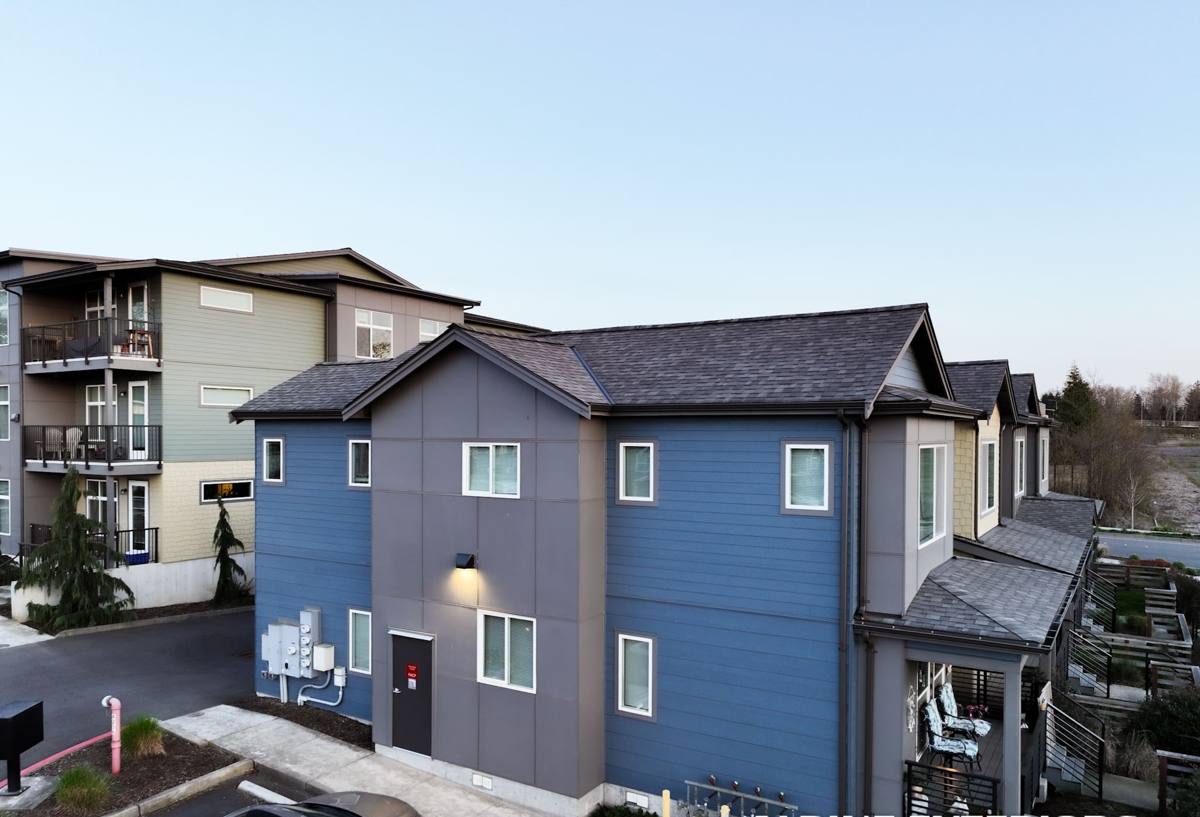
How to Tell a Blaine Roof Needs Replacing, Not Repair
Not every roof problem means a full replacement, but there's a point where patching stops making financial sense. Here's what typically tips a roof from "repair" into "replace" territory:
- Granule loss heavy enough that you can see bald patches or find granules piling up in gutters
- Shingles that are curling, cracking, or cupping across large sections rather than one isolated spot
- Soft or spongy spots when walking the roof, which usually means the decking underneath has taken on moisture
- Daylight visible through the roof deck from inside the attic
- Leaks that show up in a new location each time it storms, rather than the same repeated spot
- Moss mats thick enough that you can't easily see the shingle surface underneath
- A roof already at or past the manufacturer's expected service life, especially one exposed to salt air the whole time
Asphalt shingle roofs are typically rated for 20 to 30 years, but coastal exposure and heavy moss growth can shorten that in practice. If a roof is showing two or more of the signs above, a replacement usually costs less over time than another round of patchwork repairs.
What a Proper Roof Replacement Involves
Tear-Off and Deck Inspection
We don't install new roofing over old layers. A full tear-off down to bare decking is the only way to actually see what's underneath — and on coastal homes, that's where hidden problems tend to hide. Any soft, delaminated, or rotted plywood or sheathing gets identified and replaced before anything new goes down. Roofing over a compromised deck just locks the problem in for another 20 years.
Underlayment and Flashing That Match the Climate
Given how much wind-driven rain Blaine sees, we use synthetic underlayment rather than old-style felt paper, and we run self-adhering ice-and-water membrane at the eaves, valleys, and around every roof penetration — chimneys, vents, skylights. Flashing gets replaced, not reused, and we favor corrosion-resistant metals over standard galvanized in areas most exposed to salt air. These are the details that separate a roof that holds up for decades from one that starts leaking around year eight.
Ventilation That Keeps the Deck Dry From Both Sides
A roof takes on moisture from outside in a climate like this, but it can also take on moisture from inside if the attic isn't ventilating properly. Balanced intake and exhaust ventilation keeps warm, moist household air from condensing on the underside of the deck, which is a quieter but just as damaging cause of rot. We check and correct ventilation as part of every replacement, not as an afterthought.
Choosing the Right Material for a Coastal Whatcom County Home
There's no single "best" roofing material — the right choice depends on budget, roof design, and how much long-term maintenance you want to take on. Here's how the common options stack up for a home exposed to salt air and heavy moss pressure:
| Material | Moss/Algae Resistance | Salt Air Durability | Typical Maintenance |
|---|---|---|---|
| Architectural asphalt shingle (algae-resistant) | Good, with treated granules | Good with proper flashing | Low to moderate |
| Standing seam metal | Very good — moss struggles to hold on smooth panels | Very good with marine-grade fasteners and coatings | Low |
| Composite/synthetic shake | Good | Good | Low to moderate |
| Cedar shake | Poor — wood retains moisture and feeds moss growth | Fair, needs regular treatment | High |
Cedar shake has a traditional look that some homeowners want, and we're happy to install it, but we're upfront about the trade-off: in a climate this damp, wood roofing needs more frequent cleaning, treatment, and inspection to keep moss from taking hold and shortening its life. For most Blaine homes, an algae-resistant architectural shingle or metal roofing gives the best balance of appearance, durability, and manageable upkeep.
Cost Factors for a Blaine Roof Replacement
Every roof is different, so we don't quote a number until we've actually walked yours, but a few factors consistently move the price up or down:
| Factor | Effect on Cost |
|---|---|
| Roof size and pitch | Larger, steeper roofs need more material and more time to install safely |
| Number of layers to remove | Multiple existing layers add labor and disposal cost |
| Deck repair needed | Rotted or soft sheathing found during tear-off adds material and labor |
| Material selected | Standard asphalt shingle is the most budget-friendly; metal and composite cost more upfront but need less upkeep |
| Roof complexity | Valleys, dormers, chimneys, and skylights all add flashing and labor time |
As a broad range, a straightforward asphalt shingle replacement on an average Blaine home often falls in the high four figures to low five figures; metal roofing, steep or complex rooflines, or significant deck repair can push that higher. We'll always break the estimate down by these factors so you know exactly what you're paying for.
Our Roof Replacement Process
- Free on-site inspection — we walk the roof, check the attic, and photograph problem areas so you can see what we see
- Written estimate covering material options, scope of work, and a realistic timeline
- Scheduling around Blaine's wet season where possible, so tear-off and dry-in happen in the shortest practical weather window
- Full tear-off to bare decking, with any damaged sheathing flagged and replaced
- Installation of underlayment, ice-and-water protection, flashing, and ventilation components
- Installation of the new roofing material to manufacturer specifications
- Full cleanup, including a magnetic sweep for stray nails around the house and driveway
- Final walkthrough so you can see the finished roof and ask questions before we consider the job done
Keeping Moss and Moisture From Cutting a New Roof Short
A well-installed roof still needs a little seasonal attention to reach its full lifespan in this climate. A few habits make a real difference:
- Keep gutters and downspouts clear so water isn't backing up under the roof edge
- Trim back overhanging branches to let more sun and airflow reach shaded, moss-prone sections
- Address moss at the first sign of growth rather than waiting for it to mat over — early growth is much easier to treat
- Skip pressure washing, which can strip protective granules and shorten shingle life; a soft, low-pressure rinse or approved treatment is safer
- Walk or have someone inspect the roof visually once a year, especially after major windstorms
Permitting, Timing, and Why Local Experience Matters
Roof replacements in Blaine typically require a building permit, and requirements can differ slightly from what applies in Lynden or unincorporated Whatcom County. A crew that already pulls permits and schedules jobs in this area knows what the local process expects, which keeps a project from stalling on paperwork. Just as important is weather timing — a crew used to working this stretch of coastline knows how to stage a tear-off so a roof isn't left exposed when a storm rolls in off the water, and how to plan around the wettest months instead of fighting them. That local familiarity, combined with established relationships with regional material suppliers, tends to mean fewer delays and fewer surprises once work is underway.
If your Blaine home's roof is showing its age, or you just want an honest opinion on whether repair still makes sense, we're glad to take a look. Reach out for a free, no-pressure estimate using the form below — we'll walk the roof, tell you what we actually find, and lay out your options in plain terms.