 Lynden Exterior
 Board & Batten Siding Built for Custer's Weather, Not Just Its Looks
Board and batten has become one of the most requested siding styles in Whatcom County, and it's easy to see why — the vertical lines read as clean and modern on a new build, and equally at home on a farmhouse-style remodel. But in Custer, the style choice is only half the decision. This community sits close enough to Birch Bay and the open water of the Salish Sea that salt-laden air is a regular fact of life, and it sits far enough inland to catch the same driving, wind-pushed rain that soaks the rest of Whatcom County all winter. Add a shaded, damp shoulder season that runs long here, and you've got a climate that is genuinely hard on exterior materials. A board and batten installation in Custer has to hold up to all three conditions at once, not just look good on installation day.
This page covers what that means in practice: what the climate actually does to siding out here, why board and batten is a strong choice when it's built correctly, what "correct" actually involves, and why we only put James Hardie fiber cement behind our board and batten work.
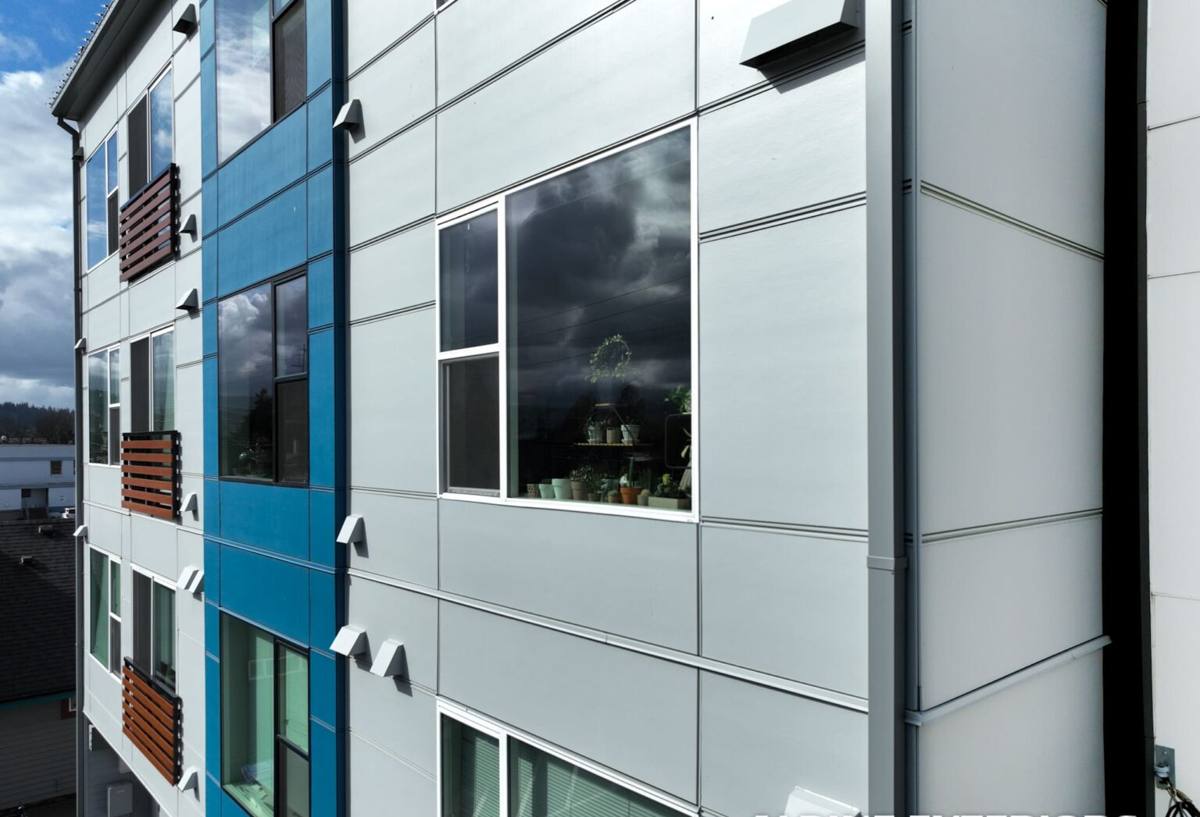
What Custer's Climate Does to Siding Over Time
Salt Air and Coastal Exposure
Salt-bearing air doesn't just affect homes right on the water. It travels inland on prevailing winds and settles on every exterior surface it touches, including siding. Over years, that salt exposure accelerates corrosion on exposed metal fasteners and trim, and it speeds up the breakdown of coatings that weren't designed to handle it. Board and batten has more exposed edges and more fastening points than lap siding, so the fastener and finish quality behind it matters more here than it does elsewhere.
Driving Rain and Wind-Driven Moisture
Whatcom County doesn't just get rain — it gets rain pushed sideways by wind off the water, which means moisture gets forced up under laps, into seams, and behind trim in ways that straight-down rain never would. Board and batten siding, by design, has vertical battens covering the seams between panels. Done right, that's an advantage — the battens shed water down and away from the joint. Done wrong, with poor flashing or the wrong fastening pattern, those same seams become entry points for wind-driven moisture to get behind the cladding.
A Long Moss and Shade Season
Between the tree cover common on Whatcom County lots and the number of overcast, damp days in a typical year, moss and algae growth on the north and shaded sides of a home is close to unavoidable without the right material. Siding that absorbs moisture stays damp longer after every rain, and damp surfaces are exactly what moss needs to take hold. That's a cosmetic problem at first, but sustained moisture retention behind moss growth is also what eventually leads to rot in materials that aren't moisture-resistant to begin with.
Why Board and Batten Is a Strong Fit for This Area — When It's Built Right
The vertical batten pattern isn't just an aesthetic trend — it has real functional advantages in a wet climate. The battens create a secondary drainage path and shadow line that sheds water off the wall face faster than a flat panel would on its own. That's genuinely useful in a place that sees the volume of rainfall Whatcom County does. The style also holds up well against the visual "busyness" that moss and streaking can create on a home, because the strong vertical lines tend to disguise minor weathering better than some horizontal profiles do.
None of that matters, though, if the panel material underneath absorbs water, swells, or delaminates. The style only performs the way it's supposed to if the substrate behind it is built for this climate. That's the piece of the decision most homeowners don't get walked through, and it's the piece we spend the most time on.
Why We Only Install James Hardie for Board and Batten Work
We standardized on James Hardie fiber cement for every board and batten project we do, including in Custer, for reasons specific to this climate. Fiber cement doesn't absorb water the way wood-based or wood-composite panel products do, so it doesn't swell, cup, or delaminate at the seams the way those materials can after repeated wet-dry cycles. It's also non-combustible, which matters more every year as wildfire smoke seasons stretch into the Pacific Northwest.
We use Hardie's HZ5 product line, which is engineered specifically for climates with sustained damp weather and freeze-thaw cycling — the same conditions Custer and the rest of Whatcom County see every winter. The factory-applied ColorPlus finish is baked on under controlled conditions rather than field-applied, which means better adhesion and more consistent fade resistance than a coating applied on-site can typically achieve, and it comes with its own finish warranty backed by the manufacturer.
We don't install LP SmartSide, vinyl, Cemplank, Allura, primed spruce, or cedar board and batten. Some of those products perform reasonably well in the right application — this isn't a claim that they're all bad — but each carries a trade-off (moisture sensitivity, seam performance, coating durability, or long-term maintenance burden) that we're not willing to put behind a wall in a climate this consistently wet. Hardie is what we're willing to warranty and stand behind on every job.
What a Correct Board and Batten Installation Actually Involves
Water-Resistive Barrier and Flashing First
The siding is the last layer, not the only layer. A correct installation starts with a properly lapped water-resistive barrier and flashing at every window, door, and penetration — installed so that any moisture that does get past the cladding has a clear path down and out, never trapped against the sheathing. This step is invisible once the job is done, which is exactly why it's the step most often shortcut on rushed installs.
Fastening and Batten Spacing
Board and batten needs to be fastened according to the manufacturer's specified pattern and into solid framing, not just sheathing, with corrosion-resistant fasteners appropriate for a coastal-influenced climate. Batten spacing and reveal need to be consistent, both for the finished look and because uneven spacing changes how water sheds off the wall.
Panel Joints and Sealant Details
Every panel joint, whether it falls under a batten or at a trim transition, needs to be treated according to Hardie's installation specifications — the right gap, the right backer material where called for, and the right sealant. Skipping or rushing this detail is one of the most common causes of early moisture intrusion on board and batten jobs, regardless of who installed it.
Clearances at Grade and Roof Lines
Siding installed too close to grade, decking, or roof lines traps moisture against the bottom edge of the panels. We hold to manufacturer-specified clearances on every job, which is a small detail that has an outsized effect on how long the siding actually lasts in a wet climate.
Our Process for Board and Batten Projects in Custer
- Walk-through and assessment — we look at your home's current siding condition, sun and shade exposure, drainage around the foundation, and any trouble spots specific to your lot.
- Written estimate — a clear scope covering material, prep work, flashing and moisture management, and timeline, with no vague allowances.
- Prep and moisture management — removal of failing material, sheathing repair if needed, and correct installation of the water-resistive barrier and flashing before a single panel goes up.
- Installation to Hardie's specifications — proper fastening, batten spacing, joint treatment, and clearances, not shortcuts to save a day of labor.
- Final walk-through — we go over the finished work with you before we consider the job done.
Board and Batten vs. Other Siding Approaches for a Custer Home
| Factor | James Hardie Board & Batten | Wood-Composite Panel | Vinyl Board & Batten |
|---|---|---|---|
| Moisture absorption | Very low | Moderate to high at cut edges and seams | Low, but seams and fasteners can allow water behind panel |
| Coastal/salt air durability | Strong with proper fasteners | Coating and edges vulnerable over time | Can become brittle with UV and temperature swings |
| Fire resistance | Non-combustible | Combustible | Combustible, can deform under heat |
| Finish durability | Factory ColorPlus finish, long fade resistance | Field or factory coating, variable performance | Color molded in, can fade and chalk over time |
| Typical warranty structure | Long-term, transferable manufacturer warranty | Varies by manufacturer | Varies widely by product tier |
This table isn't meant to declare every alternative unusable — it's meant to show the specific trade-offs we weighed before deciding what we'd put our name behind in a climate like this one.
Maintenance Checklist for Board and Batten in a Whatcom County Climate
Even the right material benefits from a little seasonal attention. This is what we tell every Custer homeowner to keep an eye on:
- Rinse pollen, road film, and salt residue off the siding once or twice a year, especially on sides facing prevailing wind and weather.
- Check north- and shade-facing walls each fall for early moss or algae growth and address it before it spreads.
- Inspect caulking at trim, window, and door transitions annually — sealant is a wear item, even on a well-installed system.
- Keep gutters clear and downspouts directed away from the wall so runoff isn't sheeting down the siding face.
- Trim back vegetation and branches that keep siding shaded and damp longer than the rest of the house.
- Watch for any soft spots, staining, or bubbling paint near ground level or roof intersections and have them checked promptly.
Why It Matters That We Already Work in Custer
Siding specs on paper don't account for how a particular lot sits relative to wind, tree cover, and drainage — that's local knowledge, built from working other homes in the same conditions. A crew that already works Custer and the surrounding Lynden area has seen how these houses actually weather, which sides take the worst of the wind-driven rain, and where moss tends to establish first. That's the kind of detail that shapes a smarter installation, not just a faster one.
If you're weighing board and batten siding for a home in Custer, we're glad to walk the property with you, talk through what we're seeing, and put together a straightforward, no-pressure estimate — no obligation, just a clear look at what the job actually involves. Use the form below to get started.