 Lynden Exterior
 Why Storm Damage Shows Up Differently on a Sumas Roof
Sumas sits at the north edge of Whatcom County, right up against the Nooksack lowlands and the border, and the weather that moves through here isn't gentle. Pacific storm systems track inland off the Salish Sea, and by the time they reach this part of the valley they're still carrying plenty of moisture and wind. Add in the salt-tinged marine air that works its way up the county, months of driving rain, and a moss season that can stretch from fall through spring, and you've got a roof that's under low-grade stress almost year-round — even before a single named storm rolls through.
That's the part homeowners in Sumas often don't realize: storm damage isn't always the dramatic kind. A lot of what we get called out for is the slow accumulation of wind-lifted shingles, saturated moss mats, and small flashing failures that a single bad storm finally pushes past the breaking point. Understanding that pattern is the first step to actually fixing the problem instead of just patching the symptom.
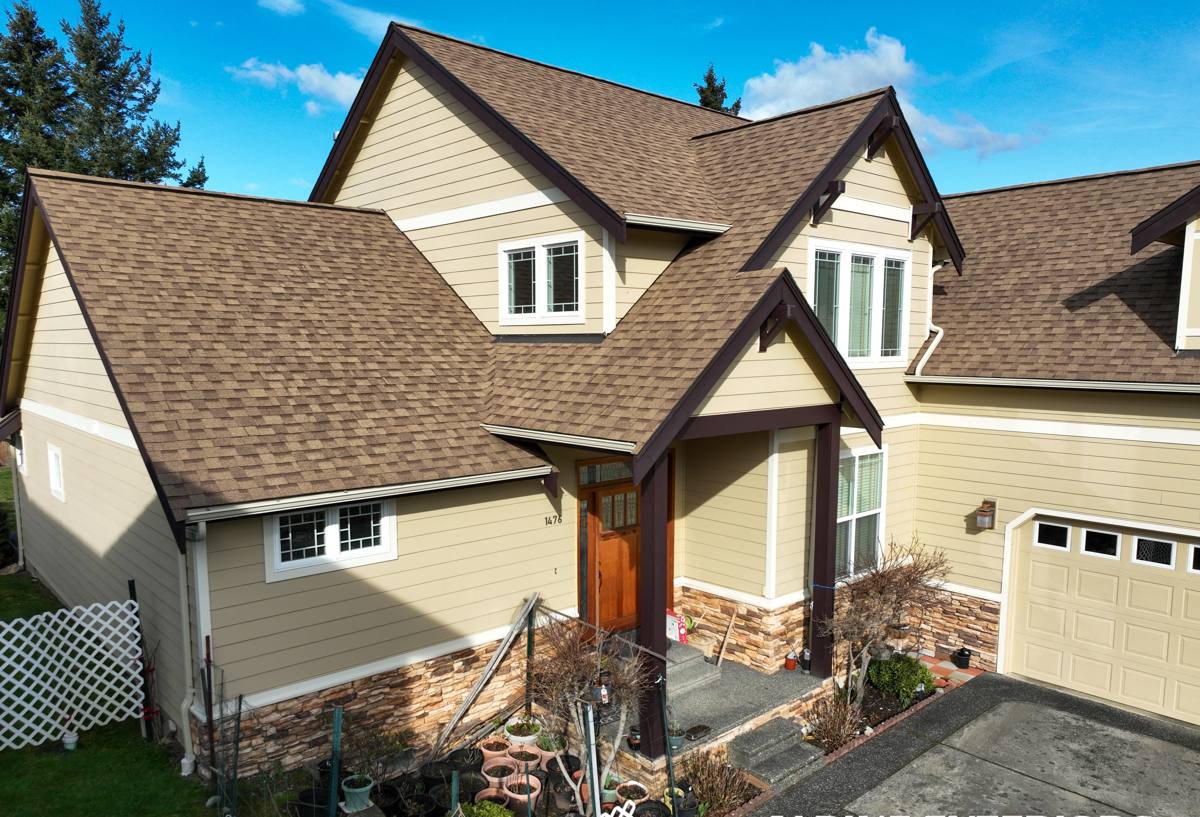
What Actually Counts as Storm Damage
When people think "storm damage roof repair," they usually picture a tree limb through the decking. That happens, but it's the minority of our calls in this area. More often, storm damage looks like:
- Shingles lifted, cracked, or torn loose by sustained wind gusts
- Wind-driven rain forced up under shingle edges and into fastener lines
- Flashing around chimneys, vents, and valleys knocked loose or bent
- Gutters torn away or pulled off their fascia, backing water up under the roof edge
- Small branches and debris that puncture or abrade the roofing surface
- Ridge cap damage from wind funneling along the roofline
Any one of these can look minor from the ground. The problem is that a roof only has to fail in one small spot for water to start working its way into the decking, insulation, and eventually the ceiling below. Storm damage repair isn't just about the visible break — it's about tracing where water can now get in and making sure that path is fully closed.
Moss: The Slow-Motion Storm
Moss doesn't blow in during a single event, but it behaves like one over time. It holds moisture against the roofing material, works its way under shingle tabs, and lifts edges just enough that the next windstorm has something to grab onto. In our experience, a roof with heavy moss buildup is far more likely to suffer real wind damage in a storm than a clean one, simply because the moss has already done the work of loosening things up.
The Damage Homeowners Usually Miss
After a storm, most people check for obvious problems — a missing shingle, a ceiling stain, a downed branch. The damage that causes the most long-term trouble is usually less obvious:
- Granule loss on asphalt shingles from wind-driven rain, which shortens the life of the roof even with no visible leak yet
- Lifted but unbroken shingles that reseal slightly crooked, leaving a gap for the next rain to exploit
- Nail pops where wind flex has backed fasteners partway out
- Soft or discolored decking underneath, only visible once shingles are pulled back
- Saturated moss hiding a section of damaged shingle underneath it entirely
This is why a proper storm damage inspection means getting on the roof, not just looking at it with binoculars from the yard. A drive-by look will catch the branch through the roof. It won't catch the six feet of lifted shingle edge two courses down from the ridge.
What a Correct Repair Actually Involves
A storm damage repair done right follows a specific sequence, not just "replace what's broken and move on."
1. Stop further water intrusion first
If there's an active leak or exposed decking, that gets tarped or temporarily sealed immediately — before any permanent repair work starts. Waiting even a few days for the "real" fix while water keeps getting in undoes the point of repairing at all.
2. Inspect beyond the obvious damage point
We check the full slope the damage occurred on, not just the immediate spot, along with valleys, flashing, and the roof edge. Wind damage rarely stays confined to one shingle.
3. Check the decking, not just the shingles
If water has been getting in for any length of time, the plywood or plank decking underneath needs to be checked for softness or delamination. Replacing shingles over damaged decking just hides a problem that will resurface.
4. Match materials properly
Repairs should tie into the existing roofing system correctly — matching shingle type, weight, and where possible, color, and integrating flashing so water sheds the way the original roof was designed to shed it, not just gets "covered."
5. Address the moss and drainage issue that made the damage worse
If moss contributed to the failure, a partial repair without addressing the moss just sets up a repeat of the same problem next season.
How Our Process Works
We keep the process straightforward on purpose, since most people calling us are already dealing with enough stress from the storm itself:
- On-site inspection — we get on the roof and document the actual extent of damage, including areas that aren't obvious from the ground.
- Clear explanation and estimate — what's damaged, what needs to happen, and an honest range for the work, with repair and replacement options laid out separately if both are on the table.
- Insurance documentation — if you're filing a claim, we provide photos and a written scope of damage that your adjuster can work from.
- Repair work — done to match the existing roof system, not just patched over.
- Final walkthrough — we show you what was done and why, so you're not left guessing.
Repair or Replace? What Actually Drives That Decision
Not every storm-damaged roof needs full replacement, and not every roof should be patched indefinitely. The honest answer depends on a few factors:
| Factor | Leans Toward Repair | Leans Toward Replacement |
|---|---|---|
| Age of roof | Under 10-12 years | Nearing or past expected lifespan |
| Extent of damage | Isolated to one section or slope | Widespread across multiple slopes |
| Decking condition | Solid, dry underneath | Soft, delaminated, or water-stained |
| Moss/algae history | Minimal or recently treated | Heavy, long-term buildup |
| Prior repairs | Few or none | Multiple past patch jobs |
We'll tell you plainly which side of that table your roof falls on. A roof that's a good repair candidate doesn't need to be sold a full replacement, and one that's genuinely past its usable life doesn't get helped by another round of patching.
Working With Your Insurance Claim
Wind and storm damage is often covered under homeowners insurance, but coverage depends on your specific policy and the cause of loss. We're not a public adjuster and won't promise a claim outcome, but we can document the damage thoroughly — photos, measurements, and a written scope — so your adjuster has an accurate picture of what happened and what it takes to fix it correctly. Homeowners who skip this documentation step often end up with a settlement that only covers part of the actual repair.
Why It Matters That We Already Work in Sumas
A crew that works this part of Whatcom County regularly knows what a Sumas roof is actually up against — the wind patterns coming off the valley, how fast moss reestablishes here compared to drier parts of the state, and which repair shortcuts simply don't hold up through a full wet season. That local familiarity matters more than it sounds like it should. It means fewer surprises during the inspection, more accurate estimates the first time, and repairs built for the actual climate this roof lives in, not a generic one.
Quick Checklist: Should You Get a Post-Storm Roof Inspection?
- Visible missing, cracked, or curled shingles anywhere on the roof
- New or worsening ceiling stains or musty smell in an upstairs room or attic
- Granules collecting in gutters or at downspout discharge points
- Gutters or flashing visibly bent, torn, or pulled loose
- Heavy moss or debris buildup that wasn't cleared before the last storm
- A tree limb or branch strike, even if the roof looks intact afterward
If any of those apply, it's worth having someone look before the next system rolls through — small gaps get worse fast in this climate.
If your Sumas home has taken storm damage, or you're just not sure whether that lifted shingle is worth worrying about, we're glad to come take a look. Estimates are free, there's no pressure to sign anything on the spot, and you'll get a straight answer about what's actually going on with your roof.