 Lynden Exterior
 Siding Repair in Maple Falls: What the Climate Actually Demands
Homes out toward Maple Falls take a different beating than homes in town. You're closer to tree cover, further from full sun exposure on north and east walls, and squarely in the path of the driving rain that rolls through Whatcom County for much of the year. Add in the moisture that Pacific weather systems carry across the region and you get long stretches where siding simply doesn't get a chance to fully dry out between storms. That combination — shade, standing moisture, and a moss season that can run from fall through spring — is exactly what breaks siding down over time, whether it's wood, vinyl, or fiber cement that wasn't installed correctly in the first place.
We're based in Lynden, but Maple Falls is part of our regular service area, and the repair calls we get out there follow a pattern. It's rarely one catastrophic failure. It's usually slow, moisture-driven damage that's been building for a year or two before a homeowner notices paint that won't hold, a soft spot near a downspout, or moss creeping up from the bottom courses. Catching that early is the difference between a same-day repair and a full re-side.
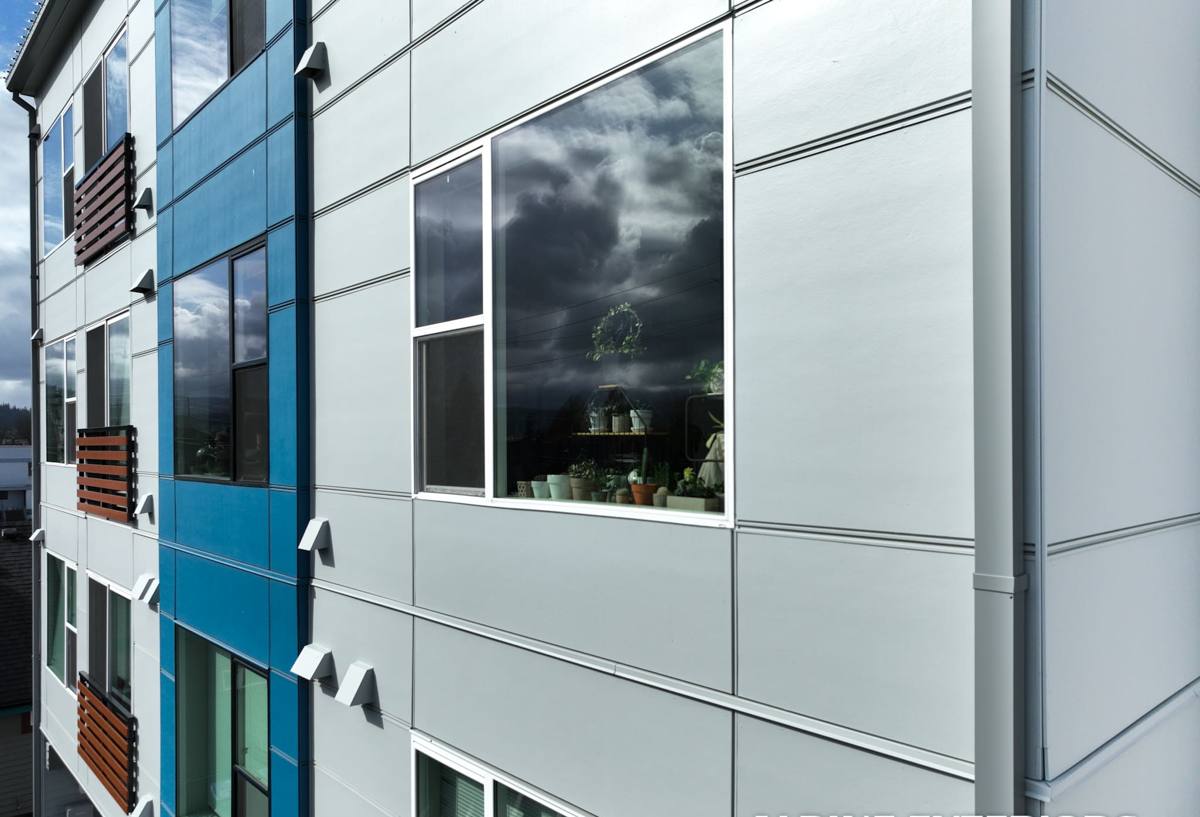
Signs a Maple Falls Home Needs Siding Repair
Most siding problems announce themselves quietly. Here's what we tell homeowners in this area to watch for, especially on north-facing and tree-shaded walls where moisture lingers longest:
- Paint or caulk that's cracking, peeling, or bubbling faster than the rest of the house
- Soft or spongy spots when you press on a panel, especially near the bottom courses or under windows
- Visible gaps, warping, or panels that have pulled away from the wall
- Moss or dark streaking that keeps coming back even after cleaning
- Stains on interior walls or ceilings near exterior corners — a sign moisture has already gotten past the siding
- Damaged or missing caulk at seams, trim, and penetrations (vents, hose bibs, light fixtures)
- Insects or wood rot around window trim, door casings, or where siding meets the foundation
If you're seeing more than one or two of these, it's worth a closer look before the next wet season, not after.
What a Correct Repair Actually Involves
A lot of siding "repairs" are really just cosmetic patches — caulk over a crack, a fresh coat of paint over a soft board. That buys a season, maybe two, but it doesn't fix what's happening behind the siding. A repair done right addresses three things:
1. What's Underneath
Siding is the visible layer, but the house wrap, flashing, and sheathing behind it are what actually keep water out. If a panel failed because water got behind it, we're checking that underlying layer before we ever put a new panel up. Replacing siding over damaged sheathing just hides the problem for another year.
2. Matching the Original Material and Profile
Patch repairs only look right — and perform right — if the replacement panel matches the exposure, thickness, and texture of what's already on the wall. Mismatched patches are one of the most common complaints we hear about work done by crews unfamiliar with the product on the house.
3. Flashing and Sealant Detail, Not Just the Panel
Most siding failures we find in this area trace back to a flashing or caulking detail, not the siding material itself — a missing kickout flashing above a roofline, a window without proper head flashing, or seams that were caulked instead of properly lapped. A repair that just replaces the panel and skips the detail work will fail again in the same spot.
Why We Repair (and Rebuild) With James Hardie
We install James Hardie fiber cement siding exclusively — we don't carry vinyl, LP SmartSide, cedar, primed spruce, or other fiber cement brands like Allura or Cemplank. That matters for repair work too, not just full re-sides. When we're patching or replacing sections of a Hardie-sided home, we're matching into a product that's engineered for this climate from the start: non-combustible, dimensionally stable in wet-dry cycles, and finished with a factory-baked ColorPlus finish that resists the fading and peeling that repainted patches are prone to.
When a repair call turns into "this wall needs more than a patch," we walk homeowners through their options honestly rather than pushing a full re-side that isn't necessary. But when a full section or full elevation does need replacement, we don't offer alternatives we don't stand behind. Homeowners consistently deal with paint failure, moisture absorption at cut edges, and shorter practical lifespans with wood and lower-grade fiber cement in exactly the conditions Maple Falls sees — shade, standing moisture, and a long wet season. Hardie's HZ5 product line is engineered specifically for climates like this one, and it's backed by a strong transferable warranty when installed to spec, which is the other half of doing this correctly.
Repair vs. Full Section Replacement
| Factor | Spot Repair | Full Section Replacement |
|---|---|---|
| Best for | Isolated damage: one panel, one corner, storm impact | Repeated failures on the same wall, widespread moisture damage |
| What's inspected | The damaged area and immediate flashing | Full wall assembly — house wrap, flashing, sheathing condition |
| Material match | Matched to existing panel profile and finish | New Hardie panels installed to current best practice |
| Typical lifespan after work | Extends the wall's life if underlying issue is addressed | Resets the clock on that section with full warranty coverage |
| Warning sign it's needed | Single soft spot, isolated crack or gap | Multiple soft spots, recurring moss/staining, sheathing rot found |
Our Process
The same process applies whether the job is a two-panel patch or a full wall:
- Inspection first. We look at the damaged area, the flashing and sealant detail around it, and check for signs the problem extends further than what's visible.
- Honest scope. We tell you plainly whether this is a repair, a section replacement, or something bigger — and why. If a patch is genuinely enough, we say so.
- Fix the cause, not just the symptom. Flashing, house wrap, or sealant issues get corrected as part of the job, not left for next time.
- Match or upgrade the material. Panels are matched to existing Hardie product where possible, or we discuss options if the original material isn't Hardie.
- Clean finish work. Caulking, trim, and paint-matched or ColorPlus-matched finish so the repair doesn't stand out.
Why Hiring a Crew That Already Works Maple Falls Matters
Siding repair is detail work, and the details that matter here are shaped by the conditions specific to this part of Whatcom County — shaded walls that stay damp longer, moss growth that needs to be addressed at the cause and not just power-washed away, and framing and flashing choices that hold up against sustained wet weather rather than occasional rain. A crew that works this area regularly isn't guessing at what caused the damage; they've seen the same failure patterns on other homes nearby and know where to look first.
There's also a practical side to this: a local crew can respond faster for time-sensitive repairs — a storm-damaged section that's letting water in shouldn't wait weeks for a contractor to make the drive out. Being based in Lynden and working Maple Falls regularly means we're not treating your repair as a one-off trip.
What to Expect: Timeline and Disruption
Most spot repairs are a one-day job once we're on site, though scheduling around weather is part of the reality of exterior work here — we won't install siding or apply sealant during active rain, since it compromises the seal. Full section replacement can run a few days depending on scope. Either way, we'll give you a realistic window up front rather than a best-case estimate that slips.
A Few Things That Keep a Repair Job Simple
- Clear access to the affected wall (trim back shrubs or move stored items if needed)
- Knowing the age and, if possible, the brand of your existing siding before the visit
- Flagging any interior stains or drafts near the damaged area — they help us find the real source
- Being upfront about past repair attempts so we're not repeating a fix that already failed
Get an Honest Look Before It Gets Worse
If you're seeing soft spots, recurring moss, or paint that won't hold on a wall out in the Maple Falls area, it's worth having someone look before another wet season passes. We'll give you a straight answer on whether it's a repair or something bigger, with no pressure either way. Reach out for a free estimate and we'll get a crew out to take a look.