 Lynden Exterior
 Aldergrove Sits Right at the Edge of a Tough Climate for Siding
Aldergrove, BC is close enough to Lynden that many of us cross that border crossing without thinking twice about it — but the climate on both sides of the line is exactly the same, and it's harder on exterior siding than most homeowners realize. This stretch of the Fraser Valley and northern Whatcom County sits in a corridor where marine air off the Salish Sea mixes with Pacific storm systems, producing long stretches of driving, wind-blown rain, salt-carrying air, and a moss season that can run from October through April. Siding here isn't just weathering rain — it's weathering rain that hits walls sideways, air that carries salt inland further than people expect, and moisture that sits on north- and west-facing walls for months without a real drying window.
That combination is why siding choice and installation quality matter more in Aldergrove than they would in a drier inland climate. A product or installation detail that would be a minor cosmetic issue in Kamloops or Spokane can turn into a moisture problem here within a few winters.
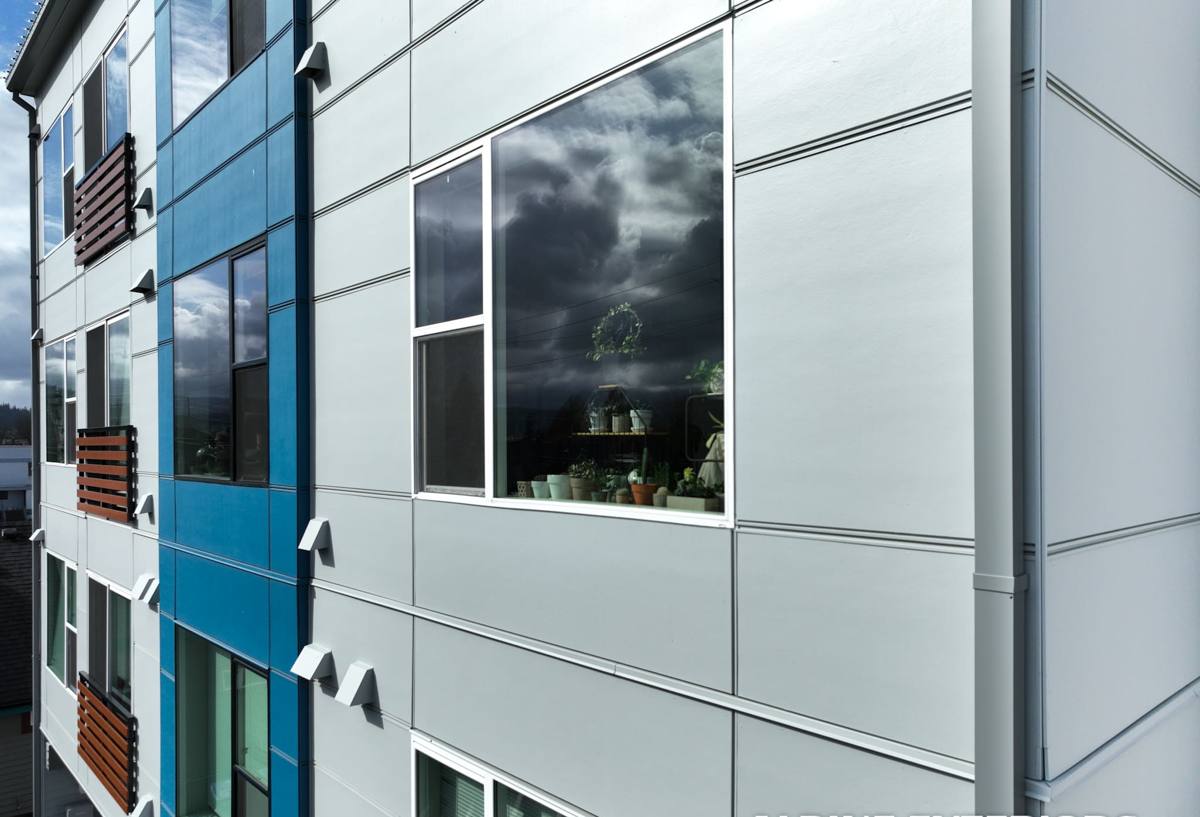
What Salt Air, Driving Rain, and Moss Actually Do to a Wall
Three things happen to siding in this specific climate, and they compound each other:
- Salt-laden air accelerates corrosion of fasteners, trim metal, and any exposed hardware, and it degrades certain paints and coatings faster than inland weathering would.
- Wind-driven rain doesn't just run down a wall — it gets pushed sideways and upward into laps, seams, and butt joints that were only designed to shed water falling straight down. Any gap, missed caulk joint, or poor flashing detail becomes a water entry point.
- Moss and prolonged dampness settle into anything with texture or shade, especially the north and east sides of a house. Moss holds moisture against the siding surface for extended periods, which is a slow but steady stress on whatever material is underneath it.
Siding materials respond to this differently. Wood and cedar products need consistent maintenance to keep moisture out of end grain and cut edges — miss a season of upkeep here and it shows. Engineered wood siding is sensitive to swelling at any exposed or damaged edge, which is a real risk in a climate where rain gets into places it normally wouldn't. Vinyl can hold up reasonably well against moisture itself, but it wasn't built to be repainted, fades unevenly over time in this kind of sun-and-rain cycle, and can distort under temperature swings.
Why We Install Only James Hardie Fiber Cement Here
We made the decision years ago to install James Hardie fiber cement exclusively, and a climate like Aldergrove's is a big part of why. Fiber cement doesn't rot, it isn't a food source for moss or mildew the way wood-based products can be, and it holds its shape and finish in exactly the temperature and moisture swings this region produces every winter. It's also non-combustible, which matters increasingly as wildfire smoke and dry-season risk become a bigger part of Pacific Northwest summers even in a generally wet region.
Climate-Engineered HZ Product Lines
James Hardie doesn't make one generic siding product — it engineers its HZ lines for different moisture and temperature zones across North America. For a marine, high-rainfall region like Aldergrove and Lynden, that means using the product formulation designed for wetter climates rather than a version engineered for drier, hotter regions. Getting this line right is a product decision, not just an installation one, and it's one reason we don't substitute in whatever fiber cement happens to be cheapest that week.
ColorPlus Factory Finish
Rather than relying on field-applied paint, which is exactly the kind of finish that struggles against salt air and constant damp, ColorPlus is baked on in a controlled factory environment across multiple coats. That finish is more consistent and more resistant to fading and moisture intrusion than most site-applied paint jobs, and it carries its own manufacturer finish warranty separate from the material warranty on the board itself.
What a Correct Installation Actually Involves
Fiber cement siding is only as good as the installation behind it. In a climate that pushes rain sideways into every gap, the details most homeowners never see are the ones that determine whether the siding performs for decades or causes problems in five years.
Flashing and Water Management First
Before a single board goes up, window and door flashing, weather-resistant barrier laps, and drainage planes need to be correct. Fiber cement siding is not itself a waterproofing system — it's a rain-screen cladding that relies on what's behind it to manage any water that gets past the surface. In a wind-driven-rain climate like this one, skipping or rushing this step is the single most common cause of siding failures we get called out to inspect.
Gaps, Fastening, and Caulk Joints
James Hardie's installation instructions specify exact gaps at butt joints, trim, and penetrations, along with fastener spacing and placement. Those specs exist specifically to manage expansion, drainage, and wind load — they're not arbitrary. Field-cut edges also need to be sealed or primed per manufacturer instructions, because an unsealed cut edge is a weak point exactly where wind-driven rain and salt air will find it first.
Metal and Fastener Selection
In a salt-air environment, fastener and flashing material choice isn't cosmetic — it's the difference between hardware that lasts as long as the siding and hardware that starts corroding and staining within a few years. We spec corrosion-resistant fasteners and flashing appropriate for this specific coastal-influenced climate rather than whatever is standard for a drier region.
Comparing Siding Options for This Climate
Homeowners in Aldergrove and Lynden often ask why we don't offer more product options. Here's an honest look at the trade-offs, based on how each material actually behaves in a marine, moss-prone climate rather than in ideal conditions.
| Material | Moisture & Moss Behavior | Salt Air Durability | Ongoing Maintenance |
|---|---|---|---|
| James Hardie Fiber Cement | Does not rot or feed moss growth | Non-combustible, holds finish well with correct fasteners | Occasional wash and caulk-joint check |
| Vinyl | Resists rot but can trap moisture behind panels if installed poorly | Can fade and become brittle over time | Low, but not repaintable if it fades or discolors |
| Cedar / Wood | Vulnerable to moss, rot, and moisture at end grain | Coatings degrade faster in salt air | Regular refinishing and inspection required |
| Engineered Wood (e.g. LP-type products) | Sensitive to swelling at damaged or exposed edges | Coating performance varies by product and edge sealing | Edge sealing and moisture checks are important |
This isn't a claim that other materials are unusable everywhere — it's why, given the specific rain, salt, and moss conditions in this corridor, we standardized on one product we can install and warranty with confidence.
Our Process for an Aldergrove Project
Whether the home is a few minutes from the border crossing or further into Aldergrove, our process doesn't change:
- On-site assessment of existing siding, moisture damage, and moss patterns specific to the home's orientation
- Inspection of sheathing and water-resistant barrier condition before any new siding goes on
- Product and HZ-line selection appropriate to this specific climate zone
- Correct flashing and drainage plane detailing at every window, door, and penetration
- Installation to manufacturer gap, fastener, and edge-sealing specifications
- Final walkthrough covering caulk joints, trim, and what routine maintenance looks like going forward
We handle the logistics that come with a cross-border project so the homeowner doesn't have to think about them — our crew and materials move through this area regularly, and we plan scheduling and site access accordingly.
Why a Crew That Already Works This Area Matters
Siding installation isn't identical everywhere, and a crew that only occasionally works a coastal, moss-heavy, wind-driven-rain climate is more likely to miss the details that matter here — the extra attention to flashing on a west-facing wall, the fastener choice that resists salt air, the awareness that a north wall will stay damp longer than the installation manual's generic assumptions. A crew based in Lynden and working Aldergrove regularly has already seen how homes in this specific corridor age, which siding details hold up, and which ones fail first. That's knowledge you can't get from a manufacturer's install guide alone — it comes from doing the work here, repeatedly, and following up on it years later.
What to Expect After Installation
Correctly installed James Hardie siding is genuinely low-maintenance, but "low-maintenance" doesn't mean "no maintenance" in this climate. Homeowners should expect to occasionally rinse off moss or algae buildup on shaded walls, keep gutters and downspouts clear so water isn't sheeting down the siding face, and do a quick visual check of caulk joints every couple of years, since caulk has a shorter service life than the siding itself. None of this is heavy work — it's the kind of upkeep that keeps a correctly installed system performing for the long haul instead of letting small issues turn into bigger ones.
If your Aldergrove home's siding is showing moss staining, cracked or peeling paint, soft spots, or you're just planning ahead for a replacement, we're happy to come take a look. There's no pressure and no charge for a walkthrough and estimate — just a straight assessment of what your home actually needs.