 Lynden Exterior
 Why Roofs in Acme Wear Differently Than You'd Expect
Acme sits in a part of Whatcom County where weather doesn't just pass through — it lingers. Moist air moves in off the water and gets pushed up against the foothills, which means more days of low cloud, drizzle, and standing dampness than a lot of homeowners realize until they're up on a ladder looking at their own shingles. Add in tree cover that's heavier than what you'll find on a typical in-town Lynden lot, and you get a roof that's shaded longer, dries out slower, and holds moisture in ways that shorten its working life if it isn't built and maintained with that reality in mind.
Salt-laden air moving inland, driving rain that comes in sideways during winter storms, and a moss season that can run from fall through spring aren't three separate problems — they compound each other. Salt and moisture accelerate corrosion on exposed metal fasteners and flashing. Driving rain finds every gap in a poorly lapped underlayment or a flashing detail installed for looks instead of water flow. And moss, once established, holds all of that moisture against the roofing material instead of letting it shed. A roof that would hold up fine in a drier climate can fail early here if any one of those factors was ignored during installation.
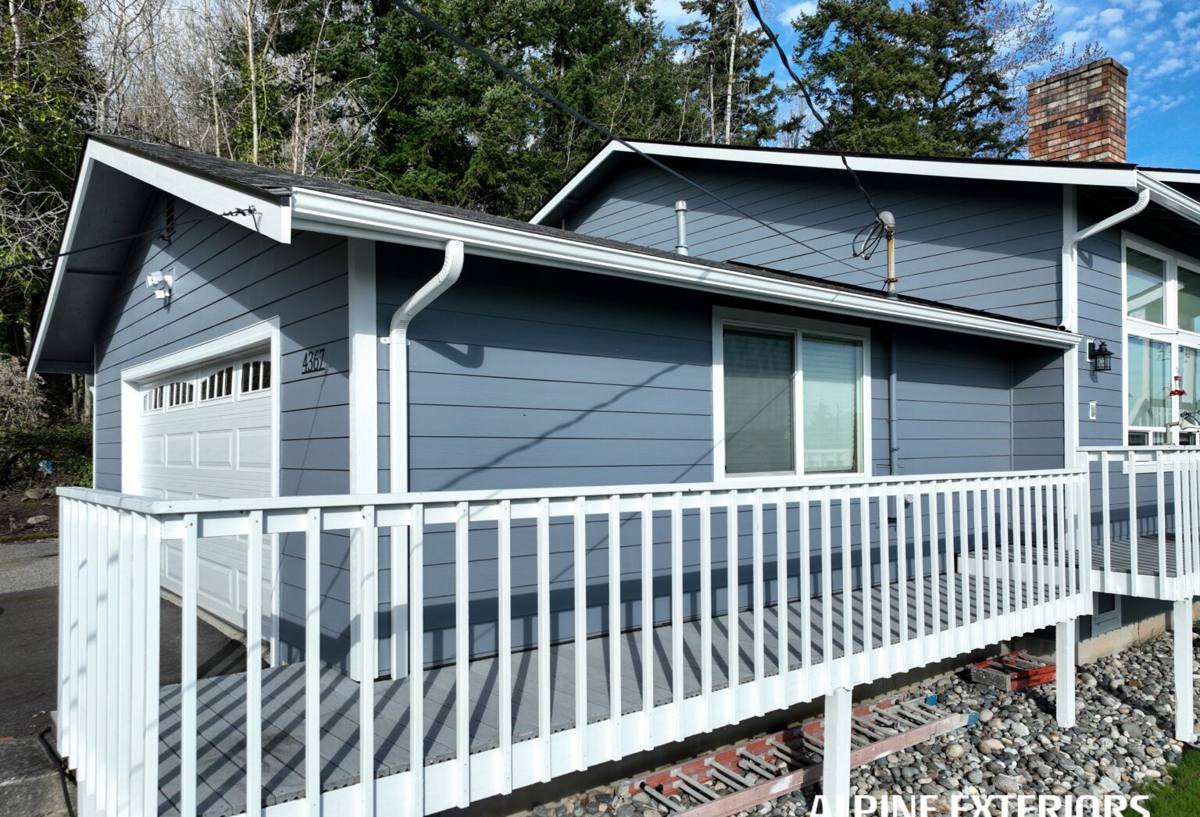
Signs an Acme Home Needs Replacement, Not Another Repair
Not every roof problem calls for a full tear-off. But there's a point where patching becomes throwing money at a system that's already failing underneath. Here's what tends to separate a "repair it" roof from a "replace it" roof on homes in this area:
- Granule loss heavy enough that you're finding shingle grit in gutters and downspouts every time it rains
- Shingles that are cupping, curling at the edges, or cracking when you press on them
- Moss or algae that keeps coming back within a season or two of cleaning, even in shaded, north-facing sections
- Soft or spongy decking felt underfoot when walking the roof, or sagging visible from the ground
- Daylight visible through the roof deck from inside the attic, or water staining on rafters and sheathing
- Flashing around chimneys, skylights, or roof-to-wall transitions that's rusted, lifted, or was caulked over instead of properly reinstalled
- A roof approaching or past the manufacturer's expected service life for its material and exposure
If you're only seeing one or two of these and the decking underneath is still sound, targeted repair is often the honest answer. We'll tell you that. Replacement makes sense once the underlying structure or underlayment system is compromised, because at that point repairs are cosmetic fixes on top of a failing base.
What a Correct Roof Replacement Actually Involves
Tear-Off and Deck Inspection
A proper replacement starts with full removal of the old roofing down to the deck — not a layover on top of existing shingles, which traps moisture and voids most manufacturer warranties. Once the deck is exposed, it gets inspected board by board. Any sheathing that's soft, delaminated, or water-stained gets replaced before anything new goes down. This is the step that's easiest to skip and most expensive to skip wrong, because a new roof over a compromised deck fails from the inside out.
Underlayment and Ice-and-Water Protection
Over bare decking goes a synthetic or felt underlayment layer, with self-adhering ice-and-water membrane concentrated at the vulnerable spots: eaves, valleys, around penetrations, and anywhere wind-driven rain is most likely to work its way under the primary roofing material. In a climate with as much driving rain as this one, underlayment quality and coverage matter as much as the shingle or panel choice sitting on top of it.
Flashing
Flashing at chimneys, sidewalls, valleys, and vent penetrations is where most roof leaks actually originate — not in the open field of shingles. Correct flashing is step-flashed and counter-flashed into the roofing material in layers that shed water downhill, never just caulked or sealed over the top. Caulk is a maintenance item, not a substitute for correctly lapped metal.
Ventilation
Balanced intake (soffit) and exhaust (ridge or roof-mounted) ventilation keeps the attic space close to outdoor temperature and humidity. Without it, moisture from daily household use condenses on the underside of the deck, which rots sheathing from below and feeds the kind of moss and algae growth that shows up on the shingles above. Ventilation is one of the least visible parts of a roof replacement and one of the most consequential for long-term performance in a wet climate.
Field Material and Finish Details
Last comes the roofing material itself — shingles, metal panels, or another system — installed to the manufacturer's nailing pattern and exposure specs, followed by ridge capping, drip edge, and gutter apron details that finish the water path all the way to the ground.
Choosing a Roofing Material for This Climate
There's no single "best" roofing material — there's a best fit for your home's exposure, roof pitch, budget, and how much moss and moisture management you're willing to keep up with. Here's an honest comparison of the systems we install most often in this area:
| Material | Typical Lifespan | Moss/Algae Resistance | Considerations |
|---|---|---|---|
| Standard asphalt (3-tab) | 15–20 years | Low without algae-resistant granules | Lowest upfront cost; shortest service life in shaded, damp areas |
| Architectural (dimensional) asphalt | 25–30 years | Moderate to good with algae-resistant granules | Thicker profile sheds water better; the most common choice we install |
| Standing-seam metal | 40–50+ years | Very good — little for moss to root into | Higher upfront cost; excellent on steeper pitches and heavy tree cover |
| Synthetic/composite shake | 30–40 years | Good with proper ventilation | Mimics wood shake appearance without the moisture upkeep wood requires |
We generally steer homeowners away from untreated cedar shake in this climate — not because it's a bad product, but because the maintenance burden of keeping wood shake dry and moss-free under a long, damp moss season is significant, and the moisture-related failure modes (splitting, rot, fungal growth) are harder to catch early than with asphalt or metal. If the look matters to you, a quality synthetic shake gets you most of the appearance with far less upkeep.
What Actually Drives Roof Replacement Cost
| Factor | Why It Matters |
|---|---|
| Roof pitch and complexity | Steep or multi-plane roofs take longer to work safely and generate more waste and flashing detail |
| Deck condition | Rotten sheathing found during tear-off adds material and labor not visible from the ground |
| Material choice | Metal and synthetic systems cost more upfront than asphalt but last longer between replacements |
| Tree cover and access | Heavier canopy on rural lots like many in Acme can mean more cleanup, staging time, and care around landscaping |
| Ventilation upgrades | Adding or correcting intake/exhaust venting is worth the modest added cost for long-term deck health |
We give real numbers after we've actually seen your roof — broad averages you find online rarely account for pitch, tree cover, or deck condition, and we'd rather be accurate than fast with a quote.
Moss, Shade, and the Long Whatcom County Moss Season
Moss doesn't just look bad — it's a moisture trap. Once it establishes on a roof, it holds water against the surface long after the rest of the roof has dried, which speeds up granule loss on asphalt and can work its way under lifted shingle edges over time. Homes with mature trees and north-facing roof planes, common on rural Acme lots, are especially prone to it because those sections get less direct sun to dry them out between storms.
A correctly installed roof doesn't eliminate moss risk, but it manages it: algae-resistant shingle granules, zinc or copper strips near the ridge on moss-prone systems, proper ventilation to reduce underside condensation, and keeping overhanging branches trimmed back all reduce how aggressively moss takes hold. None of that is a one-time fix — it's ongoing maintenance we're happy to talk through as part of any replacement estimate.
Our Process, Start to Finish
- On-site assessment — we walk the roof and attic space, not just look from the ground, so the estimate reflects the actual condition of your deck and ventilation, not just the visible shingle wear
- Written estimate and material walkthrough — a clear scope of work and material options, with the trade-offs explained in plain terms, no pressure to upsell to a system you don't need
- Scheduling around weather — we plan tear-off days with realistic weather windows in mind, since an open deck during a driving rainstorm is exactly the risk we're trying to avoid
- Tear-off and deck repair — full removal, deck inspection, and replacement of any compromised sheathing before anything new is installed
- Underlayment, flashing, and ventilation installation — the parts of the job that don't show once the roof is finished, done to spec rather than shortcut
- Final material installation and detailing — field material, ridge caps, and edge details completed to manufacturer specification
- Site cleanup and magnetic sweep — full debris removal and a nail sweep of the yard and driveway before we consider the job done
- Walkthrough — we go over the finished roof with you so you know what was done and what to watch for going forward
Why a Crew That Already Works Acme Matters
Roofing crews that work all over the region tend to treat every job the same way. A crew that regularly works Acme and the surrounding Lynden area already knows what the tree cover, exposure, and moisture patterns in this part of Whatcom County do to a roof over time — and builds the underlayment coverage, ventilation, and moss-prevention details in from the start instead of treating them as optional add-ons. That familiarity also means fewer surprises during permitting and inspection, since local requirements and typical construction of homes in this area are already understood going in, rather than being figured out on the fly.
It also matters for accountability. A local crew is still around next season if a question comes up about how the roof is performing — not a name on an invoice from a job three counties away.
Homeowner Checklist: Getting Ready for a Roof Replacement
- Confirm the contractor is licensed and insured, and ask to see current proof — not just a claim
- Get the full scope in writing: tear-off, deck repair terms, underlayment type and coverage, flashing approach, and ventilation plan
- Ask what happens if hidden deck damage is found, and how that's priced before work starts, not after
- Clarify the manufacturer warranty terms and what voids them, especially around ventilation and installation method
- Move vehicles, patio furniture, and anything fragile away from the work area before the crew arrives
- Ask about debris and nail cleanup procedures, particularly if you have kids, pets, or a driveway used daily
- Get a realistic timeline that accounts for weather delays rather than a fixed date regardless of forecast
Maintaining Your Roof After Replacement
A new roof still needs periodic attention in this climate. Keep gutters clear so water isn't backing up under the eaves, trim back branches that shade roof sections and slow drying, and have moss growth addressed early rather than left to spread across a full season. A quick visual check after major storms — looking for lifted shingles, debris buildup in valleys, or damaged flashing — catches small issues before they become deck-level problems. None of this requires climbing on the roof yourself; a lot of it is visible from the ground or an upstairs window.
If you're weighing repair against replacement, or just want an honest read on where your roof actually stands, we're glad to come take a look. The estimate is free, there's no pressure attached to it, and you'll get a straight answer about what your roof needs — use the form below to get started.