 Lynden Exterior
 Roofing Around Wiser Lake: A Different Kind of Wear
Wiser Lake sits in a pocket of Whatcom County that wears on a roof differently than open farmland or a dry subdivision. The tree cover around the water holds shade and moisture longer into the day, the lake itself adds humidity to the air right above the property, and the broader marine climate that moves through this part of Washington keeps everything just damp enough, just often enough, to shorten the life of roofing materials that would otherwise hold up fine somewhere drier. Add in wind-driven rain off the Salish Sea weather systems that regularly push through Lynden and the rest of Whatcom County, and you get a roof that's fighting a slower, quieter battle than a roof in, say, eastern Washington ever has to fight.
None of this means Wiser Lake homes need exotic roofing solutions. It means the basics — flashing, ventilation, moss control, and correct repair technique — matter more here and get overlooked more often, usually because the roof looks fine from the driveway while the actual problem is happening under the surface.
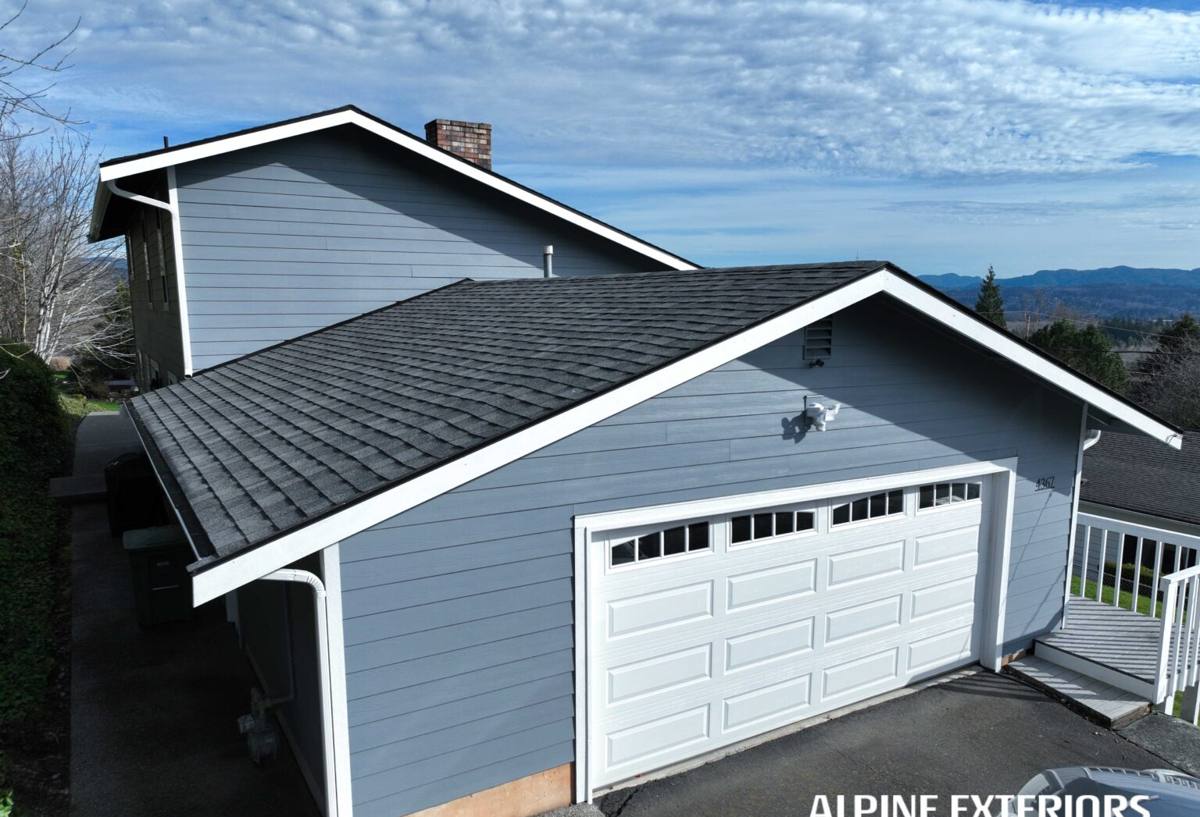
What Driving Rain Does to a Roof Over Time
Wind-Driven Rain at Flashings and Valleys
Straight-down rain is easy for any roof to shed. Driving rain — rain pushed sideways or upward by wind — is a different problem. It finds its way under shingle edges, around chimney and vent flashing, and into valleys where two roof planes meet. A roof that's never seen a hard, wind-driven storm can look perfectly sealed and still leak the first time weather comes in sideways, because the failure point was never visible until wind put water where gravity alone never would.
Water That Doesn't Just Fall Straight Down
Around Wiser Lake, that sideways rain is common enough that flashing details deserve more attention than a quick caulk-and-go fix. Step flashing, counter-flashing, and valley metal all need to be lapped correctly, not just sealed with sealant that will eventually crack and let water back in. A repair that only addresses the shingle and ignores the flashing underneath is a repair that will fail again, usually during the next storm strong enough to push rain uphill.
Moss, Shade, and the Long Season Around the Lake
Why Shade Changes the Equation
Moss needs three things to take hold: moisture, shade, and time. Wiser Lake's tree cover and proximity to the water supply the first two in abundance, and the region's mild, wet stretch of the year supplies the third. That's a longer moss-growing window than a roof gets on an open, sun-exposed lot elsewhere in the county, which is why homes here often show moss activity in spots that would stay clean on a less shaded roof — typically the north-facing slopes, areas under overhanging branches, and anywhere debris collects and holds water against the shingle.
What Moss Actually Does to Shingles
Moss doesn't just look bad. It grows in a mat that holds water against the shingle surface far longer than the shingle was designed to tolerate, and as it grows it physically lifts shingle edges, breaking the seal that keeps wind-driven rain out. Over time it accelerates granule loss, which shortens the life of the shingle underneath it. A roof with moss left unaddressed for a few seasons is a roof that's aging faster than its calendar age suggests, and by the time moss is visible from the ground, it's often already established in spots you can't see without getting on the roof.
Signs a Wiser Lake Roof Needs Repair Now
Most roof problems in this area start small and stay hidden until they show up as a stain on a ceiling. Homeowners who catch issues early almost always save money over homeowners who wait for a leak to announce itself. Watch for:
- Granules collecting in gutters or at the base of downspouts
- Shingles that look cupped, curled, or lifted at the edges
- Dark streaking or visible moss patches, especially on shaded or north-facing slopes
- Soft spots or slight sagging felt underfoot near valleys or roof edges
- Flashing around chimneys, vents, or skylights that looks separated, rusted, or resealed with visible caulk
- Water stains on interior ceilings, especially after a windy rainstorm rather than a calm one
- Daylight visible through the roof deck from inside the attic
Any one of these on its own might be minor. Two or three together usually mean it's time for a real inspection, not a guess from the ground.
What a Correct Repair Actually Involves
Not all "roof repairs" are equal, and the difference matters most in a climate like this one, where a shortcut fix has more weather to fail against. A patch that would survive fine in a dry climate can fail within a season here if it doesn't account for wind-driven rain and moss regrowth.
| Quick Patch Approach | Correct Repair Approach |
|---|---|
| Sealant applied over the visible gap | Flashing removed, inspected, and reinstalled with proper laps |
| New shingle laid over old, unmatched material | Matching shingle profile and color where possible, tied into surrounding courses |
| No check of the decking underneath | Decking inspected for soft spots or rot before re-covering |
| Moss scraped off, nothing else done | Moss treated and the underlying shingle condition assessed for damage already done |
| Repair addresses the leak's exit point only | Repair traces the leak back to its actual entry point, which is often several feet away |
That last row is the one that causes the most repeat calls in this industry generally. Water travels along the underside of decking or along a rafter before it drips through the ceiling, so the stain you see inside is rarely directly under the failure. A repair that doesn't trace the path back to the real entry point is a repair that looks successful until the next storm proves otherwise.
How Our Repair Process Works
- Inspection. We get on the roof, not just look from the ground, and check flashing, valleys, vents, and the decking condition where we can access it.
- Diagnosis. We trace any leak back to its actual source, which may be well away from where water is showing up inside the home.
- Written scope. Before any work starts, we walk through what we found and what it will take to fix it correctly, including honest options if a full section or slope needs more than a patch.
- Repair. We replace damaged shingles and flashing to match the existing roof as closely as possible, and address any moss or decking issues uncovered along the way.
- Cleanup and moss treatment. We clear debris and treat moss-prone areas so the repair isn't undone by the same growth pattern within a year or two.
- Follow-through. If something wasn't visible until we opened it up, we tell you before closing it back in, not after.
Repair or Replace? Cost Factors to Weigh
Not every roof problem around Wiser Lake needs a full replacement, and not every roof problem is a simple fix either. The honest answer depends on a handful of factors, and a good contractor will walk you through these rather than defaulting to the most expensive option.
| Factor | Leans Toward Repair | Leans Toward Replacement |
|---|---|---|
| Roof age | Under roughly 15 years | Nearing or past its expected shingle lifespan |
| Extent of damage | Isolated to one area or slope | Spread across multiple slopes or repeated leak history |
| Decking condition | Solid, no rot found | Soft spots or rot found in more than one location |
| Moss history | Recent, treatable growth | Long-term moss damage with granule loss across large areas |
| Cost range | Typically a few hundred to a couple thousand dollars depending on scope | A larger investment, but often better value than repeated repairs on an aging roof |
We'll always tell you honestly which side of that table your roof falls on. A repair that's likely to need another repair within a year or two isn't a good use of your money, and we'd rather say so upfront.
Why Hire a Crew That Already Works Wiser Lake
A roofing crew that mostly works dry, open, sun-exposed neighborhoods will diagnose a Wiser Lake roof the same way they'd diagnose any other roof — and that's exactly how moss and hidden leak damage get missed. Crews familiar with this lake community already know to check shaded north-facing slopes more carefully, to expect moss regrowth patterns tied to the tree cover, and to take wind-driven rain seriously when inspecting flashing rather than assuming a straight-down rain test tells the whole story.
There's also a practical side to local experience: knowing the area means knowing how to get equipment and materials to a property near the lake without guesswork, and being available to respond quickly when a storm exposes a problem rather than treating the job as an out-of-the-way trip. For homeowners in and around Lynden and the rest of Whatcom County, that familiarity shows up in fewer callbacks and repairs that actually hold.
Getting a Straight Answer on Your Roof
If you're seeing granules in the gutter, moss creeping across a shaded slope, or a stain that only shows up after a windy rain, it's worth getting an honest look before it becomes a bigger repair. We offer free, no-pressure estimates for Wiser Lake homeowners — use the form below and we'll take a look and tell you plainly what we find.