 Lynden Exterior
 Birch Bay's Coastal Climate Is Hard on a Roof
Birch Bay sits right on the water, and that changes what a roof is up against compared to homes a few miles inland in Whatcom County. Marine air carries salt onto every exposed surface, wind off the bay drives rain at angles that a standard roof detail wasn't built to shed, and the long, wet stretch from fall through spring keeps shaded roof slopes damp for weeks at a time. Add in the tree cover common on many Birch Bay lots, and you get ideal conditions for moss and algae to take hold.
None of this means a roof here is doomed to fail early. It means the installation has to account for salt exposure, wind-driven moisture, and moss from day one — not as an afterthought once problems show up. A roof built to a generic spec, without those factors in mind, tends to show its age years before it should.
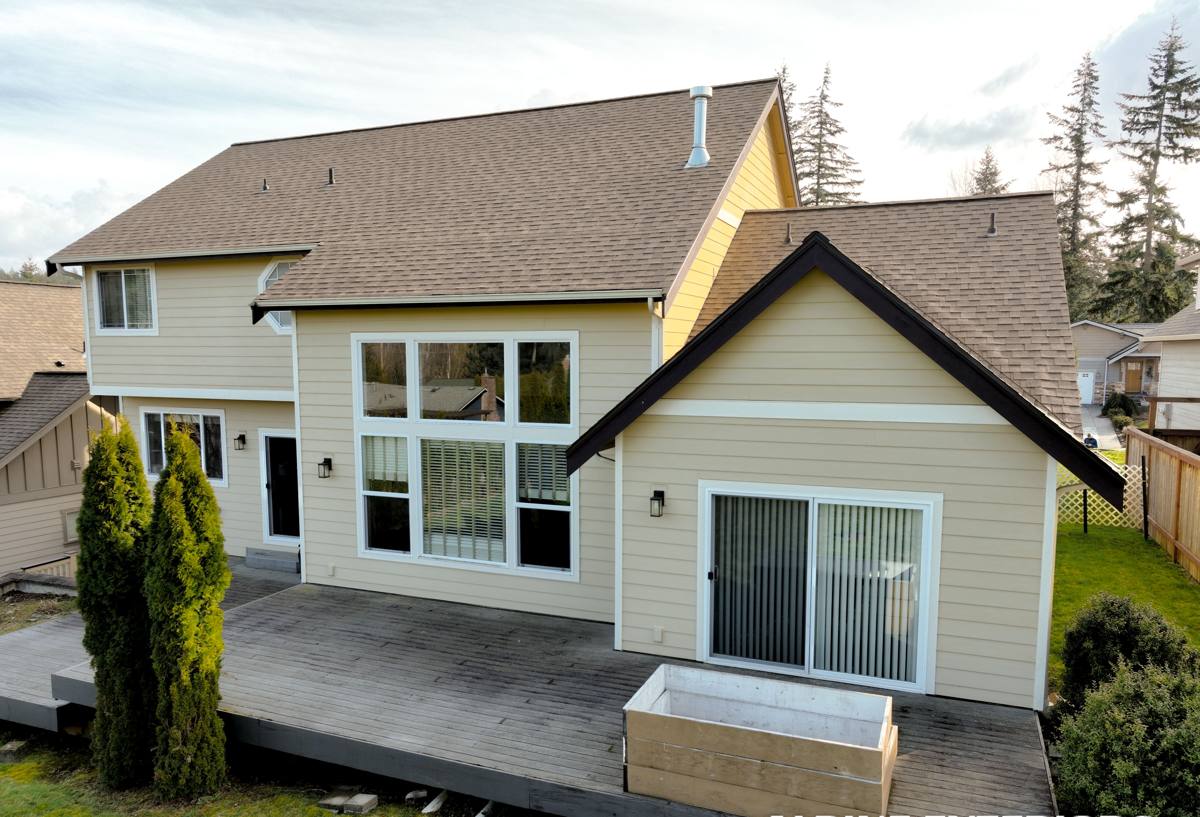
What a New Roof Actually Needs to Hold Up Here
Fasteners and Flashing That Resist Salt Corrosion
Salt air accelerates corrosion on any metal that isn't rated for it. Fasteners, drip edge, valley metal, and flashing around chimneys and penetrations all need to be a corrosion-resistant grade — not the cheapest option that happens to pass inspection. A roof that looks fine for the first couple of years but starts showing rust streaks and loosening fasteners by year five usually points back to the wrong hardware being used in the wrong environment.
Underlayment and Protection at Vulnerable Points
Wind-driven rain doesn't just fall straight down — it gets pushed sideways and even uphill under shingle edges during a real storm off the bay. That's why eaves, valleys, roof-to-wall transitions, and every penetration need self-adhering waterproof membrane underneath, backed by a full synthetic underlayment across the rest of the field. This is standard practice for coastal work, and it's the difference between a roof that sheds a windstorm and one that leaks at the first hard blow.
Ventilation That Actually Balances
A roof deck that can't breathe traps moisture underneath the shingles, which feeds rot in the sheathing and gives moss and algae a damp surface to grip on the topside. Balanced ventilation — intake at the eaves, exhaust at the ridge, sized to the attic space — keeps air moving so the deck dries out between rain events instead of staying wet all season. On heavily shaded Birch Bay lots, this matters even more than on an open, sunny roof that dries on its own.
Choosing a Roofing Material for a Birch Bay Home
There's no single "best" roofing material for every house — it depends on your roof's shade exposure, your budget, and how much upkeep you want to take on. Here's how the common options compare specifically for a salt-air, high-moss environment like Birch Bay.
| Material | Moss/Algae Resistance | Salt-Air Durability | Wind Performance | Maintenance |
|---|---|---|---|---|
| Architectural asphalt shingle (algae-resistant granules) | Good — resists staining and growth better than standard shingles | Good, when paired with corrosion-resistant flashing and fasteners | Strong when installed to the manufacturer's high-wind nailing pattern | Low — periodic gutter and debris checks |
| Standard 3-tab asphalt shingle | Fair — more prone to algae staining over time without treated granules | Fair — thinner profile is more sensitive to wind uplift | Lower wind rating than architectural shingles | Moderate — shorter service life in wet, shaded conditions |
| Standing seam metal | Excellent — smooth surface sheds moss and debris | Excellent when using marine-grade coatings and fasteners | Excellent — among the best for wind-driven rain and gusts | Low — occasional fastener and sealant inspection |
| Cedar shake | Poor without regular treatment — wood surface holds moisture and feeds growth | Fair — needs consistent maintenance to resist salt and rot | Moderate | High — regular cleaning, treatment, and inspection required |
We'll walk through these trade-offs with you based on your specific roof, not push one material across the board. A heavily shaded, tree-lined lot near the water often does better with metal or a treated architectural shingle than with cedar, simply because of how much upkeep cedar demands to stay ahead of moss in this climate.
Our New Roof Installation Process
- Tear-off and deck inspection — full removal of the old roofing down to the deck, with every section of sheathing checked for soft spots, rot, or delamination from trapped moisture.
- Deck repair — any compromised sheathing is replaced before anything new goes down. Installing new roofing over a damaged deck just hides the problem.
- Self-adhering membrane at critical points — eaves, valleys, roof-to-wall transitions, skylights, and other penetrations get waterproof membrane first.
- Synthetic underlayment — covers the remaining field for a secondary moisture barrier under the finish roofing.
- Corrosion-resistant drip edge and flashing — set at all edges, valleys, and transitions to handle the salt-air exposure.
- Field installation — shingles or panels installed to the manufacturer's specified nailing or fastening pattern for wind performance, not a generic pattern.
- Ridge and intake venting — set to balance airflow through the attic space.
- Cleanup and final inspection — site cleared of debris and nails, roof walked and checked before we call the job done.
Signs a Birch Bay Roof Is Due for Replacement
Roofs in this environment don't usually fail all at once — they show warning signs first. Worth checking for, especially heading into the wet season:
- Granule loss showing up in gutters or bald patches on the shingle surface
- Moss buildup on north-facing or shaded slopes, even after cleaning
- Shingle edges curling, cracking, or lifting
- Rust staining or visibly corroded flashing and fasteners
- Soft or spongy spots when walking the roof, or sagging visible from the ground
- Daylight visible through the roof deck from inside the attic
- Water stains on interior ceilings or walls after a windy storm
- A roof approaching or past the expected service life for its material
Any one of these on its own might not mean immediate replacement — but a few together, especially on an older roof, is usually a sign it's time for a real inspection rather than another round of patching.
What Drives the Cost of a Roof Replacement
Every Birch Bay roof is different, so we don't quote off a flat per-square rate without seeing the house. These are the factors that actually move the number:
| Factor | Why It Matters |
|---|---|
| Roof size and number of squares | More material and labor to cover a larger footprint |
| Pitch and roof complexity | Steep pitches, multiple valleys, and dormers slow the work and add flashing detail |
| Number of existing layers | Extra tear-off layers add labor and disposal cost |
| Deck condition | Rotted or damaged sheathing needs replacement before new roofing goes on |
| Material choice | Asphalt, metal, and cedar carry different material and labor costs |
| Site access | Tree cover, tight lots, and staging challenges affect how efficiently the crew can work |
We'll walk your roof and give you a clear, itemized quote based on what's actually there — not a generic estimate that changes once we get on the roof.
Why a Local Lynden Crew That Works Birch Bay Regularly Matters
A roofing crew that's worked this stretch of Whatcom County knows what a Birch Bay roof is actually dealing with — the wind exposure off the water, which slopes on a shaded lot tend to hold moss longest, and how salt air shows up in flashing and fasteners years down the road. That's the kind of judgment that comes from doing the work here repeatedly, not from a crew passing through the area for a single job.
Being based in Lynden also means we're a short drive away if something comes up after a storm — a lifted shingle, a flashing question, a follow-up check. We're not disappearing to the next region once the job wraps.
After Installation: Keeping a Birch Bay Roof Performing
A correctly installed roof still benefits from a little upkeep in this climate:
- Keep gutters and downspouts clear of leaves and needles, especially on tree-covered lots — clogged gutters back water up under the roof edge
- Have shaded, moss-prone slopes checked and gently treated periodically rather than left to build up over multiple wet seasons
- Avoid power-washing shingles — it strips protective granules and shortens the roof's service life
- Trim overhanging branches where practical to improve sun exposure and airflow across the roof
- Have flashing and fasteners visually checked every few years for early signs of corrosion, and address it before it becomes a leak
Some homeowners also ask about zinc or copper strips near the ridge as a moss-prevention measure. They can help slow regrowth on some roofs, but they change the roof's appearance over time as the metal streaks, and they're not a substitute for proper ventilation and material choice — we'll tell you honestly whether it makes sense for your specific roof rather than upselling it as a cure-all.
Get a Straight Answer on Your Birch Bay Roof
If your roof is showing its age or you just want an honest read on how much life it has left, we're glad to come take a look. The estimate is free, there's no pressure, and you'll get a clear explanation of what we find and what it would take to do the job right for a home in this stretch of Whatcom County. Fill out the form below to get started.