 Lynden Exterior
 Building New in Sumas: What the Climate Asks of Your Windows
Sumas sits at the edge of Whatcom County's flat, low-lying prairie near the Nooksack River, and that setting comes with its own set of moisture challenges. Marine air pushes inland off the Salish Sea most of the year, bringing long stretches of driving rain rather than short cloudbursts. Add in a moss season that runs longer here than in drier parts of the state, and the wood, trim, and wall assemblies around a window opening spend a lot of the year staying damp instead of drying out. For a new build, that means the window installation isn't just a product choice — it's a drainage and flashing decision that determines whether the wall behind the window stays dry for the next thirty years.
Sumas has also seen firsthand what happens when regional water tables run high, and new construction in and around the area tends to sit on ground that holds moisture longer after a storm than higher ground closer to Lynden proper. None of that means a house here is destined for problems — it means the details at the rough opening matter more than they would in a drier climate, and there's less room for shortcuts that might get away with it elsewhere in the county.
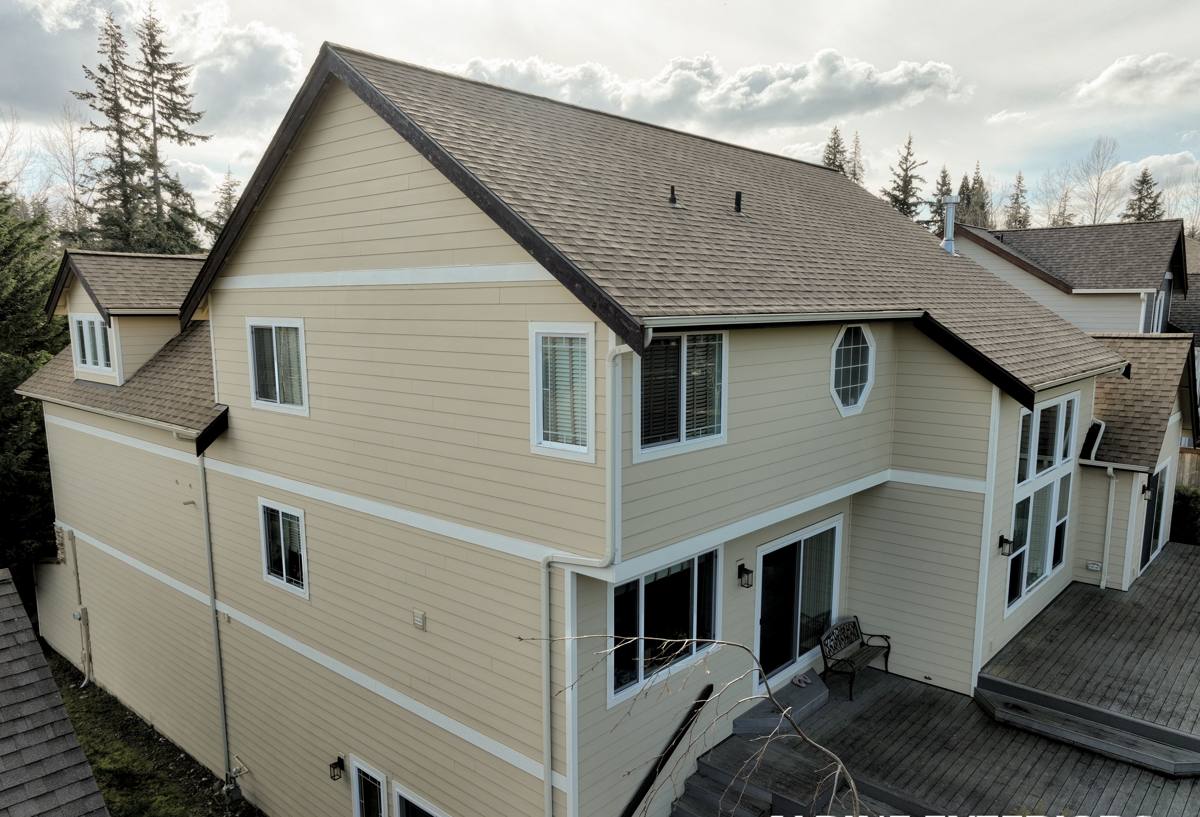
New-Construction vs. Replacement Windows: Why the Distinction Matters
New-construction windows are built with a nailing fin around the perimeter of the frame, meant to be fastened directly to the sheathing before the weather-resistive barrier and siding go on. Replacement or retrofit windows are designed to slide into an existing frame with the exterior trim left in place, which is the right call on a remodel but the wrong approach for a home being built from the studs out. On a new build, you have the framing exposed and one real chance to get the flashing, drainage plane, and fin integration correct before it's covered by house wrap, trim, and siding.
That one chance is the whole reason new-construction window work deserves its own process rather than being treated as an afterthought of the framing schedule. A mistake here — a reversed flashing lap, a missing sill pan, a nailing fin stapled instead of properly fastened and sealed — doesn't show up as a leak on day one. It shows up as rot in the sill or subfloor three, five, or ten years later, after the drywall, insulation, and siding have all been built around it.
What a Correct New-Construction Window Installation Involves
Sill Pan Flashing and Drainage
Every rough opening should get a sill pan — a shaped, sloped flashing at the bottom of the opening that catches any water that gets past the window and directs it back out, not into the framing. In a climate that sees as much sustained rain as Whatcom County, skipping this step or improvising it with caulk alone is one of the most common ways a new window ends up with hidden water damage.
Integrating the Window With the Weather-Resistive Barrier
The house wrap and the window's nailing fin have to be layered correctly — sill first, then jambs, then head — so that water draining down the wall sheds over the top of each layer below it, like shingles on a roof. Get the sequence backward at the head flashing and you've built a path for water to run behind the barrier instead of over it, which is exactly the kind of mistake that stays invisible until the wall is opened up for a repair.
Shimming, Plumb, Level, and Square
A window that isn't set plumb, level, and square will bind, won't lock tight, and puts uneven stress on the frame and glass seal over time. Correct shimming at the right points — not just wherever is convenient — keeps the sash operating smoothly and keeps the frame from twisting as the house settles through its first few seasons.
Sealant — Where It Belongs, and Where It Doesn't
It's tempting to think more caulk equals a tighter seal, but sealing the bottom of the exterior trim or the underside of the sill can trap water that gets past the outer defenses instead of letting it drain back out. A correct install seals where water needs to be stopped and leaves a clear path where it needs to escape — the flashing and drainage plane do the real work; sealant is a backup, not the primary defense.
Choosing the Right Window for a Sumas New Build
Frame material affects how a window handles years of damp, cool weather more than almost any other decision you'll make. There's no single right answer for every home, but the trade-offs are worth understanding before your builder locks in a spec.
| Frame Material | Moisture Tolerance | Maintenance | Typical Cost Tier |
|---|---|---|---|
| Vinyl | Good — won't rot, some flexing possible with large sizes | Low — occasional cleaning | Entry to mid-range |
| Fiberglass | Very good — dimensionally stable in wet/cold swings | Low | Mid to upper-range |
| Wood-clad | Depends heavily on cladding and finish quality | Higher — finish and joints need periodic attention | Upper-range |
Wood-clad windows can look excellent on a new build, but the cladding and corner joints are exactly the spots that take the most abuse in a long wet season, and we tell homeowners upfront that they carry a higher maintenance commitment than vinyl or fiberglass. That's a trade-off worth making consciously, not something to discover after the first few winters.
Performance Ratings for Our Climate Zone
Whatcom County falls in a marine climate zone where energy code minimums focus on U-factor (how well the window resists heat loss) more than solar heat gain, since we don't get the intense summer sun that drives cooling-load concerns in other parts of the country. Washington's energy code sets a minimum U-factor for new-construction windows, and the exact number can shift slightly between code cycles — your building department can confirm the current requirement, and any window we spec for a Sumas new build is chosen to meet or beat it, not just scrape by.
How We Work With Builders and GCs on New Construction
Rough Opening Inspection Before We Install
Before a single window goes in, we check that rough openings are framed square and to the correct dimension, and that the sheathing and house wrap are ready to receive flashing. Catching a framing error before the window arrives is a lot cheaper than discovering it after.
Coordinating With Siding and Trim Crews
Window flashing has to be finished and inspected before siding closes the wall up, so we schedule around the framing and siding crews rather than working in isolation. On a new build, timing is as much a part of doing it right as the install itself.
Final Walkthrough and Warranty Paperwork
Once windows are in and trimmed, we walk the openings with the builder or homeowner, confirm operation on every unit, and hand over the manufacturer's warranty registration along with our own installation warranty — so there's a clear paper trail if anything needs attention down the road.
Why a Local Whatcom County Crew Matters for Sumas New Builds
A crew that already works new construction around Sumas and Lynden knows the permitting process with the local building department, knows which details inspectors look at closely in this area, and has already worked out the flashing sequence that holds up against this specific climate — not a generic template built for a drier region. We're also close enough to respond quickly if a punch-list item comes up before occupancy, instead of a crew that has to travel in from out of the county. For a builder juggling a tight construction schedule, that responsiveness is worth as much as the install itself.
New-Construction Window Checklist for Sumas Homeowners and Builders
- Rough openings framed square, level, and to the correct dimension before windows arrive
- Sill pan flashing installed at every opening, sloped to drain outward
- House wrap and nailing fin integrated in proper shingle-lap order — sill, then jambs, then head
- Windows set plumb, level, and square with correct shim placement
- Sealant applied only where it should stop water, not where it could trap it
- Frame material and performance ratings matched to the home's exposure and energy code minimums
- Flashing inspected and signed off before siding closes the wall
- Manufacturer and installation warranty paperwork provided at final walkthrough
If you're building new in Sumas, or working with a builder who is, we're happy to walk the site, look at the rough openings, and give you a straightforward, no-pressure estimate for the window work — just fill out the form below.